Introduction to MSN News
MSN News is a digital news and information platform operated by Microsoft. For years, it has served as a central destination where readers can discover breaking stories, politics, business coverage, entertainment, sports, technology, lifestyle content, weather information, and much more. Instead of functioning only as a traditional newsroom, MSN brings together content from a wide range of publishers and presents it through Microsoft’s digital ecosystem.
One reason MSN News remains widely recognized is its convenience. Readers do not necessarily have to visit dozens of individual news websites to see what is happening. MSN can place stories from different publishers in one personalized feed, making it possible to browse headlines and select the stories that appear most relevant or interesting.
The platform has also evolved considerably as online news habits have changed. Modern readers expect fast-loading pages, personalized recommendations, mobile access, visual content, and updates throughout the day. MSN has adapted to those expectations by combining news discovery with other useful information and personalization features.
What Is MSN News?
MSN originally stood for Microsoft Network, a name associated with Microsoft’s online services since the 1990s. Over time, the MSN brand developed into a broader collection of web-based services, including news, weather, finance, entertainment and other information categories.
Today, MSN News is best understood as a digital content and discovery platform rather than simply a newspaper-style website. It works with numerous publishers and makes their stories available through Microsoft’s news ecosystem. This gives users a convenient way to browse different sources without manually searching for every publication.
The platform’s broad approach is particularly useful for readers who want variety. A single visit can expose someone to local reporting, international developments, financial stories, celebrity news, sports updates and practical lifestyle articles. That mixture is a major part of the platform’s appeal.
How MSN News Works
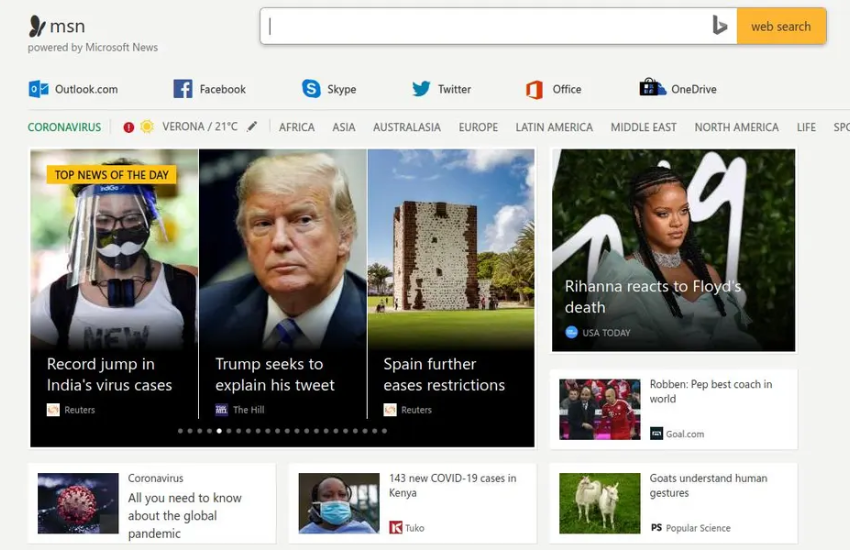
At a basic level, MSN News collects and displays stories from a broad network of news organizations and content publishers. Users can see headlines, summaries, images and other information designed to help them decide which stories they want to read.
Microsoft’s technology plays an important role in organizing this information. Algorithms can analyze signals such as a user’s interests, reading behavior and selected topics to determine which stories may be useful or engaging. The result is a news experience that can become increasingly personalized over time.
This approach is different from simply presenting a fixed homepage to every visitor. Two people using the platform may see different combinations of stories because their interests and browsing behavior can differ. Personalization can make a large amount of information easier to navigate, although readers should still make an effort to explore different sources.
Why MSN News Is Popular
One of the biggest advantages of MSN News is convenience. People are often overwhelmed by the number of websites, apps and social-media accounts publishing information every day. A centralized news feed can make that information easier to manage.
Another reason for its popularity is variety. A reader interested in technology can find technology stories alongside business coverage, while someone interested in entertainment can move from celebrity news to sports or lifestyle content without leaving the platform.
MSN also benefits from its connection to Microsoft’s wider ecosystem. Many people encounter MSN through Microsoft products and services, which can make the platform feel familiar even if they do not deliberately type the MSN website address into their browser.
Breaking News on MSN
Breaking news is one of the most important categories for a modern digital news platform. Events can develop rapidly, and readers want access to updates as soon as credible information becomes available.
MSN can surface developing stories from participating publishers and news organizations, allowing readers to see different reports about the same event. This can be particularly useful during major elections, natural disasters, international events, financial developments or other situations where information changes quickly.
However, speed should never replace verification. Early reports can contain incomplete or developing information. Readers should pay attention to the publisher, publication time and wording of a story, especially when an event is still unfolding.
Politics and Current Affairs
Political coverage is another major part of the MSN News experience. Depending on the user’s interests and current events, the platform can feature stories about governments, elections, legislation, public policy and political figures.
A useful feature of seeing political stories from multiple publishers is that readers can compare reporting styles and perspectives. Instead of relying on one publication, readers can examine how different organizations describe the same development.
That does not mean every article should automatically be treated as equally reliable. Different publishers have different editorial standards, expertise and approaches to commentary. A thoughtful reader should distinguish between reported facts, analysis, opinion and speculation.
Business and Financial News
MSN has long had a strong connection with financial and business information. Readers can encounter stories about companies, markets, economic developments, personal finance, employment and major business trends.
Financial news is especially time-sensitive. Stock prices, economic indicators and corporate developments can change rapidly, meaning an article that was accurate earlier in the day may no longer represent the newest situation.
Readers should therefore check timestamps and consult appropriate primary sources when making important financial decisions. News platforms are useful for staying informed, but they should not automatically be treated as substitutes for professional financial advice or direct market data.
Sports Coverage
Sports is another category that attracts large numbers of digital readers. MSN can help users discover stories about professional leagues, athletes, tournaments, teams and major sporting events.
The advantage of a broad aggregation platform is that sports fans can encounter breaking reports, game analysis, interviews and feature stories from different publishers in one place.
Sports information can also change very quickly. Scores, injuries, lineups and transfer developments may change within minutes. When following a live event, readers should pay attention to the publication time and look for the latest reporting rather than relying on an older article.
Entertainment and Celebrity News
Entertainment coverage has become an important part of the online news environment, and MSN features a wide variety of stories in this area. Readers can find information about actors, musicians, television programs, movies, streaming services and celebrity developments.
The appeal of entertainment news is often its immediacy. Fans may want to know about a new movie announcement, an upcoming television series, a celebrity interview or a major entertainment event as soon as it happens.
At the same time, entertainment reporting can contain rumors and unconfirmed claims. Readers should distinguish between statements from an official source and reports based on anonymous sources or online speculation.
Technology News
Technology coverage is especially relevant to modern readers because digital products influence almost every part of daily life. MSN can feature stories about smartphones, artificial intelligence, cybersecurity, software, social platforms, computers and emerging technologies.
Technology news also moves quickly. A product announcement can be followed by reviews, software updates, security advisories and competing products within a short period.
For readers, this makes source quality particularly important. Technical specifications and security information are best confirmed through official announcements, reputable technology publications or appropriate documentation rather than relying solely on a headline.
Health and Wellness Information
Health-related stories can also appear in digital news feeds, covering subjects such as nutrition, fitness, medical research, wellness and public-health developments.
This category requires extra care because health information can directly affect personal decisions. A headline may simplify a complicated scientific finding, while an early research study may not provide enough evidence for a broad conclusion.
Readers should therefore treat general health articles as informational material rather than automatically assuming that an article provides personalized medical advice. For important health decisions, qualified healthcare professionals and authoritative medical sources remain essential.
Lifestyle Content
Lifestyle stories make news platforms more useful for everyday readers. MSN can feature content involving food, travel, home improvement, relationships, shopping, careers and personal interests.
Unlike breaking news, lifestyle content is often designed to remain useful for a longer period. A cooking guide or home-maintenance article may continue attracting readers long after publication.
This type of content also demonstrates how the modern concept of “news” has expanded. Readers increasingly expect digital platforms to provide not only current events but also practical information that helps them navigate everyday life.
Weather Information
Weather is one of those services people may check repeatedly throughout the day. MSN provides access to weather information alongside its broader content ecosystem.
Weather information can be especially valuable when conditions are changing quickly. Forecasts can help people plan commutes, outdoor activities and travel.
However, weather forecasts are predictions rather than guarantees. Conditions can change, particularly during severe weather. When safety is involved, readers should consult official local weather authorities and emergency services rather than relying solely on a general news feed.
MSN News and Personalization
Personalization is one of the defining characteristics of modern digital news platforms. Rather than giving everyone exactly the same list of headlines, MSN can tailor parts of the experience according to user interests.
A person who frequently reads sports stories may see more sports-related content, while another user interested in technology may encounter more technology coverage.
Personalization can be convenient, but it also creates a responsibility for readers. If people only consume information that matches their existing interests, they may miss important stories. Periodically exploring different categories and publishers can create a more balanced information diet.
How Algorithms Influence the News Feed
Algorithms are central to the modern digital information experience. They help determine which stories are displayed prominently and which stories may appear farther down a feed.
The benefit is efficiency. There are far more stories published each day than any individual could realistically read. Automated systems can help filter this enormous volume.
The challenge is that algorithms are not the same thing as human editorial judgment. A story that attracts attention is not necessarily more important than a quieter but significant development. Readers should therefore remember that what appears prominently in a personalized feed is not necessarily a complete representation of everything happening in the world.
The Importance of News Sources
One of MSN’s distinguishing characteristics is its use of content from numerous publishers. This gives readers access to a broad range of reporting.
For readers, the publisher’s identity matters. A headline appearing on MSN does not necessarily mean that Microsoft itself reported or independently wrote the story. In many cases, the article originates from a partner or third-party publisher.
This distinction is important when evaluating credibility. Readers should look beyond the headline and check the publication name, author, date and underlying reporting before deciding how much confidence to place in a particular article.
MSN News Versus Traditional News Websites
Traditional news websites generally operate as individual publications with their own editorial teams, brands and websites. MSN takes a broader approach by bringing content from multiple publishers into one discovery environment.
This makes MSN particularly convenient for comparison and browsing. Instead of repeatedly opening separate sites, users can explore a variety of headlines in one place.
The trade-off is that readers may have less familiarity with some of the publishers they encounter. Someone who regularly reads one established newspaper may already understand its editorial standards, while an unfamiliar publisher requires additional evaluation.
MSN News on Mobile Devices
Mobile access has become essential for modern news consumption. People increasingly read headlines while commuting, waiting in line or taking short breaks during the day.
MSN’s mobile-oriented experience is designed to make news discovery convenient on smaller screens. Stories can be browsed quickly, while categories and personalized recommendations make it easier to find relevant information.
Mobile reading also encourages shorter interactions. People may scan several headlines without opening every article. This makes it especially important to avoid judging a complicated story solely from its headline.
The Role of Images and Video
Visual content is another major part of digital news. Images can quickly communicate the subject of an article, while videos can provide interviews, demonstrations, event footage and other forms of context.
For readers, visual material can make a complicated story easier to understand. A video from an event may provide context that a short text summary cannot fully capture.
However, visuals can also be misleading when separated from their original context. Readers should consider when and where an image or video was recorded rather than assuming that every visual associated with an article represents a current event.
How to Read MSN News More Effectively
A good approach to MSN News is to treat the platform as a starting point for information discovery. A headline can tell you that something happened, but the full article provides context.
For major stories, compare reports from multiple reputable publishers. Look for agreement on basic facts and identify where accounts differ.
It is also useful to check the publication date. Digital platforms can continue displaying older stories, especially when a topic remains popular. An article published several days ago may still be relevant, but it should not automatically be mistaken for the latest update.
Avoiding Clickbait Headlines
Like many large digital content platforms, MSN can display headlines designed to attract attention. Some headlines may be dramatic, emotional or deliberately curiosity-driven.
Clickbait does not always mean an article is false. Sometimes a legitimate story simply uses a highly engaging headline. The problem occurs when the headline exaggerates what the article actually establishes.
The best habit is simple: read beyond the headline. Check the article’s evidence, source material and wording before forming a conclusion.
MSN News and Misinformation
Misinformation is a challenge across the entire internet, not just one news platform. False claims can spread through social media, websites, videos and even ordinary conversations before reliable organizations have time to verify them.
News aggregators can help people discover information, but readers still have a role in evaluating it. If a claim seems extraordinary, checking several independent sources is a good first step.
Primary sources can be especially valuable. Official government announcements, company statements, court documents, scientific papers and direct interviews can sometimes provide stronger evidence than a secondary article summarizing them.
Why Headlines Should Not Be the Whole Story
Digital readers often move quickly from one headline to another. This is understandable, especially when dozens of stories appear in a single feed.
The problem is that headlines have limited space. Complex subjects involving politics, science, economics or legal disputes rarely fit into a single sentence.
Reading the full article allows readers to understand qualifications, timelines and evidence. It also makes it easier to distinguish confirmed facts from predictions, opinions and allegations.
The Future of MSN News
The future of MSN News will likely continue to involve personalization, artificial intelligence, video, interactive content and increasingly sophisticated recommendation systems.
Artificial intelligence is already changing how people discover and summarize information. As these technologies develop, platforms will have new opportunities to make large amounts of information easier to understand.
At the same time, the importance of editorial quality will remain. Technology can organize information extremely quickly, but trustworthy journalism still depends on verification, evidence, context and accountability.
Why MSN News Remains Relevant
Despite the enormous number of news apps and websites available today, MSN remains relevant because it combines information discovery with Microsoft’s broader digital ecosystem.
Its biggest strength is not necessarily that it replaces every individual news organization. Instead, it provides a convenient doorway into a wide range of publishers and topics.
For readers who want a quick overview of what is happening, this can be extremely useful. For important stories, however, the best approach is to move beyond the initial feed and investigate the underlying reporting.
Final Thoughts on MSN News
MSN News is best understood as a modern digital news and information hub that helps readers discover stories from a wide range of publishers. Its combination of personalization, broad subject coverage and integration with Microsoft’s online ecosystem makes it a convenient destination for everyday news browsing.
Whether someone is interested in politics, business, technology, sports, entertainment, weather or lifestyle topics, MSN can provide a useful starting point. The platform’s broad range is one of its biggest advantages because readers can move between subjects without constantly searching for new websites.
Still, responsible news consumption requires more than scrolling through headlines. Readers should check dates, identify publishers, compare important stories and distinguish verified reporting from opinion or speculation. These habits are useful on MSN and on every other digital news platform.
Ultimately, the value of MSN News comes from how readers use it. When treated as a discovery tool rather than an unquestionable source of truth, it can be an efficient way to stay informed, explore different perspectives and discover stories worth reading in greater depth.
YOU MAY HAVE MISSED