
Introduction
Local government decisions shape everyday life in ways that residents may not immediately notice. Decisions about public spending, coastal planning, development applications, environmental protection, infrastructure, and municipal services often begin with a public meeting. The records created during these meetings help residents understand what officials discussed, what motions were considered, and which decisions received formal approval.
The city of saint augustine beach meeting minutes technology software topic brings together three important areas of modern municipal administration: public meeting documentation, digital information management, and transparent access to government records. Understanding these areas helps residents, researchers, journalists, business owners, and public administrators navigate local government information more effectively.
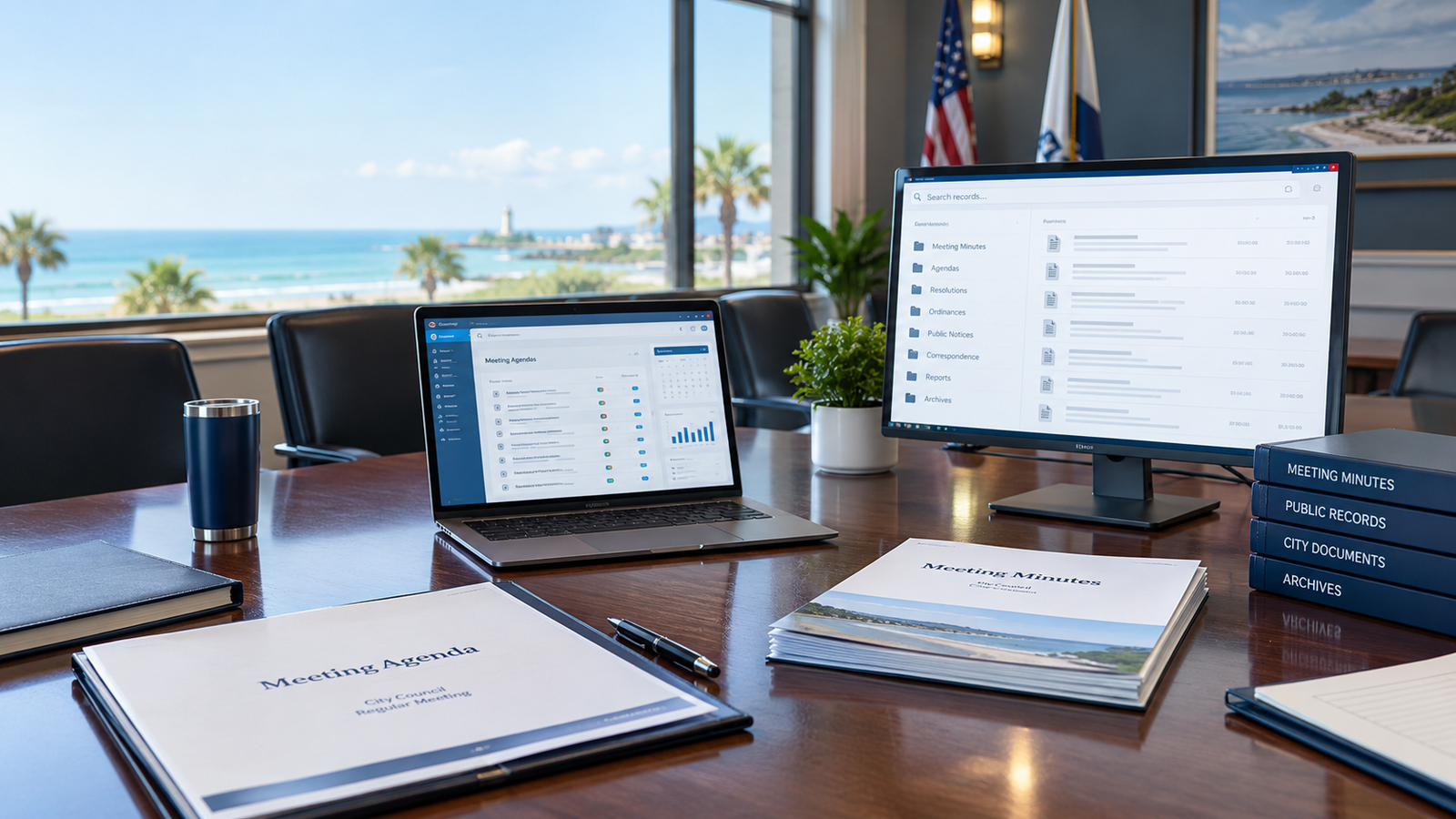
St. Augustine Beach is a coastal municipality in St. Johns County, Florida. Its government conducts meetings involving the City Commission and other municipal boards and committees. The city makes meeting materials available through its online Agenda Center, where visitors can find records organized by governing body and meeting date. The public-facing system provides access to agendas, minutes, media, and downloadable meeting materials for applicable entries. CivicEngage+1
This online access is important because municipal records serve a purpose beyond documenting past events. They create an information trail that helps the public follow government decisions, compare proposals, understand policy changes, and monitor the implementation of approved actions.
The city of saint augustine beach meeting minutes technology software subject also raises a practical question: what technology supports the publication and organization of these records, and how can residents evaluate the system’s usefulness without confusing documented facts with assumptions about the city’s internal software?
A careful answer begins by distinguishing the publicly visible records platform from the technology used behind the scenes. An online agenda portal may provide evidence of how documents are presented to the public, but it does not automatically reveal every software product, recording tool, workflow, database, or internal records-management application used by municipal employees.
This guide examines the role of meeting minutes, the features and limitations of digital agenda systems, the importance of accurate records, and the technology considerations that matter to local government. It also explains how residents can search municipal documents, assess the reliability of available information, and understand the difference between draft minutes, approved minutes, agendas, and supporting materials.
Understanding the City of St. Augustine Beach and Its Public Meeting Records
The role of municipal meetings
Municipal meetings provide a structured setting in which elected officials, appointed board members, administrators, and members of the public can address local matters. Depending on the governing body and its responsibilities, a meeting may include presentations, public comments, planning discussions, financial reports, proposed ordinances, motions, votes, and administrative updates.
For a coastal community such as St. Augustine Beach, these discussions may concern land use, public facilities, transportation, environmental initiatives, emergency preparedness, municipal budgets, parks, and other local priorities. The specific subjects addressed at any meeting depend on its agenda and the responsibilities of the body involved.
Meeting records preserve the formal history of this work. Without accessible records, residents would need to rely more heavily on personal recollections, news reports, informal summaries, or attendance at individual meetings to understand how local decisions developed.
The city of saint augustine beach meeting minutes technology software concept is therefore not simply about uploading documents to a website. It concerns the complete process of creating, reviewing, organizing, preserving, and publishing information about municipal proceedings.
Why meeting minutes matter
Meeting minutes are official records of a meeting’s proceedings. Their purpose is to document the business conducted and the actions taken, rather than reproduce every spoken sentence.
Depending on the meeting and the applicable rules, minutes may identify the meeting date, location, presiding officer, attendees, agenda items, motions, seconds, voting outcomes, and other relevant procedural information.
They can help answer practical questions such as:
- Which proposal did a board consider?
- Was a motion made, and what was the result?
- Did officials approve, reject, postpone, or revise an item?
- Was a matter referred to staff for additional research?
- What follow-up action was requested?
- Where can the supporting agenda or meeting packet be found?
These questions are especially important when an issue develops across multiple meetings. A resident researching a proposed development, for example, may need to compare the original discussion, a subsequent revision, and the eventual decision.
The city of saint augustine beach meeting minutes technology software framework helps readers approach these records as an organized sequence of public information rather than isolated files scattered across a website.
Agendas, minutes, packets, and recordings are different
Although these materials are often displayed together, they serve different purposes.
| Record type | Main purpose |
|---|---|
| Meeting agenda | Identifies the subjects scheduled for consideration. |
| Meeting minutes | Records proceedings and formal actions. |
| Meeting packet | Collects supporting reports, applications, presentations, and related documents. |
| Meeting recording | Provides an audiovisual account of the proceedings when available. |
| Previous agenda version | Helps identify changes made to a published agenda. |
| Staff report | Explains background information, analysis, and recommendations for an agenda item. |
These distinctions matter because one document cannot necessarily substitute for another. An agenda establishes what was scheduled, but it does not prove that every listed item was discussed or approved. Minutes may record a vote without containing all the technical information presented in a staff report. A recording may clarify the context of a discussion, but it should be considered alongside the official written record when determining the status of a formal action.
A reliable research process begins by identifying which type of record is needed.
What Is the City of Saint Augustine Beach Meeting Minutes Technology Software System?
Understanding the term
The phrase city of saint augustine beach meeting minutes technology software can refer broadly to the digital tools and administrative processes involved in publishing, searching, managing, and preserving municipal meeting records.
It is not, by itself, the confirmed name of a specific software application. It is better understood as a research topic covering the municipality’s public agenda portal, document publication process, recordkeeping practices, and any related meeting-management technology that can be verified.
For the public, the most visible part of this arrangement is the city’s online Agenda Center. The official St. Augustine Beach website displays meeting materials through an agenda portal branded CivicEngage. Its City Commission section organizes entries by year and meeting date, with available categories for agendas, minutes, media, and downloads. The portal also states that records from before 2025 can be found in the Document Center. CivicEngage+1
This provides a concrete starting point for understanding the city’s digital records environment.
However, the existence of a public agenda portal does not establish which applications employees use to draft minutes, record votes internally, transcribe audio, maintain document retention schedules, or manage other administrative tasks. Those details require separate confirmation.
What the public portal demonstrates
A public-facing agenda system can provide several useful capabilities:
- A centralized location for meeting materials.
- Organization by municipal body and meeting date.
- Access to available agendas and approved or published minutes.
- Downloadable documents for offline reference.
- Access to media where a particular meeting entry provides it.
- Links to previous versions of agenda materials where supported.
- A way to distinguish current records from older archived documents.
The availability of each feature may vary by meeting, document, or date. Visitors should therefore inspect the relevant entry instead of assuming that every meeting includes every type of material.
In the context of the city of saint augustine beach meeting minutes technology software topic, these features demonstrate the practical value of an online publication system: residents can begin their research remotely and retrieve relevant documents without necessarily visiting a municipal office.
Public-facing software versus internal software
One of the most important distinctions in municipal technology research is the difference between a publicly visible platform and the complete internal technology environment.
The public portal can show how meeting information is presented. It does not necessarily reveal the software used to prepare documents, the systems used to store original records, the methods used to review drafts, or the technology used to record proceedings.
For example, municipal employees might use word-processing software to prepare draft minutes and a separate portal to publish the approved document. Audio recordings might be stored or processed through another application. Email, document-management systems, and records-retention procedures may also form part of the overall workflow.
These are examples of common municipal arrangements, not confirmed descriptions of every application used by St. Augustine Beach.
A responsible explanation of the city of saint augustine beach meeting minutes technology software environment must keep that distinction clear. Verified public evidence supports describing the visible agenda portal; a definitive inventory of internal systems would require official documentation, procurement records, vendor agreements, or confirmation from the appropriate city department.
How the Online Agenda Center Organizes Meeting Information
Meeting records by date and governing body
A municipal agenda portal becomes more useful when it organizes documents according to the way the government operates. Instead of presenting one enormous collection of unrelated files, a structured portal groups meeting materials into identifiable records.
The St. Augustine Beach Agenda Center provides a City Commission section with entries arranged by year and meeting date. The visible listings include meeting materials and document options, while older records are directed to the Document Center. CivicEngage+1
This arrangement supports a chronological approach to research. Someone investigating a decision made in a particular year can begin with the relevant meeting date, open the available documents, and examine related materials.
The governing-body structure is equally important. A City Commission meeting and a planning board meeting may concern different subjects, operate under different procedures, and produce different records. Searching within the correct category reduces confusion and helps users avoid attributing a decision to the wrong body.
Searching current and historical records
Digital archives are valuable because public questions often concern events that occurred months or years earlier. A researcher may want to identify the first discussion of a policy, compare revisions to a proposal, or determine when a particular action appeared in the public record.
The city of saint augustine beach meeting minutes technology software topic is particularly relevant to this type of longitudinal research.
A practical search strategy includes the following steps:
- Identify the subject, approximate date, and governing body involved.
- Open the city’s official Agenda Center.
- Select the relevant municipal body and year.
- Review the meeting entries around the date in question.
- Open the available agenda, minutes, packet, or media record.
- Search the document for distinctive terms, names of agenda items, ordinance numbers, or project identifiers.
- Compare records from earlier and later meetings to understand how the issue developed.
- Verify important decisions against the relevant official record and any later amendments.
This process is more dependable than relying on a search-engine snippet alone. A search result can identify a potentially relevant document, but the document itself provides the context needed to understand what occurred.
Understanding the transition between archives
Municipal websites sometimes reorganize their document libraries when a new portal is introduced or when records are moved into a different archive. Such changes can affect the way visitors locate historical materials.
St. Augustine Beach’s current Agenda Center specifically directs users to the Document Center for agendas and minutes from before 2025. CivicEngage+1
This is a useful example of why archive navigation should be part of any guide to municipal records technology.
A visitor searching only the current meeting listings may overlook older documents that remain available elsewhere on the city’s website. Conversely, a record in an older archive should not automatically be treated as incomplete or unofficial simply because it is not displayed in the newest section.
Researchers should check the archive instructions, confirm the meeting date, and examine the document’s title and status before drawing conclusions about its relevance.
Downloading and preserving copies
Downloading a meeting document can make comparison easier, particularly when a researcher needs to review multiple versions or annotate a report. A local copy can also provide convenient access when the researcher is offline.
However, a downloaded file should not be confused with the permanent official record. Documents can be corrected, replaced, or supplemented after initial publication. The portal’s current listing and the issuing department’s confirmation remain useful when the exact status of a record matters.
A disciplined researcher should record the document title, meeting date, governing body, publication or revision information where available, and the date on which the file was retrieved.
This simple habit improves reproducibility and reduces the risk of citing an outdated version of a municipal document.
The Technology Behind Digital Meeting Minutes
1. Agenda creation and preparation
The meeting-record process usually begins before officials enter the meeting room. Administrative staff prepare an agenda, collect supporting materials, confirm item titles, and organize the documents that officials and members of the public may need.
Depending on the municipality’s workflow, this preparation may involve word-processing applications, shared document repositories, electronic forms, scheduling tools, and an agenda-management platform.
A well-designed process helps ensure that the published agenda identifies each item clearly and that the corresponding supporting documents are available when appropriate. It also provides a framework for managing revisions when new information becomes available.
For the city of saint augustine beach meeting minutes technology software research topic, it is important to distinguish these general capabilities from the specific functions verified in the city’s public portal. The portal demonstrates online publication of meeting materials, but a complete description of the internal agenda-preparation workflow would require further official confirmation.
2. Recording attendance and proceedings
During a public meeting, accurate documentation requires attention to attendance, the order of business, motions, amendments, and voting outcomes.
Staff responsible for preparing minutes may use notes, meeting recordings, official voting records, or other authorized sources to establish what occurred. The precise process depends on municipal procedures and the nature of the meeting.
Technology can help organize these details, but accuracy still depends on careful review. An electronic system cannot independently determine the legal or procedural significance of every statement, motion, or vote without reliable information and appropriate human oversight.
For example, a discussion about a proposed ordinance should not be summarized as an approval unless the record establishes that the required action actually occurred. Likewise, a motion to postpone consideration must not be confused with a final rejection.
3. Drafting and reviewing minutes
After a meeting, draft minutes may be prepared and checked for completeness, clarity, and procedural accuracy. Reviewers may compare the draft with meeting notes, attendance records, voting information, or available recordings.
The goal is to produce a record that is concise enough to read efficiently while preserving the information needed to understand the proceedings.
Common review questions include:
- Is the meeting date correct?
- Are the names and roles of participants accurately recorded?
- Are motions and voting outcomes described correctly?
- Does the document distinguish discussion from formal action?
- Are postponed or continued items identified appropriately?
- Are corrections needed before the record is presented for approval?
A well-managed digital workflow can make this review easier by organizing documents and reducing uncertainty about which draft is current.
Nevertheless, the presence of a document-management or agenda portal does not prove that every review step is automated. The specific internal workflow of St. Augustine Beach should be established from official policies or staff confirmation rather than inferred from the public-facing website.
4. Publication and public access
Once a meeting record is ready for publication under the applicable municipal procedures, it can be made available through the public portal.
A digital publication workflow may include assigning a meeting date, selecting the appropriate board or commission, attaching the document, checking the file, and verifying that the public listing displays the correct material.
These steps are important because even a well-written document offers little practical value if visitors cannot locate it or if it appears under the wrong meeting entry.
The city of saint augustine beach meeting minutes technology software system can be assessed from the user’s perspective by examining how easily a visitor can find, open, and interpret the published records. That evaluation does not require speculation about the internal technology stack.
5. Archiving and long-term preservation
Publication is not the end of a municipal record’s lifecycle. Public bodies also need to preserve records, maintain their organization, and make older materials retrievable.
A digital archive may contain many years of agendas, approved minutes, staff reports, and supporting documentation. As the collection grows, consistent naming conventions and reliable indexing become increasingly important.
Long-term preservation involves more than keeping files on a server. A sound records-management program considers access permissions, retention requirements, backup practices, document integrity, migration to supported formats, and the ability to retrieve records when needed.
The visible separation between the current St. Augustine Beach Agenda Center and the older Document Center illustrates the practical importance of archive navigation. It does not, by itself, establish the city’s backup arrangements or its full records-retention policy. CivicEngage+1
Essential Features of Effective Meeting Minutes Software
Not every municipal software product offers the same capabilities. Some systems concentrate on agenda preparation and public publication, while others support recording, transcription, voting, approvals, records management, or broader administrative workflows.
The following features provide a useful framework for evaluating municipal meeting technology.
Centralized document management
A centralized repository keeps meeting materials organized in a consistent location. Users should be able to identify the relevant meeting without navigating an unnecessarily complicated folder structure.
Useful functions may include:
- Organization by department, board, commission, and date.
- Separate categories for agendas, minutes, and supporting documents.
- Consistent file naming and document descriptions.
- Access to previous meeting materials.
- Clear identification of revised or superseded files.
Centralization reduces fragmentation, although it does not guarantee that every record is available through one portal. Some municipalities maintain separate archives for particular boards or historical periods.
Full-text search and indexing
Search functionality can make large collections of public records substantially easier to navigate. A visitor researching a road project, for example, may want to find every meeting in which the project was discussed.
A strong search function may support phrases, date ranges, document categories, and other filters. More advanced systems can index the contents of uploaded documents rather than search only their titles.
This distinction is important because a file titled with a meeting date may contain several subjects that are not visible in the filename.
Scanned PDFs present an additional challenge. If the document contains only page images rather than searchable text, optical character recognition may be needed to make its contents searchable. OCR can introduce errors, so researchers should verify important names, figures, and legal references against the original page.
The availability and technical sophistication of these search functions should be tested directly. They should not be assumed merely because a municipality maintains an online archive.
Document version control
Meeting materials may change as staff correct errors, add attachments, or update an agenda. Version control helps users distinguish the current document from an earlier copy.
A good system can preserve previous versions where appropriate, identify revisions, and make the status of each document clear.
Version control is particularly useful when a researcher needs to understand whether an agenda item changed before a meeting or whether a later document replaced an earlier one.
The St. Augustine Beach Agenda Center includes a previous-versions option for at least some meeting entries, demonstrating that version history is a visible part of the public-facing experience for those entries. CivicEngage+1
The precise scope of this functionality may vary. Researchers should examine the individual meeting record rather than assume that every document has an identical revision history.
Accessibility and mobile usability
Public records should be usable by people with different abilities, devices, and levels of technical experience.
Accessible digital records can include properly structured headings, meaningful document titles, keyboard navigation, readable contrast, text alternatives for visual content, and compatibility with assistive technologies.
PDF accessibility deserves particular attention. A PDF may look polished while remaining difficult for a screen reader to interpret if its text order, headings, tables, or reading structure are not properly encoded.
Mobile usability matters as well. Residents may search for meeting information on a phone while traveling, attending a meeting, or reviewing a local issue. A portal that requires excessive zooming or complicated navigation creates unnecessary barriers.
When assessing the city of saint augustine beach meeting minutes technology software experience, visitors should consider not only whether a document exists but also whether they can read it, navigate it, and understand its contents on their preferred device.
Download options and document formats
Downloadable records support research, archiving, comparison, and offline reading. PDF is common for finalized meeting documents because it preserves a consistent visual layout across devices.
Other formats can serve different purposes. HTML can improve browser-based reading, while structured data formats may support analysis across large document collections. Word-processing files can be useful during drafting but are not necessarily appropriate for public distribution in every situation.
A practical publication policy should balance convenience with document integrity, accessibility, file size, and the need to preserve an authoritative version.
Integration with recordings and transcripts
When meeting recordings are available, connecting them to the corresponding agenda items can help residents investigate a discussion in greater detail.
For example, a record might allow users to move from a written agenda item to a relevant section of a recording. A transcript, where available, can improve searchability and help users locate specific statements.
These functions can save considerable time, particularly when a meeting covers numerous subjects.
However, a recording, a transcript, and approved minutes are not interchangeable. Automatic transcription can misidentify names, omit words, or misinterpret specialized terminology. A recording may also contain more discussion than the minutes are intended to preserve.
A complete evaluation should therefore identify which media features are actually provided for each meeting and avoid assuming that recordings or transcripts are universally available.
Notifications and subscriptions
Some agenda-management platforms offer notifications when new records are published. Such features can help residents follow a particular board or subject without repeatedly checking the website.
Notification systems are especially useful for people who monitor planning applications, budget hearings, public works projects, or other recurring matters.
However, notifications should be treated as a convenience rather than a substitute for checking official records. Delivery delays, subscription settings, or changes to a meeting schedule can affect what users receive.
If a portal provides notification options, residents should review its available categories and settings directly.
Why Accurate Meeting Minutes Are Essential to Public Accountability
Creating a reliable record of government action
Meeting minutes help establish an official account of municipal proceedings. Their value lies in providing a consistent reference that can be reviewed after a meeting has ended.
When residents disagree about what a board decided, the minutes can help clarify the recorded action. When a new official joins a commission, earlier records can provide context for ongoing projects. When a policy changes, historical minutes can help show how the issue developed.
Accurate minutes also protect the integrity of the administrative process. A record that clearly identifies a motion and its outcome makes it easier to distinguish an approved action from a proposal that remains under discussion.
The city of saint augustine beach meeting minutes technology software topic is therefore closely connected to institutional accountability. Technology helps make records accessible, but the quality of those records depends on sound documentation and review practices.
Supporting residents’ understanding of local government
Many residents cannot attend every public meeting. Work schedules, transportation, family responsibilities, accessibility needs, and other commitments may prevent participation.
Online records allow these residents to follow public business at a convenient time. They can examine the agenda before a meeting, read minutes afterward, and review supporting documents when additional detail is necessary.
This access can improve public understanding by reducing dependence on brief summaries or secondhand accounts.
It also gives residents a practical way to prepare informed questions. Someone researching a proposed park improvement, for example, can review previous discussions before contacting the relevant municipal office or attending a future meeting.
Helping journalists and researchers
Journalists, historians, students, policy researchers, and civic organizations often need to reconstruct a sequence of events across multiple meetings.
A searchable digital archive can support that work by making it easier to locate earlier discussions, identify changes in policy, compare financial proposals, and examine how officials responded to public concerns.
The usefulness of the archive depends on more than the number of documents it contains. Records must be identifiable, sufficiently complete, readable, and associated with the correct meeting.
Researchers should also distinguish official records from third-party summaries. Independent websites can help discover meetings or identify subjects of interest, but the issuing municipality’s own documents should generally be consulted when confirming formal actions.
Strengthening trust through consistency
Public trust is not created by software alone. It develops through consistent administrative practices, accessible information, accurate records, and clear explanations of government action.
A well-maintained digital archive supports those practices by giving residents a predictable place to find information.
Conversely, missing documents, unclear publication dates, broken file references, or confusing version histories can undermine confidence, even when the underlying administrative work is sound.
For that reason, evaluating municipal meeting technology should include both technical performance and the quality of the records-management process.
Florida’s Public Records Environment and Municipal Meeting Documentation
The importance of Florida’s Sunshine Law
Florida has a longstanding legal framework supporting public access to government meetings. Florida’s Government-in-the-Sunshine Law, commonly associated with section 286.011 of the Florida Statutes, establishes public-meeting requirements for covered boards and commissions.
The law generally requires covered meetings to be open to the public, subject to applicable legal exceptions, and requires minutes to be taken. The precise obligations depend on the relevant law, the public body, and the circumstances of a particular meeting.
For municipal administrators, this means that meeting documentation is not merely a website-maintenance task. It forms part of a broader responsibility to conduct public business in accordance with applicable legal requirements.
The city of saint augustine beach meeting minutes technology software subject must therefore be considered within the context of public access, accurate recordkeeping, and responsible administration.
Technology can support compliance by organizing meeting materials, facilitating publication, and helping staff maintain consistent workflows. It does not independently establish legal compliance. That depends on whether the municipality follows the relevant requirements in practice.
Public records and document retention
Florida’s public records framework, including Chapter 119 of the Florida Statutes, governs access to public records and related responsibilities, subject to applicable exemptions and other legal provisions.
Not every document necessarily becomes publicly accessible in precisely the same way or at the same time. Certain records may be subject to statutory exemptions, confidentiality requirements, or specific handling rules. The applicability of those provisions depends on the record and the circumstances.
A public-facing agenda portal is therefore one part of a wider records-management environment. Some documents may be available online, while others may need to be requested through the appropriate municipal process.
An online search that fails to locate a particular record does not, by itself, establish that the record does not exist or that access has been denied.
Researchers should first examine the relevant archive, then contact the appropriate city office if necessary. A precise request identifying the meeting date, board, subject, or document type can make it easier for staff to locate the material.
Draft minutes and approved minutes
Draft minutes and approved minutes have different statuses.
Draft minutes may be prepared for review before formal approval. They can contain errors or omissions that are corrected through the review process. Approved minutes represent the version accepted through the applicable official procedure, although later corrections or amendments may sometimes occur under relevant rules.
This distinction is important when researching a disputed vote or a developing municipal issue.
A draft may help explain the progress of documentation, but it should not automatically be treated as the final authoritative account. Likewise, an older approved record should be read in context if a later meeting amended, reconsidered, or superseded an earlier action.
When using the city of saint augustine beach meeting minutes technology software portal, readers should check the document’s title, date, meeting category, and status wherever that information is available.
Digital access does not eliminate the need for formal requests
Online publication makes many records easier to find, but it does not guarantee that every municipal document is included in the same portal.
A resident seeking a specific recording, correspondence item, technical report, or historical document may need to contact the appropriate city department.
An effective request should be specific without being unnecessarily restrictive. It may identify the date range, the relevant board, the subject of the discussion, and the type of record being sought.
For example, a request concerning a development proposal might identify the approximate meeting date and ask for the agenda, minutes, supporting staff report, and any available recording associated with that item.
The appropriate office can clarify the available records, applicable procedures, and any relevant restrictions. This approach is more productive than assuming that a missing online file proves the municipality has no record of the matter.
How to Find and Review St. Augustine Beach Meeting Minutes
Residents researching the city of saint augustine beach meeting minutes technology software topic can use the following practical method to navigate official records.
Step 1: Start with the correct municipal website
Begin with the official website for St. Augustine Beach, Florida. This is important because the City of St. Augustine and the City of St. Augustine Beach are separate municipalities with separate records.
The distinction is particularly important in search results. Both names refer to places in the same general area, and a search engine may return documents belonging to either government.
Before relying on a record, verify the issuing body’s name, the meeting location or municipal identity, and the document’s heading.
Step 2: Open the Agenda Center
Locate the official Agenda Center and identify the relevant board or commission.
The City Commission section provides a chronological listing of meeting materials, including entries for 2025 and 2026. The portal directs visitors to the Document Center for records from before 2025. CivicEngage+1
This is the most useful starting point for locating the city’s published meeting records.
Step 3: Identify the correct meeting date
If the exact date is unknown, begin with an approximate period and search several related meetings.
Municipal decisions often develop over time. An initial presentation may be followed by a workshop, a revised staff report, a public hearing, and a later vote.
Examining only the final meeting can leave out important background. A chronological review provides a clearer picture of how the issue developed.
Step 4: Choose the right document
Open the available meeting materials and determine which document answers the question.
If the goal is to understand the scheduled business, begin with the agenda. If the goal is to establish the recorded outcome, look for the minutes and verify their status. If technical details are missing, examine the staff report or supporting packet. If the wording or context of a discussion matters, check whether a meeting recording is available.
The most efficient research process uses these materials together rather than expecting one document to answer every question.
Step 5: Verify decisions carefully
When a record mentions a motion, resolution, ordinance, or vote, read the surrounding section.
A proposal may have been discussed without being approved. An item may have been postponed, amended, referred to staff, or continued to another meeting.
Pay attention to the difference between a recommendation and a formal decision. Staff recommendations can inform a commission’s deliberations, but they are not necessarily equivalent to an action taken by the governing body.
If the outcome is unclear, examine subsequent minutes and any relevant official ordinance or resolution.
Step 6: Document your research
For serious research, keep a simple log containing the meeting date, governing body, document title, relevant agenda item, and the action described in the record.
If several versions are available, note which one you consulted. If the record contains a relevant motion or vote, preserve the exact wording needed to support your analysis.
This practice is useful for journalists, academic researchers, community organizations, property owners, and anyone preparing a report based on municipal records.
Evaluating the Quality of Meeting Minutes Technology
The city of saint augustine beach meeting minutes technology software topic can also be approached as a practical assessment of digital public services.
Rather than assuming that a platform is effective because it is online, evaluate how well it supports the tasks residents actually need to perform.
Public records technology assessment checklist
Use these questions to evaluate a municipal meeting portal.
Assessment progress
0 of 10
Can users find meetings by date and governing body?Are agendas and minutes clearly distinguished?Can users retrieve historical records?Are downloadable files readable and complete?Are document revisions identifiable where applicable?Can users find supporting packets and reports?Does the portal work on mobile devices?Are documents usable with accessibility tools?Are publication dates and document status clear?Is there a practical way to request missing records?
Reset checklist
This checklist is an evaluation aid, not an official city audit. A missing feature should be verified before being treated as a confirmed deficiency, because some functions may be provided through a different page or records-request process.
Search accuracy and discoverability
Search quality is one of the most important aspects of a public records system.
A portal that organizes documents only by date may still be useful, but users researching a particular ordinance or project may need to inspect many files manually. Full-text search, consistent indexing, and descriptive filenames can make the process faster.
Search accuracy also depends on data quality. If a meeting title is inconsistent or a document is assigned to the wrong category, even a sophisticated search tool may fail to return the expected result.
Reliability and availability
A useful public portal should provide dependable access to published records. Broken downloads, missing attachments, or pages that fail to load can prevent users from retrieving information.
Reliability can depend on hosting infrastructure, software maintenance, file storage, security controls, and the way the site handles traffic. These technical factors should be evaluated through actual testing or official service information rather than assumed from the appearance of the website.
Transparency of document status
Visitors benefit when the system makes it clear whether a document is a draft, an approved record, an agenda, a recording, or a revised file.
This is especially important when multiple versions exist. A document library that presents several files without explaining their relationship can create confusion even when the records themselves are accurate.
Clear labels, revision dates, and links between related meeting materials help users interpret the record correctly.
Consistency across boards and committees
Municipal governments often have multiple boards and committees, each with its own meeting schedule and documentation needs.
A consistent portal structure helps residents learn how to navigate records across different bodies. However, publication practices may vary according to each board’s procedures, and not every meeting will necessarily have identical materials.
A useful assessment therefore examines representative examples from different categories instead of judging the entire system from one meeting entry.
Data Security, Privacy, and Responsible Digital Recordkeeping
Protecting official records from unauthorized changes
Digital records require appropriate security controls. Municipal meeting documents may be used to establish the history of official decisions, making their integrity important to both administrators and the public.
A responsible records-management environment may use access controls, audit logs, version histories, secure backups, and procedures for reviewing changes. These measures can help reduce the risk of accidental deletion, unauthorized alteration, or loss of important documents.
The exact safeguards used by St. Augustine Beach cannot be determined solely from its public Agenda Center. Assessing those arrangements would require additional technical documentation or information from the city.
Balancing transparency with legitimate privacy requirements
Public access does not mean that every piece of information held by a municipality should automatically appear on a public website.
Some records may contain confidential information, personal details, or material covered by a statutory exemption. Appropriate review procedures help staff determine which information may be published and whether redaction is required.
Digital publishing can make distribution faster, but it also makes mistakes easier to reproduce and share. A sound publication process should therefore include checks for document accuracy, appropriate disclosure, and compliance with applicable requirements.
Backup and disaster recovery
Long-term access depends on more than the availability of a website at a particular moment. Municipal records should be managed with appropriate attention to preservation, backup, and recovery.
Potential risks include hardware failure, accidental deletion, cyberattacks, software incompatibility, and the loss of access to outdated file formats.
Good records-management practices can reduce these risks by maintaining appropriate copies, testing recovery procedures, and ensuring that documents remain accessible as technology changes.
These are general best practices rather than claims about the city’s current backup infrastructure.
The Potential Role of Artificial Intelligence and Automation
Automation is increasingly relevant to meeting administration, although its usefulness depends on the task, the quality of the underlying information, and the controls used to review its output.
Transcription and searchable text
Speech-to-text technology can convert recorded discussions into searchable transcripts. This can help residents locate relevant sections of long meetings and reduce the amount of audio they must review.
However, transcription systems may misidentify speakers, names, place names, technical expressions, and legal terminology. Background noise and overlapping speech can further reduce accuracy.
For official purposes, automated transcripts should be treated according to the municipality’s procedures and the intended use of the transcript. They should not automatically replace approved minutes or other authoritative records.
Drafting assistance and document classification
Automated tools may help staff organize notes, identify agenda topics, or prepare an initial summary of a meeting.
These applications can save time, but a human reviewer still needs to verify motions, voting outcomes, names, dates, and other consequential details. A summary that sounds plausible can still misstate the outcome of a discussion.
For the city of saint augustine beach meeting minutes technology software topic, the distinction between a possible future capability and a confirmed existing feature is particularly important. The public-facing portal does not, on its own, establish whether the city uses automated transcription, artificial intelligence, or machine-generated summaries.
Practical safeguards for automated workflows
Any municipality considering automation should establish clear rules about how generated material is reviewed, corrected, approved, and retained.
Important safeguards include:
- Keeping the authoritative record distinct from an unapproved automated draft.
- Verifying names, dates, motions, and vote counts against reliable evidence.
- Restricting access to sensitive material where required.
- Maintaining appropriate records of corrections and revisions.
- Avoiding unsupported claims when audio or documentation is incomplete.
- Providing a clear way to identify the status of published documents.
Automation is most useful when it improves the efficiency of a well-governed process rather than replacing the judgment and accountability required for official records.
Common Challenges in Municipal Meeting Records
Even well-organized digital archives can present practical difficulties.
Missing or difficult-to-find documents
A document may be stored in an older archive, filed under a different board, or listed with a title that does not contain the search term a visitor expects.
The best response is to broaden the search. Check adjacent meeting dates, historical archives, related agenda items, and supporting documents. If the record remains unavailable, contact the appropriate municipal office.
Confusion about meeting dates
Special meetings, workshops, budget hearings, and regular meetings may occur close together. Some subjects may be continued from one meeting to another.
Researchers should verify the date and type of each meeting instead of assuming that similarly titled entries refer to the same proceeding.
Incomplete context
Minutes are generally designed to record proceedings and actions, not reproduce every statement. They may not contain all the technical detail a researcher needs.
When additional context matters, consult the agenda, staff report, supporting packet, recording if available, and subsequent official records.
Outdated or superseded documents
An older file may remain useful for historical research even after a newer version has been published. The key is to identify its status and explain which version supports a particular statement.
A careful researcher does not automatically discard earlier versions, but does not present them as current without checking.
Technical accessibility barriers
Large PDF files, scanned documents, unclear filenames, and inconsistent formatting can make municipal information difficult to use.
These issues illustrate why records quality involves more than the existence of an online portal. Effective public access also requires readable files, understandable labels, reliable navigation, and workable alternatives when technical problems occur.
How Residents, Journalists, and Researchers Can Use These Records
Different audiences approach municipal minutes with different goals.
Residents may want to know whether an improvement project was approved, whether a public hearing is planned, or how a local policy changed. Business owners may monitor planning decisions, construction-related matters, or proposed regulations. Journalists may reconstruct the timeline of a controversial decision. Researchers may compare policies or examine patterns in municipal administration.
For all these audiences, the city of saint augustine beach meeting minutes technology software topic offers a useful starting point for understanding how digital public records can support local research.
A few practical habits make that research more effective:
- Begin with a specific question rather than browsing an entire archive without a purpose.
- Identify the correct governing body and approximate meeting date.
- Read the agenda before interpreting the minutes.
- Check the precise wording and outcome of any formal action.
- Consult supporting documents when the minutes lack necessary detail.
- Compare later records when the matter continued beyond the original meeting.
- Keep track of document versions and dates.
- Distinguish confirmed facts from interpretation or speculation.
These habits help prevent common errors, including confusing a recommendation with a decision, attributing a vote to the wrong meeting, and relying on an outdated document.
Future Opportunities for Municipal Meeting Technology
Digital meeting systems can continue to improve as public expectations and administrative requirements evolve.
Better cross-document search
More effective indexing could help users search across agendas, minutes, reports, and other published materials. A researcher might search for a project name and receive relevant documents from several meetings, reducing the need to inspect each entry individually.
Improved accessibility
More accessible document formats, readable HTML versions, consistent headings, and better mobile navigation can make municipal information easier to use for a wider audience.
Clearer document histories
More visible publication dates, revision labels, and relationships between related files can help readers identify the appropriate document without confusion.
Greater integration between records
Connecting agenda items to staff reports, meeting minutes, and available recordings can help residents follow an issue from its introduction through its eventual disposition.
Stronger preservation practices
As archives grow, municipalities can benefit from consistent metadata, documented retention procedures, supported file formats, and tested recovery arrangements.
These are potential improvements, not assertions that the city has adopted or scheduled particular projects. Their relevance depends on the municipality’s priorities, resources, procurement decisions, and technical requirements.
The most valuable improvements are those that address genuine public needs while protecting the accuracy, integrity, and appropriate accessibility of official records.
What the Publicly Available Evidence Establishes
The most reliable way to assess the city of saint augustine beach meeting minutes technology software topic is to separate confirmed information from questions that remain open.
| Question | What can reasonably be established |
|---|---|
| Does the city publish meeting materials online? | Yes. Its official Agenda Center provides public access to meeting materials. |
| What is the visible platform? | The public agenda portal is branded CivicEngage. |
| Can users find City Commission records by date? | Yes. The listings are organized chronologically by year and meeting date. |
| Where are records from before 2025 directed? | The portal directs visitors to the Document Center. |
| Are agendas, minutes, and media all the same thing? | No. They serve different purposes, and availability varies by meeting. |
| Which internal applications are used to draft minutes? | The public portal alone does not establish a complete internal software inventory. |
| Does the city use AI-generated minutes? | This cannot be confirmed from the public-facing portal alone. |
| What backup and cybersecurity systems are used? | These require separate technical or official documentation. |
The distinction between known and unknown information is central to responsible reporting. A platform’s public branding can identify the visible publishing environment, but it should not be used to infer every aspect of a municipality’s internal operations.
Frequently Asked Questions (FAQs)
1. What is the city of saint augustine beach meeting minutes technology software?
The phrase describes the digital systems and processes associated with publishing, organizing, searching, and preserving St. Augustine Beach municipal meeting records. The city’s publicly accessible Agenda Center is the clearest starting point for examining its published meeting materials. The phrase itself is not the confirmed name of a particular internal software product.
2. What software does St. Augustine Beach use for meeting minutes?
The city’s public Agenda Center is branded CivicEngage. This identifies the visible platform used to present meeting materials to the public. It does not establish the complete set of internal applications used to draft minutes, record proceedings, manage approvals, or preserve official records.
3. Where can I find St. Augustine Beach City Commission meeting minutes?
Start with the official St. Augustine Beach Agenda Center and select the City Commission section. Review the available meeting entries by year and date, then open the relevant minutes or supporting materials. The portal directs visitors to the Document Center for records from before 2025.
4. Are meeting agendas and meeting minutes the same?
No. An agenda identifies the subjects scheduled for consideration, while minutes record the proceedings and formal actions. Supporting packets may contain staff reports and other background documents. A meeting recording, when available, can provide additional context but is not identical to the written minutes.
5. Can I access historical meeting minutes online?
The city’s online records include historical materials, with the Agenda Center directing visitors to the Document Center for records from before 2025. The availability of a particular document depends on the relevant meeting and archive entry. If you cannot locate a record, contact the appropriate city office for assistance.
6. How can I confirm whether a proposal was approved?
Locate the relevant meeting minutes and read the section covering the proposal. Check the wording of the motion, any amendment, and the recorded vote. If the item was postponed or continued, review later meeting records. When the legal status of an ordinance or other formal action matters, consult the applicable official document as well.
7. Does meeting minutes software automatically create official minutes?
Not necessarily. Some systems support recording, transcription, drafting, or document organization, but their functions vary. Automated text may contain errors and should not be assumed to constitute an approved official record. The municipality’s procedures determine how minutes are reviewed and finalized.
8. Why might a meeting record be missing from the current agenda listings?
The record may be in the historical Document Center, listed under a different governing body, or associated with another meeting date. It may also not yet be published or may be available through a separate records process. Check related entries and contact the appropriate city department if necessary.
9. Are municipal meeting minutes public records in Florida?
Meeting minutes and related municipal documents may be subject to Florida’s public-meeting and public-records laws. The Sunshine Law and Florida’s public records framework establish important access and documentation requirements, subject to applicable exceptions and exemptions. The status of a particular record depends on the relevant legal provisions and circumstances.
10. What features make a municipal meeting portal effective?
Useful features include clear organization by board and date, searchable documents, accessible file formats, identifiable revisions, downloadable records, reliable links, and understandable document statuses. The ability to find older records and request missing material is also important. A portal should be assessed through actual use rather than assumptions based on its branding.
11. Can meeting minutes be used for legal or historical research?
Yes. They can provide valuable evidence of recorded proceedings and formal actions. Researchers should verify the meeting date, document status, relevant motion, and subsequent actions. Where the exact wording of a legal decision matters, consult the appropriate ordinance, resolution, approved minutes, or other authoritative record rather than relying solely on a summary.
12. How can residents improve their understanding of city decisions?
Residents can review agendas before meetings, read minutes afterward, examine supporting reports, and compare records across multiple dates. They should distinguish proposals from approved actions and contact the appropriate city office when a record is unclear. Consistent use of official documents helps build a more accurate understanding of local government.
A More Informed Approach to Local Government Records
The value of municipal meeting technology lies in its ability to connect public decisions with the records that explain them. When agendas, minutes, supporting documents, and historical archives are organized effectively, residents can investigate local issues with greater confidence and less unnecessary effort.
For anyone researching the city of saint augustine beach meeting minutes technology software topic, the official Agenda Center provides a practical entry point. Its publicly visible CivicEngage branding, chronological meeting listings, document options, and direction to the historical Document Center establish a foundation for researching the city’s published records. They do not, however, prove which internal applications, automated workflows, or security systems the municipality uses.
That distinction is essential to a credible understanding of digital government. A useful assessment combines direct examination of public records with careful attention to document status, legal context, technical accessibility, and the limits of available evidence.
As municipal information systems evolve, the enduring priority remains the same: making official records accurate, understandable, retrievable, and useful to the people they are intended to serve.
