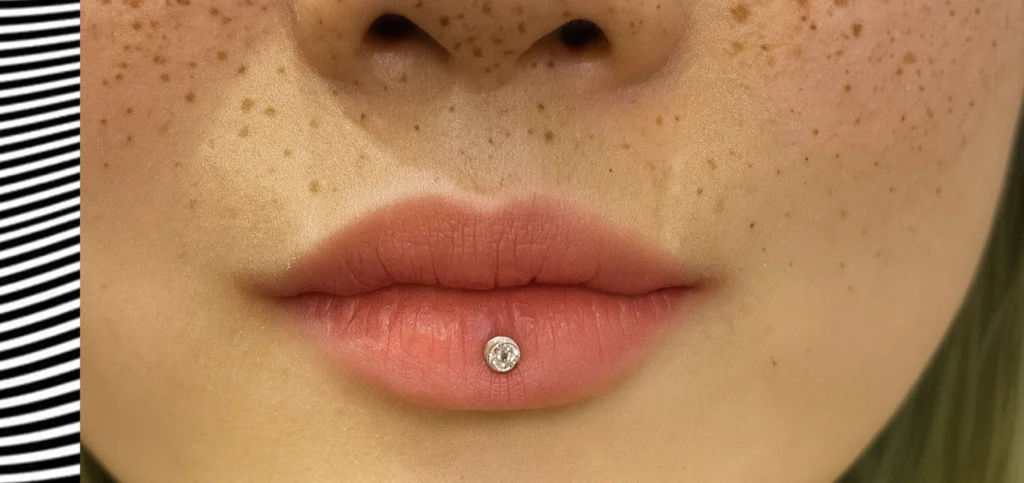
An Ashley piercing is a stylish lip piercing that has become popular among people who want something subtle but still noticeable. Unlike many traditional lip piercings, the Ashley piercing is designed so that most of the jewelry sits directly on the lower lip, creating a clean and minimal appearance from the front.
What makes this piercing interesting is its placement. A single piece of jewelry passes through the lower lip, with the decorative end visible on the outside and the flat backing positioned inside the mouth. Because of this placement, an Ashley piercing requires more attention than a standard ear piercing. The lip is constantly exposed to movement, food, drinks, saliva, and contact with the teeth and gums.
If you are thinking about getting an Ashley piercing, understanding the process before making an appointment is important. This guide covers everything from placement and pain to jewelry choices, healing time, aftercare, possible complications, and everyday considerations.
What Is an Ashley Piercing?
An Ashley piercing is a type of single-point lower-lip piercing. It usually consists of one hole that passes through the lower lip, with a small decorative bead or gemstone visible on the outside. Inside the mouth, the jewelry normally has a flat back designed to reduce unnecessary contact with the teeth and gums.
The piercing is often associated with a clean and understated aesthetic. From the front, it can look like a small stud placed in the center of the lower lip. This makes it different from paired lip piercings, where jewelry is visible on both sides of the mouth.
One important thing to understand is that an Ashley piercing is not simply a regular piercing performed in a different location. The piercer has to consider the thickness and anatomy of the lip, the position of the teeth, the gums, and how the jewelry will sit when the mouth moves.
Why Is It Called an Ashley Piercing?
The exact origin of the name “Ashley piercing” is not completely clear. Like several modern piercing names, the term has become popular through piercing communities, social media, and professional studios rather than being tied to one universally documented historical origin.
The name is now widely used to describe this specific lower-lip piercing style. When searching for a professional piercer, you may also find the placement described in slightly different ways depending on the studio or piercer.
Because terminology can vary, showing your piercer a reference photo can be helpful. A professional can then confirm whether the piercing you want matches the placement you have in mind.
Where Is an Ashley Piercing Placed?
An Ashley piercing is generally positioned through the center portion of the lower lip. From the outside, the jewelry appears on the front surface of the lip, while the backing sits inside the mouth.
Exact placement can vary because everyone’s lip anatomy is different. A professional piercer should evaluate the natural shape and thickness of your lip before marking the piercing location.
The placement should also take the inside of the mouth into consideration. A skilled piercer will look at where the flat backing will rest and how it interacts with the teeth and gums. This is particularly important because poorly positioned oral jewelry can cause irritation or dental problems over time.
How Does an Ashley Piercing Work?
During the procedure, a professional piercer first examines your lip and discusses the desired placement. The area is then cleaned and marked. You should have an opportunity to check the proposed position before the actual piercing takes place.
A sterile, single-use piercing needle is used to create the channel through the lip. The jewelry is then inserted according to the piercer’s technique. The entire procedure itself is usually quite quick, although preparation and positioning can take additional time.
A reputable studio should use appropriate sterilization procedures and professional-grade equipment. The piercer should also explain the jewelry material, aftercare instructions, and what you should expect during the healing process.
Does an Ashley Piercing Hurt?
Pain is one of the most common concerns before getting an Ashley piercing. The short answer is that discomfort varies from person to person. The actual piercing generally happens very quickly, so the intense part of the experience is usually brief.
You may feel pressure, a sharp pinch, or a moment of burning or throbbing. The lip is sensitive, so some people find the sensation stronger than an ear piercing. Others describe it as manageable and over before they have much time to think about it.
Your personal pain tolerance, anxiety level, anatomy, and the experience of your piercer can all influence how the procedure feels. Being nervous can also make sensations seem more intense, so choosing a professional you trust can make the experience easier.
How Much Does an Ashley Piercing Cost?
The price of an Ashley piercing depends heavily on your location, the studio, the piercer’s experience, and the jewelry you choose. A basic piercing with high-quality jewelry may cost less than a premium setup using more expensive materials or gemstones.
It is usually better to focus on the reputation and hygiene standards of the studio rather than choosing the cheapest available option. A bargain piercing is not necessarily a good deal if it results in complications or requires corrective treatment later.
Before booking, ask what the quoted price includes. Some studios include basic jewelry and aftercare guidance, while others charge separately for jewelry upgrades or follow-up services.
What Jewelry Is Used for an Ashley Piercing?
A flat-back labret-style stud is commonly associated with Ashley piercings. The flat backing is useful because it can provide a relatively low-profile surface inside the mouth.
Jewelry material matters. Implant-grade titanium is a popular choice because it is lightweight, durable, and generally well tolerated. Other materials may also be appropriate depending on their quality and your individual circumstances.
The visible front can be very simple or decorative. Some people choose a tiny metal bead, while others prefer a gemstone or another small design. The jewelry should not be selected purely for appearance; its size, shape, and material need to be suitable for the placement and healing stage.
What Size Jewelry Is Best for an Ashley Piercing?
There is no universal jewelry size that works for everyone. The correct length and thickness depend on your lip anatomy, swelling, and the piercer’s assessment.
Fresh piercings generally need enough room to accommodate initial swelling. Jewelry that is too tight can put pressure on the tissue and create unnecessary irritation. On the other hand, jewelry that is excessively long may move around and catch on objects.
Once swelling has gone down and the piercing has stabilized, a professional piercer may recommend downsizing the jewelry. This can make the jewelry more comfortable and reduce movement.
How Long Does an Ashley Piercing Take to Heal?
Lip piercings can heal relatively quickly compared with some other body piercings, but healing times vary. An Ashley piercing may take several weeks to several months to fully settle.
It is important not to assume that a piercing is completely healed simply because it looks fine from the outside. The internal tissue can still be healing even when there is little visible irritation.
During the healing period, avoid changing the jewelry unnecessarily. Your piercer can tell you when it is appropriate to have the jewelry assessed and, if necessary, downsized.
Ashley Piercing Aftercare
Good aftercare is one of the most important parts of having a successful Ashley piercing. Your piercer should provide specific instructions based on the jewelry and placement, and those instructions should take priority.
Keep your hands clean before touching the piercing. Avoid unnecessary touching, twisting, spinning, or removing the jewelry. The less mechanical irritation the area receives, the easier it generally is for the tissue to recover.
Because the piercing passes through the lip and has an oral component, maintaining good oral hygiene is especially important. Gentle brushing and appropriate mouth care can help keep the environment clean without aggressively disturbing the piercing.
Cleaning an Ashley Piercing
The external portion of the piercing can generally be cleaned gently according to your professional piercer’s instructions. A sterile saline solution is commonly used for body-piercing aftercare.
Avoid harsh substances such as rubbing alcohol or hydrogen peroxide unless a qualified healthcare professional specifically tells you to use them. These products can irritate healing tissue and may slow recovery.
Inside the mouth, follow the oral-care instructions provided by your piercer. Avoid excessively aggressive rinsing or cleaning because irritation can be just as problematic as inadequate care.
What Should You Avoid During Healing?
One of the easiest ways to irritate a new Ashley piercing is to repeatedly touch it. Even clean hands can introduce unnecessary movement, and dirty hands can introduce bacteria.
You should also be cautious with activities that put pressure on the piercing. Biting the jewelry, playing with it using your teeth, or repeatedly moving it with your tongue can irritate the healing channel.
Food and drinks may also require some attention during the early healing period. Very spicy, extremely hot, or irritating foods can make the area uncomfortable, particularly during the first few days.
Can You Eat Normally With an Ashley Piercing?
You can generally continue eating, but eating may feel different during the initial healing period. Swelling and tenderness can make certain foods uncomfortable.
Soft foods can be easier immediately after getting the piercing. Taking smaller bites and eating slowly may also reduce the chance of accidentally biting the jewelry or putting pressure on the lip.
As healing progresses, most people return to their normal diet. However, it remains important to avoid habits such as chewing on the jewelry because repeated contact can damage teeth, gums, or the jewelry itself.
Ashley Piercing Swelling
Some swelling is normal after a fresh lip piercing. The body naturally responds to the needle and jewelry by producing inflammation around the affected tissue.
Initial swelling may make the jewelry appear tighter than expected. This is one reason professional piercers select appropriate initial jewelry that allows room for swelling.
If swelling becomes severe, rapidly worsens, causes significant pressure, or is accompanied by other concerning symptoms, you should seek professional medical advice. Jewelry that appears to be sinking into the tissue should also be assessed promptly.
Ashley Piercing and Infection
Any piercing that breaks the skin has some risk of infection. With an Ashley piercing, the oral location adds another consideration because the area naturally contains many microorganisms.
Signs that may indicate a problem include increasing redness, worsening pain, significant warmth, unusual swelling, or thick and abnormal discharge. Feeling increasingly unwell can also be a reason to seek medical attention.
It is important not to automatically assume that every little amount of swelling or discharge means infection. Normal healing can involve tenderness and small amounts of clear or pale fluid that dry into crust. If you are unsure, have the piercing assessed by a qualified professional or healthcare provider.
Can an Ashley Piercing Damage Your Teeth?
This is one of the biggest considerations with oral-area piercings. Jewelry that repeatedly rubs against teeth can potentially contribute to enamel wear, chips, or other dental problems.
The gums can also be affected if jewelry constantly presses or rubs against them. This is why proper placement, appropriate jewelry, and avoiding unnecessary movement are important.
If you notice persistent contact between the jewelry and your teeth or gums, speak with a professional piercer and consider discussing the situation with a dentist. Dental health should be part of the decision when choosing an oral piercing.
Ashley Piercing Scarring
Any piercing can potentially leave a small mark after the jewelry is removed. How noticeable the mark becomes depends on factors such as individual healing, jewelry, irritation, and the length of time the piercing was worn.
Some people are left with only a tiny dot, while others may develop more noticeable scar tissue. Repeated irritation can increase the likelihood of a visible mark.
If you have a history of developing raised scars or unusual scar tissue, discuss this with an appropriate healthcare professional before getting pierced.
Can You Change Ashley Piercing Jewelry?
Changing jewelry too early can interfere with healing. Even if the outside appears healed, the internal piercing channel may still be fragile.
The safest approach is to wait until the piercing has healed sufficiently and have a professional evaluate it before making a jewelry change. This is particularly useful for an Ashley piercing because the jewelry has an oral component.
Once the piercing is fully established, you can explore different styles, but always choose jewelry that is properly sized and made from a suitable material.
What Does an Ashley Piercing Look Like After Healing?
A healed Ashley piercing typically has a small decorative piece visible on the lower lip. The minimalist appearance is one of the reasons people choose this style.
The jewelry can dramatically change the overall look. A tiny plain bead creates a subtle appearance, while a gemstone can make the piercing more noticeable.
Because the piercing sits in a central facial position, even a small piece of jewelry can become an important part of someone’s appearance. Choosing a design that matches your personal style can make the piercing feel more intentional.
Ashley Piercing vs. Other Lip Piercings
Ashley piercings are different from traditional side-positioned lip piercings. Their central placement gives them a distinctive appearance.
A labret piercing, for example, can refer to a piercing placed through the lower lip area with the jewelry positioned differently. Snake bites typically involve two piercings placed on opposite sides of the lower lip.
The right choice depends on the look you want and your anatomy. A professional piercer can explain which placements are suitable and which may create unnecessary risks for your teeth, gums, or lip tissue.
Is an Ashley Piercing Suitable for Everyone?
Not necessarily. Anatomy plays an important role in determining whether a particular piercing can be performed safely and comfortably.
A professional piercer should assess the thickness and structure of your lip as well as the position of your teeth and gums. Someone else having a successful Ashley piercing does not automatically mean the same placement is suitable for you.
If a reputable piercer tells you that your anatomy is not appropriate for the piercing, it is worth taking that advice seriously. A good piercer should prioritize your safety rather than simply performing every requested procedure.
How to Choose a Professional Piercer
Choosing the right piercer is arguably more important than choosing the jewelry. Look for a reputable professional who has experience with oral and lip piercings.
The studio should have strong hygiene practices, appropriate sterilization equipment, and a clear approach to aftercare. You should feel comfortable asking questions before the procedure.
Do not hesitate to ask about the jewelry material, sterilization process, expected healing time, and what to do if you experience a problem. A professional should be willing to explain the process rather than rushing you into a decision.
Common Mistakes People Make With Ashley Piercings
One common mistake is touching the piercing unnecessarily. People often check swelling, move the jewelry, or rotate it out of curiosity. Unfortunately, repeated movement can create irritation.
Another mistake is changing jewelry too soon. A piercing may look attractive and stable from the outside while the internal channel is still healing.
Ignoring dental contact is another problem. If the jewelry repeatedly hits your teeth or rubs against your gums, it should not simply be accepted as normal. Getting the situation assessed can help prevent longer-term complications.
Ashley Piercing Pros and Cons
One major advantage of an Ashley piercing is its distinctive appearance. It can provide a strong facial accent without requiring multiple pieces of jewelry.
Another advantage is its versatility. A small gemstone can create an elegant appearance, while a simple metal stud can produce a more understated look.
Thhttps://docs.google.com/document/d/1gWHjmEmSeljuxHoDw6F_K_1rdpkKJDZPbPubgGjKxFk/edit?tab=t.0#heading=h.8c7o89c2oqyoe main disadvantages involve the healing process and oral-health considerations. Because the jewelry sits through the lip, there can be interaction with the teeth and gums. It also requires consistent care during healing.
Can You Sleep Normally With an Ashley Piercing?
Sleeping with a fresh piercing can be slightly uncomfortable. Pressure against the pillow may irritate the lip or cause the jewelry to move.
Try to avoid sleeping directly on the piercing during the early healing period. Keeping your bedding clean can also be helpful because your face comes into contact with your pillow for several hours each night.
Once the piercing has healed and the jewelry is properly fitted, sleeping usually becomes much easier. Still, avoiding excessive pressure is a good habit.
Can You Kiss With an Ashley Piercing?
Kissing can involve significant movement and contact around the mouth, so it is generally better to avoid activities that could irritate a fresh piercing while it is healing.
The exact restrictions and timing should be discussed with your professional piercer. The goal is to minimize irritation and reduce exposure to bacteria while the tissue is recovering.
Once the piercing is fully healed, normal activities can usually resume, but it is still possible to catch or pull the jewelry accidentally during close contact.
What Happens If You Remove an Ashley Piercing?
If you decide you no longer want the piercing, removing the jewelry allows the body to begin closing the piercing channel. However, the opening may not disappear completely.
Some people are left with a tiny mark, while others may have a more noticeable scar. Healing after removal varies from person to person.
If the piercing is causing a problem, do not automatically remove it without professional advice. In certain situations, removing jewelry while an infection is present can complicate the situation. A healthcare professional or experienced piercer can guide you based on the circumstances.
Frequently Asked Questions About Ashley Piercing
Is an Ashley piercing painful?
Most people experience a quick pinch or sharp sensation during the piercing. The level of discomfort varies depending on individual sensitivity, anatomy, and personal pain tolerance.
How long does an Ashley piercing take to heal?
Healing varies between individuals. Although the outside may appear comfortable relatively quickly, complete healing can take considerably longer. Follow your piercer’s aftercare instructions and avoid changing jewelry prematurely.
Can I use any jewelry in an Ashley piercing?
No. Jewelry should be appropriately sized and made from a suitable material. Implant-grade titanium is a commonly preferred option, but a professional should recommend jewelry based on your anatomy and healing stage.
Can an Ashley piercing damage teeth?
It can potentially contribute to dental or gum problems if the jewelry repeatedly contacts or rubs against them. Proper placement, appropriate jewelry, and avoiding jewelry play are important for reducing this risk.
Can I change my Ashley piercing myself?
It is better to have a professional evaluate the piercing before changing jewelry, especially if it has not completely healed. Changing it too early can cause irritation or damage the developing piercing channel.
What should I do if my Ashley piercing looks infected?
If you have worsening pain, significant swelling, unusual discharge, increasing warmth or redness, or feel generally unwell, seek medical advice. Do not rely solely on online information to diagnose an infection.
Final Thoughts on Ashley Piercing
An Ashley piercing can be a stylish and distinctive form of facial jewelry, especially for people who prefer a small but noticeable look. Its central lower-lip placement gives it a unique appearance compared with many traditional lip-piercing styles. At the same time, this piercing deserves careful consideration because the jewelry sits partly inside the mouth. Proper placement, quality jewelry, good hygiene, and responsible aftercare all play important roles in the healing process.
YOU MAY HAVE MASSED