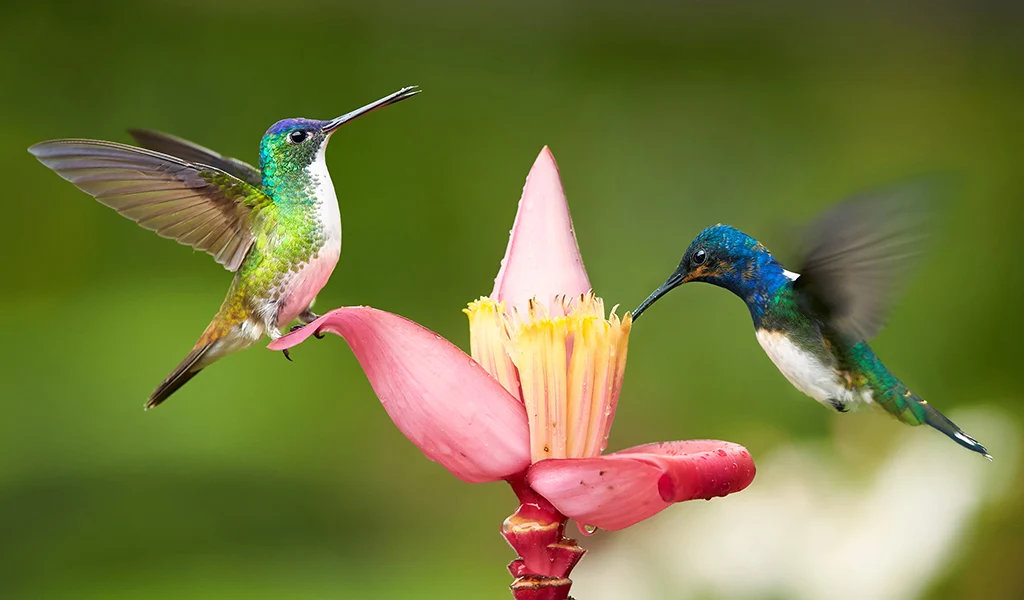
Hummingbirds are among the most fascinating birds in the natural world. Known for their incredibly small bodies, colorful feathers, and remarkable flying abilities, these birds have captured the attention of nature lovers, photographers, gardeners, and scientists for generations. Although they may look delicate, hummingbirds possess impressive physical abilities that allow them to survive in different environments and perform movements that most other birds cannot manage.
One of the most recognizable characteristics of a hummingbird is its ability to hover in the air while drinking nectar from flowers. Unlike many birds that must land before feeding, a hummingbird can remain almost perfectly stationary in front of a flower by rapidly moving its wings. Some species can also fly backward, change direction quickly, and accelerate away from potential threats in a fraction of a second. These abilities make hummingbirds especially interesting to researchers studying flight, balance, and energy use.
Hummingbirds are also important members of their ecosystems. As they move between flowers searching for nectar, they transfer pollen from one plant to another, helping many flowering plants reproduce. Their small size does not reduce their ecological importance. In fact, their feeding habits, migration patterns, and relationships with flowering plants make them essential parts of many natural environments.
This complete guide explores hummingbird characteristics, habitats, feeding habits, species, migration, reproduction, and conservation. It also explains how people can attract hummingbirds to their gardens and help protect these remarkable birds.
What Is a Hummingbird?
A hummingbird is a small bird belonging to the family Trochilidae. Hummingbirds are native to the Americas, with the greatest diversity of species found in Central America and South America. They occur in a wide range of environments, including tropical rainforests, mountain regions, open woodlands, deserts, and residential gardens.
The hummingbird family contains more than 350 recognized species, although the exact number can vary slightly as scientific classifications change. These species differ in size, coloration, behavior, and habitat preferences. Some have long, curved bills adapted to particular flowers, while others have shorter bills that allow them to feed from a wider variety of blossoms.
Despite their differences, hummingbirds share several defining characteristics. They have lightweight bodies, long and narrow bills, specialized tongues, and wings capable of rapid movement. Their metabolism is exceptionally fast, meaning they need frequent access to energy-rich food. This combination of physical adaptations allows them to survive despite their tiny size and demanding lifestyles.
Hummingbirds are often associated with beauty and speed, but their biology is equally impressive. Their bodies are carefully adapted to the challenges of finding food, avoiding predators, competing for territory, and maintaining enough energy to remain active throughout the day.
Physical Characteristics of Hummingbirds
Hummingbirds are generally small birds with compact bodies, relatively long bills, and narrow wings. Their size varies considerably between species. The bee hummingbird, native to Cuba, is the smallest known living bird species, while some larger hummingbirds are several times heavier and have noticeably longer bodies and tails.
Their lightweight skeletons and specialized muscles help hummingbirds move quickly through the air. Their wings connect to strong flight muscles that provide the power required for hovering and rapid acceleration. Unlike many other birds, hummingbirds can rotate their wings through a broad range of motion, producing lift during both the forward and backward portions of each wingbeat.
Their bills are another important physical feature. Bill length and shape differ among species, often reflecting the kinds of flowers they visit. A long, curved bill may be particularly useful for reaching nectar inside tubular flowers, while a shorter bill can be effective when feeding from open blossoms.
Hummingbirds also have excellent visual abilities. They can detect movement quickly and recognize colors that help them locate flowers. Research suggests that hummingbirds can distinguish certain colors beyond the range of ordinary human color vision, including colors produced by combinations of ultraviolet and visible light. These visual skills help them navigate a world filled with flowers, competitors, and potential dangers.
Why Are Hummingbirds So Colorful?
The bright appearance of many hummingbirds is one of the main reasons people find them so attractive. Their feathers may display brilliant greens, blues, reds, purples, oranges, or iridescent combinations that seem to change as the bird moves. Some species have glowing throat patches called gorgets, which can become especially vivid under direct sunlight.
Much of this brilliance comes from the microscopic structure of their feathers. Rather than relying entirely on colored pigments, many hummingbird feathers contain specialized structures that reflect and scatter light. This phenomenon is called structural coloration. Depending on the angle of the light and the position of the bird, the same patch of feathers may appear bright red, dark brown, or nearly black.
Coloration often plays a role in communication and courtship. Males of many species use bright feathers, aerial displays, or distinctive movements to attract females and discourage rivals. A flash of color may communicate information to another hummingbird without requiring physical contact.
However, not every hummingbird is brightly colored. Females and juveniles often have more subdued feathers, which can help them blend into vegetation. Some species also appear relatively plain until sunlight reaches their feathers at the right angle. This variation demonstrates that hummingbird coloration serves practical biological functions rather than simply making the birds attractive to human observers.
How Hummingbirds Fly
Hummingbird flight is extraordinary because these birds can hover, move backward, turn sharply, and accelerate rapidly. Their flight mechanics differ from those of many other birds, which generate most of their lift during the downward movement of their wings.
When a hummingbird hovers, its wings move through a rapid figure-eight-like pattern. This motion allows the bird to generate lift during both the forward and backward strokes. The bird adjusts its wing angle, speed, and body position to remain stable while feeding from a flower.
Wingbeat frequency varies among species and flight conditions. In many hummingbirds, the wings beat dozens of times per second, creating the familiar humming or buzzing sound that gives the birds their name. The exact frequency depends on the species, activity, and physical demands of the movement.
Their ability to fly backward is particularly useful when leaving a flower. Instead of turning around immediately, a hummingbird can reverse its movement and move away from the blossom. This ability also helps it reposition itself quickly when competing with another bird or avoiding an obstacle.
Hovering is energetically expensive, which explains why hummingbirds need so much food relative to their size. Their specialized muscles, efficient wing movements, and high-energy metabolism work together to support this demanding style of flight.
What Do Hummingbirds Eat?
Nectar is one of the most important foods in a hummingbird’s diet. It provides simple sugars that supply the energy needed for hovering, rapid flight, and other daily activities. Hummingbirds visit many types of flowers, selecting those that offer accessible nectar and suit their bill shapes.
However, nectar alone does not provide every nutrient a hummingbird needs. These birds also eat small insects and spiders, which supply protein, fats, vitamins, and minerals. Tiny insects may be caught in midair, collected from leaves, or gathered from spiderwebs.
A hummingbird’s diet changes with the season and the availability of food. During breeding periods, adults need additional nutrients to support reproduction and the growth of their young. Before migration, some species increase their energy intake to build the fat reserves required for long-distance travel.
Hummingbirds are frequent feeders because their energy demands are unusually high. They may visit numerous flowers throughout the day, returning repeatedly to productive feeding locations. Their feeding behavior also depends on competition, temperature, and the distance between flowers.
A healthy natural environment provides hummingbirds with a varied diet. Gardens containing flowering plants and areas rich in small insects can offer valuable feeding opportunities, particularly when suitable natural habitats are becoming less common.
How Hummingbirds Drink Nectar
Hummingbirds have long, narrow bills that help them reach nectar inside flowers. Although people sometimes imagine that they use their bills like straws, the process is more specialized. Their tongues contain tiny structures that help collect and transport liquid into the mouth.
When a hummingbird extends its tongue into a flower, the tongue’s shape and flexible structure allow it to interact with nectar efficiently. The tongue can rapidly extend and retract, allowing the bird to collect small amounts of liquid during each feeding movement.
Flower shape influences how a hummingbird feeds. Long tubular flowers may be particularly suitable for birds with long bills, while flatter blossoms can attract a wider range of pollinators. Some hummingbirds also feed from artificial nectar feeders, provided the feeding stations are maintained properly.
A hummingbird may remember productive feeding locations and return to them regularly. However, the bird’s choices are not fixed. It can explore new flowers, adjust to changes in nectar availability, and defend particularly valuable food sources against competitors.
Watching a hummingbird feed reveals how its anatomy, behavior, and environment work together. Its bill, tongue, visual abilities, and hovering flight all contribute to a feeding method that is both highly specialized and remarkably effective.
Hummingbird Habitats and Distribution
Hummingbirds are found throughout much of the Americas, from Alaska and Canada to southern South America. Different species occupy different geographical regions, and many have specialized habitat preferences. Their distribution is closely connected to temperature, elevation, vegetation, and the availability of flowering plants.
Tropical rainforests support an especially rich variety of hummingbird species. These environments contain abundant flowering plants, layered vegetation, and diverse food sources. Some hummingbirds occupy forest edges and clearings, while others are closely associated with particular elevations or types of vegetation.
Mountain habitats also support many specialized species. In the Andes, for example, hummingbirds may live in cool high-altitude environments where temperatures change considerably between day and night. Species that occupy these regions often have adaptations that help them manage cold conditions and limited food availability.
Some hummingbirds live in deserts and dry shrublands, where flowering plants may be available only during certain seasons. Others thrive in parks, suburban gardens, and urban green spaces. These birds can benefit from planted flowers and feeders, although urban development may also expose them to dangers such as window collisions, pesticides, and habitat fragmentation.
The ability of hummingbirds to occupy different environments demonstrates their adaptability. Nevertheless, individual species may depend on very specific habitats, making the protection of local ecosystems important for their long-term survival.
Popular Types of Hummingbirds
There are hundreds of hummingbird species, and each has distinctive physical features and behaviors. Some are famous for their migration journeys, while others stand out because of their unusual colors, tiny bodies, or specialized relationships with flowering plants.
Ruby-Throated Hummingbird
The ruby-throated hummingbird is one of the best-known species in eastern North America. Adult males have a bright red throat that can appear dark when viewed from certain angles. Females generally have a pale throat and less vivid coloration, making the two sexes relatively easy to distinguish when viewed closely.
These hummingbirds breed across much of eastern North America and migrate to Mexico and Central America for the winter. During migration, some individuals cross the Gulf of Mexico in a nonstop flight lasting many hours. Their ability to store energy before departure is essential to completing this demanding journey.
Ruby-throated hummingbirds frequently visit gardens, woodland edges, and flowering landscapes. They are attracted to nectar-rich flowers and well-maintained feeders, making them familiar visitors in many residential areas.
Anna’s Hummingbird
Anna’s hummingbird is widely associated with the western coast of North America. It is particularly notable because some populations remain in their territories throughout the year instead of migrating long distances. Its adaptability has helped it become familiar in gardens and urban landscapes.
Adult males display a striking pinkish-red head and throat. In bright sunlight, these feathers can appear almost brilliant pink, while the same areas may look much darker in shade. Females generally have more muted coloring and may show a small red patch on the throat.
Anna’s hummingbirds feed on nectar and small insects. They are often seen around flowering shrubs, ornamental plants, and backyard feeders. Their ability to use a variety of food sources helps them survive in environments that experience seasonal changes.
Rufous Hummingbird
The rufous hummingbird is recognized for its warm orange and reddish-brown feathers. It breeds mainly in western North America and travels to wintering areas in Mexico. Its migration route is remarkable because many individuals cover substantial distances relative to their body size.
Males often display bright orange coloration, while females typically have a mixture of green and rusty feathers. Like many hummingbirds, they can be territorial and may aggressively defend a valuable feeding location.
Rufous hummingbirds are especially interesting to scientists studying migration and navigation. Their seasonal movements connect different ecosystems, and their dependence on flowering plants makes the timing of migration important to their survival.
Bee Hummingbird
The bee hummingbird is native to Cuba and is famous for its exceptionally small size. It is generally recognized as the smallest living bird species. Because it weighs so little, it can appear almost insect-like when flying among flowers.
Despite its tiny body, the bee hummingbird shares many of the family’s characteristic abilities. It can hover, feed on nectar, and catch small insects. Males display colorful feathers during courtship, while females generally have less vivid plumage.
Its small size also means that it must manage its energy carefully. Access to suitable flowers and insect prey is important for maintaining its demanding metabolism. Protecting natural vegetation in Cuba is therefore important for preserving this remarkable species.
Allen’s Hummingbird
Allen’s hummingbird is a small species found mainly along parts of the western coast of North America. Males often display orange feathers and a colorful throat, while females tend to have green upperparts and lighter underparts.
Many Allen’s hummingbirds are associated with coastal scrub, woodland edges, and gardens. Their feeding habits include nectar collection and insect hunting, and they can defend productive feeding areas against other hummingbirds.
Seasonal movements differ between populations. Some travel considerable distances, while others follow shorter migration routes. This variation makes the species useful for understanding how geography and climate influence hummingbird movement.
Hummingbird Migration and Long-Distance Travel
Migration is one of the most impressive aspects of hummingbird biology. Several species travel between breeding and wintering grounds as seasons change. These journeys allow them to take advantage of different food resources and environmental conditions throughout the year.
Before migration, hummingbirds may increase their body weight by storing fat. Fat provides a concentrated source of energy that can sustain flight when flowers are unavailable or feeding opportunities are limited. Because their bodies are so small, the management of these reserves is especially important.
Migration routes differ by species. Ruby-throated hummingbirds move between eastern North America and wintering areas farther south, while rufous hummingbirds travel between western breeding areas and Mexico. Some species migrate along coastlines or mountain corridors, where feeding opportunities may help support their journeys.
Weather can influence migration timing and success. Strong winds, storms, cold temperatures, and changes in flowering schedules can affect when hummingbirds depart and where they find food. Climate change may also alter the availability of flowers along traditional migration routes.
Gardeners can help migrating hummingbirds by maintaining nectar-producing plants and clean feeders during appropriate seasons. However, feeders should supplement natural food sources rather than replace the diverse habitats these birds need.
Hummingbird Behavior and Territoriality
Hummingbirds are small but can be surprisingly aggressive when defending food. A bird may repeatedly chase away competitors from a flowering shrub or feeder that provides a dependable supply of nectar. This behavior reduces competition at valuable feeding locations.
Territoriality is closely connected to energy needs. When a hummingbird finds a productive feeding area, defending it may help the bird maintain reliable access to food. Chasing other birds requires energy, but the behavior can be worthwhile when the defended resource is sufficiently valuable.
Not all hummingbirds defend territories in the same way. Some species establish feeding areas and aggressively protect them, while others use different strategies depending on food availability. When nectar is abundant and spread across many flowers, competition may become less intense.
Hummingbirds also use a variety of visual and vocal signals. They may produce chirps, trills, and other sounds while communicating with rivals or potential mates. Certain species perform dramatic aerial displays, using speed and precise movement to attract attention or establish dominance.
Their behavior can look entertaining to human observers, but it serves important biological purposes. Feeding, courtship, territorial defense, and predator avoidance all influence how hummingbirds interact with their surroundings.
Hummingbird Reproduction and Nesting
Hummingbird reproduction involves elaborate courtship displays and careful nest construction. Depending on the species, males may perform aerial dives, rapid flights, or colorful displays to attract females. Some displays include distinctive sounds created by the wings or tail feathers.
After mating, the female generally takes primary responsibility for building the nest and raising the young. The nest is often constructed from soft plant fibers, moss, and other lightweight materials. Spider silk may be used to bind the structure together and help it expand as the chicks grow.
Hummingbird nests are usually extremely small and carefully camouflaged. They may be placed on thin branches, shrubs, or other protected locations. The exact placement depends on the species and habitat, but a suitable site helps protect the eggs and young from weather and predators.
The female typically lays two eggs, although details vary among species. She incubates the eggs and feeds the hatchlings after they emerge. Young hummingbirds grow quickly, but they remain dependent on the female until they develop enough strength and coordination to leave the nest and feed more independently.
Successful reproduction requires access to food, safe nesting sites, and suitable weather conditions. Habitat loss and disturbances near nests can reduce breeding success, which is one reason why protecting natural vegetation matters.
How Hummingbirds Sleep and Survive Cold Weather
Hummingbirds have unusually high energy requirements during active periods, but they cannot maintain the same level of activity continuously. To conserve energy, many species enter a deep, energy-saving state called torpor, especially during cold nights or when food is limited.
During torpor, a hummingbird’s body temperature, heart rate, breathing rate, and metabolic activity can decrease substantially. This allows the bird to reduce energy consumption while it is inactive. Torpor is different from ordinary sleep because the changes in body function can be much more pronounced.
As morning approaches, a hummingbird must gradually return to its active state. The process takes energy, and the bird often begins feeding as soon as conditions permit. A warm day with plenty of nectar can help it replenish the energy used during the night.
Cold weather presents challenges because hummingbirds are so small and lose body heat quickly. Their ability to conserve energy helps them survive temperature changes, but prolonged cold conditions combined with a shortage of food can still be dangerous.
People should not assume that a hummingbird is dead simply because it appears motionless while hanging from a branch. It may be experiencing torpor. At the same time, an injured or unresponsive bird may need professional wildlife assistance, so unnecessary handling should be avoided.
The Role of Hummingbirds in Pollination
Hummingbirds contribute to pollination by transferring pollen between flowers as they feed. When a bird inserts its bill and head into a blossom, pollen may attach to its feathers. As the bird visits another flower of the same plant species, some of that pollen may be deposited on the flower’s reproductive structures.
This process helps many flowering plants reproduce. Hummingbirds are especially important pollinators in parts of the Americas where certain plants have evolved flowers that are well suited to their feeding habits.
Some hummingbird-pollinated flowers are tubular, brightly colored, and rich in nectar. These features can attract birds while making nectar accessible to their bills. The relationship between birds and plants is not always exclusive, however. Other pollinators may visit the same flowers, and hummingbirds can feed from a wide variety of blossoms.
The benefits work in both directions. Plants provide nectar that supplies energy, while hummingbirds help transfer pollen. Over time, these interactions influence the distribution and reproduction of plant species across natural landscapes.
Supporting hummingbirds can therefore benefit more than birds alone. A garden with a diverse selection of flowering plants can help pollinators and other wildlife, creating a healthier local ecosystem.
How to Attract Hummingbirds to Your Garden
Attracting hummingbirds begins with creating a suitable environment. Nectar-rich flowers are among the best ways to encourage regular visits because they provide natural food while supporting other pollinators. Native flowering plants are particularly valuable when they are appropriate for the local climate and soil conditions.
Choose plants with different flowering periods so that nectar remains available across multiple seasons. In North American gardens, examples may include native salvias, bee balm, trumpet honeysuckle, cardinal flower, and columbine, depending on the region. Local gardening experts can help identify native species that suit the area.
A clean hummingbird feeder can provide an additional food source. Use a simple mixture of four parts water to one part plain white granulated sugar. Boil the water if desired to help dissolve the sugar, then allow the mixture to cool before filling the feeder. Do not use honey, artificial sweeteners, or red food coloring, because these are unnecessary and may be harmful.
Feeder hygiene is essential. Clean feeders regularly, following the manufacturer’s instructions, and replace nectar frequently, especially in hot weather. Fermented or moldy nectar can harm hummingbirds, so any feeder that smells unusual or shows visible contamination should be cleaned immediately.
Provide safe perches and a pesticide-free environment whenever possible. Hummingbirds need places to rest between feeding visits, and insects are an important part of their diet. Avoid spraying chemicals on plants where birds feed, and keep feeders away from hazards that could injure them.
Common Mistakes When Feeding Hummingbirds
One of the most common mistakes is adding red dye to homemade nectar. Red coloring is not needed to attract hummingbirds, and unnecessary additives may introduce risks. Many feeders already contain red parts, while flowering plants naturally provide the visual signals that attract birds.
Another mistake is leaving nectar in a feeder for too long. Sugar water can ferment or support the growth of microorganisms, particularly in warm conditions. Dirty feeders may spread contamination, so regular cleaning and frequent nectar replacement are essential.
Using honey instead of ordinary white sugar is also a poor choice. Honey can encourage the growth of microorganisms and may create dangerous conditions for hummingbirds. Artificial sweeteners are not suitable substitutes because they do not provide the sugar energy the birds require.
Some people place too many feeders close together and expect the birds to share peacefully. Territorial species may prevent others from feeding, especially when food is concentrated in one location. Placing feeders at several separate locations can sometimes make food more accessible to different birds.
Finally, feeders should not be treated as a complete replacement for natural habitat. Hummingbirds need flowers, insects, shelter, nesting areas, and safe places to rest. A garden that supports these broader needs is more helpful than one that offers sugar water alone.
Threats Facing Hummingbirds
Hummingbirds face several threats, although the level of risk varies by species and region. Habitat loss is among the most significant problems because development, agriculture, deforestation, and other land-use changes can reduce the availability of food and nesting sites.
Climate change may also affect hummingbirds by changing temperatures, rainfall, and the timing of flowering plants. If flowers bloom earlier or later than usual, migrating birds may arrive when food is less abundant. Species adapted to narrow elevation ranges can be particularly vulnerable to environmental changes.
Pesticides pose another concern. Chemicals used to control insects may reduce the availability of natural prey or expose birds to harmful substances. Because hummingbirds eat small insects as well as nectar, protecting insect populations is an important part of supporting their health.
Collisions with windows can injure or kill hummingbirds. Transparent glass and reflective surfaces may appear to birds as open space or vegetation. Applying visible window markings, screens, or other bird-safe treatments can help reduce this danger.
Outdoor cats and other predators can also threaten hummingbirds, especially when birds feed or nest close to the ground. Responsible pet care, habitat planning, and reducing environmental hazards can improve survival opportunities for local populations.
How to Help Protect Hummingbirds
Protecting hummingbirds starts with preserving the habitats they depend on. Supporting parks, native gardens, woodland conservation, and restoration projects can help maintain the flowers, insects, and nesting locations these birds require.
Homeowners can make a meaningful contribution by planting native flowers and avoiding unnecessary pesticide use. A diverse garden provides food at different times of the year and supports insects that hummingbirds need for protein. Even a small outdoor space can become useful when plants are selected carefully.
People who maintain feeders should follow safe feeding practices. Fresh nectar, clean equipment, and suitable placement reduce the risk of disease and accidents. Feeders should also be positioned where cats cannot easily reach feeding birds and where window-collision risks are minimized.
Conservation organizations and community science projects provide additional ways to help. Depending on the region, volunteers may record hummingbird sightings, monitor seasonal arrivals, or contribute observations about flowering plants. Such information can help researchers understand migration patterns and changes in local populations.
It is also important to recognize that not every hummingbird species faces the same level of risk. Some are relatively adaptable, while others have restricted ranges and more specialized habitat requirements. Protecting vulnerable species may require targeted conservation work based on scientific evidence.
Interesting Facts About Hummingbirds
Hummingbirds possess several abilities that make them exceptional among birds. Their capacity to hover is one of the most famous, but their backward flight, rapid acceleration, and precise control also deserve attention. These movements allow them to feed efficiently and navigate crowded vegetation.
Another fascinating fact is that hummingbirds have extremely fast metabolisms. Their bodies use energy rapidly during active periods, which is why they feed frequently. Their ability to enter torpor helps them conserve energy when conditions make constant activity difficult.
Hummingbirds also have remarkable memories. They can learn where reliable food sources are located and may remember when particular flowers are likely to replenish their nectar. This ability can help them make efficient feeding decisions and reduce unnecessary travel.
Their tongues are specialized for nectar collection, and their feathers can display brilliant colors through structural effects. These adaptations illustrate how evolution can produce highly specialized solutions to the challenges of survival.
Some hummingbirds undertake migrations that are impressive even when compared with much larger birds. Their journeys depend on careful energy management, suitable weather, and the availability of food along the route. Despite their small size, these birds demonstrate exceptional endurance and adaptability.
Hummingbirds and Their Relationship with Humans
Hummingbirds have long attracted human attention because they are colorful, quick, and relatively easy to observe in suitable environments. A single bird visiting flowers in a garden can become a favorite sight for people who enjoy wildlife, photography, or outdoor activities.
Many gardeners deliberately choose flowering plants to attract hummingbirds. This creates an opportunity to observe feeding behavior, territorial displays, and interactions with other pollinators. When gardens are designed with wildlife in mind, they can become small but valuable habitats within developed areas.
Hummingbirds also inspire scientific research. Their flight mechanics have attracted interest from engineers and researchers studying aerodynamics, while their migration and energy management provide useful subjects for ecological research. Learning how these birds move and survive can contribute to a broader understanding of animal biology.
However, human interest should not interfere with their natural behavior. Chasing birds for photographs, disturbing nests, or handling them unnecessarily can create stress and danger. The best observations are made patiently from a respectful distance.
By learning about hummingbirds and creating safer outdoor spaces, people can enjoy these birds while helping maintain the ecological relationships that support them.
Frequently Asked Questions About Hummingbirds
What Is the Main Food of a Hummingbird?
Nectar is a major energy source for hummingbirds because it contains sugars that fuel their demanding flight. However, these birds also eat insects and spiders, which supply protein and other nutrients. A balanced natural diet includes both plant-based nectar and small animal prey.
How Fast Do Hummingbirds Beat Their Wings?
Wingbeat frequency depends on the species and the activity being performed. Many hummingbirds beat their wings dozens of times per second, particularly while hovering. The rapid movement helps them generate the lift and control needed to remain in place while feeding.
Can Hummingbirds Fly Backward?
Yes. Hummingbirds are famous for their ability to fly backward, an unusual skill among birds. Their specialized shoulder joints and wing movements allow them to generate lift and control movement in several directions, making it easier to approach and leave flowers.
Do Hummingbirds Migrate?
Many hummingbird species migrate seasonally between breeding and wintering areas. The distances vary by species, and some populations remain in the same general region throughout the year. Migration helps birds take advantage of changing temperatures and food availability.
How Can I Attract Hummingbirds to My Yard?
Plant nectar-rich flowers that are suitable for your region, avoid pesticides, and provide a clean feeder when appropriate. Use a mixture of four parts water and one part plain white sugar, and keep the feeder clean. Providing natural flowers and insects is just as important as offering supplemental nectar.
Are Hummingbirds Helpful to Gardens?
Yes. Hummingbirds can pollinate flowers while collecting nectar, helping some plants reproduce. Their insect-eating habits also connect them to the broader garden food web. A hummingbird-friendly garden can support other wildlife and contribute to local biodiversity.
Where Do Hummingbirds Build Their Nests?
Hummingbird nesting sites vary by species, but many nests are placed on branches or in protected vegetation. Females often use plant fibers, moss, and spider silk to construct small, flexible nests. Their locations are usually selected to provide some protection from weather and predators.
How Long Do Hummingbirds Live?
Lifespan varies by species and individual circumstances. Many young hummingbirds do not survive their first year, but birds that reach adulthood can live for several years. Some banded individuals have been documented living much longer than the average lifespan, demonstrating that these tiny birds can be surprisingly resilient.
Conclusion
Hummingbirds are extraordinary birds whose small size hides an impressive collection of biological adaptations. Their colorful feathers, specialized wings, long bills, and rapidly moving tongues allow them to feed and move in ways that distinguish them from most other birds. Their ability to hover and fly backward makes them especially fascinating, while their demanding metabolism reveals how much energy is required to support these movements. Beyond their appearance and flight skills, hummingbirds play important roles in the natural world. They pollinate flowers, consume small insects, participate in food webs, and connect different ecosystems through seasonal migration. Their survival depends on suitable habitats, dependable food supplies, and safe places to nest and rest.
YOU MAY HAVE MASSED