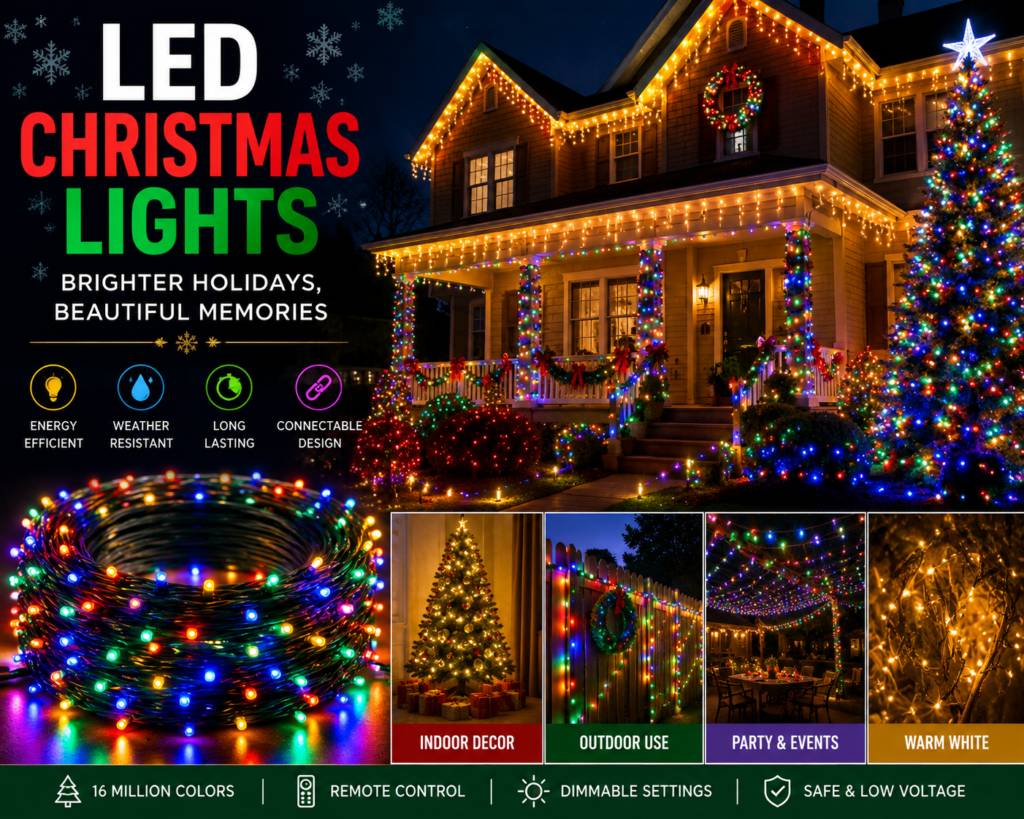
LED Christmas lights have completely changed the way people decorate their homes, gardens, balconies, offices, and outdoor spaces during the holiday season. They offer the familiar sparkle of traditional Christmas lighting while using modern technology that is generally more energy-efficient, durable, and versatile. Whether you want a simple string of lights around a window or a full outdoor display that turns your home into a winter wonderland, LED lights can make the job easier and more creative.
One of the biggest reasons people choose LED Christmas lights is their combination of appearance and practicality. Modern LED bulbs are available in warm white, cool white, red, green, blue, multicolor, and many other variations. Some sets have steady illumination, while others offer flashing, fading, chasing, twinkling, or programmable patterns. This gives homeowners plenty of freedom to create a decorating style that matches their personality and the atmosphere they want for the holidays.
LED Christmas lights are also suitable for much more than Christmas trees. You can use them to outline doors and windows, decorate staircases, highlight landscaping, brighten patios, or add a cozy glow to bedrooms and living areas. With the right type of lights and a little planning, even a small space can feel festive. The key is understanding the different options available and choosing lights that fit the location, purpose, and overall design.
What Are LED Christmas Lights?
LED stands for light-emitting diode, a technology that produces light by passing an electrical current through a semiconductor. Unlike older incandescent Christmas bulbs, LEDs do not rely on a traditional filament that becomes extremely hot. This difference is one reason LED Christmas lights have become so popular for seasonal and decorative lighting.
LED bulbs are typically designed to use less electricity than comparable incandescent bulbs. They can also remain relatively cool during operation, although the surrounding wiring, power adapters, and connectors still need to be handled responsibly. Their efficient design makes them especially appealing when someone plans to operate many strings of lights for several hours every evening throughout the holiday season.
Another useful feature is the wide variety of LED Christmas light designs. You can find tiny micro LEDs for subtle decorations, traditional-shaped bulbs for a classic appearance, larger decorative bulbs for outdoor displays, curtain lights for walls, net lights for bushes, and icicle lights for rooflines. This variety means that LED lighting can be used for both traditional Christmas decorating and more modern interior design.
Why LED Christmas Lights Are So Popular
Energy efficiency is one of the main advantages associated with LED Christmas lights. Because LEDs generally consume less electricity than traditional incandescent bulbs, a large display can be easier on your household energy budget. This becomes particularly useful when lights are left on for several hours each evening over multiple weeks.
Durability is another important benefit. Quality LED bulbs are designed to withstand regular seasonal use, and many products are less vulnerable to the types of filament failures associated with traditional bulbs. That does not mean LED lights are indestructible. Cords can still become damaged, connectors can fail, and outdoor products can deteriorate when exposed to weather for long periods. Proper storage and careful handling remain important.
LED Christmas lights also provide excellent design flexibility. A warm white set can create a traditional, cozy atmosphere, while multicolor lights can produce a cheerful and playful appearance. Cool white lighting can give a home a crisp winter look, and programmable sets can create animated effects. Because there are so many choices, LED lighting can work with almost any decorating theme.
Choosing the Right Color of LED Christmas Lights
Warm white LED Christmas lights are a popular choice for people who want a classic and comfortable holiday atmosphere. Their slightly golden appearance works particularly well with wooden decorations, greenery, ornaments, candles, and traditional Christmas colors. They can be used indoors or outdoors and often look especially attractive when placed around windows or wrapped around a Christmas tree.
Cool white lights create a cleaner and brighter appearance. They can complement silver decorations, icy-blue ornaments, glass decorations, and modern interiors. If your goal is to create a winter-inspired theme rather than a traditional cozy Christmas scene, cool white LEDs can be a strong option. They are also useful for highlighting architectural details without introducing multiple colors.
Multicolor LED Christmas lights are ideal for a more energetic and traditional festive display. Red, green, blue, yellow, and other colors can instantly make a space feel celebratory. They work particularly well on Christmas trees, children’s rooms, outdoor bushes, fences, and larger holiday displays. There is no universal rule about which color is best; the right choice depends on the mood and design you want to create.
LED Christmas Lights for Christmas Trees
Decorating a Christmas tree with LED lights is one of the easiest ways to make a room feel festive. Before installing the lights, decide whether you want the bulbs to be evenly distributed across the branches or concentrated toward the outer edges. Wrapping the lights around both the front and deeper parts of the tree generally creates a fuller appearance because the illumination comes from different depths.
Start near the power source and work gradually around the tree. Instead of placing the entire string only around the outside, weave sections slightly toward the center of the branches. This helps prevent dark areas and gives the tree more dimension. Take occasional steps back to inspect the overall balance rather than waiting until the end to discover that one side is much brighter than another.
The color of the LEDs should also complement the ornaments. Warm white lights pair beautifully with gold, red, natural wood, and traditional decorations. Multicolor lights can work with playful ornaments and family-oriented themes. If your tree has a minimalist design, a single-color LED set can create a clean and sophisticated appearance without overwhelming the decorations.
Outdoor LED Christmas Lighting
Outdoor LED Christmas lights can transform the exterior of a home into an attractive holiday display. They can be installed along rooflines, wrapped around trees, placed around railings, or used to highlight pathways and landscaping. Because outdoor environments expose electrical products to moisture, temperature changes, and physical wear, it is important to select lighting specifically rated for outdoor use.
Rooflines are one of the most popular locations for Christmas lights. A continuous line of lights along the edge of a roof can emphasize the architecture of a house and make the display visible from the street. For a more polished appearance, measure the area before buying lights and plan where the power connection will begin. This helps avoid running short or ending up with unnecessary excess cable.
Trees and shrubs offer another excellent opportunity. String lights can be wrapped around tree trunks and branches, while net lights can cover bushes quickly and evenly. Keep connections elevated from standing water and avoid damaging tree bark with overly tight installations. The goal should be attractive lighting without putting unnecessary stress on plants, cords, or electrical connections.
Indoor Decorating Ideas With LED Christmas Lights
LED Christmas lights are not limited to the living room tree. You can use them around windows, mirrors, shelves, staircases, headboards, bookshelves, and decorative wall displays. Small LED strands can add a soft glow to areas that might otherwise look dark, making them useful for creating a comfortable holiday atmosphere without major changes to the room.
Curtain-style LED lights can be especially effective on large walls or windows. They create multiple vertical lines of illumination and can make a plain surface look more decorative. For a subtle design, choose warm white lights and keep the surrounding decorations simple. If you want something more playful, multicolor or animated lights can become a central feature.
Bedrooms and private spaces can also benefit from seasonal lighting. A short strand placed around a headboard or shelf can create a cozy effect, while battery-powered LEDs can be useful when there is no convenient electrical outlet. When using lights in sleeping areas, however, keep cords organized and avoid placing electrical products where they could become tangled or damaged.
LED Christmas Lights for Balconies and Patios
Balconies and patios can become attractive holiday spaces with relatively little effort. String LED lights around railings, along walls, or above seating areas to create a warm outdoor environment. If the space is small, avoid covering every surface. A carefully placed strand can often look more elegant than an excessive amount of lighting.
For larger patios, combine different types of lighting. For example, string lights can provide general illumination while smaller decorative LEDs highlight plants or furniture. Warm white LEDs are particularly suitable when you want the area to feel comfortable and inviting for evening gatherings.
Always check whether the lights and extension equipment are designed for outdoor conditions. Outdoor-rated products are generally a better choice for exposed locations. Keep electrical connections protected and follow the manufacturer’s instructions regarding weather exposure, installation, and power requirements.
Battery-Powered LED Christmas Lights
Battery-powered LED Christmas lights are convenient for locations where an electrical outlet is unavailable. They are useful for wreaths, centerpieces, shelves, glass jars, stair decorations, and small outdoor features. Because they do not require a direct connection to a wall outlet, they can be positioned almost anywhere.
Many battery-powered sets include compact battery compartments that can be hidden behind decorations. Some also include timers, allowing the lights to turn on and off automatically at particular times. This can save you from manually switching the lights every evening and may help extend battery life.
The main limitation is that batteries eventually need to be replaced or recharged. For large displays, plug-in LED lights are generally more practical. Battery-powered lights are best when portability and convenience are more important than running a large number of bulbs continuously.
Smart and Programmable LED Christmas Lights
Smart LED Christmas lights add another level of control to holiday decorating. Depending on the product, users may be able to control brightness, color, timing, and lighting patterns through a remote, smartphone application, or another compatible control system. This can make it easy to change the atmosphere without physically reaching the lights.
Programmable lighting is particularly useful for people who enjoy creative displays. You might choose a steady warm white setting for a quiet evening and switch to multicolor patterns when guests arrive. Some systems can also schedule lights to operate at specific times, reducing the need for daily manual adjustments.
The main consideration with smart lighting is complexity. Basic string lights are usually straightforward, while advanced systems may require setup, pairing, software, or a compatible controller. If you want simplicity, a traditional LED strand may be all you need. If you enjoy customization and technology, programmable LEDs can provide much more creative freedom.
How to Install LED Christmas Lights Safely
Safety should always be part of the decorating plan. Before installing LED Christmas lights, inspect the entire string for damaged insulation, exposed wires, broken sockets, loose connectors, or other visible problems. Do not use a string that appears unsafe simply because only one small section is damaged.
For outdoor installations, use products intended for outdoor use and follow the manufacturer’s instructions. Keep electrical connections away from areas where water can collect. When installing lights at height, use a stable ladder and avoid stretching or leaning dangerously. If the installation requires working near electrical service lines, it is better to avoid the area rather than take unnecessary risks.
Do not overload outlets, power strips, or extension equipment. Follow the manufacturer’s recommendations for connecting multiple strands. When the display is finished, turn the lights off according to the product instructions, particularly if the lights are not designed for continuous operation. A timer can make this easier and reduce the chance of accidentally leaving the display running all night.
How to Make LED Christmas Lights Look Professional
A professional-looking Christmas display is usually more about planning than simply using more lights. Start by choosing a consistent color palette. A combination of warm white lights and natural greenery, for example, can look polished without being complicated. If you prefer multicolor lighting, repeat the same color theme across different areas so the display feels connected.
Spacing also matters. Lights that are placed randomly can make even expensive decorations look messy. Try to maintain reasonably consistent spacing along rooflines, railings, windows, and other straight surfaces. When wrapping trees or columns, keep the pattern reasonably even instead of creating dense clusters in some areas and empty spaces in others.
Finally, remember that contrast makes decorations stand out. You do not need to illuminate every corner. Leaving some darker areas can actually make the brighter features more noticeable. Think of the display as a composition rather than a collection of individual lights. A few carefully planned focal points can create a stronger effect than covering the entire property with bulbs.
How Many LED Christmas Lights Do You Need?
Determining how many lights you need depends on the size of the area and the type of installation. A Christmas tree, for example, may require a different amount of lighting depending on its height, fullness, and your preferred brightness. A heavily decorated tree usually benefits from more lights, while a minimalist tree can look attractive with fewer strands.
For rooflines and railings, measure the actual path where the lights will be installed before shopping. Add a little extra length for corners and connection points, but avoid buying dramatically more than necessary. Planning beforehand can save money and prevent frustrating installation problems.
It is also helpful to consider where the power source is located. A strand may technically be long enough to cover the desired area but still be inconvenient if the plug cannot reach a suitable outlet. Map the route from the outlet to the first section of lights before finalizing your purchase.
LED Christmas Lights vs. Traditional Christmas Lights
Traditional incandescent Christmas lights have a familiar appearance and remain popular with people who enjoy their classic glow. However, they generally produce more heat and consume more electricity than comparable LED lighting. LEDs offer a modern alternative that can provide similar decorative effects while offering different practical advantages.
LED bulbs are also available in a huge range of shapes and colors, so choosing them does not mean giving up the traditional Christmas look. You can find LEDs that mimic the appearance of classic bulbs while benefiting from modern lighting technology.
For many households, the decision comes down to personal preference, budget, efficiency, and intended use. If you are decorating a large property or running lights for many hours throughout the season, LED technology can be particularly appealing. If you already own traditional lights that are in good condition, there may also be no need to replace everything immediately; upgrading gradually can be a practical approach.
Maintaining LED Christmas Lights
Proper maintenance can help keep LED Christmas lights in good condition from one holiday season to the next. Before storing them, check for damaged wires, loose bulbs, broken connectors, and other problems. Fix or replace unsafe components according to the manufacturer’s guidance rather than putting them away and hoping they will work next year.
Cleaning can also make a difference. Dust, dirt, and outdoor debris can accumulate on lights, especially when they are installed for several weeks. Use a suitable dry or lightly damp cleaning method recommended by the manufacturer, and make sure electrical components are disconnected from power before handling them.
Storage is equally important. Avoid throwing strings of lights into a box where they can become tightly tangled. Loosely wrapping each strand around a storage reel, piece of cardboard, or another suitable organizer can make installation much easier next season. Keep lights in a dry location away from excessive heat, moisture, and pests.
How to Store LED Christmas Lights After the Holidays
Taking down Christmas lights carefully is just as important as installing them properly. Pulling hard on a strand can damage wires, connectors, or mounting points. Remove clips and fasteners gently and inspect the lights as you go. If you notice damage, separate the affected strand so you remember to address it before the next holiday season.
Once removed, allow outdoor lights to dry completely if they have been exposed to moisture. Store them in a clean, dry container and avoid crushing them beneath heavy decorations. Keeping indoor and outdoor lighting sets labeled can also save considerable time when you begin decorating again.
A simple labeling system can make future installations much easier. For example, you might label one set “living room tree,” another “front windows,” and another “balcony.” This small organizational step can turn a frustrating collection of tangled lights into a manageable decorating system.
Creative LED Christmas Light Ideas
One creative idea is to use LED lights inside transparent containers. Glass jars, decorative lanterns, and clear vases can become glowing holiday decorations with a short strand of battery-powered LEDs. These arrangements work well as table centerpieces, shelf decorations, or accents on entryway furniture.
Another option is to use lights to highlight existing architectural features. Instead of simply outlining the entire house, focus on columns, arches, windows, stair railings, or a particularly attractive doorway. This approach can make a display feel intentional and elegant while using fewer lights.
You can also combine LED Christmas lights with greenery, ribbons, ornaments, and natural materials. A strand woven through a garland can add depth, while lights placed behind decorative objects can create a soft backlit effect. Experimenting with layers is often the easiest way to create a display that feels unique rather than copied from a standard decoration set.
Common Mistakes to Avoid
One common mistake is buying lights without measuring first. It is frustrating to reach the end of a roofline or railing and discover that several feet are still uncovered. Measuring the installation area and considering the route to the power source can prevent this problem.
Another mistake is mixing too many unrelated lighting styles. There is nothing wrong with creativity, but combining several bulb shapes, colors, and flashing patterns can make a display feel chaotic. Choose a central theme and use different elements that support it.
People also sometimes overlook storage and maintenance. Lights may work perfectly at the end of December but become damaged when thrown into a box and forgotten. A few minutes of careful inspection and organized storage can make a significant difference when the next holiday season arrives.
Are LED Christmas Lights Worth It?
For many households, LED Christmas lights are a practical choice because they combine decorative flexibility with modern lighting technology. They are available in countless styles and can be used for everything from a small tabletop decoration to a large outdoor display. Their efficiency and versatility make them particularly attractive for people who enjoy extensive holiday decorating.
The biggest advantage is that you do not have to sacrifice style for practicality. Warm white LEDs can deliver a classic appearance, while multicolor and programmable options can create elaborate displays. Indoor and outdoor versions make it possible to carry the same decorating concept throughout a property.
Ultimately, the best LED Christmas lights are the ones that match your space, decorating goals, and budget. You do not need the most expensive or technologically advanced set to create something beautiful. Good planning, consistent design, careful installation, and proper storage often matter more than the number of lights you buy.
Final Thoughts on LED Christmas Lights
LED Christmas lights have become one of the most flexible tools for holiday decorating. They can make a Christmas tree sparkle, turn a balcony into a cozy retreat, highlight outdoor landscaping, or give a home’s exterior a festive appearance. With so many colors, shapes, sizes, and lighting effects available, there is an option for almost every decorating style.
The secret to a successful display is not simply buying more lights. Start with a clear idea of what you want to achieve, measure the areas you plan to decorate, choose the appropriate indoor or outdoor products, and organize the installation before you begin. Pay attention to spacing and color so that every part of the display works together.
With careful planning and responsible use, LED Christmas lights can become a reliable part of your holiday decorating tradition. Whether you prefer a simple warm glow or a spectacular multicolor display, the right lighting can make ordinary spaces feel special and bring a little extra holiday magic to the season.
YOU ASLO MAY MISSED