
Introduction
Smartphones have become essential tools for communication, navigation, entertainment, digital payments, business operations, and everyday information. As people increasingly depend on mobile devices throughout the day, maintaining sufficient battery power has become an important practical concern. A depleted smartphone battery can interrupt a payment, prevent access to a digital ticket, disrupt navigation, or make it difficult to contact someone. Although personal power banks provide a convenient solution, carrying an additional charging device is not always practical.
This growing need for convenient mobile charging has created opportunities for shared power bank rental services. These businesses install automated kiosks in public and commercial locations, allowing customers to rent portable charging devices when necessary and return them after use. The service combines physical infrastructure, rechargeable battery technology, digital payments, cloud-based management software, and partnerships with property owners.
The business model for power bank rental kiosk operations industry report examines how these interconnected elements create a commercial service capable of generating recurring transaction-based revenue. Unlike conventional retail businesses that sell electronic accessories directly to customers, power bank rental operators retain control of their equipment and earn income from repeated usage. Their commercial success depends on equipment availability, customer convenience, rental frequency, location quality, pricing strategy, and operational efficiency.
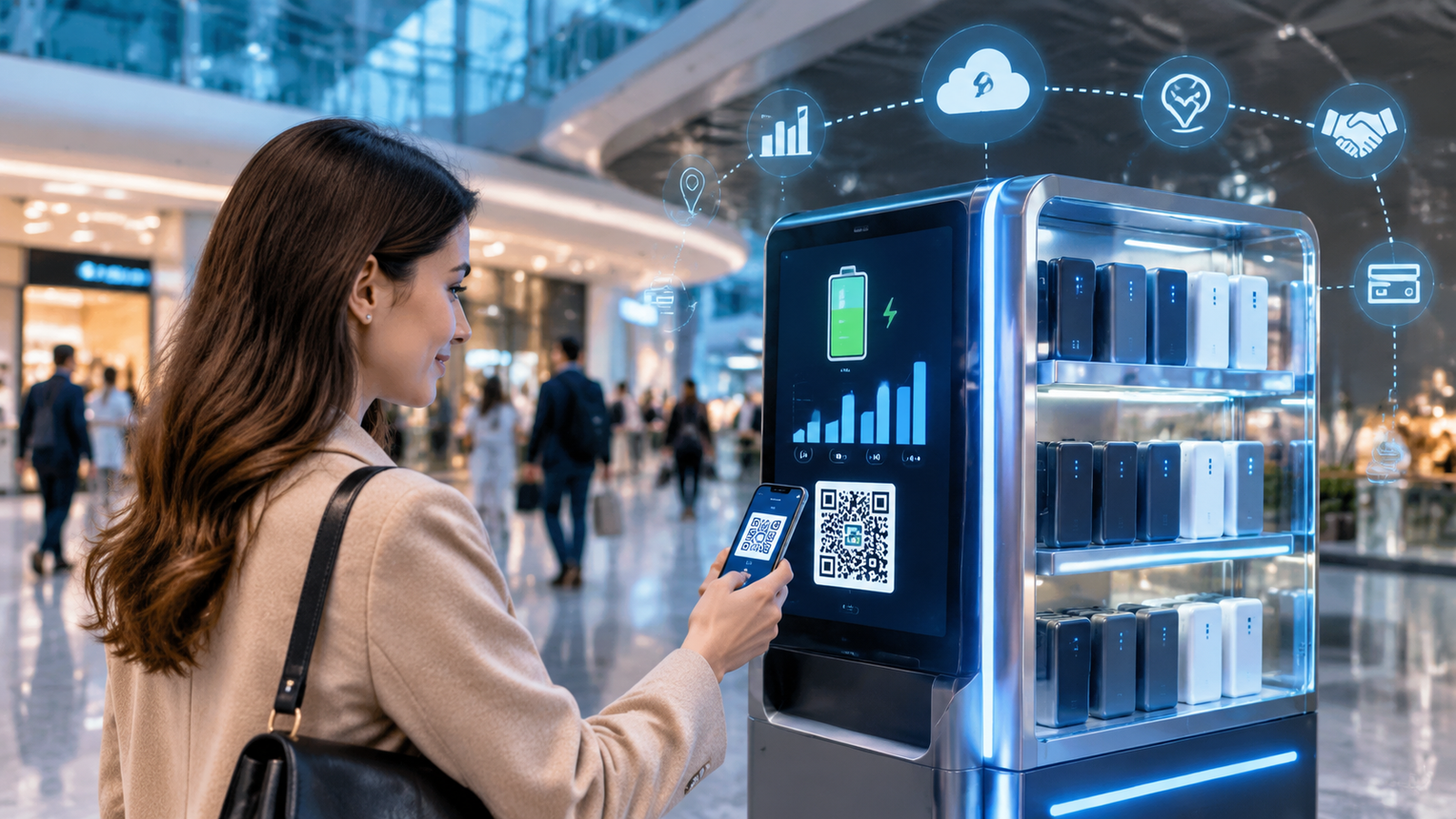
The concept is relatively straightforward. A customer discovers a charging kiosk, scans its QR code, completes the required payment or authorization, and receives a portable power bank from an automated docking slot. The customer uses the device while moving through their daily activities and returns it to a compatible station. The system records the transaction and updates equipment availability.
Behind this simple customer experience is a more complex operating structure. Businesses must purchase or lease hardware, acquire suitable commercial locations, establish payment-processing arrangements, monitor battery conditions, manage software infrastructure, handle customer support, and maintain a reliable return network.
The industry therefore represents a combination of consumer convenience, technology-enabled asset utilization, and location-based service distribution. Its potential extends across shopping centers, restaurants, hotels, airports, universities, hospitals, entertainment venues, transportation facilities, and event locations.
Understanding the business model for power bank rental kiosk operations industry report requires examining the complete commercial ecosystem rather than focusing exclusively on the physical charging cabinet. Hardware ownership, venue relationships, software control, payment arrangements, customer acquisition, and network density all influence the financial performance of an operator.
This report explores the industry’s operating principles, business structures, revenue opportunities, investment requirements, cost categories, competitive environment, technological foundations, safety considerations, and future development.
Industry Overview: What Is a Power Bank Rental Kiosk Business?
A power bank rental kiosk business provides temporary access to portable charging equipment through automated public stations. Instead of purchasing a power bank, consumers pay to use a shared device for a defined period.
A typical station contains several charging slots, a communication module, a payment or identification interface, and a collection of portable power banks. The equipment is connected to a digital management platform that monitors inventory, rental transactions, device status, and station availability.
The business operates through three interconnected components.
Physical Charging Infrastructure
The first component consists of rental kiosks and portable batteries. Stations may contain a small number of slots for compact locations or larger configurations designed for high-volume commercial environments.
The portable power banks are stored in charging docks until a customer rents one. When the rental is completed, the system releases the selected device and records its removal.
The physical infrastructure must be reliable, accessible, and suitable for its installation environment. A station placed in a busy restaurant has different space requirements from one installed in an airport or shopping center.
Digital Rental Platform
The second component is the software system responsible for coordinating customer transactions and equipment operations.
The platform can manage:
- Customer registration and identification.
- QR-code scanning and rental authorization.
- Payment processing and transaction records.
- Automated slot unlocking.
- Rental duration and pricing calculations.
- Return confirmation.
- Battery and station inventory.
- Operator dashboards and performance reporting.
- Customer notifications and support requests.
Without reliable software, an automated kiosk becomes difficult to manage at scale. Operators need accurate information about equipment availability, outstanding rentals, technical problems, and revenue performance.
Commercial Venue Network
The third component consists of the businesses and property owners hosting the kiosks.
Restaurants, shopping malls, hotels, entertainment centers, transportation operators, and other establishments provide access to customers who may need charging services.
These relationships are commercially important because the operator usually does not own the surrounding property. Instead, it negotiates permission to install and maintain equipment in an existing customer environment.
The venue may receive a percentage of rental revenue, a fixed placement payment, or another commercial benefit. In some arrangements, the venue provides the service as an additional customer amenity without directly participating in rental income.
The business model for power bank rental kiosk operations industry report places particular emphasis on the relationship between these three components. The equipment creates the service, software makes it manageable, and the venue network provides access to customers.
Industry Background and Market Development
The shared power bank concept developed alongside the expansion of smartphones and digital lifestyles. As mobile devices became central to everyday activities, consumers increasingly required charging access outside their homes and workplaces.
Traditional public charging facilities generally required users to remain near an electrical outlet. Some businesses offered charging cables or allowed customers to leave their phones with employees. These arrangements could be inconvenient because customers remained physically restricted or had to surrender control of their devices.
Portable power bank rental services introduced a different approach. Customers could borrow a battery, continue their activities, and return the equipment later.
The model became particularly relevant in densely populated commercial environments where people frequently moved between venues. A charging device could be rented in one location and returned elsewhere if the operator maintained a compatible network.
Market Expansion Drivers
Several factors contribute to interest in this business category.
Smartphone dependency: Mobile devices support communication, payments, transportation applications, entertainment, and work-related activities. Their importance increases the inconvenience associated with battery depletion.
Urban mobility: Consumers frequently travel between restaurants, offices, shopping centers, public transportation facilities, and entertainment venues. Portable charging fits naturally into these movement patterns.
Digital payment adoption: QR codes, mobile wallets, contactless transactions, and browser-based payment systems can reduce the difficulty of completing a rental.
Commercial partnerships: Venue operators increasingly evaluate services that improve customer convenience without requiring substantial additional staffing.
Shared-economy familiarity: Consumers are already familiar with temporary access to bicycles, vehicles, accommodation, and other shared resources. Rental charging services apply a similar concept to portable electronics.
Industry Research and Market Measurement
Market reports do not always use identical definitions. Some measure the value of rental transactions, while others include hardware sales, software services, charging infrastructure, or broader power bank sharing activities.
Consequently, market-size estimates should not be combined without examining their methodology.
A useful industry assessment separates the addressable market into several categories:
- Rental revenue generated by consumer transactions.
- Hardware sales and kiosk deployment.
- Software licensing and platform services.
- Installation and maintenance services.
- Franchise and distribution arrangements.
- Advertising and promotional income.
- Business-to-business charging services.
The International Telecommunication Union’s Recommendation Y.4510, published in March 2025, provides a functional architecture framework for smart power bank rental services. It demonstrates that the category is increasingly recognized as a technology-enabled service requiring coordinated system functions rather than simply a collection of charging accessories.
The business model for power bank rental kiosk operations industry report should therefore evaluate the service ecosystem as a whole, while distinguishing rental-market performance from related equipment and technology markets.
Biography Table: Industry Profile and Business Model Overview
Because this is an industry report rather than an individual biography, the following table provides an equivalent industry profile covering the principal characteristics of the business.
| Category | Industry details |
|---|---|
| Industry name | Power bank rental kiosk operations |
| Business category | Shared electronics and mobile charging services |
| Primary product | Portable rechargeable power banks |
| Main infrastructure | Automated rental and return kiosks |
| Core service | Temporary access to charging equipment |
| Primary customers | Smartphone users and mobile-device owners |
| Main business model | Pay-per-use equipment rental |
| Additional models | Subscription, B2B, franchise, and venue-sponsored services |
| Revenue sources | Rental fees, subscriptions, advertising, and partnerships |
| Main customers’ locations | Malls, restaurants, hotels, airports, and entertainment venues |
| Technology foundation | IoT, cloud software, QR codes, and digital payments |
| Main commercial partners | Venue owners, payment providers, manufacturers, and distributors |
| Operating requirements | Equipment procurement, installation, maintenance, and support |
| Important performance measures | Rentals per station, utilization, revenue, and uptime |
| Major cost categories | Hardware, software, payments, commissions, logistics, and maintenance |
| Competitive advantages | Location coverage, reliability, pricing, and network density |
| Primary risks | Theft, damage, low utilization, battery degradation, and competition |
| Expansion opportunities | New territories, franchises, events, and institutional partnerships |
| Long-term objective | Build a dependable, profitable shared charging network |
Core Business Model: How Power Bank Rental Kiosks Operate
The central business model is based on maintaining a fleet of reusable portable batteries and making them available through strategically positioned kiosks.
An operator invests in charging stations, power banks, and software infrastructure. It then establishes commercial partnerships with venues and makes the service accessible to consumers.
Each successful rental creates revenue. The same battery can generate multiple transactions over its useful operating life, provided that it is returned, maintained, and recharged correctly.
Customer Rental Process
The customer experience usually follows a standardized sequence.
Step 1: Discovering the kiosk
The customer notices a charging station in a commercial location. The station displays instructions, pricing information, and a QR code or another rental interface.
Step 2: Starting the rental
The customer scans the QR code or opens the supported application. The digital platform displays available equipment and applicable rental conditions.
Step 3: Payment or authorization
The customer completes payment, authorizes a temporary security hold, or follows another approved payment arrangement.
Step 4: Automatic release
The system communicates with the kiosk and unlocks an available power bank.
Step 5: Using the equipment
The customer connects the power bank to a smartphone or another compatible device and continues their activities.
Step 6: Returning the power bank
The customer returns the equipment to a compatible station. The system detects the device and records the completed return.
Step 7: Transaction settlement
The platform calculates the rental charge, processes any applicable refund or deposit release, and updates the customer’s transaction history.
This process reduces the need for employees to supervise every rental. However, automation does not eliminate the need for customer service, maintenance, equipment inspection, or financial reconciliation.
The Role of Network Density
Network density is one of the most important characteristics of a shared power bank operation.
A single kiosk may provide a useful service within one building, but a connected network creates additional value. Customers become more comfortable renting equipment when they know that they can return it at another compatible location.
For example, a person may rent a power bank at a restaurant, travel to a shopping center, and return it at a station operated within the same network.
This flexibility makes the service more practical and can encourage repeat usage.
However, cross-location returns introduce inventory-management challenges. Equipment may accumulate at locations where rental demand is low while high-demand stations experience shortages. Operators therefore need effective redistribution procedures.
Major Business Models in the Power Bank Rental Industry
There is no single commercial structure suitable for every operator. The appropriate arrangement depends on available capital, technology access, venue relationships, management capability, and expansion objectives.
1. Self-Operated Business Model
In a self-operated arrangement, the company owns or controls the equipment and manages the complete rental service.
The operator selects the hardware, establishes venue partnerships, determines customer pricing, manages payments, and coordinates maintenance.
This structure offers considerable control over commercial decisions. It allows the company to build its own brand, customer relationships, operational standards, and location network.
However, it also creates greater financial responsibility. The company must fund equipment purchases, negotiate commercial agreements, maintain the software system, and manage customer complaints.
This model is generally appropriate for businesses with sufficient capital and access to suitable commercial locations.
2. Franchise Business Model
A franchise structure allows independent entrepreneurs to operate within an established brand and technology network.
The franchisor may provide equipment specifications, software access, branding, training, operating procedures, and marketing support.
The franchisee generally invests in local equipment deployment and venue acquisition. Depending on the agreement, the franchisee may pay an initial franchise fee, recurring software charges, or a percentage of rental revenue.
This arrangement can support geographical expansion without requiring the central company to finance every station.
However, franchise quality depends on effective oversight. Inconsistent pricing, poor equipment maintenance, weak customer support, and unauthorized installation practices can damage the overall brand.
3. Distributor or Regional Operator Model
A distributor purchases or obtains access to equipment and technology from a manufacturer or platform provider.
It then supplies stations to local operators, businesses, or franchisees.
The distributor may earn income from equipment sales, installation, software subscriptions, technical support, or territorial distribution rights.
This structure is more focused on infrastructure distribution than direct consumer rental revenue.
It can be suitable for businesses with strong sales networks, logistics capabilities, and relationships with commercial property owners.
4. Venue Partnership Model
Under a venue partnership arrangement, the rental operator collaborates with a property owner or commercial establishment.
The operator supplies and maintains the equipment, while the venue provides suitable installation space and customer access.
Both parties agree on the commercial terms. These may include revenue sharing, fixed rental payments, or a combination of financial and service benefits.
The venue benefits from an additional customer amenity and may receive supplementary income without purchasing the equipment.
For operators, venue partnerships reduce the need to acquire or lease dedicated retail property.
5. Business-to-Business Model
Business-to-business arrangements provide charging access to employees, guests, visitors, or members of an organization.
Examples include:
- Corporate offices.
- Universities and colleges.
- Hospitals.
- Hotels.
- Conference centers.
- Transportation terminals.
- Large entertainment facilities.
The organization may pay a monthly service fee, purchase a predefined number of rental credits, or subsidize the service for visitors.
This model can produce more predictable revenue than relying exclusively on individual consumer transactions.
6. Sponsored or Advertising-Supported Model
Some charging stations incorporate digital screens or promotional displays.
An operator may sell advertising space to local businesses, brands, event organizers, or commercial partners.
Alternatively, a sponsor may finance a charging station in exchange for brand visibility.
Advertising should be treated as a separate revenue stream rather than assumed to be an automatic benefit of installing a screen. The operator needs advertisers, suitable audience exposure, reliable display technology, and a process for measuring campaign performance.
7. Hybrid Business Model
A hybrid arrangement combines several commercial approaches.
An operator may directly manage stations in major locations, appoint franchisees in smaller territories, sell equipment through distributors, and negotiate sponsored installations with large commercial partners.
This structure provides flexibility but requires careful financial and operational management.
The business model for power bank rental kiosk operations industry report identifies the hybrid approach as a potentially useful expansion strategy for businesses that have developed sufficient operational experience to manage different partner relationships.
Revenue Streams and Monetization Strategies
The financial structure of a rental kiosk business depends on its ability to convert equipment availability into paid transactions.
Rental fees are usually the central revenue source, but additional commercial opportunities can diversify income.
Pay-Per-Use Rental Fees
The most straightforward revenue model charges customers according to the duration of equipment usage.
Pricing may be calculated by the hour, by a defined rental period, or through a combination of initial and additional time charges.
For example, an operator might establish:
- A minimum rental charge.
- An hourly rate.
- A maximum daily charge.
- A late-return policy.
- A replacement charge for unreturned equipment.
Actual prices should reflect local purchasing power, competitive alternatives, equipment costs, and customer expectations.
Subscription Revenue
Subscription plans can offer frequent users a predictable charging expense.
A monthly membership may include discounted rentals, extended usage allowances, or access to selected stations.
Subscriptions are most useful in markets where consumers have regular exposure to the network. A person who visits participating venues frequently may see greater value in membership than someone who rents only occasionally.
Operators must calculate subscription economics carefully. Unlimited or heavily discounted usage can create losses if high-frequency customers consume more service capacity than expected.
Deposit and Authorization Revenue
Some rental services require a refundable deposit or payment authorization.
This arrangement helps reduce the financial exposure associated with unreturned equipment.
A deposit is not automatically rental revenue. Refundable amounts should be treated as liabilities or temporary payment holds according to applicable accounting and payment rules.
Where a device is not returned, the operator may apply clearly disclosed contractual charges. Those charges should be proportionate, legally compliant, and supported by transaction records.
Advertising Revenue
Digital screens provide opportunities for promotional campaigns.
Potential advertisers include restaurants, entertainment businesses, retailers, consumer brands, and local service providers.
Advertising revenue depends on measurable audience reach, campaign duration, screen visibility, and advertiser demand.
Corporate Service Agreements
Organizations may pay for charging access as part of their customer experience or employee services.
A hotel, for example, might pay a fixed monthly amount to provide charging equipment in its lobby. A conference organizer may purchase a temporary rental arrangement for an event.
Equipment and Technology Services
Established operators may also earn income from equipment installation, platform licensing, technical support, or managed network services.
These activities can create revenue independently of individual consumer rentals.
The business model for power bank rental kiosk operations industry report should distinguish recurring operating income from one-time hardware sales and refundable deposits. This distinction is essential for understanding genuine profitability.
Target Customers and Market Segmentation
Successful operators identify where customers are most likely to need portable charging.
Not every public location produces the same rental demand. The strongest opportunities generally involve a combination of mobile-device usage, customer movement, extended visits, and limited access to convenient personal charging.
Shopping Malls and Retail Centers
Shopping malls provide access to large numbers of consumers who may spend several hours browsing stores, dining, and attending entertainment activities.
A charging kiosk can improve visitor convenience while giving the venue an additional customer service.
Food courts, entrances, waiting areas, and entertainment zones may offer suitable installation opportunities.
Restaurants and Cafes
Restaurants provide another attractive environment because customers often spend extended periods at their tables.
A low smartphone battery can interfere with communication, digital menus, mobile payments, and entertainment.
A strategically positioned kiosk may improve customer satisfaction while generating additional rental income.
Airports and Transportation Hubs
Airports, railway stations, and bus terminals attract travelers who rely heavily on mobile devices.
Customers use smartphones for tickets, boarding information, navigation, accommodation reservations, and communication.
Long waiting periods can create demand for portable charging.
These locations may also involve more complicated commercial negotiations, security requirements, and installation approvals.
Hotels and Hospitality Businesses
Hotels can offer power bank rentals as an additional convenience for guests.
Suitable areas include reception lobbies, conference facilities, restaurants, and event spaces.
A hotel may choose to share rental revenue or pay for a managed charging service.
Hospitals and Healthcare Facilities
Patients, visitors, and employees may spend considerable time in healthcare facilities.
Charging access can be especially useful for people who need their phones for communication, transportation, appointment information, or family coordination.
Installation arrangements must consider hygiene, accessibility, electrical safety, and the operational requirements of healthcare environments.
Universities and Educational Institutions
Students frequently use smartphones for educational platforms, communication, research, and digital payments.
Libraries, student centers, cafeterias, and campus entertainment facilities may offer suitable locations.
Institutional agreements can provide access to a consistent customer population.
Entertainment and Nightlife Venues
Cinemas, sports facilities, concert venues, clubs, and event spaces may experience concentrated periods of charging demand.
Event-based installations can generate strong transaction volumes during short operating windows, although demand may fluctuate significantly between events.
Location Selection and Deployment Strategy
Location quality is one of the most influential factors in kiosk profitability.
A station can contain excellent batteries and advanced software yet generate weak financial results if it is installed in an area with limited customer exposure.
Foot Traffic Analysis
Operators should estimate the number of people passing through a potential location.
However, total foot traffic alone is insufficient. The relevant question is how many visitors are likely to need charging and notice the station.
A busy shopping corridor may generate less rental activity than a smaller restaurant where customers remain seated for an extended period.
Customer Dwell Time
Dwell time describes how long visitors typically remain at a location.
Longer visits can increase the probability that a customer will require charging. Airports, hospitals, hotels, restaurants, and entertainment facilities may therefore offer different opportunities from fast-moving retail environments.
Competitive Coverage
Operators should examine whether competing rental networks or free charging services already exist nearby.
Competition does not automatically make a location unsuitable. A high-demand venue may support multiple providers, but customer demand must be sufficient to justify additional equipment.
Physical Accessibility
Stations should be easy to find, reach, and use.
Poor visibility can reduce rental activity even when the equipment is located inside a busy venue.
Installation should also account for electrical access, floor-space restrictions, customer movement, security arrangements, and emergency access.
Location Scoring Framework
A structured location evaluation can reduce poor investment decisions.
| Evaluation factor | Suggested assessment |
|---|---|
| Foot traffic | Number of relevant visitors |
| Dwell time | Average visitor stay |
| Smartphone dependency | Likelihood of charging need |
| Visibility | Ease of discovering the kiosk |
| Accessibility | Convenience of renting and returning |
| Competition | Availability of alternative services |
| Venue relationship | Commercial agreement quality |
| Power availability | Reliable electrical connection |
| Security | Risk of theft or vandalism |
| Operating schedule | Hours of customer access |
The operator should test potential locations through a pilot rather than relying entirely on sales presentations or estimated visitor numbers.
Technology Infrastructure and Software Requirements
The modern power bank rental industry depends on integrated digital infrastructure.
The customer sees a simple rental interface, but the operator requires multiple technical systems to ensure that equipment, payments, and records remain synchronized.
Internet of Things Connectivity
Internet of Things technology allows physical kiosks to communicate with remote management platforms.
Depending on the system, connectivity may use Wi-Fi, cellular networks, or another supported communication method.
The kiosk sends information about slot availability, device movement, operational status, and technical faults.
Remote monitoring reduces the need for manual inspections at every location.
QR-Code Rental Technology
QR codes provide a convenient method for initiating transactions.
Customers can scan a code using a smartphone camera and access the rental process through a browser or supported application.
The system should provide clear instructions and transparent pricing before the customer confirms a rental.
Cloud-Based Management
Cloud platforms allow operators to monitor multiple stations through a centralized dashboard.
Important functions include:
- Station inventory management.
- Transaction monitoring.
- Customer account management.
- Rental history.
- Revenue reporting.
- Partner settlements.
- Equipment alerts.
- Maintenance records.
- Pricing configuration.
- Geographic performance analysis.
Cloud-based management can improve scalability because operators do not need to visit each station to obtain routine operational information.
Payment Integration
The rental platform may support bank cards, digital wallets, mobile payment applications, or region-specific payment methods.
Payment integration must account for authorization failures, refunds, disputed charges, payment security, and transaction reconciliation.
The operator should select payment methods that customers can use conveniently within the target market.
Data Analytics
Analytics help identify the locations and commercial conditions that generate the strongest results.
Operators can compare rental frequency, average transaction value, equipment utilization, return patterns, and station downtime.
This information supports decisions about pricing, equipment allocation, venue retention, and future expansion.
Cybersecurity and Privacy
Because the service processes customer and payment information, data security is an important operating requirement.
Operators should use appropriate access controls, secure communication, data-minimization practices, and reputable payment providers.
Customer information should be collected only for legitimate service purposes and handled according to applicable privacy requirements.
The business model for power bank rental kiosk operations industry report therefore treats technology as a central commercial asset, not merely an optional convenience.
Equipment Procurement and Infrastructure Investment
Equipment procurement is one of the most important decisions for a new rental kiosk operator. The quality of the equipment influences customer satisfaction, maintenance requirements, replacement frequency, and long-term operating expenses.
An operator should evaluate the complete equipment package rather than choosing a supplier based exclusively on the initial purchase price.
Rental Kiosk Capacity
Kiosks are available in different configurations. Smaller units may be appropriate for cafes, convenience stores, and compact commercial locations. Larger cabinets can accommodate more portable batteries and serve venues with greater transaction potential.
The appropriate capacity depends on expected demand, equipment replacement arrangements, available floor space, and the operator’s ability to redistribute batteries.
Installing an oversized station in a low-demand location creates unnecessary capital expenditure. Conversely, a small cabinet in a busy transportation terminal may run out of available batteries during peak periods.
Power Bank Specifications
The power bank itself determines the quality of the customer’s charging experience.
Important specifications include:
- Battery capacity.
- Charging output.
- Charging speed.
- Connector compatibility.
- Battery management technology.
- Charging-cycle durability.
- Physical strength.
- Temperature protection.
- Overcurrent and short-circuit protection.
Different customer groups may require different device configurations. A basic portable battery may be adequate for occasional smartphone charging, while travelers may prefer higher-capacity equipment.
Supplier Evaluation
Suppliers should be assessed according to product reliability, technical documentation, warranty arrangements, replacement availability, software compatibility, and after-sales support.
A low-priced cabinet can become expensive if it experiences repeated communication failures or requires frequent maintenance.
Operators should also confirm whether the software platform supports the intended commercial structure, including multiple venues, revenue-sharing arrangements, cross-location returns, and detailed transaction reporting.
Hardware Lifecycle Management
Power banks are reusable assets, but their capacity gradually deteriorates with repeated charging cycles and ordinary wear.
Operators should maintain a replacement policy based on battery health, safety inspection results, charging performance, and manufacturer guidance.
Equipment that becomes unreliable should be removed from circulation rather than kept active simply to avoid replacement expenditure.
Operating Costs and Financial Structure
The financial performance of a rental kiosk network depends on the relationship between capital expenditure, recurring operating expenses, and actual rental activity.
A realistic business plan should separate initial investment from the ongoing costs of operating the service.
Initial Capital Expenditure
The startup investment may include:
- Rental kiosk purchases.
- Portable power bank inventory.
- Software setup or licensing.
- Payment-system integration.
- Installation and electrical work.
- Branding and signage.
- Business registration and professional services.
- Initial venue acquisition.
- Logistics and transportation.
- Working capital.
Capital requirements vary significantly according to the equipment configuration, number of locations, technology provider, and market.
Recurring Operating Expenses
Ongoing costs generally include:
- Venue commissions.
- Software subscription fees.
- Internet connectivity.
- Payment-processing charges.
- Customer support.
- Equipment repairs.
- Battery replacements.
- Field maintenance.
- Redistribution logistics.
- Insurance.
- Marketing and administration.
Some expenses increase with the number of transactions, while others are relatively fixed.
For example, payment-processing charges usually rise with revenue, whereas a basic software subscription may remain constant within a particular service tier.
Venue Commission Structure
Revenue sharing is a common method of compensating venue partners.
The operator collects rental payments and distributes an agreed portion to the location owner.
The commercial agreement should specify the calculation method, settlement frequency, responsibility for taxes, refund treatment, and procedures for disputed transactions.
A fixed placement fee may be preferable in locations with predictable rental activity. Revenue sharing may be more attractive when the operator wants to align the venue’s financial benefit with customer usage.
Illustrative Station-Level Economics
The following example demonstrates how a single kiosk could be evaluated. These figures are hypothetical planning assumptions, not industry averages or guaranteed commercial results.
| Financial measure | Illustrative assumption |
|---|---|
| Daily paid rentals | 8 |
| Average rental revenue | $2.00 |
| Operating days per month | 30 |
| Monthly gross rental revenue | $480 |
| Venue revenue share | 20% |
| Venue payment | $96 |
| Payment and platform expenses | $38 |
| Maintenance and logistics allocation | $55 |
| Other operating allocation | $41 |
| Illustrative monthly contribution | $250 |
Under these assumptions, the kiosk generates $250 in monthly contribution before depreciation, financing costs, taxes, and any other expenses not included in the example.
The example also demonstrates why rental frequency is important. If the station generates only two rentals per day, the financial outcome may be substantially weaker.
Break-Even Analysis
Break-even analysis identifies the level of rental activity required to cover operating expenses.
A basic formula is:
Break-even rentals per month = Monthly fixed costs ÷ Contribution per rental.
Contribution per rental is calculated by subtracting variable costs from the average amount retained by the operator.
For example, suppose a kiosk generates an average rental payment of $2.00. After payment fees and the venue’s percentage, the operator retains $1.50 before other variable expenses. If additional variable expenses are $0.15 per rental, contribution becomes $1.35.
If the station has $135 in monthly fixed operating costs, it needs 100 rentals per month to cover those fixed costs.
This calculation should be performed separately for each venue category because customer behavior and commercial terms vary.
Return on Investment
Return on investment measures the financial return relative to the capital committed.
A simplified calculation is:
ROI = Annual net operating return ÷ Initial investment × 100.
However, operators should avoid using gross rental revenue as the numerator. Genuine investment analysis must account for operating expenses, equipment depreciation, financing, replacement requirements, and taxes.
The business model for power bank rental kiosk operations industry report emphasizes that a station’s profitability depends on its complete lifecycle economics, not simply the number of payments processed.
Key Performance Indicators for Rental Kiosk Operations
Performance measurement helps operators identify which locations deserve additional investment and which require corrective action.
Rentals per Station per Day
This indicator measures the average number of completed rentals at each station.
It is one of the most direct measures of customer demand.
Operators should examine daily averages alongside weekday, weekend, seasonal, and event-related patterns.
Revenue per Station
Revenue per station shows how much income each kiosk generates over a defined period.
This measure is particularly useful when comparing different venue categories.
Equipment Utilization Rate
Utilization measures how actively the available battery inventory is being used.
A simplified approach compares the time devices are rented with the total time they are available for use.
Low utilization may indicate insufficient demand, excessive inventory, poor location selection, or an ineffective customer acquisition strategy.
Station Uptime
Uptime measures the percentage of time that a kiosk remains operational and available.
A station that frequently loses connectivity or fails to release power banks can lose revenue even when customer demand is strong.
Return Rate
The return rate indicates the proportion of rented power banks successfully returned within the required tracking period.
Operators should also monitor overdue equipment, missing devices, and recovery outcomes.
Customer Acquisition and Repeat Usage
Customer acquisition measures the cost of attracting new users.
Repeat usage measures how often existing customers return to the service.
A sustainable rental network should gradually develop repeat behavior rather than depending entirely on expensive promotional campaigns.
Venue Retention
Venue retention indicates whether commercial partners continue their relationships with the operator.
High venue retention can reduce acquisition expenses and create a more stable distribution network.
Venue Partnerships and Commercial Agreements
Venue relationships are fundamental to the business.
The operator may own the equipment, but the venue controls access to the physical environment where customers discover the service.
A successful partnership should create clear benefits for both parties.
Benefits for Venue Owners
A charging station can provide an additional convenience without requiring venue employees to manage individual charging requests.
Customers can retain possession of their smartphones, which may improve their experience compared with leaving a device behind a counter.
The venue may also receive revenue, promotional benefits, or a service that strengthens its customer offering.
Benefits for Rental Operators
Venue partnerships provide access to existing customer traffic without requiring the operator to develop a separate retail location.
They can also reduce customer acquisition costs because the station is introduced into an environment where consumers already spend time.
Negotiating Commercial Terms
A partnership agreement should address:
- Installation permission.
- Equipment ownership.
- Electricity responsibility.
- Revenue-sharing arrangements.
- Maintenance obligations.
- Customer complaint handling.
- Insurance and liability.
- Equipment removal.
- Contract duration.
- Termination conditions.
- Branding and advertising permissions.
The agreement should also establish whether the venue is permitted to install competing services and how performance will be reviewed.
Building Long-Term Relationships
Regular communication is important.
Operators should provide venue partners with transparent reports covering rental volume, revenue settlements, maintenance activity, and customer issues.
A location that consistently produces weak results may need relocation, revised pricing, or a different equipment configuration.
Marketing and Customer Acquisition Strategy
Marketing is not limited to online advertising. In the rental kiosk industry, physical visibility and the quality of the customer experience are equally important.
In-Location Marketing
A clearly positioned kiosk with readable instructions can attract customers at the moment they need charging.
The rental price should be visible before the customer begins the transaction.
Simple instructions reduce confusion and help first-time users complete the rental without assistance.
Digital Marketing
Search visibility, social media campaigns, local business partnerships, and location-based advertising can increase awareness.
Operators may also publish maps showing available rental and return locations.
Loyalty Programs
Reward programs can encourage repeat usage.
Examples include discounts after a certain number of rentals, promotional credits, or special membership rates.
These incentives should be evaluated against their effect on actual customer retention and contribution margins.
Venue-Based Promotions
A restaurant or shopping center can promote the charging service through its existing communication channels.
The operator may provide promotional material or coordinate campaigns with the venue’s marketing team.
Customer Trust
Trust is especially important when users must authorize payments or provide contact information.
Transparent pricing, clear refund procedures, responsive support, and reliable equipment can strengthen customer confidence.
The business model for power bank rental kiosk operations industry report recognizes that customer experience is a commercial advantage. A network may have extensive coverage, but poor transaction reliability can undermine its reputation.
Competitive Landscape and Industry Challenges
The market includes hardware manufacturers, software platforms, local operators, regional networks, distributors, and venue-based service providers.
Competition may occur at several levels.
Hardware Competition
Manufacturers compete through pricing, design, reliability, battery specifications, and compatibility with management software.
Because similar equipment may be available from multiple suppliers, hardware ownership alone does not necessarily create a lasting competitive advantage.
Platform Competition
Software providers differentiate themselves through rental workflows, payment integrations, analytics, inventory management, and technical support.
The quality of the platform influences how easily an operator can manage a growing network.
Location Competition
Multiple operators may compete for desirable venues.
High-quality commercial locations can become valuable because they provide access to concentrated customer traffic.
Long-term agreements and reliable venue relationships can help protect an operator’s distribution network.
Pricing Pressure
If competing services offer similar convenience, customers may compare rental rates.
Operators must balance affordability with sufficient revenue to cover equipment, maintenance, payment, and venue expenses.
Excessive discounting can produce transaction growth without corresponding profitability.
Equipment Loss and Damage
Power banks are portable assets, which creates a risk of loss, non-return, theft, and physical damage.
Operators can reduce exposure through clear rental conditions, payment authorization, device tracking, and appropriately structured non-return charges.
Low Utilization
A station may perform poorly because its location has limited demand or because customers do not understand how the service works.
Low utilization can make otherwise reasonable equipment investments financially unattractive.
Network Imbalance
Cross-location returns can create uneven inventory distribution.
A station may receive more returns than rentals, while another repeatedly runs out of equipment.
Regular inventory monitoring and redistribution are necessary to maintain availability.
Safety, Compliance, and Regulatory Considerations
Battery safety should be treated as a core operating responsibility.
Power banks generally use rechargeable lithium-based battery technology. Although these products are widely used, improper manufacturing, damaged cells, unsuitable charging conditions, and inadequate protection can create safety risks.
Product Certification and Testing
Operators should obtain equipment from suppliers that can provide relevant safety documentation and product testing information.
UL 2056 is a recognized safety standard covering power banks and was revised in June 2026. Its requirements address risks associated with fire and explosion, among other product safety considerations.
Applicable certification requirements vary by jurisdiction. Operators should confirm which standards and approvals apply to their equipment and intended market.
Battery Management Systems
Battery management systems help monitor and control important operating conditions.
Depending on the product, protective functions may include:
- Overcharge protection.
- Over-discharge protection.
- Overcurrent protection.
- Short-circuit protection.
- Temperature monitoring.
- Voltage regulation.
These protections should be verified through manufacturer documentation and appropriate testing.
Inspection and Replacement
Operators should establish inspection procedures for returned equipment.
Devices with swelling, physical deformation, unusual heat, damaged connectors, or other warning signs should be removed from service.
Battery replacement decisions should be based on safety, measured performance, and the supplier’s recommended operating limits.
Fire Prevention and Emergency Procedures
Kiosk placement should account for electrical access, ventilation, emergency routes, and the venue’s fire-safety procedures.
Employees and field technicians should understand how to report unusual heating, damaged batteries, or suspected equipment faults.
Transportation and Storage
Battery handling requirements may differ between normal commercial operations and air transportation.
The International Air Transport Association’s 2026 guidance for operators discusses issues including supplier documentation, UN 38.3 compliance, inspection of battery condition, storage, and emergency procedures.
Operators should follow applicable transportation, storage, and disposal rules rather than assuming that ordinary consumer handling requirements are sufficient for commercial equipment fleets.
Environmental Responsibility
Portable batteries should not be disposed of through ordinary waste channels where local regulations require specialized collection or recycling.
A responsible operator should maintain a documented process for collecting damaged and end-of-life batteries through appropriate recycling or waste-management providers.
Risk Management and Business Continuity
A professional operator needs a structured risk-management system.
Technical failures, payment interruptions, venue disputes, equipment shortages, and regulatory changes can all affect service availability.
Technical Risk
Kiosks may experience software faults, communication interruptions, charging failures, or mechanical problems.
Operators should maintain remote alerts, maintenance records, spare parts, and supplier escalation procedures.
Financial Risk
Revenue may fluctuate according to seasonality, customer demand, venue activity, and competitive pricing.
A conservative financial plan should include working capital for equipment replacement, unexpected repairs, and slower-than-expected location performance.
Contractual Risk
A venue may change ownership, renovate its premises, restrict installation access, or terminate an agreement.
Operators should avoid excessive dependence on one commercial partner.
Reputation Risk
Unclear pricing, disputed charges, unreturned deposits, and unsuccessful rentals can create negative customer experiences.
A transparent refund policy and accessible support system are essential.
Business Continuity Planning
Operators should establish procedures for restoring software services, replacing failed hardware, communicating outages, and protecting customer transaction records.
A reliable network is not one that never experiences problems. It is one that identifies problems quickly and responds effectively.
Expansion Strategy: From Pilot Project to Regional Network
Expansion should follow demonstrated commercial performance rather than assumptions about market size.
Phase One: Market Research
The operator identifies customer segments, competitor activity, venue categories, local payment preferences, equipment requirements, and applicable regulations.
Phase Two: Pilot Deployment
A limited number of stations are installed in carefully selected locations.
The pilot tests actual customer behavior, rental pricing, technical reliability, venue cooperation, and equipment requirements.
Phase Three: Performance Evaluation
The operator examines transaction frequency, revenue, operating expenses, equipment losses, customer complaints, and location-level contribution.
Poor-performing locations should be improved or relocated before expansion.
Phase Four: Local Network Development
Once the pilot demonstrates repeatable results, the company can establish additional locations within the same geographic area.
Geographical concentration makes field maintenance and equipment redistribution more efficient.
Phase Five: Regional Expansion
The business can enter new districts or cities through direct operations, distributors, or franchise partners.
Expansion requires attention to local laws, payment methods, customer expectations, and commercial property arrangements.
Phase Six: Platform and Service Diversification
An established network may introduce corporate agreements, advertising, memberships, event services, and additional charging products.
Diversification should support the core rental operation rather than create unnecessary complexity.
Future Trends in the Power Bank Rental Kiosk Industry
The future of shared charging services will depend on improvements in equipment reliability, customer experience, network coverage, and commercial efficiency.
Several developments are likely to influence the direction of the industry.
Smarter Kiosk Management
Connected equipment and cloud-based monitoring will continue to improve operational visibility.
Operators can use transaction history and station performance data to determine where additional batteries are required, which locations need maintenance, and when equipment should be replaced.
Predictive maintenance may also help identify technical problems before they cause prolonged service interruptions.
Improved Battery Technology
Battery manufacturers continue to develop products with improved energy density, charging performance, durability, and safety characteristics.
For rental operators, the most useful improvements will be those that reduce lifecycle costs while maintaining dependable charging performance.
Higher capacity alone is not necessarily the best purchasing criterion. Weight, temperature management, durability, and replacement costs are equally relevant.
Greater Payment Flexibility
Payment convenience can influence customer adoption.
Future systems may offer broader support for digital wallets, contactless payments, local payment applications, and browser-based transactions.
Regional payment compatibility will remain important because consumers do not use identical payment methods in every country.
Integration With Commercial Platforms
Rental kiosks may become more closely integrated with hotel applications, shopping center platforms, loyalty programs, and event-management systems.
These integrations can make charging services easier to discover and may create additional opportunities for venue-based promotions.
Network Expansion Through Partnerships
Partnerships with property operators and regional distributors can accelerate expansion.
A company with a strong technology platform may enter new markets through local businesses that already understand the commercial environment.
This approach can reduce the need for a centralized team to manage every installation.
More Sophisticated Revenue Management
Operators may increasingly use detailed performance information to evaluate pricing, location profitability, and equipment allocation.
Rather than applying one price across every venue, companies may develop pricing structures suited to different customer groups and commercial environments.
Sustainability and Circular Equipment Management
Battery reuse and responsible recycling will remain important industry considerations.
A shared device can serve multiple customers during its useful life, potentially reducing the number of individually purchased charging accessories required for occasional use.
However, environmental benefits depend on actual equipment utilization, battery lifespan, energy consumption, transportation requirements, and responsible end-of-life management.
Strategic Recommendations for New Market Entrants
Entering the rental kiosk industry requires more than purchasing equipment and finding a few businesses willing to host it. A sustainable operation must establish a repeatable commercial system.
The following recommendations provide a practical framework.
Begin With a Clearly Defined Customer Segment
New operators should avoid targeting every possible customer category immediately.
A focused launch may concentrate on restaurants, shopping malls, universities, or entertainment venues.
This approach helps the company understand the requirements of a particular customer group before expanding into more complicated environments.
Prioritize Location Quality Over Equipment Quantity
Installing many kiosks does not automatically create a profitable network.
A smaller number of carefully selected stations may generate better results than a large deployment across unsuitable locations.
The initial objective should be to identify repeatable location characteristics associated with healthy rental activity.
Select Technology for Long-Term Compatibility
Operators should evaluate software functionality, equipment reliability, technical support, payment integration, and cross-location return capabilities.
A system that works for a small pilot may become inadequate when the network expands.
Negotiate Transparent Venue Agreements
Commercial agreements should explain revenue sharing, equipment responsibilities, access rights, maintenance procedures, and settlement schedules.
Clear agreements help prevent disagreements and protect both parties.
Establish Strong Customer Support
Customers should be able to report unsuccessful rentals, damaged devices, payment errors, and return problems through a straightforward support process.
Support quality influences customer trust and venue relationships.
Measure Every Station Individually
Company-wide revenue can conceal poor-performing locations.
Operators should examine station-level contribution, utilization, downtime, equipment losses, and maintenance costs.
A location should be evaluated according to its financial contribution rather than its appearance or popularity alone.
Protect Cash Flow
The business should maintain sufficient working capital for replacements, software fees, venue payments, and unexpected repairs.
Expansion should be funded by realistic financial projections rather than optimistic assumptions about future rental volume.
Build a Recognizable Local Brand
A consistent brand identity, visible pricing, clear instructions, and reliable service can help a rental network become familiar to local consumers.
Customer recognition becomes more valuable when the network offers convenient rental and return coverage across multiple locations.
Industry Outlook and Commercial Opportunities
Power bank rental kiosks occupy an interesting position between consumer electronics, automated retail, digital payments, and shared-economy services.
The industry solves a practical problem through a relatively simple transaction. Yet the commercial infrastructure required to deliver that transaction reliably can become sophisticated as the network expands.
Its strongest opportunities are likely to emerge where smartphone dependency, customer movement, and extended waiting or visiting periods intersect.
Retail, hospitality, entertainment, transportation, education, and healthcare provide different operating environments, each with distinct customer expectations and financial characteristics.
The business model for power bank rental kiosk operations industry report demonstrates that the industry’s central economic principle is repeated utilization of reusable assets. A power bank is not sold after one transaction. It remains part of the operator’s inventory and can generate additional revenue whenever it is successfully rented again.
This creates the possibility of recurring transaction income, but it also creates ongoing responsibilities. The operator must maintain equipment, balance inventory, manage payment systems, protect customer information, and preserve reliable relationships with commercial venues.
The most promising business strategies will therefore combine disciplined location selection with reliable technology and careful financial planning.
Companies that understand their local markets, maintain dependable equipment, and develop convenient return networks may establish stronger competitive positions than operators that focus primarily on rapid hardware deployment.
Frequently Asked Questions (FAQs)
1. What is the business model for power bank rental kiosk operations?
The business model involves installing automated charging stations in commercial or public locations and renting portable power banks to consumers for a fee. Customers scan a QR code, authorize payment, collect a battery, use it to charge their devices, and return it to a compatible station. The operator earns revenue from rentals and may generate additional income through subscriptions, advertising, corporate agreements, or venue partnerships.
2. How do power bank rental kiosks make money?
The primary income source is rental fees charged according to usage duration or a predefined pricing structure. Additional revenue opportunities include monthly memberships, sponsored installations, digital advertising, business-to-business contracts, and managed charging services. The operator must deduct venue commissions, payment charges, maintenance, software, and other operating expenses to calculate profitability.
3. Is a power bank rental kiosk business profitable?
It can be profitable when equipment is installed in locations with sufficient rental demand and operating costs remain controlled. However, profitability is not guaranteed. Rental frequency, equipment investment, venue commissions, battery replacement, customer support, and location quality all influence the financial outcome. A pilot project and station-level break-even analysis are recommended before significant expansion.
4. What equipment is required to start this business?
The essential equipment includes automated rental kiosks, compatible portable power banks, charging docks, connectivity hardware, and management software. The operator may also require electrical installation materials, branding, spare equipment, and maintenance tools. Payment processing and customer support infrastructure are also necessary.
5. Which locations are best for power bank rental kiosks?
Shopping malls, restaurants, cafes, airports, railway stations, hotels, hospitals, universities, cinemas, entertainment venues, and event facilities can offer attractive opportunities. The best location depends on relevant foot traffic, customer dwell time, smartphone usage, kiosk visibility, competitive coverage, and commercial agreement terms.
6. How much does it cost to start a power bank rental kiosk business?
Startup costs vary according to the number and size of stations, battery specifications, supplier pricing, software licensing, installation, branding, and working capital requirements. A small pilot generally requires less investment than a multi-location network. Prospective operators should obtain supplier quotations and calculate the complete cost of ownership rather than relying on equipment prices alone.
7. What is the role of QR codes in power bank rental operations?
QR codes provide a simple connection between the physical kiosk and the digital rental platform. Customers scan the code to access rental instructions, view pricing, authorize payment, and initiate equipment release. The platform records the transaction and updates inventory information.
8. How do customers return rented power banks?
Customers return the equipment to a compatible station within the operator’s network. The kiosk detects the returned device, records its availability, and updates the rental transaction. Some systems support returns at different locations, which improves convenience but requires effective inventory management.
9. What are the main revenue streams in this industry?
The main revenue sources include hourly or daily rental charges, subscription plans, corporate service agreements, advertising, sponsorships, and technology services. Venue-based revenue sharing is also common, although it represents a distribution of rental income rather than a separate customer payment.
10. What is the franchise model for power bank rental kiosks?
A franchise model allows independent business operators to use an established company’s brand, technology, and operating procedures. Franchisees generally manage local installations and commercial relationships, while the franchisor provides some combination of equipment access, software, training, and brand support. Fees and revenue-sharing conditions depend on the franchise agreement.
11. What are the biggest challenges facing power bank rental operators?
Major challenges include low station utilization, unreturned equipment, battery deterioration, maintenance costs, payment failures, weak venue partnerships, competition, and inconsistent customer demand. Network imbalance can also create equipment shortages in busy locations and excess inventory in less active areas.
12. How important is software in the rental kiosk industry?
Software is essential because it coordinates rental authorization, payments, station communication, equipment tracking, inventory management, and performance reporting. Reliable software allows operators to manage multiple locations without manually supervising every transaction.
13. What is the importance of revenue sharing with venue owners?
Revenue sharing gives venue owners a financial incentive to host charging stations and promote the service. It can help operators access commercial locations without paying traditional retail rent. The agreement should define the revenue calculation, settlement frequency, refund treatment, and responsibilities of both parties.
14. How can operators prevent power bank theft and non-return?
Operators can use payment authorization, clearly disclosed deposits, customer identification procedures where appropriate, device tracking, return reminders, and transparent non-return charges. Monitoring overdue rentals and maintaining accurate transaction records can also reduce losses.
15. What safety standards should power bank rental companies consider?
Operators should examine applicable product safety standards, manufacturer testing, battery management protections, electrical installation requirements, transportation rules, and local fire-safety regulations. UL 2056 and relevant battery transportation testing requirements are useful references, but the exact legal requirements depend on the operating jurisdiction.
16. Can a power bank rental kiosk business operate without employees at every location?
Yes. The customer rental process can be automated, and software can provide remote monitoring. However, operators still need people to acquire venues, maintain equipment, redistribute inventory, manage payments, handle customer complaints, and respond to technical problems.
17. What is the difference between a power bank rental operator and a distributor?
An operator manages the customer-facing rental network and earns revenue from equipment usage. A distributor primarily supplies hardware, software access, or related services to local operators and business partners. Some companies perform both functions.
18. How can a new company compete with established rental networks?
A new company can focus on underserved locations, better customer support, transparent pricing, dependable hardware, local payment compatibility, and strong venue relationships. Developing a concentrated local network may be more effective than immediately attempting to compete across an entire country.
19. Is the power bank rental kiosk business suitable for small entrepreneurs?
It can be suitable for small entrepreneurs who have access to appropriate locations and sufficient resources for equipment, maintenance, and customer support. However, entrepreneurs should carefully review supplier agreements, platform fees, territorial rights, venue commissions, and actual demand before purchasing equipment.
20. What is the long-term outlook for power bank rental kiosk operations?
The long-term outlook depends on continued demand for mobile charging, consumer acceptance of shared equipment, improvements in battery technology, payment convenience, and profitable location networks. Operators that combine reliable infrastructure with effective partnerships and disciplined asset management may be better positioned to sustain growth.
Building a Sustainable Shared Charging Enterprise
Power bank rental kiosk operations represent a business opportunity built around convenience, reusable equipment, and technology-enabled distribution. Their appeal comes from addressing an everyday consumer requirement through a service that can operate across multiple commercial environments.
The commercial opportunity, however, is not determined by equipment availability alone. Successful operations require a carefully coordinated system of suitable locations, reliable batteries, compatible software, efficient payments, responsive maintenance, and transparent commercial agreements.
For new entrants, the strongest starting point is a limited pilot supported by realistic financial assumptions. For established operators, the priority is to improve utilization, strengthen network density, retain valuable venue relationships, and maintain consistent service quality.
The business model for power bank rental kiosk operations industry report provides a framework for understanding these requirements and evaluating the different ways businesses can participate in the market.
Ultimately, the industry’s long-term value will depend on how effectively operators transform a simple charging transaction into a dependable, accessible, and financially sustainable service.
