
Introduction
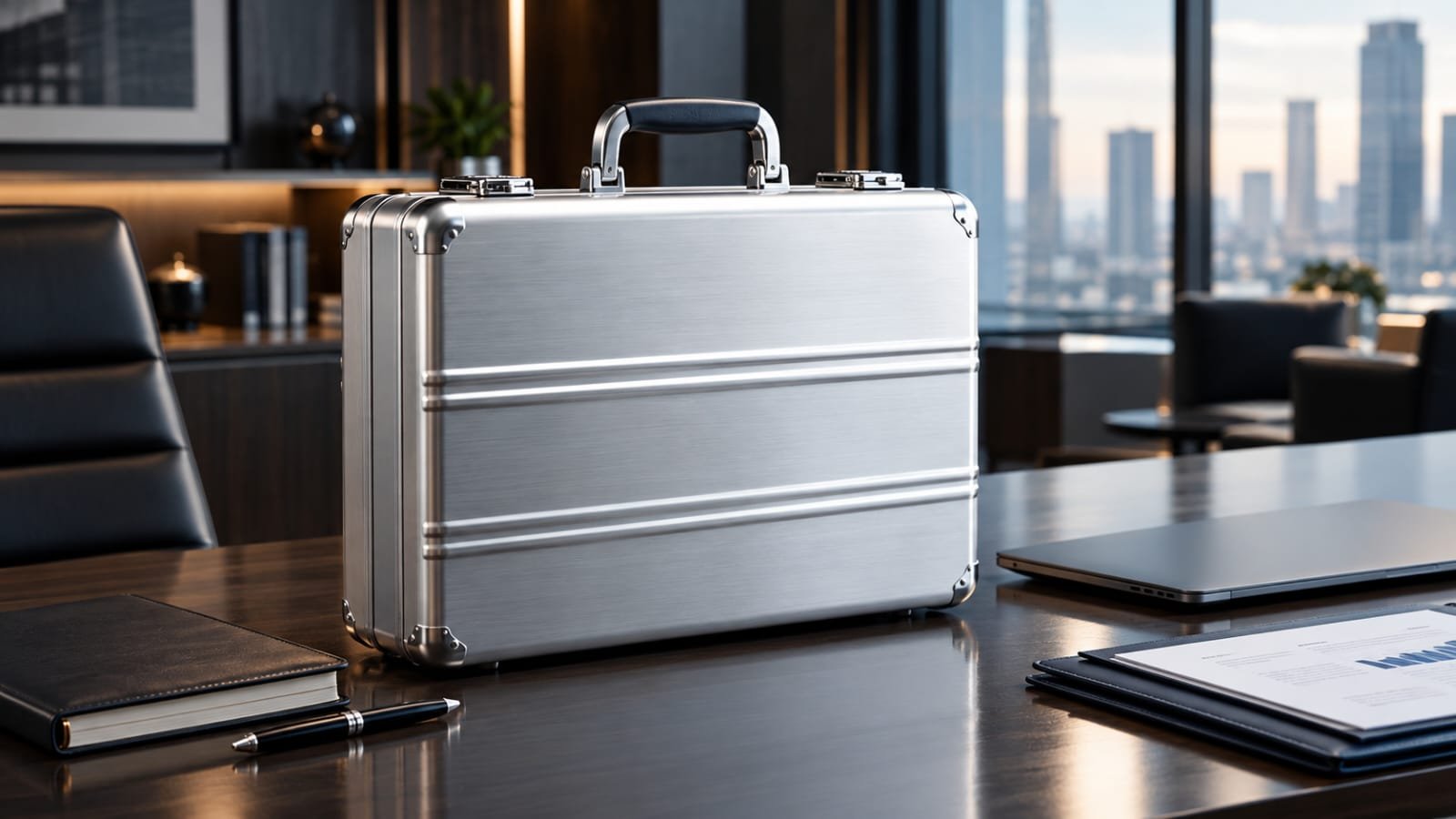
In the world of premium business accessories, certain products become recognizable not simply because of their appearance but because of the engineering, history, and philosophy behind their construction. The Zero Halliburton Classic Aluminum Business Case belongs to this category. Combining a distinctive aluminum exterior with sophisticated travel functionality, it represents a long-standing approach to professional luggage in which durability, organization, and understated elegance are equally important.
Business cases have changed considerably over the years. Traditional briefcases were primarily designed to transport papers, folders, and essential office supplies. Modern professionals, however, carry a much broader selection of belongings, including laptops, tablets, chargers, presentation materials, personal accessories, and occasionally clothing for short business trips. This changing lifestyle has created demand for cases that offer more capacity and protection without abandoning the refined appearance associated with executive luggage.
Zero Halliburton has built its reputation around precisely this relationship between protection and design. Its aluminum luggage heritage dates to 1938, while the distinctive double-rib design associated with its Classic Aluminum collection was introduced in 1946. The modern Classic Aluminum 3.0 Business Case 28L brings that established visual identity into a contemporary travel format, incorporating features such as dual-wheel casters, an oil-damped auto-return handle, a TSA combination lock, and an adjustable compression panel. <Cite refs={[“turn169070search1″,”turn169070search2″,”turn169070search4”]}/>
The zero halliburton classic aluminum business case is particularly interesting because it is not simply a conventional office briefcase. Its 28-liter capacity and rolling design place it between a traditional executive case and a compact business travel suitcase. This combination makes it relevant to professionals who regularly move between offices, airports, meetings, hotels, and corporate events.
Its appeal also extends to people who appreciate industrial design and well-engineered everyday objects. The aluminum shell provides a recognizable appearance, while the practical interior and mobility features address the demands of modern travel.
Understanding this product requires looking beyond its premium exterior. Its history, construction, organization, handling characteristics, strengths, limitations, and intended audience all contribute to its overall identity. This guide examines those elements in detail and explains what makes the Classic Aluminum Business Case a distinctive option in the premium luggage market.
Biography Table: Zero Halliburton Classic Aluminum Business Case
A biography-style product table is an important way to present the essential identity of a product before exploring its individual features. It provides readers with a quick reference and makes the article easier to navigate.
| Category | Details |
|---|---|
| Product name | Zero Halliburton Classic Aluminum Business Case |
| Current model designation | Classic Aluminum 3.0 Business Case 28L |
| Brand | Zero Halliburton |
| Product category | Premium business luggage and rolling business case |
| Brand origin | United States |
| Brand founding history | 1938 |
| Classic double-rib design introduction | 1946 |
| Primary exterior material | Aluminum |
| Product capacity | 28 liters |
| Listed weight | Approximately 4.1 kg |
| Height | Approximately 41 cm |
| Width | Approximately 39 cm |
| Depth | Approximately 23 cm |
| Handle | Auto-return handle with integrated oil damper |
| Wheels | Dual-wheel casters with ball bearings |
| Security | TSA combination lock |
| Interior organization | Adjustable compression panel |
| Main colors shown | Silver, Black, and Sunset Gold |
| Model SKU example | 94401-05 |
| Intended use | Business travel, daily professional needs, and short journeys |
| Suggested travel duration | Day trips to journeys of approximately three days |
| Design identity | Traditional double-rib aluminum construction |
| Overall positioning | Premium executive and business travel luggage |
Specifications refer to the current Classic Aluminum 3.0 Business Case 28L listing and may vary across editions, regional models, or product revisions. <Cite refs={[“turn169070search1″,”turn169070search5”]}/>
What Is the Zero Halliburton Classic Aluminum Business Case?
The Zero Halliburton Classic Aluminum Business Case is a premium hard-shell business travel case developed for professionals who want a combination of organization, structural protection, mobility, and distinctive styling.
Unlike a conventional soft briefcase, which generally relies on fabric, leather, or synthetic materials, this model uses an aluminum exterior. The rigid construction gives the product a defined shape and creates a protective outer structure around the belongings stored inside.
Its current Classic Aluminum 3.0 Business Case 28L configuration is particularly notable for its rolling design. Instead of requiring the owner to carry the entire load continuously, it incorporates wheels and an extendable handle to make movement easier through airports, stations, hotels, and other travel environments.
The product is designed to accommodate day-to-day professional requirements and short journeys. Its 28-liter capacity provides space for business essentials and selected personal belongings, while an adjustable internal compression system helps keep the contents organized.
The design also preserves the visual language that made Zero Halliburton recognizable. Its aluminum surface, double-rib detailing, carefully finished hardware, and restrained appearance create a product that feels connected to the company’s historical identity.
The zero halliburton classic aluminum business case therefore occupies an interesting position in the luggage market. It combines characteristics of an executive briefcase with the practicality of compact rolling luggage.
It is important to distinguish this wheeled business case from the brand’s separate Medium Attaché Case. The attaché is a more traditional hand-carried case with a compact profile, whereas the 28-liter business case is intended for a broader range of travel requirements. <Cite refs={[“turn169070search1″,”turn169070search10”]}/>
The History of Zero Halliburton
Understanding the product’s identity begins with understanding the company behind it. Zero Halliburton has a long association with aluminum luggage, protective case engineering, and the development of distinctive travel accessories.
The Beginning in 1938
The company’s origins are associated with Erle P. Halliburton, an American oil-field entrepreneur and engineer who encountered practical problems with conventional luggage.
During his travels, ordinary luggage did not always provide the level of protection he wanted against dust, dirt, moisture, and difficult environmental conditions. His professional background encouraged him to approach the problem from an engineering perspective.
Rather than accepting the limitations of existing products, Halliburton explored the possibility of using aluminum to create stronger travel cases.
The resulting aluminum cases attracted attention because they offered a different approach to protecting personal belongings. Their construction was particularly appealing to travelers who needed a more dependable enclosure for important possessions.
The brand’s historical account identifies 1938 as the year its aluminum travel-case story began. <Cite refs={[“turn169070search0″,”turn169070search2”]}/>
The Development of a Recognizable Design
The introduction of aluminum cases established an important foundation, but the company’s identity continued to evolve.
In 1946, Zero Halliburton introduced its distinctive double-rib design. This detail became one of the most recognizable elements of its classic luggage.
The ribs were not merely decorative. They were developed to contribute to the rigidity of the case structure while creating a visual pattern that differentiated the products from ordinary luggage.
The double-rib appearance eventually became a recognizable design signature. It connected the brand’s different product generations and helped establish a consistent visual identity.
The modern Classic Aluminum 3.0 collection draws inspiration from this heritage while adapting the construction and handling experience to contemporary expectations. <Cite refs={[“turn169070search1″,”turn169070search4”]}/>
From Traditional Cases to Modern Business Travel
The needs of professional travelers have changed significantly since the middle of the twentieth century.
Earlier business cases were often associated with paper documents, office files, and traditional executive accessories. Modern users may need to transport electronic devices, cables, portable storage equipment, personal documents, and clothing.
Zero Halliburton’s contemporary luggage development reflects this change. The brand now offers different types of luggage and business accessories, including aluminum travel cases, attaché cases, carry-on products, and other specialized collections.
The Classic Aluminum Business Case demonstrates how a traditional design identity can be adapted to a different functional purpose without losing its recognizable character.
Its wheels, contemporary handle system, and compression panel reflect the requirements of modern mobility, while its aluminum exterior maintains a connection with the brand’s original approach to protective luggage.
Design and Exterior Construction
The exterior is one of the most important reasons the Classic Aluminum Business Case attracts attention. Its design is recognizable without depending on excessive decoration or prominent branding.
The Aluminum Shell
Aluminum provides the product with a rigid outer structure that differs substantially from the flexible construction of ordinary fabric luggage.
The shell maintains a defined shape and helps protect its contents from routine external contact during transport. It also contributes to the distinctive appearance associated with premium aluminum luggage.
An aluminum exterior offers several practical characteristics:
- A firm structure that does not behave like flexible fabric.
- A recognizable metallic appearance.
- Resistance to ordinary deformation associated with soft-sided bags.
- A solid enclosure around stored belongings.
- A material that can develop an individual appearance through use.
However, aluminum should not be described as completely damage-proof. A rigid metal case can still acquire dents, scratches, abrasions, and surface marks. The manufacturer acknowledges that such marks can occur even during normal use. <Cite refs={[“turn169070search11”]}/>
This is an important consideration for people who expect a premium case to remain visually untouched. Aluminum luggage is designed for practical use, not necessarily permanent cosmetic perfection.
The Signature Double-Rib Pattern
The double-rib structure is perhaps the most recognizable visual characteristic of the Classic Aluminum collection.
The raised lines create a distinctive exterior profile and contribute to the product’s structural identity. They also connect the modern business case with the historical design language introduced by the brand in 1946.
The pattern gives the case a sense of depth and proportion. Rather than presenting a completely flat metallic surface, the design creates visual rhythm through repeated structural lines.
For many enthusiasts, this is an important part of the product’s appeal. It is recognizable as Zero Halliburton luggage without requiring a large decorative logo.
Finish and Color Options
The product has been presented in several finishes, including silver, black, and Sunset Gold.
Silver provides a traditional metallic appearance that emphasizes the material and the classic double-rib construction. Black offers a more restrained visual character, making the case suitable for people who prefer darker professional accessories.
Sunset Gold introduces a warmer and more distinctive appearance. It offers an alternative to conventional metallic finishes while retaining the underlying design language.
The available colors and stock status can vary between product editions and retailers. Buyers should confirm the specific color and SKU before purchasing.
Hardware and Overall Appearance
The exterior design is supported by practical hardware elements. These include the handle system, wheel assemblies, locking components, and opening mechanisms.
The overall appearance is deliberately controlled. Rather than relying on complicated decoration, the product uses material quality, proportion, rib detailing, and carefully integrated components to establish its identity.
This design philosophy helps the case work in different professional environments, including corporate offices, conference venues, airports, and hotels.
Material Quality and Engineering
Material selection has a significant influence on the performance of premium luggage. The outer material determines much of the product’s appearance, structural behavior, maintenance requirements, and long-term ownership experience.
Why Aluminum Is Used
Aluminum is widely valued in engineering because it offers a useful combination of relatively low density, strength, formability, and corrosion resistance.
For luggage construction, it provides a rigid alternative to many textile-based materials. It can be formed into a recognizable shell and finished to produce a refined metallic surface.
However, aluminum has characteristics that buyers should understand. It can show cosmetic marks, and it may dent under sufficiently strong localized impacts.
This means that a premium aluminum case should be evaluated according to its intended purpose. Its benefits are associated with structural protection, material character, and long-term utility rather than an unrealistic promise that damage can never occur.
Structural Rigidity
The double-rib design contributes to the product’s structural character.
A formed shell with reinforcing contours behaves differently from a completely flat sheet. The raised geometry helps give the exterior rigidity while preserving the distinctive appearance associated with the collection.
This relationship between structure and design is an important element of the Classic Aluminum identity.
Long-Term Material Appearance
Aluminum luggage often develops visible evidence of use.
Small scratches, surface abrasions, and minor marks can accumulate through travel. Some owners appreciate this because the case develops an individual appearance over time. Others prefer their luggage to maintain a pristine finish.
Neither preference is inherently wrong. The important point is to understand that a metal travel case should be treated as a functional object rather than a permanently flawless display item.
Zero Halliburton recommends cleaning aluminum cases with a soft, damp cloth and avoiding abrasive cleaning solutions that may damage the finish. <Cite refs={[“turn169070search11”]}/>
Interior Organization and Storage Capacity
A business case must do more than look impressive. Its interior determines whether it can support the daily routines of the person carrying it. A well-designed storage space should make important belongings accessible, reduce unnecessary movement, and provide enough flexibility for different types of journeys.
The Classic Aluminum Business Case addresses these requirements through a 28-liter interior and an adjustable compression system.
Understanding the 28-Liter Capacity
The 28-liter capacity gives the case more versatility than a traditional compact briefcase.
It can accommodate a combination of professional and personal belongings, depending on their dimensions and arrangement. Possible items include:
- A compatible laptop and tablet.
- Business documents and presentation folders.
- Notebooks and writing accessories.
- Chargers, cables, and electronic accessories.
- A travel wallet and personal documents.
- Small clothing items for a short journey.
- Toiletry accessories and other compact essentials.
Capacity figures should not be confused with a guarantee that every combination of belongings will fit. The dimensions and shape of individual items matter, particularly when carrying electronic equipment or larger folders.
The internal space is best understood as a flexible business-travel compartment rather than a specialized filing cabinet.
Adjustable Compression Panel
One of the product’s notable interior features is its adjustable compression panel.
The purpose of this system is to help prevent belongings from shifting when the amount of packed material changes.
This is useful because a business traveler may carry different combinations of equipment from one journey to another. A case packed with a laptop, documents, and a few accessories behaves differently from one containing clothing and additional personal items.
An adjustable panel helps manage these differences by keeping the contents more stable.
Its practical benefits include:
- Reducing unnecessary movement inside the compartment.
- Helping maintain a more organized packing arrangement.
- Keeping selected belongings in their intended positions.
- Supporting more efficient use of available space.
- Making the interior adaptable to different packing requirements.
For professionals who move between meetings and travel destinations, organization can make a meaningful difference. Having essential materials arranged consistently can reduce the time spent searching for small items.
Packing Electronic Equipment
Electronic devices have become central to business travel. Laptops, tablets, charging equipment, headphones, and accessories are now common components of a professional’s daily luggage.
The aluminum exterior provides a rigid enclosure, but that does not mean electronic devices should be placed inside without additional protection.
A padded sleeve is advisable for laptops and tablets. It can reduce movement and provide cushioning against direct contact with other belongings.
Chargers should ideally be stored in a separate pouch to prevent cables from becoming tangled. Small accessories such as USB drives, adapters, and presentation remotes should also be grouped together.
The case’s actual ability to accommodate a particular laptop depends on the laptop’s dimensions and the usable interior space. Buyers should verify compatibility instead of assuming that every device marketed as a particular screen size will fit.
Organizing Business Documents
Although digital communication has reduced the amount of paper used in many workplaces, printed documents remain important in certain professional environments.
Contracts, reports, presentation materials, signed agreements, and notebooks may still need to be transported physically.
The case’s interior can accommodate business materials alongside other essentials, although users should protect important papers from folding and avoid placing heavy objects directly on delicate documents.
A separate document folder is a sensible addition for people who regularly carry contracts or presentation materials.
Packing for Short Business Trips
The manufacturer describes the 28-liter model as suitable for day trips and journeys of up to approximately three days. <Cite refs={[“turn169070search1″,”turn169070search5”]}/>
This makes it relevant to professionals who need more than a conventional briefcase but do not want to travel with a full-sized suitcase.
A practical packing arrangement might include a laptop, tablet, notebook, charging equipment, a small toiletry pouch, and a limited selection of clothing.
The adjustable compression panel can help stabilize the contents when the packing arrangement changes.
Nevertheless, travelers should avoid overpacking. A carefully organized 28-liter case is more useful than a crowded one in which every item competes for space.
Handle Design and Mobility
Mobility is a major part of the modern business travel experience. Professionals may need to move through airports, railway stations, office corridors, hotel lobbies, and crowded conference venues.
A case that is comfortable to move can make these journeys less tiring.
The Auto-Return Handle
The Classic Aluminum 3.0 Business Case incorporates an auto-return handle with an integrated oil damper.
This mechanism is designed to allow the handle to return slowly and quietly when released, rather than dropping abruptly. <Cite refs={[“turn169070search1″,”turn169070search5”]}/>
The feature reflects an attention to small details that influence the everyday handling experience.
A handle is one of the most frequently used components of rolling luggage. Its movement, grip, stability, and responsiveness affect how comfortable the product feels.
The damped return mechanism adds a controlled movement to an otherwise ordinary interaction.
Dual-Wheel Casters
The case uses dual-wheel casters equipped with ball bearings.
The wheel arrangement is designed to support smoother movement and easier rotation. The use of bearings helps reduce friction within the rotating assembly.
For business travelers, this matters because luggage may be moved across different surfaces throughout a journey.
Smooth airport flooring, hotel corridors, station platforms, and office interiors can all place different demands on the wheels.
The dual-wheel design also supports maneuverability when changing direction in confined spaces.
However, wheel performance should be evaluated realistically. No luggage wheel is immune to wear, rough surfaces, dirt, or damage. The weight of the packed case and the way it is handled also influence its long-term performance.
Rolling Versus Carrying
One advantage of the wheeled configuration is that it reduces the need to carry the full weight continuously.
This can be especially useful when the case contains electronic equipment, documents, and other heavy belongings.
A traditional attaché case may offer a more compact and formal appearance, but its entire weight must be supported by the user’s hand.
A rolling business case provides an alternative for longer distances and frequent movement.
The trade-off is that wheels and a retractable handle introduce additional components. These parts require maintenance and can add weight compared with a simpler hand-carried case.
Security Features and Locking System
Security is an important consideration for anyone transporting professional documents, electronic devices, or personal belongings.
The Classic Aluminum Business Case includes a TSA combination lock.
TSA-compatible locking systems are intended to support luggage inspection procedures in relevant travel environments. They provide a way for authorized security personnel to inspect luggage using compatible procedures without necessarily damaging the lock.
However, a TSA lock should not be treated as a guarantee against theft or unauthorized access.
Its primary function is to provide a locking mechanism compatible with certain security inspection requirements. It does not turn luggage into a certified safe or eliminate every security risk.
Protecting Important Belongings
Professionals should consider the value and sensitivity of the items they carry.
For example, a laptop containing confidential business information requires more than a physical case lock. Device encryption, strong passwords, account security, and secure backups remain important.
Likewise, confidential printed documents should be transported in a way that limits unnecessary exposure.
A useful security routine includes:
- Keeping the combination private.
- Locking the case when it is unattended.
- Avoiding unnecessary storage of highly sensitive information.
- Using appropriate protection for electronic devices.
- Keeping travel documents separate when practical.
- Maintaining awareness of luggage in crowded environments.
The combination of an aluminum shell and locking system provides a practical level of physical enclosure, but responsible handling remains essential.
Dimensions, Weight, and Technical Specifications
Dimensions are among the most important factors when selecting business luggage. A product can have an attractive design and excellent storage capacity but still be unsuitable if its size conflicts with the user’s travel requirements.
The manufacturer’s current listing provides the following measurements for the 28-liter model:
| Specification | Measurement |
|---|---|
| Capacity | 28 liters |
| Height | 41 cm |
| Width | 39 cm |
| Depth | 23 cm |
| Weight | 4.1 kg |
| Height in inches | Approximately 16 in |
| Width in inches | Approximately 15 in |
| Depth in inches | Approximately 9 in |
<Cite refs={[“turn169070search1″,”turn169070search5”]}/>
Is the Weight Practical?
At approximately 4.1 kilograms before packing, the case is not particularly lightweight.
This is an important consideration for travelers who prioritize minimum luggage weight.
The aluminum structure, wheels, handle, and hardware contribute to the overall weight. Once a laptop, accessories, documents, and personal belongings are added, the total can become substantial.
The rolling design helps address this issue by allowing the user to move the case without carrying its entire weight for every step.
Nevertheless, the case may be less convenient for people who frequently need to lift luggage into overhead compartments, carry it up stairs, or walk long distances on uneven surfaces.
Understanding Airline Compatibility
The product is marketed for business journeys and is described by the manufacturer as suitable for domestic and international flights, particularly aircraft with more than 100 seats. <Cite refs={[“turn169070search1”]}/>
However, airline baggage policies vary.
Carry-on restrictions may depend on the airline, aircraft type, route, operating carrier, ticket class, and current cabin baggage policy.
The case’s external dimensions should therefore be checked against the specific airline’s requirements before departure.
Travelers should also remember that the published dimensions of a luggage product may not always account for every protruding component in the same way that an airline measures baggage.
Checking the complete external dimensions is the safest approach.
Everyday Business Applications
The Classic Aluminum Business Case is designed for people whose professional routines involve regular movement and the transportation of important belongings.
Its usefulness depends on how closely its features match the user’s daily requirements.
Corporate Executives
Executives often move between offices, meetings, conferences, and business trips.
They may need to transport laptops, documents, personal accessories, and presentation materials throughout the day.
The case’s combination of a formal exterior and rolling mobility can suit this type of routine.
Consultants
Consultants frequently work across multiple client locations.
Their travel requirements may include electronic equipment, reports, notebooks, and short-term personal belongings.
A structured case can help keep these materials together and make transitions between locations more convenient.
Lawyers and Legal Professionals
Legal professionals may carry contracts, printed documentation, laptops, and confidential materials.
The rigid exterior and organized interior offer a useful framework for transporting these items.
However, sensitive legal documents should always be handled according to professional confidentiality requirements. The case’s lock alone is not a substitute for secure document management.
Entrepreneurs and Business Owners
Entrepreneurs often work in environments that change throughout the day.
A single journey may involve an office, a supplier meeting, a client presentation, and a hotel.
The case can accommodate a combination of professional and personal belongings, making it a possible option for people who prefer to keep their travel equipment consolidated.
Frequent Business Travelers
Frequent travelers may appreciate the rolling design, compression system, and aluminum construction.
The product’s capacity is particularly relevant for short journeys when a conventional briefcase is too small but a large suitcase is unnecessary.
The Classic Aluminum Business Case Compared With a Traditional Briefcase
Traditional briefcases and aluminum business cases serve related purposes, but their construction and intended use can differ significantly.
A traditional briefcase is usually designed around portability, compactness, and convenient access to papers or electronic devices.
The Classic Aluminum Business Case takes a broader approach.
Its 28-liter capacity, rigid shell, wheels, and extendable handle make it more suitable for combining professional storage with short-trip packing.
The main differences include:
| Feature | Traditional Briefcase | Classic Aluminum Business Case |
|---|---|---|
| Exterior | Often leather or fabric | Aluminum |
| Structure | Frequently flexible or semi-rigid | Rigid shell |
| Mobility | Hand or shoulder carrying | Rolling wheels and handle |
| Storage | Office essentials | Business and short-trip belongings |
| Protection | Depends on padding and construction | Rigid external enclosure |
| Weight | Often lighter | Approximately 4.1 kg empty |
| Appearance | Traditional professional | Distinctive metallic design |
| Best use | Daily office transportation | Business travel and larger professional loads |
Neither format is automatically better.
A professional who walks frequently and carries only a laptop may prefer a lightweight shoulder bag. Someone transporting equipment and clothing for a short business journey may find a rolling aluminum case more useful.
Zero Halliburton Classic Aluminum Business Case Versus Other Premium Luggage
The premium luggage market contains several established manufacturers with different approaches to materials, engineering, and visual identity.
Comparing these products helps explain where Zero Halliburton fits.
Zero Halliburton and Rimowa
<Rimowa> is associated with distinctive aluminum luggage and a recognizable grooved exterior design. Both brands appeal to people who appreciate structured metal luggage and established design identities.
Zero Halliburton emphasizes its traditional double-rib appearance, while Rimowa is known for its own characteristic shell pattern.
The two products should not be considered identical merely because both use aluminum. Their dimensions, internal organization, hardware, and intended applications vary by model.
Zero Halliburton and TUMI
<TUMI> has a broad premium travel range that includes business luggage, backpacks, briefcases, and travel accessories.
Its product philosophy often emphasizes practical organization and contemporary professional styling.
Zero Halliburton offers a different identity through its aluminum heritage and recognizable metal-shell construction.
For someone who values traditional luggage engineering and a distinctive metallic appearance, Zero Halliburton may be more appealing. Someone who prioritizes a wider selection of soft-sided business bags may prefer exploring TUMI’s offerings.
Zero Halliburton and Sterling Pacific
Sterling Pacific is another name associated with premium aluminum luggage.
The comparison is particularly relevant for buyers who appreciate metal construction, traditional aesthetics, and specialist luggage design.
However, product-level comparisons should consider actual dimensions, weight, materials, warranty arrangements, and available service rather than relying only on brand reputation.
Which Brand Is Better?
There is no universal answer.
The most appropriate choice depends on:
- Preferred exterior material.
- Required storage capacity.
- Weight tolerance.
- Frequency of travel.
- Internal organization.
- Repair and warranty arrangements.
- Available colors and finishes.
- Personal design preferences.
The zero halliburton classic aluminum business case is particularly distinctive because its identity connects a recognizable historical design with a contemporary rolling business-case format.
Advantages of the Zero Halliburton Classic Aluminum Business Case
The product has several characteristics that may make it attractive to a particular type of professional traveler.
1. Recognizable Historical Design
The double-rib exterior connects the modern model with the company’s historical design identity.
This gives the case a recognizable appearance without relying on excessive decoration.
2. Rigid Aluminum Construction
The aluminum shell provides a structured enclosure that differs from conventional fabric luggage.
It is especially appealing to people who prefer firm external construction.
3. Useful Storage Capacity
The 28-liter capacity allows the case to accommodate more than a basic office briefcase.
It can support a mixture of work essentials and selected belongings for short journeys.
4. Adjustable Compression System
The internal compression panel helps keep packed belongings from shifting.
This is useful when the quantity and type of items change between journeys.
5. Rolling Mobility
The dual-wheel casters and retractable handle support movement through airports, hotels, and professional environments.
6. Controlled Handle Return
The integrated oil damper provides a more controlled handle-return movement.
It is a small but distinctive engineering detail.
7. TSA-Compatible Lock
The combination lock supports compatible travel-security inspection procedures.
8. Distinctive Finish Options
The availability of different finishes gives buyers some flexibility in choosing an appearance that matches their preferences.
Together, these characteristics make the product a specialized option in the premium business-luggage category.
Potential Disadvantages and Limitations
A balanced product assessment should explain not only what makes an item attractive but also where it may be less suitable.
The Classic Aluminum Business Case has a distinctive design and useful travel features, but its construction and price positioning create considerations that prospective owners should understand.
1. Relatively High Empty Weight
The listed weight of approximately 4.1 kilograms is significant for a business case.
Someone who frequently carries luggage by hand may find a lighter fabric or polycarbonate alternative more convenient.
Although the wheels reduce the need for continuous carrying, lifting the case remains part of the travel experience.
2. Aluminum Can Acquire Dents and Scratches
Aluminum is durable, but it is not immune to cosmetic damage.
A hard impact can leave a dent, while repeated contact with rough surfaces can create scratches.
This is especially relevant for people who prefer their luggage to maintain a flawless appearance.
3. Premium Price Positioning
Zero Halliburton products occupy a premium market segment.
The current official listing for the Classic Aluminum 3.0 Business Case 28L has shown a US retail price of $1,145. Prices, availability, and regional offers may change. <Cite refs={[“turn169070search1″,”turn169070search5”]}/>
This price makes it important for buyers to consider how frequently they will use the case and whether its specialized features justify the investment.
4. Not Ideal for Every Travel Environment
A rolling aluminum case is most convenient on reasonably smooth surfaces.
It may be less practical on rough pavement, stairs, narrow passages, or crowded locations where lifting becomes necessary.
5. Limited Flexibility Compared With Soft Luggage
A rigid case does not expand and compress in the same way as some fabric luggage.
Its fixed external structure can also make storage more demanding when the case is not in use.
6. Additional Components Require Care
Wheels, handles, locks, and opening hardware are mechanical components.
They can experience wear over time and may require maintenance or professional servicing.
7. Security Should Not Be Overestimated
The TSA combination lock and rigid shell provide practical protection, but they do not make the case theft-proof.
Sensitive electronics and documents still require appropriate digital and physical security measures.
These limitations do not necessarily make the product a poor choice. They simply establish the conditions under which its design is most useful.
Who Should Consider Buying It?
The Classic Aluminum Business Case is best suited to people who appreciate structured luggage and regularly transport a substantial collection of professional belongings.
Professionals Who Travel Regularly
People who frequently move between cities for meetings or business events may benefit from its rolling design and 28-liter capacity.
Executives Who Prefer Aluminum Accessories
Some buyers appreciate the appearance and engineering characteristics of aluminum luggage.
For these users, the material and double-rib design may be important reasons for choosing the product.
People Who Carry Multiple Work Essentials
The storage capacity may be useful for professionals who carry a laptop, documents, charging equipment, and selected personal belongings together.
Collectors of Premium Luggage
The company’s historical association with aluminum travel cases may appeal to collectors who appreciate established luggage designs.
Buyers Who Value Long-Term Ownership
Someone who prefers maintaining and using a premium object over an extended period may appreciate the product’s construction and repair-oriented ownership approach.
Who Might Prefer Another Type of Business Case?
The product is not necessarily the best option for everyone.
A lightweight backpack may be more suitable for students, commuters, or professionals who walk long distances.
A traditional leather briefcase may better match the requirements of someone who mainly carries documents and a laptop to nearby offices.
A soft-sided rolling suitcase may offer greater flexibility for travelers who prioritize lower weight or expandable storage.
A compact aluminum attaché may be preferable for people who want the visual character of Zero Halliburton without the larger capacity and rolling configuration.
The important distinction is between wanting a particular design and needing a particular function. A purchase makes the most sense when the two requirements align.
How to Choose the Right Zero Halliburton Model
Zero Halliburton offers different product types, and the Classic Aluminum name covers more than one configuration.
Selecting the correct model is therefore important.
Business Case 28L
The Business Case 28L is the rolling configuration examined in this article.
It offers greater storage capacity and is intended for professional use and short journeys.
Medium Attaché Case
The Medium Attaché Case is a separate, more traditional design.
The current Classic Aluminum 3.0 version is listed with a capacity suited to carrying professional essentials such as a laptop of up to 15.6 inches or B4 documents, subject to actual device dimensions.
It weighs approximately 3.2 kilograms and has listed external dimensions of 46 × 36 × 13 cm. <Cite refs={[“turn169070search10”]}/>
Other Aluminum Travel Cases
The company also offers larger travel cases intended for different journey lengths.
These products may share elements of the Classic Aluminum design language but should not be confused with the 28-liter business case.
Check the Model Number
Before purchasing, examine the product’s model number or SKU.
Different sizes and editions may have similar names but different measurements, weights, interior arrangements, and hardware.
The 28-liter Business Case listing, for example, includes SKU 94401 variants. <Cite refs={[“turn169070search1″,”turn169070search5”]}/>
Checking the exact designation helps prevent confusion between a rolling business case and a conventional attaché.
Buying Considerations and Product Authenticity
Premium luggage is a significant purchase, so checking the product carefully is important.
Buy From a Reliable Seller
A reputable retailer should provide a clear product description, model number, photographs, warranty information, and a transparent return policy.
Where possible, buyers should compare the seller’s information with the manufacturer’s official product details.
Verify the SKU
The SKU is particularly useful when comparing different colors or versions.
A product photograph alone may not reveal whether the case is the correct model.
Inspect the Aluminum Exterior
For a pre-owned product, inspect the shell carefully.
Look for:
- Deep dents or structural deformation.
- Damaged corners or edges.
- Scratches and surface abrasions.
- Misaligned panels.
- Problems around the latches.
- Signs of corrosion or inappropriate repairs.
Small cosmetic marks may be normal for previously used aluminum luggage, but structural damage deserves greater attention.
Test the Wheels
Move the case across a smooth surface.
Check whether the wheels rotate properly, whether the case moves evenly, and whether there is unusual noise or resistance.
Test the Handle
Extend and retract the handle several times.
It should operate smoothly without obvious sticking or instability.
The auto-return feature should also be checked for controlled movement.
Check the Locking Mechanism
Confirm that the combination lock operates correctly.
If purchasing a second-hand product, make sure the seller explains the lock’s current configuration and provides the necessary information for resetting it according to the manufacturer’s instructions.
Review Warranty Coverage
Warranty terms can vary by region, purchase channel, and product edition.
Buyers should obtain the applicable warranty documentation rather than assuming that every retailer provides identical coverage.
Care and Maintenance
Aluminum luggage can remain useful for many years when handled and maintained appropriately.
The objective of maintenance is not necessarily to prevent every mark. Instead, it is to preserve the structure, finish, and mechanical components.
Cleaning the Aluminum Exterior
Zero Halliburton recommends wiping aluminum cases with a soft, damp cloth to remove dirt and residue.
Abrasive cleaning solutions should be avoided because they can damage the surface or leave additional scratches.
The company also notes that mild polishing wax without silica may be used when appropriate for the aluminum finish. <Cite refs={[“turn169070search11”]}/>
A sensible cleaning routine includes:
- Remove loose dirt with a soft cloth.
- Lightly dampen the cloth with clean water.
- Wipe the surface without applying excessive pressure.
- Pay attention to corners and recessed design details.
- Dry the surface using a clean, soft cloth.
- Allow the case to dry completely before storage.
Always follow the care instructions applicable to the specific finish.
Caring for the Wheels
Wheels should be inspected periodically for dirt, hair, and small debris.
Foreign material can interfere with rotation and make movement less smooth.
Avoid forcing the wheels when they are obstructed. Remove accessible debris carefully and seek professional assistance if a wheel assembly is damaged.
Maintaining the Handle
The handle should be extended and retracted without excessive force.
If it becomes difficult to operate, inspect the mechanism for visible obstruction or damage.
Do not attempt complicated repairs without appropriate technical guidance.
Protecting the Interior
The internal compartment should be kept clean and dry.
Small accessories should ideally be stored in pouches to prevent unnecessary movement.
Electronic devices should be carried in appropriate protective sleeves, even when the outer case is made from aluminum.
Storing the Case
When not in use, store the case in a clean, dry location.
Avoid placing heavy objects on top of it.
A protective cover can help reduce surface contact and cosmetic damage during storage.
The Role of Industrial Design in the Classic Aluminum Collection
The Classic Aluminum Business Case is an interesting example of how industrial design can preserve historical identity while responding to modern expectations.
Industrial design involves more than making an object visually attractive. It considers how materials behave, how components interact, how people use a product, and how manufacturing methods influence the final result.
The development of modern Zero Halliburton luggage has involved contemporary design work. Industrial design consultancy Pensa has documented its work with the brand, describing the modernization of classic luggage through changes to materials, handles, and the overall user experience. <Cite refs={[“turn169070search6″,”turn169070search12”]}/>
Balancing Heritage and Innovation
A product with a long-established design identity faces a particular challenge.
Changing too much can weaken the connection with its heritage, while changing too little can leave it unsuitable for contemporary use.
The Classic Aluminum 3.0 collection addresses this challenge by preserving recognizable visual characteristics while incorporating updated handling and mobility features.
Function as Part of Appearance
The double-rib design illustrates how a structural feature can also become an aesthetic signature.
Similarly, the handle, wheel assemblies, and locking hardware contribute to the overall appearance while serving practical purposes.
This integration is one reason premium industrial products often attract attention from people who appreciate engineering and design.
The Importance of Small Details
The oil-damped handle return is a useful example of detail-oriented design.
It is not a feature that fundamentally changes the product’s purpose, but it improves a repeated interaction.
The same applies to the dual-wheel casters and adjustable compression panel. Individually, these components perform specific functions. Together, they influence the overall experience of using the case.
The Zero Halliburton Brand and Professional Identity
Business accessories can communicate personal preferences and professional identity.
A briefcase, travel case, watch, or writing instrument may become part of the way an individual presents themselves in professional environments.
The Classic Aluminum Business Case has a visual character associated with engineering, structure, and understated luxury.
Its metallic exterior is noticeably different from conventional leather luggage. It can appeal to professionals who prefer a more technical and distinctive aesthetic.
However, the value of a business case should not be measured solely by the impression it creates.
A premium accessory is most useful when it supports the owner’s actual routine. A beautiful case that is too heavy or inconvenient for everyday requirements may not be the right choice.
The strongest argument for this product is the combination of its recognizable construction and its practical travel features.
Is the Zero Halliburton Classic Aluminum Business Case Worth It?
Whether the product represents good value depends on what the buyer expects from premium luggage.
For someone who wants a lightweight everyday office bag, it may be more elaborate and expensive than necessary.
For someone who frequently travels, values rigid aluminum construction, appreciates historical design, and needs additional storage capacity, the product offers a more specialized proposition.
The 28-liter configuration is particularly interesting because it sits between the traditional briefcase and the conventional suitcase.
Its wheels make longer movements easier, while the interior supports a broader range of packing requirements.
Its disadvantages are equally important. The empty weight is relatively high, the exterior can acquire dents and scratches, and the purchase price is substantial compared with many ordinary business bags.
A sensible evaluation should consider the expected frequency of use, travel requirements, preferred materials, and available alternatives.
For the right owner, the case can function as a practical business-travel companion as well as a distinctive expression of industrial design.
Why the Classic Aluminum Business Case Remains Distinctive
The luggage market contains many products that promise durability, organization, and professional styling. What distinguishes Zero Halliburton is the continuity between its historical design language and its modern product development.
The aluminum construction dates back to the company’s origins in 1938, while the double-rib design connects the current collection to its 1946 heritage.
The modern business case adapts these elements to contemporary professional travel through rolling mobility, controlled handle movement, a TSA combination lock, and an adjustable compression system.
The zero halliburton classic aluminum business case therefore represents more than an ordinary container for office supplies. It reflects an established approach to protective luggage in which material, engineering, appearance, and everyday function work together.
Its appeal is strongest when these characteristics answer a genuine need. Professionals who regularly travel with equipment and documents may appreciate its structured storage and rolling design, while collectors and design enthusiasts may value its distinctive aluminum identity.
Ultimately, the product’s character comes from the relationship between its heritage and its practical purpose. It offers a recognizable design rooted in the history of premium aluminum luggage while addressing the changing demands of modern business travel.
Frequently Asked Questions (FAQs)
1. What is the Zero Halliburton Classic Aluminum Business Case?
It is a premium aluminum business travel case designed to combine rigid exterior construction, organized interior storage, and convenient mobility. The current Classic Aluminum 3.0 Business Case has a 28-liter capacity and features dual-wheel casters, a retractable handle, and a TSA combination lock.
2. What makes Zero Halliburton luggage special?
Zero Halliburton is recognized for its aluminum luggage heritage, which began in 1938. Its signature double-rib design, introduced in 1946, remains an important part of its visual identity. The brand combines traditional design elements with contemporary luggage engineering.
3. How much can the Classic Aluminum Business Case hold?
The current business case offers approximately 28 liters of storage capacity. It can accommodate a combination of professional documents, electronic equipment, accessories, and selected personal belongings for short journeys.
4. How much does the Zero Halliburton Business Case weigh?
The manufacturer’s listing specifies a weight of approximately 4.1 kilograms for the 28-liter model. The weight of a packed case will naturally be higher.
5. Is the Zero Halliburton Classic Aluminum Business Case suitable for air travel?
Yes. The manufacturer describes it as suitable for business journeys and compatible with domestic and international flights, particularly aircraft with more than 100 seats. Nevertheless, travelers should check their airline’s current cabin baggage restrictions before departure.
6. Does the business case have wheels?
Yes. The Classic Aluminum 3.0 Business Case includes dual-wheel casters with ball bearings. These are designed to support smooth movement and convenient maneuverability.
7. Does the case include a security lock?
Yes. The product includes a TSA combination lock designed to support compatible airport inspection procedures. It should not be considered a substitute for comprehensive protection against theft.
8. What is the purpose of the double-rib aluminum design?
The double-rib design is one of Zero Halliburton’s signature features. Introduced in 1946, it was developed to enhance structural rigidity while creating a distinctive appearance.
9. Does aluminum luggage scratch easily?
Aluminum can develop scratches, abrasions, and dents during normal use. Zero Halliburton acknowledges that these marks may appear even after relatively limited use. Appropriate handling and cleaning can help maintain the finish.
10. How should the aluminum exterior be cleaned?
The manufacturer recommends using a soft, damp cloth to remove dirt and residue. Abrasive cleaning products should be avoided because they may damage the surface.
11. Is the Business Case 28L the same as the Medium Attaché Case?
No. They are separate products. The Business Case 28L is a rolling business travel case with a larger storage capacity, while the Medium Attaché Case is a more traditional hand-carried professional case.
12. Is the Zero Halliburton Business Case worth its premium price?
Its value depends on the buyer’s requirements. People who appreciate aluminum construction, historical design, organized storage, and rolling mobility may find it attractive. Those who prioritize lightweight construction or lower prices may prefer alternative luggage.
13. What colors are available?
The product has been presented in Silver, Black, and Sunset Gold. Actual availability can vary by retailer, model, and production edition.
14. Is the case suitable for everyday office use?
It can be used for everyday professional transportation, particularly by people who carry multiple devices, documents, and accessories. However, its weight and rolling configuration may be less convenient than a traditional briefcase for short daily commutes.
15. What should buyers check before purchasing?
Buyers should confirm the exact model number, dimensions, capacity, weight, color, locking mechanism, wheel condition, warranty coverage, and seller authenticity. For pre-owned products, the shell, hardware, and handle should be inspected carefully.
16. What makes the Classic Aluminum 3.0 different from older Zero Halliburton models?
The Classic Aluminum 3.0 collection combines the company’s traditional design identity with updated handling and travel features. The modern business case includes dual-wheel casters, an oil-damped handle-return system, and adjustable internal compression.
A Legacy of Practical Design and Professional Travel
The history of premium luggage demonstrates that good design is not simply about appearance. It involves selecting appropriate materials, understanding how people travel, and creating products that remain useful under changing conditions.
Zero Halliburton has maintained a recognizable identity through its aluminum construction and traditional double-rib design. The Classic Aluminum Business Case continues that identity while responding to modern professional requirements.
Its 28-liter capacity, organized interior, rolling mobility, and distinctive metallic exterior make it an interesting option for people who need more than a conventional briefcase. At the same time, its weight, premium positioning, and susceptibility to cosmetic marks make it important to evaluate the product according to individual expectations.
The zero halliburton classic aluminum business case stands out through the combination of historical design, material character, and practical engineering. Its strongest appeal is not that it attempts to suit every traveler, but that it offers a carefully defined solution for professionals who appreciate structured luggage and distinctive craftsmanship.
