A desert is one of the most fascinating natural environments on Earth. Known for its limited rainfall, extreme temperatures, and unique landscapes, a desert can look harsh and lifeless at first glance. However, these remarkable environments support a surprising variety of plants, animals, and microorganisms that have developed special ways to survive with very little water. From enormous sand dunes to rocky valleys and frozen polar regions, deserts come in many different forms.
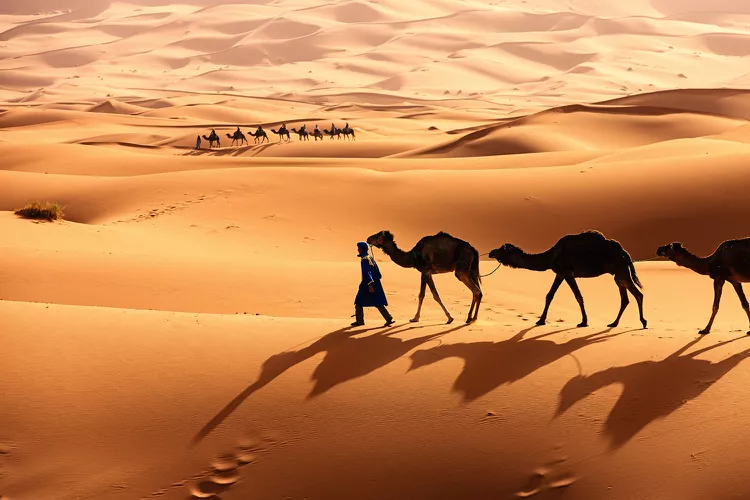
When people hear the word desert, they often imagine endless golden sand, scorching sunshine, and camels traveling across distant dunes. While this image represents certain deserts, it does not describe every desert on the planet. Some deserts are covered in stones and gravel, while others experience freezing temperatures for much of the year. What makes an area a desert is primarily its lack of precipitation rather than the amount of sand it contains.
Deserts also play an important role in the Earth’s natural systems. They influence weather patterns, provide habitats for specialized wildlife, contain valuable geological resources, and preserve evidence of ancient climates. Understanding deserts helps us appreciate how life adapts to challenging conditions and why protecting these environments is important for future generations.
What Is a Desert?
A desert is a region that receives very little precipitation compared with the amount of water lost through evaporation and other processes. Many deserts receive less than approximately 250 millimeters of precipitation annually, although the precise classification depends on the climate system being used. Some areas receive rain only occasionally, while others may experience long periods without measurable rainfall.
The defining feature of a desert is dryness. This means a desert does not necessarily need to be hot, sandy, or completely empty of vegetation. Cold deserts and polar deserts can experience snow and freezing temperatures, yet remain extremely dry because they receive little precipitation. Similarly, a rocky desert may contain almost no visible sand while still meeting the scientific definition.
Deserts vary considerably in size, elevation, temperature, and geological structure. Some contain wide plains, rugged mountains, salt flats, and deep canyons. Others feature dunes that change shape as the wind moves sand across the landscape. Despite these differences, water scarcity is the common factor that influences the climate, soil, vegetation, and wildlife of desert regions.
How Are Deserts Formed?
Deserts develop through several natural processes, and their formation is closely connected to global atmospheric circulation. One major cause is the presence of descending air in subtropical regions. As air descends, it warms and becomes less favorable for cloud formation and rainfall. This helps explain why many of the world’s largest hot deserts are located around the subtropical latitudes.
Mountains can also contribute to desert formation through a process called the rain shadow effect. Moist air moves toward a mountain range and rises as it encounters higher terrain. As the air rises, it cools and may release moisture as rain or snow on the windward side. By the time the air reaches the other side, it contains less moisture, leaving the leeward region comparatively dry.
Other deserts form because they are far from major sources of moisture or because cold ocean currents limit rainfall along nearby coastlines. In some regions, long-term geological and climatic changes have gradually transformed previously wetter landscapes into dry environments. These different processes demonstrate that deserts are not created by a single cause but by a combination of atmospheric, geographic, and historical factors.
Major Types of Deserts
Deserts are commonly divided into four broad categories: hot and dry deserts, semiarid deserts, coastal deserts, and cold deserts. These categories help explain differences in temperature, rainfall, vegetation, and seasonal conditions. Scientists may use more detailed climate classifications, but these four groups provide a useful introduction.
Hot and dry deserts experience intense sunshine, limited rainfall, and often substantial differences between daytime and nighttime temperatures. The Sahara is a well-known example. Semiarid deserts generally have less extreme conditions than the hottest deserts, although they still receive limited precipitation and may experience long dry periods. Some contain grasses, shrubs, and scattered trees adapted to water shortages.
Coastal deserts occur near coastlines where cold ocean currents and atmospheric conditions restrict rainfall. The Atacama Desert in South America is a famous example of an exceptionally dry coastal desert. Cold deserts, meanwhile, experience low precipitation alongside cold winters and sometimes short, relatively warm summers. Parts of the Gobi Desert illustrate this type of environment. Each category supports distinct ecological communities shaped by its particular climate.
The Sahara Desert: The World’s Largest Hot Desert
The Sahara Desert stretches across a large portion of northern Africa and is widely recognized as the world’s largest hot desert. It covers approximately 9.2 million square kilometers, although exact measurements depend on how its boundaries are defined. The Sahara includes parts of several countries and contains a remarkable mixture of sand seas, rocky plateaus, mountains, gravel plains, and dry valleys.
Although many photographs show the Sahara’s enormous dunes, sandy terrain represents only part of its landscape. Large areas consist of exposed rock and gravel, and some regions contain mountains with different temperatures and ecological conditions. The desert also includes oases, where groundwater reaches the surface or can be accessed by wells, allowing vegetation and human settlements to survive.
The Sahara has a long and complex history. Thousands of years ago, portions of the region experienced much wetter conditions, supporting lakes, grasslands, and a greater variety of wildlife. Rock art and archaeological discoveries provide evidence of these ancient environments and the people who lived there. Today, communities throughout the Sahara continue to maintain cultural traditions, trade networks, and livelihoods adapted to the demands of desert life.
The Arabian Desert and Its Unique Landscape
The Arabian Desert occupies much of the Arabian Peninsula and contains some of the most recognizable desert scenery in the world. Its landscapes include extensive sand dunes, rocky uplands, gravel plains, and dry mountain regions. The Rub’ al Khali, also known as the Empty Quarter, is one of the largest continuous sand deserts on Earth.
Temperatures in parts of the Arabian Desert can become extremely high during summer. Rainfall is generally limited and irregular, meaning plants and animals must make efficient use of available moisture. Some areas experience brief periods of seasonal growth after rain, while other locations remain dry for extended periods.
Human communities have adapted to these conditions over many generations. Historically, nomadic pastoralism and trade routes connected settlements across the peninsula. Camels played an important role because they could travel long distances through dry environments and provide transportation, milk, and other resources. Today, the region also contains modern cities, energy infrastructure, protected natural areas, and tourism destinations that coexist with traditional desert landscapes.
The Gobi Desert: A Cold Desert in Asia
The Gobi Desert extends across parts of Mongolia and northern China. Unlike the classic image of a hot desert, the Gobi experiences substantial seasonal temperature changes, with very cold winters and warm or hot summers. Its dryness results from geographic conditions that limit moisture, including its inland location and the influence of surrounding mountain systems.
Much of the Gobi consists of bare rock, gravel, and dry plains rather than continuous fields of sand dunes. Strong winds can shape the landscape, while limited precipitation supports hardy shrubs, grasses, and other plants in suitable locations. Water availability changes across the region, and some areas contain springs, seasonal streams, or other localized sources of moisture.
The Gobi is also known for its paleontological importance. Fossil discoveries have provided valuable evidence about prehistoric animals, including dinosaurs and their eggs. These discoveries help scientists investigate ancient ecosystems and understand how life changed over millions of years. The region also supports wildlife such as wild camels, gazelles, and other species adapted to its challenging climate.
The Atacama Desert: One of the Driest Places on Earth
The Atacama Desert lies along the Pacific coast of South America, primarily in northern Chile. It is frequently described as one of the driest nonpolar regions on Earth. Certain locations have recorded extraordinarily low precipitation, and some weather stations have experienced long periods with little or no measurable rainfall.
Several factors contribute to the Atacama’s dryness. The cold Humboldt Current influences coastal atmospheric conditions, while the Andes and other elevated terrain help restrict moisture from reaching parts of the region. These factors combine to create an environment where rain is exceptionally uncommon in some areas.
Despite its dryness, the Atacama contains fascinating natural features, including salt flats, mineral-rich landscapes, volcanic formations, and high-altitude lagoons. Certain areas occasionally experience desert blooms when unusual rainfall encourages dormant seeds to germinate. The region is also valuable for astronomy because its clear skies and low atmospheric moisture provide excellent conditions for observing distant objects in space.
Cold Deserts and Polar Deserts
Cold deserts demonstrate that extreme heat is not necessary for a region to qualify as a desert. These environments receive very little precipitation and may experience long, freezing winters. Depending on the location, their surfaces can include rocky plains, dry valleys, snow-covered ground, or frozen soil.
The Antarctic Desert is the largest desert on Earth when hot and cold deserts are considered together. Antarctica receives very little precipitation across much of its interior, even though the continent is covered by enormous amounts of ice. This may seem surprising, but desert classification depends on precipitation rather than the total amount of frozen water stored in a landscape.
Polar deserts support specialized organisms despite their severe conditions. Microorganisms, lichens, and certain mosses can survive in suitable locations, while animals in surrounding polar environments rely on food webs connected to the ocean. These ecosystems are particularly sensitive to environmental changes, and studying them helps researchers understand climate patterns, ice systems, and the limits of biological survival.
Desert Climate and Weather Conditions
Desert climates are strongly influenced by low precipitation, limited cloud cover, and the amount of solar energy reaching the surface. During the day, sunlight can heat exposed ground quickly. At night, the same ground may lose heat rapidly, especially when the air is dry and clouds provide little insulation. As a result, some deserts experience substantial daily temperature changes.
Rainfall patterns differ widely among desert regions. Some receive brief, intense storms that produce sudden runoff, while others experience only occasional light precipitation. When heavy rain falls on dry, compacted, or rocky surfaces, water may move quickly across the landscape instead of soaking into the ground. This can cause flash floods, particularly in narrow valleys and dry river channels.
Wind also plays a major role in desert weather. It can transport dust, reshape dunes, expose rock, and influence how seeds and nutrients move across the landscape. Dust storms may reduce visibility and affect air quality over large distances. Understanding these weather conditions is essential for people traveling through deserts, managing water resources, or working in desert environments.
Desert Plants and Their Survival Strategies
Desert plants have developed a variety of adaptations that allow them to survive with limited water. Some store moisture in thick stems or leaves, while others develop extensive root systems that collect water from a broad area. Certain plants grow deep roots that reach moisture far below the surface, whereas others use shallow roots to absorb brief rainfall quickly.
Many desert plants reduce water loss through small leaves, waxy coatings, protective hairs, or other structural features. Some species have leaves that are reduced to spines, helping limit evaporation while offering protection from animals. These adaptations vary among plant families, and not every desert plant uses the same survival strategy.
A particularly interesting group consists of annual plants that complete their life cycles quickly after rain. Their seeds may remain dormant for months or years until conditions become suitable for growth. Following favorable rainfall, they can germinate, flower, and produce new seeds within a relatively short period. This strategy allows plants to take advantage of rare opportunities without maintaining active growth throughout long dry periods.
Animals That Live in the Desert
Desert animals must manage water scarcity, temperature extremes, and limited food supplies. Some are active mainly at night, when conditions are cooler and the risk of overheating is lower. Others shelter underground during the hottest hours and emerge when the environment becomes more suitable for feeding or movement.
Reptiles such as lizards and certain snakes are common in many desert ecosystems. Their behavior often helps them regulate body temperature, and some species use burrows or shaded spaces to avoid excessive heat. Small mammals may obtain much of their water from food, reducing the need to drink frequently from open water sources.
Larger animals have their own adaptations. Camels are well known for their ability to travel through dry environments, but their survival does not mean they can live indefinitely without water under every condition. They conserve water through several physiological and behavioral mechanisms. Desert foxes, gazelles, rodents, birds, insects, and other animals also contribute to desert food webs. Each species occupies a particular ecological role, making biodiversity important even in environments that appear barren.
Desert Soil and Geological Features
Desert soils vary considerably depending on the underlying rock, local climate, vegetation, and geological history. Some contain coarse gravel and sand, while others have fine sediments, clay, or high concentrations of salts. Because plant cover may be sparse, the surface can be vulnerable to wind erosion and water runoff.
Salt flats are a distinctive desert feature. They can form when water carrying dissolved minerals collects in a basin and evaporates, leaving salts behind. Over long periods, repeated cycles of evaporation may create broad, pale surfaces. Some salt flats remain dry for much of the year, while others temporarily contain shallow water after rainfall.
Desert landscapes also include mesas, canyons, volcanic rocks, dunes, and exposed geological layers. These formations provide clues about ancient rivers, lakes, shifting climates, and tectonic processes. In certain regions, the present-day desert environment developed after a much wetter period, preserving evidence of conditions that no longer exist. Geological research helps explain how deserts change over time and how Earth’s surface responds to environmental forces.
The Importance of Water in Desert Ecosystems
Water is the central resource influencing life in a desert. Because rainfall is limited or unpredictable, many organisms depend on small and temporary sources of moisture. These may include seasonal pools, springs, underground aquifers, dew, and water stored in plants or food.
Oases are especially important in some desert regions. They may develop where groundwater reaches the surface naturally or where people use wells to access underground supplies. Oases can support trees, crops, wildlife, and settlements, creating relatively productive areas within a dry landscape. Their ecological and cultural importance often extends far beyond their physical size.
However, desert water supplies are not unlimited. Groundwater may take a long time to recharge, particularly in arid regions where rainfall is rare. Excessive pumping can lower water tables and threaten springs, wetlands, and agricultural activities. Sustainable water management requires understanding how quickly water sources replenish, how much is being used, and which ecosystems depend on them.
Human Life and Culture in the Desert
People have lived in desert environments for thousands of years, developing practical knowledge and cultural traditions suited to local conditions. Communities have adapted their homes, clothing, transportation, farming methods, and daily routines to manage heat, limited water, and long distances between settlements.
Some desert communities historically practiced nomadic or semi-nomadic pastoralism, moving livestock according to seasonal conditions and available grazing. Other societies established permanent settlements near rivers, oases, or underground water sources. Trade routes connected distant regions and enabled the exchange of food, textiles, tools, knowledge, and cultural traditions.
Modern desert life is diverse. Many desert regions now contain large cities, industrial facilities, agricultural operations, research centers, and tourism businesses. Traditional knowledge continues to be valuable, especially when it concerns local plants, seasonal weather, water conservation, and travel through difficult terrain. Recognizing the experiences of desert communities is essential when discussing conservation or development because local residents are directly affected by changes to their environment.
Agriculture and Food Production in Desert Regions
Agriculture in deserts is challenging because crops require suitable temperatures, nutrients, and sufficient water. However, farming can succeed where reliable water supplies and appropriate soil conditions are available. Communities have developed techniques such as irrigation, water harvesting, shade structures, and carefully selected crops to make production possible.
Drip irrigation can improve water efficiency by delivering moisture close to plant roots rather than spreading water across an entire field. Greenhouses and protected growing systems may also help farmers manage temperature and reduce water loss. In some regions, farmers cultivate dates, vegetables, grains, and other crops that suit local conditions.
Desert agriculture must be managed carefully. Poor irrigation practices can cause salt to accumulate in soil, reducing its productivity. Excessive groundwater extraction can also threaten future farming. Successful long-term production depends on matching crop choices to local resources, maintaining soil health, monitoring water quality, and avoiding the assumption that every desert area can support intensive agriculture.
Renewable Energy and the Desert Environment
Deserts receive abundant sunshine in many regions, making them attractive locations for solar energy projects. Solar photovoltaic panels convert sunlight into electricity, while concentrated solar power systems use mirrors to focus sunlight and produce heat for power generation. These technologies can help diversify energy supplies and reduce dependence on fossil fuels when integrated appropriately into the wider energy system.
Large open areas can provide space for energy infrastructure, but desert projects still require careful planning. Construction may disturb fragile soils, wildlife habitats, and migration routes. Some desert ecosystems recover slowly after disturbance because vegetation grows gradually and rainfall is limited.
Wind energy can also be useful in desert regions where local conditions support reliable wind resources. Developers need to assess environmental impacts, transmission requirements, water use, and community interests before construction. Well-planned renewable energy projects can provide economic opportunities while minimizing unnecessary damage to the landscapes that make deserts ecologically important.
Tourism and Adventure in the Desert
Deserts attract visitors interested in natural scenery, photography, wildlife, cultural experiences, hiking, and adventure activities. Popular experiences include watching the sunrise over sand dunes, exploring rocky canyons, visiting ancient settlements, and observing the night sky far from major sources of artificial light.
Adventure tourism can involve activities such as guided camel rides, off-road excursions, sandboarding, camping, and trekking. These experiences may introduce visitors to desert ecology and local traditions. However, the environment can be more demanding than it appears in photographs, and travelers should plan according to the season, terrain, and length of the journey.
Responsible tourism helps protect both natural landscapes and local communities. Visitors should follow designated routes, avoid disturbing wildlife, carry away waste, respect cultural practices, and use qualified guides when necessary. Adequate drinking water, sun protection, suitable clothing, navigation equipment, and emergency planning are essential. In remote areas, small mistakes can become serious problems because assistance may be far away.
Desertification and Environmental Challenges
Desertification is the process through which land in dry regions becomes less productive because of climatic variations and human activities. It is often associated with soil degradation, vegetation loss, erosion, and reduced agricultural productivity. Importantly, desertification does not simply mean that a natural desert expands into every neighboring area.
Several factors can contribute to desertification, including prolonged drought, excessive grazing, unsustainable farming, deforestation, and poor water management. When vegetation is removed, soil may become more exposed to wind and rain. The loss of healthy soil can then make it more difficult for plants to recover, creating a cycle of declining productivity.
Addressing desertification requires solutions suited to local conditions. These may include restoring native vegetation, improving grazing management, reducing erosion, conserving water, and supporting sustainable farming practices. In some locations, carefully designed restoration projects can help communities protect livelihoods while rebuilding soil health. Effective solutions should involve local knowledge and long-term monitoring rather than relying on a single method for every landscape.
Climate Change and the Future of Deserts
Climate change can affect deserts through shifts in temperature, rainfall patterns, drought frequency, and the intensity of extreme weather. Some dry regions may experience greater heat stress or longer periods without rain, while other locations may receive heavier rainfall during certain events. The precise effects vary according to geography and regional climate systems.
Higher temperatures can increase evaporation and make water management more difficult. Plants and animals already living near their physiological limits may face additional pressure, especially when heat combines with habitat disturbance or reduced access to water. Changes in rainfall can also influence the timing of plant growth, seed production, and the availability of food for wildlife.
Adaptation requires reliable climate information, effective conservation, sustainable water use, and planning for extreme conditions. Protecting connected habitats can help wildlife move as conditions change. Communities may also benefit from heat preparedness, improved infrastructure, and agricultural practices suited to local water availability. Deserts are not static landscapes, and understanding their changing conditions is important for both ecological protection and human well-being.
How to Protect Deserts and Their Wildlife
Protecting deserts begins with recognizing that their ecosystems are valuable even when they contain relatively little visible vegetation. Native plants stabilize soil, animals contribute to food webs, and natural geological features preserve important environmental history. Damage to these systems may take a long time to reverse because growth and recovery can be slow.
One important conservation measure is habitat protection. Protected areas can provide space for wildlife, preserve distinctive landscapes, and support scientific research. However, effective conservation also requires managing pressures outside protected boundaries, including development, mining, illegal hunting, pollution, and unsustainable resource extraction.
Individuals can contribute by visiting deserts responsibly, avoiding littering, respecting wildlife, and supporting credible conservation initiatives. Travelers should not remove fossils, plants, or other protected natural objects without authorization. Communities and governments can strengthen conservation through environmental education, responsible land-use planning, and collaboration with people who depend on desert resources for their livelihoods.
Interesting Facts About Deserts
Deserts contain some of the most surprising environments on Earth. The Sahara is the largest hot desert, while Antarctica is the largest desert overall when precipitation-based classification is used. These examples show that deserts can be extremely hot or intensely cold while sharing the same fundamental characteristic of limited precipitation.
Another interesting fact is that sand dunes are not present everywhere. Large areas of many deserts are covered by rock, gravel, or exposed bedrock. The appearance of a desert depends on its geological history, wind patterns, and available sediment. Even two neighboring desert regions can have dramatically different landscapes.
Deserts can also experience sudden changes after rainfall. Seeds that have remained dormant may germinate, insects may become more active, and temporary pools can support short-lived communities. In certain regions, unusual rainfall events trigger spectacular wildflower displays. These events reveal that desert ecosystems are not lifeless; they are adapted to take advantage of brief periods when water becomes available.
Frequently Asked Questions About Deserts
What is the main characteristic of a desert?
The main characteristic of a desert is low precipitation relative to water loss. Many deserts receive less than approximately 250 millimeters of precipitation each year, although scientific classification depends on the method used. Deserts can be hot or cold, and their surfaces may consist of sand, gravel, rock, or ice.
What is the largest desert in the world?
Antarctica is the largest desert in the world because it receives very little precipitation across much of its area. The Sahara is the world’s largest hot desert. The distinction is important because deserts are defined primarily by dryness, not by high temperatures.
Why are deserts hot during the day and cold at night?
Many deserts have dry air and limited cloud cover. The ground heats rapidly under direct sunlight, then loses heat after sunset. With little moisture and few clouds to retain warmth, nighttime temperatures can fall considerably. However, temperature differences vary by location and season.
Can plants and animals survive in deserts?
Yes. Desert organisms have evolved adaptations that help them manage limited water and extreme temperatures. Plants may store moisture or reduce evaporation, while animals may be nocturnal, shelter underground, or obtain water from their food. These strategies allow many species to survive in environments that appear harsh.
Are all deserts covered in sand?
No. Many deserts contain rocky plains, gravel surfaces, salt flats, mountains, and dry valleys. Sand dunes are a distinctive feature of some desert landscapes, but they are not a requirement for an area to be classified as a desert.
What is desertification?
Desertification is the degradation of land in dry regions due to a combination of climatic conditions and human activities. It can reduce soil fertility, damage vegetation, and make farming more difficult. Sustainable land management, vegetation restoration, and responsible water use can help reduce its impacts.
Why are deserts important to the planet?
Deserts support specialized wildlife, preserve geological and archaeological records, influence atmospheric processes, and provide resources for local communities. They also offer opportunities for scientific research, astronomy, tourism, and renewable energy development. Protecting them helps maintain biodiversity and environmental stability.
Conclusion
Deserts are among the most distinctive and scientifically important environments on Earth. Their limited precipitation creates challenges for plants, animals, and people, yet these conditions have also encouraged remarkable adaptations and cultural innovations. From the immense dunes of the Sahara to the freezing expanses of Antarctica, deserts demonstrate the extraordinary diversity of the natural world. Learning about deserts involves more than understanding dry weather or recognizing famous landscapes. It means exploring climate systems, geology, biodiversity, water management, human history, and the environmental pressures that shape these regions. Deserts can support thriving communities and complex ecosystems when their resources are managed carefully.
YOU MAY HAVE MASSED