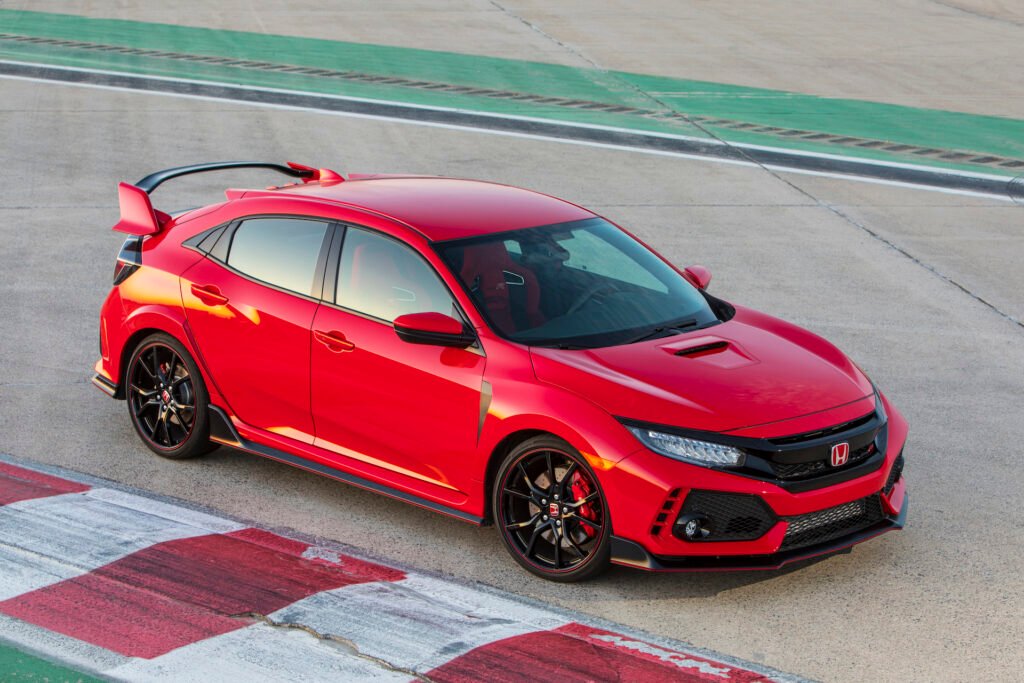
The Honda Civic Type R is one of the most recognizable performance cars in the modern automotive world. Known for its powerful turbocharged engine, sharp handling, aggressive styling, and practical interior, it offers a driving experience that feels exciting without sacrificing everyday usability. Unlike many sports cars that focus almost entirely on speed, the Civic Type R combines performance engineering with the convenience of a hatchback.
Honda developed the Type R name to represent its high-performance vehicles. Over the years, the Civic Type R has earned a loyal following among car enthusiasts, track-day drivers, and people who simply enjoy driving a responsive manual-transmission car. Its reputation comes from a combination of careful engineering, strong turbocharged performance, and a chassis designed to handle demanding corners.
Another reason the Honda Civic Type R remains popular is its balance between fun and practicality. Drivers can use it for daily commuting, weekend road trips, and occasional track sessions. It offers useful cargo space, comfortable seating, modern technology, and performance features that make it feel very different from an ordinary compact hatchback.
Whether you are researching your first performance car or comparing the Civic Type R with other sporty vehicles, understanding its engine, design, interior, technology, running costs, and ownership experience can help you make a more informed decision.
What Is the Honda Civic Type R?
The Honda Civic Type R is the high-performance version of the Honda Civic hatchback. It takes the basic Civic concept and develops it into a more focused driver’s car with additional power, improved suspension components, stronger brakes, performance tires, and a more aggressive exterior design.
The Type R name first became associated with Honda’s performance philosophy through models such as the NSX Type R and Integra Type R. The Civic Type R later brought that philosophy to a practical compact car. Each generation introduced improvements in power delivery, body stiffness, steering response, braking performance, and electronic driving systems.
Modern versions of the Civic Type R are particularly notable because they do not rely on an automatic transmission to deliver their sporty character. Recent generations have emphasized a six-speed manual gearbox, allowing drivers to control gear changes themselves. For enthusiasts who enjoy being involved in the driving process, this is a major attraction.
The car is not simply a standard Civic with a body kit. Its engineering changes extend to the suspension, differential, engine cooling, aerodynamics, braking system, and other mechanical components. These upgrades help the vehicle maintain stability and control when driven enthusiastically.
History and Evolution of the Honda Civic Type R
The Honda Civic Type R has developed through several generations, with each model reflecting Honda’s changing approach to performance engineering. The original Civic Type R appeared in the late 1990s, when lightweight construction and high-revving naturally aspirated engines were important parts of Honda’s performance identity.
Early versions became popular because they delivered an engaging driving experience without requiring an extremely large engine. Their relatively low weight, responsive steering, and manual transmissions made them enjoyable on winding roads. These early cars also established the Type R tradition of combining a practical body style with focused performance hardware.
Later generations expanded the concept. The Civic Type R became more powerful, more technologically advanced, and more visually distinctive. Honda introduced turbocharged engines in later models, providing stronger low- and mid-range torque while maintaining the high-performance character expected from the badge.
The fifth-generation Civic Type R, introduced for the 2017 model year in many markets, helped establish the modern turbocharged formula. The subsequent generation refined the exterior styling, chassis balance, interior quality, and overall driving experience. The current generation in this lineage is widely recognized for combining everyday comfort with serious performance capability.
Each generation has its own appeal. Older models attract enthusiasts who appreciate simpler mechanical systems and naturally aspirated engines, while newer models offer greater power, advanced safety features, and more sophisticated chassis technology.
Honda Civic Type R Engine and Performance
The engine is one of the most important reasons people choose the Honda Civic Type R. Recent generations use Honda’s K20C1 2.0-liter turbocharged four-cylinder engine, which provides strong acceleration and an energetic response when the driver presses the accelerator.
In the U.S.-market 2023-and-newer FL5 generation, the engine produces approximately 315 horsepower and 310 lb-ft of torque. Specifications differ by market and model year, so buyers should confirm the figures for the exact vehicle they are considering. The previous FK8 generation offered approximately 306 horsepower in U.S. specification, demonstrating how Honda has continued to refine its performance formula.
Turbocharging allows the Civic Type R to deliver substantial torque without requiring a large-displacement engine. This makes the vehicle effective during highway overtaking, quick acceleration from lower speeds, and corner exits. The engine is also supported by cooling and airflow systems designed to help maintain performance under demanding conditions.
However, raw horsepower tells only part of the story. The Civic Type R’s appeal comes from how the engine works with the transmission, front differential, tires, and suspension. The powertrain is engineered to provide a connected experience rather than simply producing impressive numbers on paper.
Drivers should also remember that acceleration varies with road conditions, tire grip, temperature, elevation, and driver technique. A powerful engine cannot overcome poor traction or unsafe driving conditions, so responsible driving remains essential.
Six-Speed Manual Transmission and Driving Control
One of the defining features of the Honda Civic Type R is its six-speed manual transmission. While many modern performance cars use automatic or dual-clutch gearboxes, Honda continues to offer a traditional manual setup in the Civic Type R, making it especially attractive to drivers who enjoy changing gears themselves.
The gearbox is designed to provide precise shifts and a mechanical connection between the driver and the car. Its short, deliberate gear changes contribute to the vehicle’s engaging character. A well-designed manual transmission can make even an ordinary journey feel more involved, particularly on roads where speed limits and traffic allow smooth, legal driving.
Honda also incorporates rev-matching technology on applicable recent models. This system adjusts engine speed during downshifts to help match the engine to the lower gear. It can make downshifting smoother and reduce the need for advanced heel-and-toe technique, although experienced drivers can still enjoy managing gear changes themselves.
The clutch and transmission require proper use. Riding the clutch, shifting aggressively before the drivetrain is ready, or forcing the gear lever can increase wear. Learning smooth clutch control and selecting the correct gear will help preserve the vehicle and improve the driving experience.
For buyers who strongly prefer automatic transmissions, the Civic Type R may not be the ideal choice. Its manual-only approach in recent generations is part of its identity, but it is also an important practical consideration before purchasing one.
Exterior Design and Aggressive Styling
The Honda Civic Type R has a distinctive exterior that immediately separates it from the standard Civic hatchback. Its wide stance, sporty front bumper, functional air openings, rear diffuser, and prominent rear wing communicate its performance-focused purpose.
The latest generation adopts a cleaner design than some of its predecessors. Earlier modern Type R models used numerous sharp creases and dramatic aerodynamic elements, while the newer design presents a more restrained appearance. It remains unmistakably sporty, but its styling is more integrated with the overall shape of the Civic.
The front end is designed to manage airflow while giving the car an assertive appearance. Side skirts and carefully shaped body panels contribute to the vehicle’s visual balance. At the rear, the diffuser area and wing help create a purposeful performance look. Depending on the generation and specification, certain aerodynamic components also contribute to stability and airflow management.
The exterior is not only about appearance. Aerodynamics can influence cooling, high-speed stability, and the way air moves around the vehicle. However, individual components should not automatically be assumed to provide major downforce or measurable performance benefits without considering the full design.
Wheel design is another important part of the Type R’s identity. Large alloy wheels and performance tires fill the wheel arches and provide the grip needed for its handling capabilities. Their low-profile tires also mean drivers should be careful around potholes, rough roads, and damaged pavement.
Interior Design and Cabin Comfort
Inside, the Honda Civic Type R combines the familiar layout of a modern Civic with performance-specific details. The cabin is designed to keep the driver focused while maintaining the storage, controls, and seating needed for everyday use.
Sport seats are among the most noticeable interior features. They are shaped to provide additional support during cornering while remaining suitable for normal journeys. The exact seat materials, adjustments, and trim details depend on the market and model year. Buyers should check the specific vehicle because equipment can differ between countries.
The dashboard generally follows a clean, driver-oriented layout. Important controls are positioned within easy reach, and the steering wheel provides access to frequently used functions. Performance-specific displays and driving-mode settings allow drivers to monitor selected vehicle information without requiring aftermarket equipment.
Cabin quality is also an important consideration. The Civic Type R offers a more specialized atmosphere than an ordinary compact hatchback, but it still includes practical touches such as cupholders, door storage, and useful small-item compartments. The cabin may not feel as luxurious as that of an expensive premium sports car, yet its straightforward layout suits its purpose.
Seat comfort is subjective, so drivers should test the car before purchasing. The supportive bolsters that work well during spirited driving may feel different for people with different body shapes or seating preferences.
Infotainment and Connectivity Features
Modern Honda Civic Type R models include infotainment systems designed to make daily driving more convenient. Depending on the model year and market, the system may provide smartphone integration, Bluetooth connectivity, navigation-related functions, music playback, and access to vehicle settings.
Apple CarPlay and Android Auto are particularly useful for drivers who rely on their phones for navigation, calls, messages, and audio streaming. Their availability and connection method can vary by specification, so it is worth checking the equipment list for a particular vehicle.
The driver information display can also provide useful details about the car’s operation. Depending on the model, drivers may be able to view performance-related information, fuel economy, trip data, and selected driving settings. These features add convenience without changing the basic mechanical character of the vehicle.
Physical controls remain important because drivers should not have to navigate complicated menus for common tasks. Climate controls, steering-wheel buttons, and other frequently used functions help make the cabin easier to operate while driving.
Technology should support the driving experience rather than distract from it. Setting up navigation, playlists, and communication features before beginning a journey is a simple way to use the infotainment system more safely.
Suspension, Steering, and Handling
The Honda Civic Type R is widely respected for its handling, and its suspension engineering plays a major role in that reputation. The car is designed to remain composed through corners, provide accurate steering feedback, and make effective use of its front tires.
The front-wheel-drive layout creates particular engineering challenges. During acceleration, the front tires must manage steering forces as well as engine power. Honda addresses this challenge through suspension geometry, a limited-slip differential, and careful chassis tuning. These elements help improve traction and reduce the tendency for the steering wheel to react strongly to uneven road surfaces under power.
Adaptive suspension is available on recent generations, with driving modes that change the vehicle’s response to different conditions. A more comfortable setting can make ordinary commuting less tiring, while sportier settings provide a firmer feel for smoother roads or track use. The most aggressive setting may be unnecessarily harsh on damaged urban streets.
Steering response is another strength. The Civic Type R is designed to respond accurately to driver inputs, allowing the driver to place the car confidently through bends. Its relatively compact body and carefully tuned chassis also help it feel more manageable than some larger performance vehicles.
Good handling does not eliminate the laws of physics. Tires have limited grip, and sudden steering inputs or excessive speed can cause loss of control. The car’s abilities are best enjoyed on public roads at legal speeds or in controlled motorsport environments.
Braking Performance and Safety
Strong acceleration is only useful when a car can slow down predictably. The Honda Civic Type R therefore uses a performance-oriented braking system intended to handle repeated braking demands more effectively than the setup found on many ordinary compact cars.
Large brake components and performance-focused pads help provide stopping power and pedal response. Depending on the generation, the braking system may use different front and rear configurations, so exact component specifications should be checked for the model under consideration.
Brake performance depends on more than the hardware. Tire condition, road temperature, brake fluid, pad condition, vehicle load, and driving technique all affect stopping distances. Even a powerful performance car cannot stop instantly, particularly on wet or slippery pavement.
Routine inspections are especially important for a car that is driven enthusiastically. Brake pads, discs, fluid, and tires should be checked according to Honda’s maintenance guidance and more frequently when the car sees regular track use. Warning signs such as vibration, unusual noises, a soft pedal, or reduced braking performance deserve prompt attention.
Modern driver-assistance equipment may include features such as collision mitigation, lane-keeping assistance, adaptive cruise control, and other safety technologies, depending on the model and market. These systems can help in appropriate circumstances, but they do not replace an attentive driver.
Fuel Economy and Everyday Efficiency
Although the Honda Civic Type R is a performance vehicle, its turbocharged four-cylinder engine offers a different efficiency profile from that of a large-engine sports car. Under moderate driving conditions, it can be relatively economical for its performance level, especially when compared with heavier or more powerful vehicles.
Actual fuel consumption depends on the model year, transmission, traffic, terrain, tire selection, and driving style. Smooth acceleration and steady cruising generally use less fuel than repeated hard acceleration and high engine speeds. Short trips and heavy traffic can also reduce efficiency because the engine spends more time operating under less favorable conditions.
The Type R requires suitable fuel for its engine and market specification. Owners should follow the fuel grade recommended in the official owner’s manual rather than guessing based on general advice for turbocharged cars. Using the correct fuel helps maintain the intended performance and operating characteristics.
It is also useful to consider the vehicle’s fuel tank capacity and local fuel prices when estimating monthly expenses. A driver who travels long distances every day may have different ownership costs from someone who uses the car mainly on weekends.
Fuel economy should be viewed alongside performance, tire costs, insurance, and maintenance. The Civic Type R is designed to offer a rewarding driving experience, so its running costs may be higher than those of a basic commuter hatchback.
Cargo Space and Practicality
One of the biggest advantages of the Honda Civic Type R is its hatchback body style. Unlike many traditional two-seat sports cars, it offers a rear seating area and a useful cargo compartment, making it practical enough for a wide range of everyday tasks.
The rear seats can accommodate passengers, although available space depends on their height and seating position. The sloping roofline and sporty front seats may affect comfort for some occupants, so families should test the rear cabin before buying.
The cargo area is suitable for groceries, backpacks, work equipment, luggage, and other everyday items. Folding the rear seats expands the available carrying space for longer or bulkier objects. Exact cargo measurements and seat configurations differ by generation and market.
This practicality makes the Civic Type R appealing to people who want one vehicle that can handle several responsibilities. It can serve as a commuter, a weekend road-trip car, and a performance vehicle without requiring a separate sports car for leisure driving.
However, practical compromises remain. The low ride height can make entry and exit less convenient, and the performance suspension may feel firm on rough roads. Large wheels and low-profile tires also require extra care when driving over potholes or damaged surfaces.
Honda Civic Type R Driving Modes
Driving modes allow the Honda Civic Type R to adapt to different situations. Depending on the generation, the available settings may adjust suspension firmness, steering weight, throttle response, engine characteristics, and other systems.
A comfort-oriented mode is generally best suited to ordinary commuting and longer journeys. It can make the suspension more forgiving and reduce the effort required to live with the car in everyday traffic. This setting is especially useful when the road surface is uneven or the driver wants a calmer experience.
Sportier modes sharpen the car’s responses. Throttle inputs may feel more immediate, steering may become heavier, and suspension settings may become firmer. These changes can make the car feel more focused, although a firmer setting is not necessarily better on a rough public road.
Some generations include an individual or customizable mode that allows the driver to select preferred settings for different systems. This can be useful for balancing comfortable suspension behavior with a more responsive steering feel.
Driving modes do not increase the physical grip available from the tires indefinitely. They change how the car responds, but safe driving still depends on road conditions, visibility, tire condition, and appropriate speed.
Honda Civic Type R Price and Market Availability
The price of the Honda Civic Type R varies considerably depending on the country, model year, trim, taxes, import duties, and local demand. Buyers should distinguish between the manufacturer’s suggested retail price, the actual dealer price, and the final cost of bringing the car onto the road.
In markets such as the United States, new-car pricing is generally quoted in local currency before certain taxes, registration costs, and optional equipment. Dealer markups may also affect the amount buyers are asked to pay. Comparing several authorized dealers can help establish whether a quoted price is reasonable.
The situation can be very different in countries where the Civic Type R is imported in limited numbers. Import duties, shipping, currency exchange rates, registration requirements, and availability of replacement parts can significantly increase the total cost. A vehicle that appears affordable in its original market may be considerably more expensive after importation.
Used examples provide another route into ownership. Their prices depend on mileage, condition, service history, accident records, modifications, and demand for the specific generation. Low-mileage cars with documented maintenance may command a premium, while heavily modified vehicles require more careful inspection.
Before paying a deposit, buyers should confirm the vehicle’s identity, specification, ownership documents, import status where relevant, and service records. A professional pre-purchase inspection is particularly valuable for a performance car that may have been driven hard.
Honda Civic Type R in Pakistan
The Honda Civic Type R attracts interest among Pakistani car enthusiasts because it combines a distinctive appearance with serious performance potential. However, buying and maintaining one in Pakistan can be more complicated than purchasing a locally available mainstream sedan.
Availability depends on imports, individual sellers, and the particular generation being offered. Buyers may encounter imported vehicles with different specifications, steering configurations, equipment packages, and documentation histories. These differences make it important to verify the exact model rather than relying only on the Type R badge.
Import duties and taxes can have a substantial effect on the final price. Exchange rates, shipping costs, registration rules, and the availability of suitable vehicles also influence market value. As a result, an advertised price should be treated as a starting point rather than a complete estimate of ownership expenses.
Road conditions are another practical consideration. The Civic Type R’s low ride height, firm suspension, and low-profile tires can make rough surfaces, deep potholes, and steep ramps challenging. Drivers may need to slow down considerably over damaged roads and carefully assess parking entrances.
Maintenance planning is equally important. Specialized engine parts, suspension components, brakes, and model-specific body panels may be more expensive or harder to source than components for an ordinary Civic. Before purchasing, confirm that a reliable workshop can service the car and that essential parts are reasonably obtainable.
For Pakistani buyers, the best decision comes from evaluating the full ownership picture. Purchase price, fuel, maintenance, tires, insurance, import documentation, and resale value all matter alongside performance.
Maintenance and Long-Term Reliability
The Honda Civic Type R benefits from Honda’s experience with performance engines and compact-car engineering, but it still requires consistent maintenance. Turbocharged engines, manual transmissions, performance brakes, and specialized tires can all become expensive if neglected.
Regular oil changes are essential. Owners should use the oil specification and service intervals recommended for their specific model and driving conditions. A car that regularly sees heavy traffic, high temperatures, or track sessions may require a more careful maintenance schedule than one used mainly for gentle commuting.
The cooling system also deserves attention. The engine, radiator, coolant, hoses, and related components must remain in good condition to manage heat effectively. Warning signs such as unexplained coolant loss, rising temperatures, or persistent fluid leaks should be investigated promptly.
Transmission and clutch condition are important when inspecting a used example. Difficult gear changes, clutch slipping, unusual drivetrain noises, or evidence of poor modifications can indicate the need for further investigation. A specialist familiar with the Civic Type R can help identify issues that might be overlooked during a casual inspection.
Suspension, brakes, tires, and wheel alignment should also be checked regularly. Performance driving can accelerate wear, especially when the vehicle is used on a circuit. Maintenance records provide useful evidence of how the car has been treated, although they should be supported by a physical inspection.
A well-maintained Type R can provide many years of enjoyable ownership, but no model is completely free from mechanical risk. Condition, driving history, servicing, and previous repairs are more useful indicators than a reputation alone.
Common Problems to Check Before Buying a Used Civic Type R
Buying a used Honda Civic Type R requires more attention than buying an ordinary commuter vehicle because previous owners may have used it for spirited driving or track sessions. This does not mean every example has problems, but the inspection should reflect the car’s performance capabilities.
Start with the engine and cooling system. Look for signs of oil or coolant leaks, irregular running, warning lights, unusual noises, and evidence of poor-quality repairs. The engine should start and operate normally under appropriate conditions, and any diagnostic codes should be investigated rather than simply erased.
Next, examine the clutch, gearbox, differential, and suspension. A slipping clutch, difficult shifts, excessive drivetrain noise, damaged suspension components, or uneven tire wear may indicate neglect or previous hard use. A test drive should be conducted safely and legally, with attention to unusual vibration, pulling, or inconsistent braking.
The bodywork and underbody also deserve careful inspection. Check for accident repairs, mismatched paint, damaged wheels, scraping underneath the car, and signs of corrosion where relevant. A performance body kit or aftermarket wing does not prove that a car has been properly maintained.
Finally, ask about modifications. Changes to engine tuning, exhaust systems, intake components, suspension, or wheels can affect reliability, emissions compliance, insurance, and resale value. Quality varies significantly between modifications, so buyers should establish what has been changed and whether the original parts are available.
A complete service history and independent specialist inspection provide a much stronger basis for a decision than a seller’s assurances alone.
Honda Civic Type R vs. Standard Honda Civic
The standard Honda Civic and the Civic Type R share a basic family resemblance, but they serve different priorities. A regular Civic is designed primarily for comfortable transportation, efficiency, and broad everyday appeal. The Type R adds a more powerful engine, performance-focused suspension, upgraded braking hardware, distinctive styling, and a manual driving experience.
For daily commuting, a standard Civic may be the more sensible choice. Depending on the version, it can offer lower running costs, a softer ride, and an easier ownership experience. Drivers who spend most of their time in traffic may not need the Type R’s additional performance hardware.
The Type R is better suited to buyers who value handling, acceleration, steering response, and driver involvement. Its engineering allows it to deliver an experience that feels much more specialized than a typical compact car. Those benefits are particularly noticeable on suitable roads and controlled circuits.
Purchase price is another major difference. The Type R generally costs more than a standard Civic, and its performance tires, brakes, and other components can increase maintenance expenses. Insurance and fuel costs may also differ depending on the driver and market.
The right choice depends on how the car will be used. A standard Civic is a strong option for practical transportation, while the Civic Type R makes more sense for someone who actively values performance and accepts the associated compromises.
Honda Civic Type R vs. Other Performance Hatchbacks
The performance hatchback category includes several vehicles that combine compact dimensions with powerful engines and sporty handling. Depending on the market, alternatives may include the Volkswagen Golf R, Hyundai Elantra N, Hyundai i30 N, and other performance-focused compact models.
The Honda Civic Type R stands out for its manual transmission, front-wheel-drive layout, precise handling, and strong chassis development. Rather than relying on all-wheel drive to distribute power to all four wheels, it focuses on maximizing the performance of its front tires through suspension geometry and differential engineering.
The Volkswagen Golf R, where available, takes a different approach by using an all-wheel-drive system. This can provide strong traction during acceleration and a different balance of everyday comfort and performance. However, drivetrain complexity, pricing, and running costs depend on the specific version.
Hyundai’s N performance models offer another alternative, with their own engine tuning, suspension settings, driving modes, and performance equipment. Depending on the model, they may appeal to buyers seeking a different mix of technology, comfort, exhaust character, and purchase price.
There is no universal winner for every driver. Some people prefer the Type R’s steering feel and manual gearbox, while others prioritize all-wheel-drive traction, automatic-transmission availability, price, or comfort. Comparing test drives, equipment, warranties, and local service support is more useful than choosing solely by horsepower figures.
Advantages of Owning a Honda Civic Type R
One of the biggest advantages of the Honda Civic Type R is its engaging driving experience. The combination of a turbocharged engine, manual transmission, responsive steering, and carefully tuned chassis gives drivers plenty of control over how the vehicle behaves.
Another strength is its versatility. The hatchback body offers practical cargo space, rear seating, and everyday convenience. Owners can use the vehicle for commuting, shopping, and travel without giving up the performance character that makes it special.
The Type R also has a recognizable identity. Its design, mechanical specification, and place in Honda’s performance history make it appealing to enthusiasts who appreciate cars developed around driver involvement. Depending on the market and generation, demand for clean examples may also support resale value, although future prices cannot be guaranteed.
Modern technology and safety equipment add convenience, while adaptive suspension on applicable models helps broaden the car’s usable range. These features make it easier to enjoy the car outside of specialized performance environments.
For people who want a compact vehicle that offers more than basic transportation, the Civic Type R presents a compelling combination of speed, handling, practicality, and personality.
Disadvantages of the Honda Civic Type R
Despite its strengths, the Honda Civic Type R is not the right car for everyone. Its performance-oriented suspension can feel firm on rough roads, and the low-profile tires are more vulnerable to pothole damage than taller tire setups commonly found on ordinary family cars.
The manual transmission is another consideration. Enthusiasts may see it as a major benefit, but drivers who spend long periods in heavy traffic may prefer an automatic. The clutch and gearbox also require appropriate technique, especially if the car is driven aggressively.
Ownership costs can be higher than those of a standard compact hatchback. Performance tires, brake components, specialized repairs, insurance, and fuel expenses should all be considered. These costs can become more significant in markets where the car is imported or model-specific parts are difficult to source.
The styling may also be too aggressive for buyers who prefer a discreet appearance. Although newer versions use a more restrained design, the Type R remains visually distinct from a conventional family hatchback.
Finally, availability and pricing can vary widely. In some markets, limited supply or dealer markups make it difficult to find one at a reasonable price. Buyers should avoid stretching their budget simply to acquire a desirable performance badge.
Is the Honda Civic Type R Worth Buying?
The Honda Civic Type R can be an excellent purchase for drivers who appreciate a manual gearbox, responsive handling, strong turbocharged performance, and a practical hatchback body. Its engineering makes it enjoyable in several situations, from daily driving to occasional track use.
However, its value depends on the buyer’s needs and budget. Someone who primarily wants inexpensive transportation may be better served by a standard Civic or another economical compact car. A buyer who values acceleration, handling, and driver engagement may find the additional cost worthwhile.
Before purchasing, calculate the full cost of ownership rather than focusing only on the asking price. Include fuel, insurance, maintenance, replacement tires, brake servicing, registration, and any import-related expenses. For a used car, reserve money for unexpected repairs as well.
It is also worth comparing multiple model years. Older generations may offer a different engine character or a lower entry price, while newer versions can provide updated styling, refinement, and equipment. The best option is not necessarily the newest or most powerful model; it is the one that matches the buyer’s priorities and financial situation.
A careful test drive and independent inspection can make a substantial difference. If the car’s condition, service history, documentation, and price are all satisfactory, the Civic Type R can deliver a rewarding ownership experience.
Tips for Getting the Best Honda Civic Type R Ownership Experience
The first step is to understand the vehicle before driving it enthusiastically. Learn how the manual transmission, clutch, driving modes, and safety systems work. Smooth inputs generally improve comfort, reduce unnecessary wear, and help the driver maintain better control.
Second, use the recommended maintenance schedule. Keep records of oil changes, fluid replacements, brake servicing, tire changes, and repairs. Good documentation helps track the vehicle’s condition and can also reassure future buyers.
Third, choose tires carefully. The correct tire size, load rating, speed rating, and specification are important for handling and safety. Cheap or unsuitable tires can reduce grip and compromise the performance characteristics that make the Type R appealing.
Fourth, treat modifications cautiously. Engine tuning and aftermarket parts may improve certain characteristics, but they can also increase stress on mechanical components, affect emissions compliance, and create insurance or warranty complications. Quality installation and appropriate supporting modifications are essential.
Finally, enjoy the car responsibly. Public roads are unpredictable, and aggressive acceleration or cornering can endanger other people. Drivers who want to explore the vehicle’s limits should consider an organized track day with proper safety procedures, suitable tires, and attention to fluid and brake condition.
Frequently Asked Questions About the Honda Civic Type R
1. What engine does the Honda Civic Type R have?
Recent Civic Type R generations use a 2.0-liter turbocharged four-cylinder engine. The FL5 generation produces approximately 315 horsepower and 310 lb-ft of torque in U.S. specification. Earlier generations have different power outputs, so the exact model year and market should be checked.
2. Is the Honda Civic Type R a good daily driver?
Yes, it can work well as a daily driver because it offers useful seating, hatchback cargo space, modern technology, and adaptable driving settings on applicable models. However, its firm suspension, manual transmission, and higher running costs may not suit every commuter.
3. Is the Honda Civic Type R automatic or manual?
Recent generations have emphasized a six-speed manual transmission. Buyers who require an automatic should confirm the available transmission options in their market, as the Type R’s specification differs from other Civic models.
4. Is the Honda Civic Type R fuel-efficient?
For a performance car, its turbocharged four-cylinder engine can deliver reasonable efficiency during moderate driving. Actual consumption depends on traffic, road conditions, driving style, model year, and fuel specification.
5. Is the Honda Civic Type R suitable for Pakistani roads?
It can be driven in Pakistan, but road conditions require consideration. Low ground clearance, firm suspension, and low-profile tires make potholes, rough surfaces, and steep ramps potential challenges. Parts availability and import-related ownership costs should also be assessed.
6. Does the Honda Civic Type R have good resale value?
Resale value depends on market demand, mileage, maintenance history, accident records, modifications, and the condition of the individual car. Well-maintained examples may attract enthusiast interest, but no resale value is guaranteed.
7. What should I check before buying a used Honda Civic Type R?
Review the service history, engine condition, cooling system, clutch, gearbox, suspension, brakes, tires, and bodywork. Check for accident damage, undocumented modifications, and warning lights. An independent inspection by a specialist is strongly recommended.
8. Is the Honda Civic Type R better than the standard Civic?
The Type R is better suited to drivers who prioritize performance, handling, and manual driving involvement. A standard Civic may be more appropriate for buyers who want lower running costs, a softer ride, and straightforward everyday transportation.
9. Can the Honda Civic Type R be used for track driving?
Yes. Its performance engine, suspension, brakes, and chassis make it suitable for organized track use when properly maintained. Track driving places additional demands on tires, brakes, cooling, and fluids, so preparation and post-event inspections are important.
10. Why is the Honda Civic Type R popular among car enthusiasts?
Its popularity comes from its combination of strong turbocharged performance, precise handling, manual transmission, distinctive styling, and practical hatchback design. It offers an enthusiast-focused experience without requiring the compromises associated with many dedicated sports cars.
Conclusion
The Honda Civic Type R is a performance hatchback that successfully combines everyday usefulness with serious driving ability. Its turbocharged engine, six-speed manual transmission, responsive steering, advanced suspension, and distinctive design make it a standout option for enthusiasts who want a car that feels special without abandoning practicality. Its appeal goes beyond acceleration and horsepower. The Civic Type R has been developed around the relationship between the driver, the engine, the transmission, and the chassis. That combination gives it a character that is difficult to judge from specifications alone.
Nevertheless, prospective owners should consider the complete ownership experience. Purchase price, road conditions, fuel costs, maintenance, tire replacement, and local parts availability can all influence whether the vehicle is the right choice. Buyers in import-dependent markets such as Pakistan should pay particular attention to documentation and long-term servicing.
YOU MAY HAVE MASSED