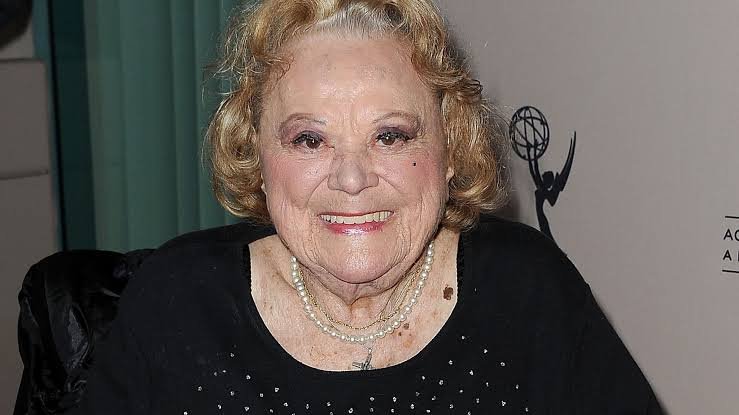
Rose Marie was one of those rare entertainers whose career seemed almost impossible to measure. She entered show business as a very young child and remained connected to entertainment for roughly nine decades. During that extraordinary journey, she worked in radio, film, television, theater, nightclubs, records, and comedy. For many viewers, she became especially familiar as Sally Rogers on The Dick Van Dyke Show, but that famous role represented only one chapter of a much bigger story.
Born Rose Marie Mazzetta in New York City on August 15, 1923, she started performing when she was only three years old. As a child, she became known professionally as Baby Rose Marie and developed a reputation for having a remarkably powerful singing voice for someone so young. Her early success helped establish a career that would eventually stretch across several generations of American entertainment.
What made Rose Marie particularly interesting was her ability to change with the entertainment industry. She began in an era when radio and vaudeville were major forms of entertainment, later moved into movies and Broadway, became a successful television performer, and eventually appeared in programs and projects decades after her childhood fame. Her longevity was not simply the result of staying famous; it came from repeatedly proving that she could entertain audiences in different formats.
Who Was Rose Marie?
Rose Marie was an American actress, singer, comedian, and vaudeville performer whose professional life began during childhood. Her birth name was Rose Marie Mazzetta, and she was born in New York City in 1923. She became famous early under the name Baby Rose Marie before eventually becoming better known simply as Rose Marie.
Her early career was built around singing and performing. At a time when child performers were often promoted as novelty acts, Rose Marie had genuine stage ability and a distinctive personality. Her talent allowed her to move beyond the limitations normally associated with child entertainment. Instead of disappearing when she grew older, she successfully reinvented herself.
For modern audiences, Rose Marie is perhaps best remembered as Sally Rogers from The Dick Van Dyke Show. Sally was a television comedy writer working alongside Rob Petrie and Buddy Sorrell. The character was smart, confident, sarcastic, and professionally capable, giving Rose Marie an opportunity to combine her comedic timing with a strong personality. Her performance became one of the defining parts of the classic sitcom.
Rose Marie’s Childhood and Early Life
Rose Marie was born on August 15, 1923, in New York City. Her parents were Frank Mazzetta, who was also known as Frank Curley, and Stella Gluszcak. From a remarkably young age, she showed an interest and ability in performance. By the age of three, she was already appearing professionally.
Her childhood career was so successful that she became known as Baby Rose Marie. The name became associated with a young performer whose singing ability was far beyond what audiences expected from a child. According to biographical accounts, she was performing on radio while still very young and became a recognizable entertainment personality during the late 1920s and early 1930s.
This early start gave Rose Marie an unusual education in show business. She learned how to perform before live audiences, work with other entertainers, handle professional expectations, and understand comedy and timing. Those experiences would later become extremely useful when she transitioned into adult entertainment.
The Rise of Baby Rose Marie
The name Baby Rose Marie became famous during an era when radio was becoming one of America’s most important entertainment mediums. Her voice was one of the qualities that separated her from many other child performers. She was able to sing with a maturity and confidence that attracted considerable attention.
During her childhood years, she appeared on radio programs, made records, and worked in films and vaudeville. The Television Academy notes that her early period of major fame ran from the late 1920s into the early 1930s, when she had her own radio show and appeared in Paramount productions.
Her early film work included appearances in short productions and the 1933 film International House, where she performed alongside major figures including W. C. Fields. These experiences placed her in the middle of an entertainment industry that was rapidly developing. Movies were becoming more influential, radio was expanding, and live performance remained extremely important.
Moving From Child Star to Adult Performer
One of the biggest challenges for child stars is making the transition into adulthood. Many performers who become famous as children struggle to establish a second identity when audiences stop seeing them as young entertainers. Rose Marie managed this transition far more successfully than most.
As she grew older, she continued performing in nightclubs, radio, and live entertainment. She gradually moved away from the “Baby” image and developed a more mature identity as a singer and comedian. This was an important stage in her career because it demonstrated that her talent was not dependent on being a novelty child performer.
Her comedy skills also became increasingly important. Rather than relying solely on singing, she developed a sharp delivery and confident personality. These qualities later became central to the television characters that made her famous among a new generation.
Rose Marie and Broadway
Rose Marie expanded her career into theater and made her Broadway debut in 1951. Her stage work gave her another opportunity to demonstrate that she could handle different types of performance.
Her Broadway career included Top Banana, a production associated with Phil Silvers. Rose Marie’s involvement in theater reflected the broad range of her abilities. She could sing, act, deliver comedy, and interact with live audiences, all of which were valuable skills for a performer during this period.
Broadway also helped establish her as an adult entertainer rather than simply a former child star. By this point, Rose Marie had already experienced several different phases of the entertainment industry, and she continued building a career that would eventually move heavily into television.
Rose Marie on Radio and Early Television
Before television became the dominant household entertainment medium, radio was enormously important. Rose Marie had already established herself on radio as a child and later continued working in the medium as an adult.
Her early television appearances came during the formative years of television. She appeared on programs such as Texaco Star Theater and The Colgate Comedy Hour, gaining experience with a medium that was still developing its visual language. The Television Academy’s interview archive records Rose Marie discussing this period of her career and the transition from her childhood success to adult television work.
Her experience across radio, stage, and live comedy gave her an advantage when television became increasingly important. She understood timing, audience reactions, dialogue, and performance. Television simply gave her another place to use those skills.
Rose Marie on The Dick Van Dyke Show
The role that cemented Rose Marie’s place in television history was Sally Rogers on The Dick Van Dyke Show. The CBS sitcom ran from 1961 through 1966, and Rose Marie appeared as part of its central ensemble.
Sally Rogers was a comedy writer who worked alongside Rob Petrie and Buddy Sorrell. The character was not written simply as a supporting woman standing around the male characters. Sally was an experienced professional, a writer, and an active participant in the show’s comedy.
That was significant for television at the time. Rose Marie brought intelligence, confidence, and comic energy to Sally. Her character could trade jokes with her male colleagues and hold her own in a workplace dominated by men. Modern viewers can still recognize why the character stood out.
Why Sally Rogers Was So Important
Sally Rogers represented a different kind of female television character. She was not defined solely by romance, domestic responsibilities, or her relationship with a male character. Instead, she had a profession and was presented as someone capable of contributing creatively to a successful comedy program.
Rose Marie’s performance helped make Sally feel like a real working professional. Her delivery was quick and confident, and she could move naturally between sarcastic jokes and serious moments.
The Television Academy describes Sally Rogers as Rose Marie’s most memorable and enduring television work, while other profiles have highlighted how the character helped present a capable woman in a male-dominated professional environment.
Working With Dick Van Dyke and the Cast
Rose Marie worked with a talented ensemble on The Dick Van Dyke Show, including Dick Van Dyke, Mary Tyler Moore, Morey Amsterdam, and other performers. Her chemistry with the cast contributed greatly to the show’s appeal.
Her longtime professional relationship with Morey Amsterdam was especially notable. The two knew each other from much earlier in their careers, and their shared understanding of comedy helped make their scenes together feel natural.
The cast created a workplace comedy where characters could move quickly between professional problems, personal situations, and absurd misunderstandings. Rose Marie’s experience allowed her to match the pace without appearing overwhelmed by the show’s rapid-fire humor.
Rose Marie and The Doris Day Show
After The Dick Van Dyke Show ended, Rose Marie continued working in television. She became part of The Doris Day Show, where she played Myrna Gibbons. Her involvement with the series continued her successful transition from one major sitcom to another.
This period demonstrated that Rose Marie was not dependent on a single famous role. She could take the skills developed through Sally Rogers and apply them to another television environment.
Working with another major entertainment personality such as Doris Day also placed Rose Marie in a different comedic setting. Her career continued to evolve rather than simply repeat what she had already done.
Rose Marie and Hollywood Squares
Another major part of Rose Marie’s television legacy was her long association with Hollywood Squares. She became a regular panelist and was part of the show’s famous celebrity-driven format for many years. The Television Academy records her as a regular panelist from 1966 into the early 1980s.
Hollywood Squares required a different type of performance from a sitcom. Panelists had to deliver quick responses, understand jokes immediately, and maintain a distinctive personality. Rose Marie was naturally suited to this format.
Her sharp humor made her memorable on the program. Viewers who knew her from The Dick Van Dyke Show could see another side of her personality, while younger viewers could discover her through the game show without necessarily knowing about her childhood career.
Rose Marie’s Emmy Recognition
Rose Marie’s work was also recognized by the television industry. She received three Primetime Emmy nominations for her performances, including nominations connected to The Dick Van Dyke Show in 1963, 1964, and 1966.
Although awards do not completely determine an entertainer’s importance, the nominations demonstrate that her work was respected by the industry. Her Sally Rogers performance was not merely popular with viewers; it was also recognized as significant television acting.
Her career is particularly interesting because her success came through many different forms of entertainment. She was not limited to one genre, one network, or one generation.
Rose Marie’s Singing Career
Although many people remember Rose Marie primarily as an actress and comedian, singing was the foundation of her career. She became famous as Baby Rose Marie because of her singing ability, and music remained part of her professional identity for decades.
Her early singing career helped her develop confidence as a performer. Performing for live audiences and radio listeners at such a young age required discipline and an understanding of entertainment that many people do not develop until adulthood.
Even after becoming famous for television comedy, Rose Marie continued performing musically. Her career therefore provides an interesting example of an entertainer who never completely abandoned the skill that originally made her famous.
The 4 Girls 4 Revue
In the late 1970s and into the 1980s, Rose Marie joined Rosemary Clooney, Helen O’Connell, and Margaret Whiting for the musical revue 4 Girls 4. The production toured in the United States and also appeared on television.
The project brought together four experienced female entertainers and gave Rose Marie another opportunity to showcase her musical abilities. It also demonstrated her willingness to continue performing on stage after decades in show business.
By this stage, Rose Marie had already experienced an extraordinary number of career chapters. Yet she remained active and continued performing rather than treating her earlier success as the end of her professional story.
Rose Marie’s Personal Life
Rose Marie married trumpeter Bobby Guy in 1946. Guy was associated with the Kay Kyser Orchestra and later worked as a musician in television. The couple had one daughter, Georgiana Guy Rodrigues.
Bobby Guy died in 1964, leaving Rose Marie a widow while she was still an active television performer. She continued her career and remained professionally active for many decades afterward.
Her personal life was often less prominent in the public conversation than her professional achievements. Much of her identity remained connected to performing, comedy, and the entertainment community in which she had spent most of her life.
Rose Marie’s Later Television Career
Rose Marie continued appearing on television long after her most famous sitcom roles. She took guest roles and recurring appearances in programs including Murphy Brown, Wings, and Caroline in the City. The Television Academy also notes later regular roles in programs such as Scorch and Hardball.
This longevity was unusual. Rose Marie was able to remain recognizable across changing television eras, from early black-and-white broadcasting to the much more modern television environment of the 1990s and beyond.
Her willingness to keep working also showed that she did not view entertainment as something that belonged only to a particular age. She continued to perform because performing was a central part of who she was.
Wait for Your Laugh
In 2017, Rose Marie became the subject of the documentary Wait for Your Laugh. The documentary included interviews with Rose Marie and people connected to her remarkable career, including Dick Van Dyke, Carl Reiner, Peter Marshall, and Tim Conway.
The documentary arrived near the end of her life and offered audiences an opportunity to look back at a career that had begun nearly a century earlier. It was especially valuable because Rose Marie herself could reflect on her experiences.
For newer generations, the documentary helped place her famous television roles into context. It showed that the woman many people knew as Sally Rogers had actually spent decades performing before The Dick Van Dyke Show ever existed.
Rose Marie’s Personality and Comedy Style
One of Rose Marie’s greatest strengths was her personality. She could deliver a joke without making the performance feel forced. Her voice, timing, facial expressions, and confidence combined to create a recognizable comedic presence.
She also understood the importance of listening. Good comedy is not simply about saying funny lines; it depends on reacting to what other performers are doing. Rose Marie’s long experience in live entertainment helped her develop this ability.
Her comedy could be sharp without requiring elaborate production. A simple expression or quick response could become funny because audiences already understood her personality. That quality made her especially effective on panel shows and sitcoms.
What Made Rose Marie’s Career So Extraordinary?
The length of Rose Marie’s career is perhaps its most remarkable feature. The Television Academy describes her career as spanning more than nine decades and encompassing film, radio, records, theater, nightclubs, and television.
Think about how much the entertainment industry changed during that period. Rose Marie began performing when radio and vaudeville were dominant. She later worked in movies, Broadway, television, game shows, and other formats. Her career crossed enormous technological and cultural changes.
Very few performers have managed to remain professionally relevant across so many different entertainment eras. Rose Marie did it by continuing to learn, adapt, and perform.
Rose Marie’s Influence on Women in Television
Sally Rogers remains an important part of Rose Marie’s legacy because the character showed a woman working successfully as a comedy writer. The character’s professional identity was central to her role rather than being treated as a minor detail.
For audiences watching in the early 1960s, seeing a woman portrayed as an experienced comedy professional was significant. Sally was funny, ambitious, independent, and capable of holding her own in a workplace full of male writers and performers.
Rose Marie’s performance helped make the character believable. She did not play Sally as someone who needed permission to participate. She played her as someone who belonged there.
Rose Marie’s Connection With Multiple Generations
One reason Rose Marie remained recognizable for so long was that different generations could discover her in different ways. Older audiences might remember Baby Rose Marie, radio appearances, or her nightclub performances. Television viewers could remember Sally Rogers or Hollywood Squares.
Later audiences could encounter her through guest appearances, classic television reruns, documentaries, or retrospective programming. This gave her career an unusual ability to stay visible.
Her story also illustrates how entertainment history is connected across generations. A performer who started in the 1920s could still be appearing on television many decades later, giving audiences a direct link to earlier eras of American popular culture.
Rose Marie’s Final Years
Rose Marie remained connected to entertainment late in life. Her appearance in Wait for Your Laugh offered one of the clearest late-career reminders of her personality and her long history in show business.
She died on December 28, 2017, in Van Nuys, California, at the age of 94.
Her death marked the end of an exceptionally long professional journey. By then, she had experienced nearly every major stage of the American entertainment business and had worked with generations of performers.
The Legacy Rose Marie Left Behind
Rose Marie’s legacy is much larger than one television character. Sally Rogers may be the role most associated with her, but her career began decades before The Dick Van Dyke Show and continued for decades afterward.
She proved that an entertainer could reinvent herself repeatedly. She went from child singing sensation to adult comedian, actress, Broadway performer, television personality, panelist, and veteran performer.
Her career is also a reminder that longevity in entertainment is not simply about staying famous. It requires adapting to new audiences, new technologies, new formats, and new expectations. Rose Marie managed that challenge exceptionally well.
Why Rose Marie Is Still Remembered Today
Rose Marie continues to attract interest because her career contains so many different stories. Someone searching for her may discover the actress from The Dick Van Dyke Show, while another person may be interested in the child star Baby Rose Marie or her appearances on Hollywood Squares.
Classic television has also helped preserve her work. Programs from earlier decades continue to be watched by new audiences, allowing performers like Rose Marie to remain part of popular culture long after their original broadcasts.
Her story is especially compelling because it demonstrates how entertainment careers can evolve. She did not simply have one moment of fame. She experienced multiple periods of recognition throughout her life.
Frequently Asked Questions About Rose Marie
Who was Rose Marie?
Rose Marie was an American actress, singer, comedian, and vaudeville performer whose entertainment career lasted roughly nine decades. She became especially famous for playing Sally Rogers on The Dick Van Dyke Show and for her long association with Hollywood Squares.
What was Rose Marie’s real name?
Her birth name was Rose Marie Mazzetta. She became known professionally as Rose Marie and earlier in her career was widely promoted as Baby Rose Marie.
When was Rose Marie born?
Rose Marie was born on August 15, 1923, in New York City, New York.
What character did Rose Marie play on The Dick Van Dyke Show?
Rose Marie played Sally Rogers, a television comedy writer who worked with Rob Petrie and Buddy Sorrell. The role became the most enduring television performance of her career.
Was Rose Marie a singer?
Yes. Singing was actually the foundation of her career. She began performing as a child under the name Baby Rose Marie and became a successful singer before establishing herself as an adult actress and comedian.
Was Rose Marie on Hollywood Squares?
Yes. Rose Marie was a longtime panelist on Hollywood Squares, where her quick humor and recognizable personality made her a popular television presence.
How many Emmy nominations did Rose Marie receive?
Rose Marie received three Primetime Emmy nominations, including nominations for her work on The Dick Van Dyke Show in 1963, 1964, and 1966.
When did Rose Marie die?
Rose Marie died on December 28, 2017, at the age of 94.
Conclusion
Rose Marie was far more than a familiar face from classic television. She was a performer whose career began when she was only three years old and continued through an extraordinary series of entertainment eras. From Baby Rose Marie to Sally Rogers, from Broadway to Hollywood Squares, she repeatedly demonstrated an ability to adapt while keeping her distinctive personality intact. Her role on The Dick Van Dyke Show remains one of the strongest parts of her legacy. Sally Rogers was smart, funny, independent, and professionally capable, and Rose Marie brought the character to life with the confidence of someone who had already spent decades mastering entertainment.
YOU MAY HAVE MASSED