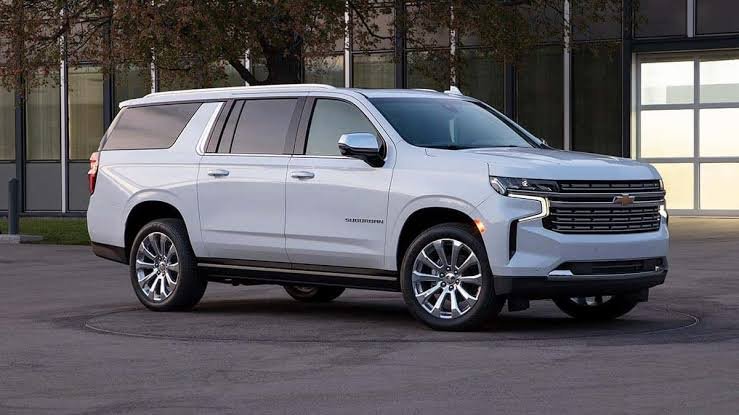
The Chevrolet Suburban is one of the most recognizable full-size SUVs in the automotive world. It has built a reputation around space, practicality, towing capability, comfort, and a strong road presence. Unlike smaller SUVs that focus mainly on city driving, the Suburban is designed for people who need serious passenger and cargo room without giving up the convenience of a modern family vehicle.
One of the most interesting things about the Chevrolet Suburban is its long history. The name has been associated with Chevrolet for generations, and the vehicle has continuously evolved as customer expectations have changed. Early versions were relatively simple utility vehicles, while modern models offer advanced technology, premium interiors, powerful engines, and sophisticated safety features.
For large families, business owners, travelers, and drivers who regularly carry people or equipment, the Chevrolet Suburban can be an appealing choice. Its enormous cabin gives passengers plenty of room, while its large cargo area makes it practical for road trips, airport runs, family vacations, and everyday transportation.
The Long History of the Chevrolet Suburban
The Chevrolet Suburban has an unusually long history compared with most vehicles still associated with the same name. Chevrolet introduced the Suburban concept during the 1930s, when buyers were looking for vehicles capable of carrying passengers and cargo. The early Suburban was much more basic than today’s version, but its fundamental idea was already clear: provide useful transportation with plenty of room.
Over the decades, Chevrolet continued developing the Suburban as automotive technology progressed. Body designs changed, engines became more powerful, interiors became more comfortable, and features that were once considered luxury equipment gradually became common. The Suburban adapted to each generation while keeping its basic identity as a large, capable vehicle.
The vehicle’s history is also closely connected with the development of the American SUV. Long before SUVs became one of the most popular vehicle categories, the Suburban was already combining passenger transportation with utility. That history helps explain why the name still carries considerable recognition among SUV buyers.
Exterior Design and Road Presence
The Chevrolet Suburban has never been a vehicle that disappears into the background. Its large dimensions, upright body, wide stance, and substantial front end give it an unmistakable road presence. Modern versions continue this tradition with a design that looks more sophisticated while maintaining the proportions expected from a full-size SUV.
The front of the Suburban generally emphasizes a wide grille and strong lighting elements. Depending on the trim, buyers can find different styling details that change the personality of the vehicle. Some versions appear more luxurious, while others have a sportier or more rugged appearance.
Its large body also provides a practical advantage. The long profile creates room for multiple seating rows and a substantial cargo compartment. Of course, the size can be noticeable when driving through tight streets or parking lots, but that same size is a major reason why the Suburban is so useful for large families and people who need maximum interior capacity.
Interior Space and Passenger Comfort
Interior space is one of the biggest reasons people consider a Chevrolet Suburban. The SUV is designed to carry several passengers without making the cabin feel as cramped as many smaller three-row SUVs. Adults can generally find more usable space across the seating areas, making longer journeys more comfortable.
The second row provides useful room for passengers, while the third row is designed to accommodate additional occupants. This is particularly important for families because many three-row SUVs offer a third row that is best suited to children. The Suburban’s larger dimensions allow Chevrolet to create a more practical passenger environment.
Comfort also depends on the selected trim and equipment. Higher-level versions can provide upgraded upholstery, additional convenience features, enhanced climate controls, and other premium touches. Even when fully loaded with passengers, the Suburban’s large cabin remains one of its defining strengths.
Chevrolet Suburban Cargo Capacity
Cargo space is another major advantage of the Chevrolet Suburban. Families often discover that passenger seating is only half the challenge when buying a large SUV. Groceries, luggage, sports equipment, camping gear, strollers, work equipment, and other belongings can quickly fill a smaller vehicle.
The Suburban addresses this problem with a long body and large rear cargo area. With all seating positions in use, there is still useful space available behind the rear row. When the rear seats are folded, the available cargo area becomes significantly more versatile.
This flexibility makes the Chevrolet Suburban suitable for a wide range of lifestyles. Someone might use it as a family vehicle during the week, a road-trip machine on weekends, and a cargo carrier when necessary. That ability to switch between passenger and utility roles is one of the vehicle’s biggest advantages.
Engine Options and Performance
Performance has always been an important part of the Chevrolet Suburban formula. A vehicle of this size needs sufficient power to move its weight confidently, particularly when it is filled with passengers or used for towing. Chevrolet has offered different engine configurations over the years to give buyers choices based on their priorities.
Gasoline-powered engines have traditionally been popular because they provide strong acceleration and are widely supported by Chevrolet’s dealer network. Depending on the generation and configuration, buyers may also encounter different displacement options and performance levels.
Another important consideration is how the Suburban is used. A driver who primarily travels around town may have different priorities from someone who frequently drives long highway distances or pulls a trailer. When selecting a Suburban, it makes sense to consider the intended use rather than choosing an engine based only on headline horsepower figures.
Diesel Chevrolet Suburban Models
Diesel power has also become an important part of the Chevrolet Suburban story in modern generations. A diesel engine can appeal to drivers who regularly cover long distances or value strong low-end torque. Torque is particularly useful when moving a large vehicle or towing a heavy load.
Diesel engines can also provide an alternative driving character compared with gasoline engines. They tend to emphasize pulling power and can be well suited to highway travel. However, diesel ownership comes with its own maintenance considerations, and the best choice depends on how the vehicle will actually be used.
For someone who spends most of the time making short urban trips, a gasoline configuration may make more sense. For a driver who regularly travels long distances, carries heavy loads, or tows, a diesel option can be worth considering where available.
Towing Capability of the Chevrolet Suburban
The Chevrolet Suburban is often selected by buyers who need towing capability in addition to passenger space. Its large platform, available four-wheel-drive configurations, powerful engines, and towing-focused equipment can make it useful for pulling trailers.
Towing capacity varies depending on the model year, engine, drivetrain, equipment, and trailer configuration. This means buyers should always check the specific vehicle’s official towing rating rather than assuming every Suburban has the same capability.
Proper towing equipment is just as important as engine power. Trailer brakes, hitch equipment, weight distribution, tire condition, and correct loading all affect towing safety and performance. When properly configured, the Suburban can serve as a practical combination of family transportation and towing vehicle.
Chevrolet Suburban for Family Travel
Few vehicle categories are as closely associated with family travel as large SUVs. The Chevrolet Suburban fits this role naturally because it provides space for passengers, luggage, entertainment needs, and road-trip equipment.
Long-distance family travel can be much easier when everyone has enough personal space. Children can have room for their belongings, adults can sit comfortably, and the cargo compartment can accommodate suitcases without forcing passengers to stack bags around their feet.
The Suburban is also useful for large families who regularly participate in activities. Sports teams, school events, vacations, camping trips, and weekend outings can require a surprising amount of equipment. A large SUV can make those situations much less complicated.
Technology and Infotainment
Modern Chevrolet Suburban models have moved far beyond the basic interiors of older SUVs. Technology now plays a major role in the driving experience, with infotainment systems designed to provide navigation, media, communication, and vehicle information.
Depending on the model year and trim, drivers may have access to a large central display, smartphone connectivity, multiple USB ports, wireless charging, premium audio equipment, and other digital features. Rear passengers may also benefit from entertainment and connectivity features on certain configurations.
Technology is particularly valuable in a vehicle designed for long trips. Navigation helps drivers find unfamiliar destinations, while smartphone integration makes it easier to access music, calls, messages, and other compatible applications. The exact technology package varies by trim and model year, so buyers should inspect the equipment on the specific Suburban they are considering.
Safety Features and Driver Assistance
Safety is a major consideration when choosing a large family vehicle. Chevrolet has equipped modern Suburban models with a variety of safety and driver-assistance technologies designed to help drivers monitor the road and respond to potential hazards.
Depending on the model and trim, available systems can include features such as automatic emergency braking, lane-related assistance, forward collision alerts, parking assistance, blind-spot monitoring, and adaptive cruise-control technology. These systems are designed to support the driver rather than replace attentive driving.
The physical size of the Suburban can also provide a feeling of security, but size alone should never be treated as a substitute for safe driving. Drivers should remain attentive, use seat belts correctly, and understand the limitations of electronic driver-assistance systems.
Chevrolet Suburban Driving Experience
Despite its enormous size, the Chevrolet Suburban is designed to provide a relatively controlled driving experience. Modern suspension systems, steering technology, braking systems, and electronic controls have made large SUVs easier to manage than many older vehicles of similar dimensions.
On highways, the Suburban can feel stable and comfortable. Its long wheelbase contributes to a relaxed ride, especially during long-distance travel. The high seating position also gives drivers a commanding view of the surrounding traffic.
City driving requires more awareness. The Suburban is wide and long, so narrow parking spaces, tight garages, and crowded streets can take some adjustment. Parking sensors, cameras, and available assistance technologies can make these situations easier, but drivers still need to understand the vehicle’s dimensions.
Four-Wheel Drive and All-Weather Capability
For buyers who regularly encounter rain, snow, gravel roads, or other challenging conditions, a four-wheel-drive Chevrolet Suburban can provide additional capability. Four-wheel drive can improve traction in situations where maintaining grip is difficult.
However, four-wheel drive does not eliminate the need for appropriate tires or careful driving. Stopping distances can still increase on slippery surfaces, and drivers should adjust speed according to road conditions.
The Suburban’s available drivetrain choices also make it adaptable to different lifestyles. Someone who mostly drives on paved roads may have little need for additional traction hardware, while a person living in an area with difficult weather or frequently traveling outside major roads may place greater importance on it.
Fuel Economy and Ownership Costs
One of the main compromises associated with a full-size SUV is fuel consumption. A vehicle as large as the Chevrolet Suburban requires considerable energy to move, particularly when carrying passengers or towing.
Actual fuel economy depends on engine choice, drivetrain, driving conditions, vehicle load, tire pressure, weather, and driving style. Highway driving may produce different results from heavy city traffic, while towing can significantly increase fuel consumption.
Ownership costs also go beyond fuel. Buyers should consider insurance, tires, maintenance, brakes, registration, and potential repair expenses. Because the Suburban is a large and sophisticated vehicle, replacement parts and certain maintenance jobs can be more expensive than those for smaller SUVs.
Chevrolet Suburban Trim Levels
One of the strengths of the Suburban lineup is the variety of available trims. Chevrolet has historically offered versions aimed at different types of buyers, ranging from relatively straightforward configurations to highly equipped luxury-oriented models.
Lower or mid-level trims can appeal to buyers who prioritize practicality and want the basic advantages of a large SUV without paying for every available luxury feature. Higher trims focus more heavily on premium materials, advanced technology, comfort, and distinctive exterior details.
When comparing trims, buyers should look beyond appearance. A vehicle with an attractive package may not have the exact combination of towing equipment, drivetrain, seating configuration, or technology that a particular buyer needs. Comparing equipment carefully can prevent paying for features that will rarely be used.
Chevrolet Suburban vs. Other Large SUVs
The full-size SUV market includes several competitors that also focus on passenger space, towing, comfort, and utility. The Chevrolet Suburban is unusual because of its particularly long body and emphasis on maximum cargo capacity.
Other large SUVs may offer different combinations of luxury, off-road capability, technology, or performance. Some buyers may prioritize a premium cabin, while others may care more about towing or rugged terrain performance.
Rather than comparing vehicles only by horsepower or price, it is useful to consider how each one fits a particular lifestyle. Passenger room, cargo capacity, towing needs, fuel costs, parking requirements, and technology preferences can all influence the decision.
Chevrolet Suburban for Road Trips
The Suburban is naturally suited to road trips because it combines seating capacity with substantial storage space. A family preparing for a long vacation can pack clothing, luggage, snacks, electronics, and other supplies without immediately running out of room.
The long wheelbase and spacious cabin can also make extended highway driving more comfortable. Passengers have room to move slightly, and the large cabin can make the journey feel less confined.
For frequent travelers, small details can make a big difference. Storage compartments, charging ports, comfortable seats, climate-control options, and entertainment features can all contribute to a better travel experience. The Suburban’s overall design is strongly aligned with this type of use.
Chevrolet Suburban for Business and Work
Although the Suburban is commonly viewed as a family SUV, it can also be useful for business purposes. Companies that transport employees, customers, equipment, or supplies may appreciate its combination of passenger capacity and cargo space.
Professional drivers and transportation services can also benefit from its spacious interior. Airport transfers, corporate transportation, and group travel are examples of situations where a large SUV can be practical.
For work-related use, operating costs become particularly important. Fuel consumption, maintenance, insurance, and tire expenses should be included when calculating the total cost of ownership. A vehicle that performs a useful job but costs too much to operate may not be appropriate for every business.
Buying a New Chevrolet Suburban
Buying a new Chevrolet Suburban gives customers access to the latest available design, technology, safety systems, and powertrain choices for that model year. Buyers can usually select from different trims and optional packages according to their needs.
The first step should be identifying the purpose of the vehicle. If the Suburban will primarily carry a large family, passenger comfort may be the top priority. If towing is important, the engine and towing package deserve closer attention.
Budgeting is equally important. The purchase price is only one part of the cost. Insurance, fuel, maintenance, taxes, financing, and potential accessories should all be considered before committing to a large SUV.
Buying a Used Chevrolet Suburban
A used Chevrolet Suburban can provide access to a large SUV at a lower purchase price than a comparable new model. However, condition and maintenance history become especially important.
Potential buyers should inspect the engine, transmission, suspension, brakes, tires, electronics, air conditioning, and four-wheel-drive system when applicable. A professional inspection can uncover issues that are difficult to identify during a short test drive.
Service records are valuable because they show whether the previous owner followed a regular maintenance schedule. A well-maintained older Suburban can be very different from one that has been heavily used without proper servicing.
Common Maintenance Considerations
Like any large vehicle, the Chevrolet Suburban needs regular maintenance to remain dependable. Oil and filter changes, brake inspections, tire rotations, fluid checks, and scheduled service are basic parts of responsible ownership.
Large SUVs can place significant demands on tires and brakes because of their weight. Drivers who frequently tow or carry heavy loads may put additional stress on these components.
Owners should also pay attention to warning lights, unusual noises, vibrations, fluid leaks, or changes in driving behavior. Addressing small problems early can sometimes prevent them from becoming more expensive repairs.
Is the Chevrolet Suburban Practical for Daily Driving?
The answer depends heavily on the driver’s lifestyle. For someone with a large family, frequent passengers, or substantial cargo needs, the Suburban can be extremely practical. It eliminates many of the compromises associated with smaller vehicles.
For a person who drives alone through crowded city streets and rarely carries passengers, however, the Suburban’s enormous size may be unnecessary. Parking and maneuvering can require more effort, and fuel costs can be higher than those of smaller vehicles.
This is why practicality should always be viewed in context. A vehicle is practical when its strengths match the owner’s needs. The Suburban makes the most sense for drivers who genuinely benefit from its space and capability.
The Chevrolet Suburban as a Long-Term Vehicle
One reason large SUVs attract loyal owners is their ability to remain useful for many years. A vehicle that can carry a growing family, tow equipment, transport luggage, and handle daily driving may continue serving a household even as its needs change.
The Suburban’s basic formula has remained remarkably consistent: lots of space, strong engines, useful towing capability, and a comfortable cabin. Technology and styling change from generation to generation, but those core characteristics remain important.
Long-term ownership still depends heavily on maintenance. Regular servicing, responsible driving, and prompt repairs can have a significant impact on how a vehicle performs as it accumulates mileage.
What Makes the Chevrolet Suburban Different?
The biggest difference is its combination of scale and versatility. Plenty of SUVs can carry seven or eight passengers, but the Suburban’s long body gives it another level of cargo flexibility.
It also has a distinctive identity. The Suburban is not trying to be a compact crossover or a sporty performance SUV. It is designed around the idea of being a large, capable transportation machine.
For buyers who want maximum interior space without moving into a van, that distinction can be important. The Suburban offers a traditional SUV driving position while providing the capacity associated with much larger family vehicles.
Final Thoughts on the Chevrolet Suburban
The Chevrolet Suburban has remained relevant for generations because its basic purpose is easy to understand. It is a large SUV designed for people who need significant passenger space, cargo room, towing ability, and everyday versatility.
Its biggest strengths are also connected to its biggest compromises. The huge cabin and cargo area are excellent for families and travelers, but the large exterior can make urban parking more challenging. Powerful engines provide useful performance, but fuel consumption can be higher than that of smaller vehicles.
Ultimately, the Chevrolet Suburban is best understood as a vehicle built around capacity. It is designed for buyers who want one vehicle capable of handling family transportation, road trips, cargo, towing, and a wide variety of everyday responsibilities. For those needs, the Suburban remains one of the most recognizable names in the full-size SUV segment.
Frequently Asked Questions About the Chevrolet Suburban
What is the Chevrolet Suburban?
The Chevrolet Suburban is a full-size SUV manufactured by Chevrolet. It is known for its large passenger cabin, extensive cargo capacity, powerful engine options, and towing capability.
The Suburban has a long history dating back to the early development of Chevrolet’s utility vehicles. Modern generations combine that traditional practicality with contemporary technology, comfort, and safety features.
Is the Chevrolet Suburban good for large families?
The Suburban can be well suited to large families because it offers three rows of seating and substantial cargo capacity. Its large interior can make long trips more comfortable for passengers.
Families should still consider the vehicle’s size, fuel consumption, and purchase price before choosing it. Its advantages are most noticeable when the additional passenger and cargo space will actually be used.
Can a Chevrolet Suburban tow a trailer?
Yes, appropriately equipped Chevrolet Suburban models are designed for towing. However, the exact towing capacity depends on the model year, engine, drivetrain, equipment, and trailer setup.
Owners should always consult the vehicle’s specific documentation and follow the manufacturer’s towing requirements before pulling a trailer.
Is the Chevrolet Suburban available with four-wheel drive?
Four-wheel-drive configurations have been available for the Chevrolet Suburban. They can provide additional traction in certain driving conditions.
However, four-wheel drive does not replace safe driving or appropriate tires. Drivers should always adapt their speed and driving technique to road and weather conditions.
Is a used Chevrolet Suburban worth considering?
A used Suburban can be an attractive option for buyers who want the space and capability of a full-size SUV while spending less than they would on a new vehicle.
Condition matters greatly. Buyers should check maintenance records, inspect major mechanical systems, review the vehicle history, and consider getting a professional inspection before purchasing.
Why is the Chevrolet Suburban so large?
The Suburban is designed to provide substantial passenger and cargo capacity. Its long body allows Chevrolet to create a large interior while maintaining the traditional SUV format.
That size is particularly useful for families, travelers, and people who regularly carry equipment. The trade-off is that the vehicle requires more space for parking and maneuvering than a smaller SUV.
What is the Chevrolet Suburban mainly used for?
The Suburban is used for family transportation, road trips, towing, business transportation, airport transfers, and general utility. Its flexible interior allows it to serve multiple purposes.
Its large cabin and cargo area make it particularly useful for people who regularly transport several passengers or large amounts of equipment.
How long can a Chevrolet Suburban last?
The lifespan of a Suburban depends on maintenance, driving conditions, mileage, climate, usage, and how previous owners treated the vehicle. Proper maintenance can play a major role in long-term reliability.
Used buyers should focus less on mileage alone and more on the vehicle’s overall condition and documented service history.
Conclusion
The Chevrolet Suburban represents a traditional approach to the full-size SUV: build a large, capable vehicle and give owners enough space to handle almost anything that everyday life can demand. From family vacations and school activities to towing and long-distance travel, its versatility is central to its identity. Its enormous size is both an advantage and a consideration. The same dimensions that create impressive interior room can make city driving and parking more demanding. Fuel and maintenance costs also deserve attention when calculating the complete ownership experience.
YOU MAY HAVE MISSED