
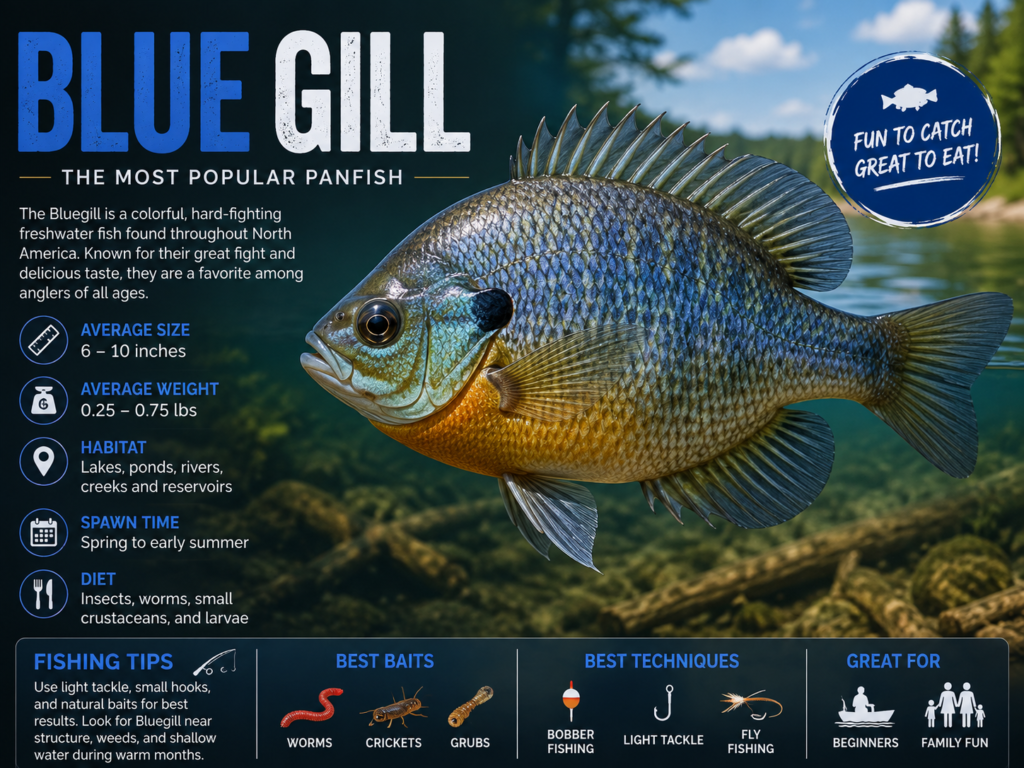
Across ponds, lakes, and slow-moving rivers of North America, one small but spirited fish consistently draws anglers of every skill level. The blue gill stands out for its willingness to bite, its scrappy fight on light tackle, and its delicious mild flavor when cooked simply. Often called bream or brim in southern states, this member of the sunfish family has introduced countless children and beginners to the joy of fishing. Its abundance and forgiving nature make it an ideal target whether you are casting from a dock, a bank, or a small boat.
Understanding this fish begins with recognizing its place in the broader freshwater ecosystem. As both predator of insects and prey for larger gamefish such as largemouth bass, the blue gill helps maintain balance in ponds and reservoirs. Anglers appreciate its colonial nesting habits that concentrate fish in shallow water during warmer months, creating reliable opportunities for action. From identification and habitat preferences to practical fishing techniques and simple recipes, the following sections explore every angle of this classic panfish in clear, approachable detail.
Recognizing the Distinctive Appearance of This Sunfish
The body of a blue gill is deeply compressed from side to side, giving it the classic disc-like or pan shape that defines many sunfish. Coloration typically features an olive to dark green back that fades into lighter sides marked by several broad vertical bars. These bars can appear more pronounced on younger fish and may fade somewhat on larger adults or in murky water. The breast and belly often show yellow to bright orange tones, especially on breeding males.
Two key markings help confirm identification. A dark, solid black spot sits at the rear base of the soft dorsal fin, and the ear flap or opercular tab is entirely black without the colorful spots seen on some related species. The lower jaw and cheek area frequently display a powdery blue hue that inspired the common name. The mouth itself is small, never extending past the front of the eye, which influences both feeding style and the size of baits that work best. These visual clues allow even novice observers to distinguish the fish from pumpkinseed, redear, or other sunfish sharing the same waters.
Exploring Natural Habitat Preferences Across Regions
Blue gill thrive in a wide range of freshwater environments as long as the water remains relatively warm and contains some form of cover. Preferred locations include the shallow, vegetated edges of ponds and lakes, the backwaters of slow rivers, and even small farm ponds or retention basins. Aquatic plants, fallen logs, brush piles, and docks all provide the shade, oxygen, and insect populations these fish seek.
They tolerate a variety of water conditions better than many other species, including moderate turbidity and warmer temperatures that would stress trout. Clear water with moderate vegetation often produces the largest individuals because it supports abundant food while still offering escape cover from predators. In rivers they favor pools and quieter side channels rather than fast current. Because of extensive stocking programs over many decades, populations now exist far beyond the original native range east of the Rocky Mountains, appearing in waters across the United States and even in some international locations.
Understanding Diet and Daily Feeding Patterns
Young blue gill begin life feeding on microscopic zooplankton such as rotifers and water fleas. As they grow, their diet expands to include aquatic insect larvae—mayflies, caddisflies, dragonflies—along with small crustaceans, snails, and the occasional tiny fish or crayfish. Adults remain opportunistic and will also take terrestrial insects that fall onto the surface. When food is scarce they may even nibble aquatic vegetation or, in extreme cases, their own eggs.
Feeding occurs primarily by sight during daylight hours, with peaks often noted in early morning and late afternoon into evening. Because of their small mouths, they prefer slow-moving or stationary prey rather than chasing fast targets over long distances. This behavior explains why a tiny piece of worm dangling motionless under a bobber consistently outperforms larger, faster-moving lures. Surface activity increases during insect hatches, creating exciting topwater opportunities with small poppers or dry flies.
Learning About Spawning Behavior and Nesting Colonies
Spawning typically begins when water temperatures climb above roughly seventy to seventy-five degrees Fahrenheit and can continue for several months depending on latitude and weather. Males move into shallow water, often one to three feet deep over sand, gravel, or soft mud, and fan out circular nests with their tails. These nests frequently form large colonies, sometimes containing dozens or even hundreds of individual depressions close together.
After a female deposits eggs, the male remains to guard the nest against intruders and to keep the eggs clean by fanning water across them. This parental care continues until the fry become free-swimming. The colonial arrangement provides some collective protection, yet it also concentrates fish in predictable shallow zones that anglers can target effectively. Multiple spawning cycles in a single season allow populations to rebound quickly, which is one reason the species remains so abundant in managed ponds and public lakes.
Examining Average Size and Growth Potential
Most blue gill encountered by anglers measure between five and ten inches in length and weigh only a few ounces. In balanced waters with good forage and moderate fishing pressure, individuals commonly reach seven to nine inches. Trophy-sized fish of ten to twelve inches appear less frequently and usually require older, well-managed lakes or ponds with limited competition and abundant food.
Growth rates vary with water temperature, food availability, and population density. In overcrowded ponds the fish may remain stunted at smaller sizes even as adults. The current all-tackle world record stands near four pounds twelve ounces, demonstrating the upper extreme possible under ideal conditions. State records across the country typically fall in the two- to three-pound range. Understanding these size expectations helps anglers set realistic goals and select appropriate light tackle that maximizes the fight of even average fish.
Mastering Effective Fishing Techniques for Consistent Success
Light spinning or ultralight gear paired with two- to six-pound test line brings out the best in blue gill fishing. Small hooks in sizes six through ten match the modest mouth size and improve hookups while reducing deep hooking. Live baits such as pieces of earthworm, red wrigglers, crickets, or mealworms remain classic producers. A simple bobber rig that suspends the bait at the desired depth works in almost any situation.
Artificial options expand the fun. Tiny jigs in one thirty-second or one sixty-fourth ounce sizes, small spinners, and soft plastic grubs all catch fish when retrieved slowly. Fly anglers enjoy excellent sport with weighted nymphs, small streamers, or surface poppers during feeding periods. Because the fish rarely chase aggressively, a slow, deliberate presentation usually outperforms fast retrieves. Focusing on weed edges, dock pilings, fallen timber, and the outer edges of nesting colonies during the spawn produces consistent action throughout the warmer months.
Comparing Related Sunfish and Avoiding Common Mix-Ups
Several other sunfish share similar waters and can confuse beginners. Pumpkinseed display bright orange spots and a colorful ear flap with a red or orange tip. Redear sunfish, sometimes called shellcrackers, show a longer ear flap edged in red or orange and prefer slightly deeper water where they crush snails. Warmouth have a larger mouth and more elongated body with distinct lines radiating from the eye.
The solid black ear flap and the dark spot at the rear of the soft dorsal fin remain the most reliable field marks for positive identification of blue gill. Vertical bars along the sides and the blue tint on the lower head further support the identification. Learning these differences not only satisfies curiosity but also helps anglers understand subtle variations in preferred habitat and feeding behavior among the different species.
Appreciating the Role in Pond and Lake Ecosystems
In farm ponds and small lakes, blue gill serve as an important forage base for largemouth bass and other predators. Their high reproductive rate can support healthy predator populations when balanced correctly. Managers sometimes stock them specifically to provide both fishing opportunity and prey for gamefish. Overpopulation, however, can lead to stunting if too many small fish compete for limited food resources.
Aquatic vegetation benefits from their presence as well. By feeding on insects and small invertebrates among the plants, they help regulate certain populations while the plants themselves offer cover and oxygen. In larger reservoirs they occupy a similar niche along the shoreline and in backwater areas. Understanding this ecological position encourages responsible harvest practices that maintain balanced fisheries for future seasons.
Planning Family-Friendly Outings Around Easy Catches
Few fish match the blue gill for introducing newcomers to angling. Their abundance means bites come frequently, building confidence quickly. Short attention spans stay engaged when action is steady, and the light tackle required is easy for small hands to manage. Many state parks and public lakes offer accessible shorelines or fishing piers where families can succeed without a boat.
Simple techniques keep the focus on fun rather than complicated gear. A cane pole or inexpensive spinning outfit, a container of worms, and a few bobbers are often enough for a memorable afternoon. Teaching basic conservation—handling fish gently, keeping only what will be eaten, and releasing the rest—instills good habits early. The mild, sweet flavor of freshly caught fillets further rewards the effort when the day ends with a simple shore lunch or backyard fish fry.
Preparing and Cooking the Mild White Fillets
Proper cleaning begins with a sharp fillet knife. The firm white flesh separates cleanly from the skin and bones once the technique is practiced. Many anglers prefer to scale the fish first if cooking whole, though filleting removes most of the small bones that can otherwise be bothersome. Ice the catch promptly to preserve quality.
Cooking methods stay simple. Lightly seasoned fillets dredged in cornmeal or flour and pan-fried in a little oil or butter produce a crisp exterior and moist interior. Baking with lemon and herbs, or even grilling in a basket, works equally well. The delicate flavor pairs nicely with tartar sauce, coleslaw, and fresh vegetables. Because the fish is relatively small, a modest number provides a satisfying meal without requiring heavy harvest from any single water body.
Reviewing Seasonal Patterns and Best Times to Fish
Spring and early summer bring fish into the shallows for spawning, creating some of the most predictable and exciting fishing of the year. As water warms further into summer, larger individuals often move slightly deeper during midday heat and return to shallower cover in the evening. Fall can produce excellent action as fish feed heavily before colder weather. Winter fishing remains possible in many southern waters, though activity slows and fish may hold deeper near structure.
Daily timing favors low-light periods. Early morning and late afternoon into dusk frequently deliver the strongest bites. Overcast days can extend productive hours, while bright midday sun often pushes fish tighter to cover. Adjusting depth and presentation to match these movements keeps the rod bent throughout the open-water season.
Considering Conservation and Sustainable Harvest Practices
Although populations remain robust in most areas, thoughtful harvest helps maintain quality fishing. Keeping a reasonable number of medium-sized fish for the table while releasing the largest individuals supports better size structure over time. Some waters impose special regulations such as minimum length limits or reduced daily creel limits to protect or enhance the fishery; checking local rules before each trip is always wise.
Handling fish intended for release with wet hands and minimal air exposure improves survival. Avoiding deep hooking by using appropriate hook sizes and setting the hook promptly further reduces mortality. Supporting habitat improvements such as the addition of brush piles or native vegetation benefits the entire fish community, including the blue gill that form such an important part of it.
Quotes Capturing the Appeal of This Classic Panfish
“There is nothing quite like the tug of a blue gill on ultralight tackle to remind you why you fell in love with fishing in the first place. The bites come steady and the smiles come easy.”
Another longtime angler observed, “I have caught bigger fish and more glamorous fish, but few that are as consistently willing to play as a school of hungry blue gill along a summer weed line.”
A parent reflecting on family trips noted, “Teaching my kids to fish started with these little sunfish. The action kept them interested, and the fish fry afterward sealed the deal for future outings.”
A Practical Comparison of Common Panfish Characteristics
| Feature | Blue Gill | Pumpkinseed | Redear Sunfish |
|---|---|---|---|
| Ear Flap | Solid black | Colorful with red tip | Long with red or orange edge |
| Body Shape | Deep, compressed | Similar, slightly rounder | Similar, often larger |
| Primary Markings | Vertical bars, dorsal spot | Bright orange spots | Fainter bars |
| Preferred Habitat | Vegetated shallows | Similar shallow cover | Slightly deeper, snails |
| Average Size | 5–10 inches | Comparable | Often larger |
| Fishing Difficulty | Easy | Easy | Moderate |
This side-by-side view highlights the subtle differences that help anglers identify their catch and adjust tactics accordingly.
Looking Ahead at Management and Future Opportunities
Fisheries managers continue to value blue gill for both recreational opportunity and ecological function. Ongoing research into stocking densities, habitat enhancement, and selective harvest helps maintain balanced populations in public and private waters. Climate patterns and changing land use will influence future distribution and abundance, yet the species’ adaptability suggests it will remain a reliable target for generations of anglers.
New generations discovering fishing through these accessible panfish help ensure the sport’s continued vitality. Simple techniques, minimal gear requirements, and widespread availability remove many barriers that might otherwise discourage beginners. As long as clean water and thoughtful stewardship persist, the blue gill will keep offering lively action and memorable days on the water.
Conclusion
The blue gill earns its popularity through a rare combination of abundance, willingness to bite, and genuine sporting quality on appropriate tackle. From the first tentative nibble under a bobber to the satisfying sizzle of fillets in a pan, the entire experience remains approachable and rewarding. Whether the goal is introducing a child to fishing, filling a stringer for a family meal, or simply enjoying a quiet morning on the water, this classic sunfish delivers consistently.
By learning its habitat preferences, feeding habits, and seasonal movements, any angler can improve success while deepening appreciation for the broader freshwater ecosystem. Responsible harvest and habitat care ensure that future visitors to the same ponds and lakes will find the same lively populations waiting. In a fishing world that sometimes chases ever-larger trophies, the humble blue gill reminds us that great days often come in smaller, more plentiful packages.
FAQ
What does a blue gill look like and how can I identify one?
A blue gill shows a deep, compressed body with olive to green sides marked by vertical bars, a yellow to orange belly, and distinctive blue tones on the lower jaw and gill cover. The solid black ear flap and a dark spot at the rear of the soft dorsal fin are the most reliable field marks that separate it from similar sunfish.
Where is the best place to find blue gill for fishing?
Look for shallow, vegetated areas of ponds, lakes, and slow rivers, especially around weed edges, docks, fallen timber, and brush piles. During the spawning season these fish concentrate in colonies in water one to three feet deep over sand or soft bottom, making them easy to locate and catch.
What bait works best when targeting blue gill?
Small pieces of earthworm, red wrigglers, crickets, and mealworms remain top producers under a light bobber. Tiny jigs, small spinners, and fly-rod offerings such as nymphs or poppers also work well when presented slowly to match the fish’s preference for easy meals.
How large do blue gill typically grow?
Most fish measure five to ten inches and weigh only a few ounces. Quality waters regularly produce seven- to nine-inch individuals, while true trophies of ten to twelve inches appear less often. The all-tackle world record exceeds four pounds, showing the upper potential under ideal conditions.
Is blue gill good to eat and how should it be prepared?
Yes, the mild white flesh is excellent table fare. Filleting removes most bones, and simple preparations such as cornmeal-fried, baked with lemon, or lightly grilled highlight the delicate flavor. Keeping the catch iced and cleaning it promptly preserves quality for the best eating experience.
When is the peak season for catching blue gill?
Spring through early summer offers the most consistent action as fish move shallow to spawn. Morning and evening periods remain productive throughout the warmer months, while fall feeding activity can also be strong before colder weather arrives.
