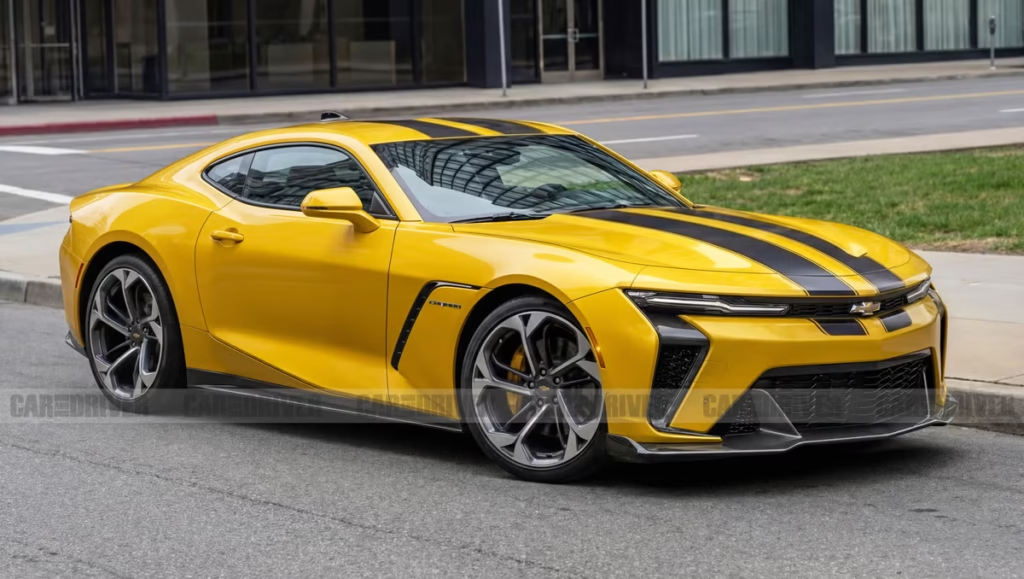
The Camaro SS is one of those cars that does not need much introduction. The moment you hear the name, you probably picture a low, wide muscle car with a powerful V8 engine, aggressive styling, and a soundtrack that makes ordinary commutes feel like something much more exciting. For decades, the Camaro SS has represented Chevrolet’s idea of what an affordable performance car should be.
What makes the Camaro SS particularly interesting is the balance between everyday usability and serious performance. It can be driven to work, taken on a weekend road trip, or pushed hard on a winding road. At the same time, it carries the character of a traditional American muscle car, which is something that many modern performance vehicles have gradually moved away from.
The Camaro SS has also evolved considerably over the years. While the earliest versions were built around the classic muscle-car formula, later generations introduced sophisticated suspension systems, modern technology, improved braking, and much better handling. The result is a car that combines old-school V8 character with modern driving dynamics.
What Is the Camaro SS?
The Camaro SS is a high-performance version of the Chevrolet Camaro. The “SS” designation has a long history within Chevrolet and has traditionally been associated with stronger engines, sportier equipment, and more aggressive styling. In the Camaro lineup, the SS became one of the most recognizable performance trims.
Unlike a basic sports package that simply adds cosmetic changes, the Camaro SS has traditionally focused on genuine performance upgrades. Depending on the generation and model year, these upgrades have included a powerful V8 engine, stronger brakes, performance suspension components, larger wheels, and exterior details designed to distinguish the SS from less powerful Camaros.
The formula is relatively simple but extremely effective. Chevrolet combines a rear-wheel-drive platform with a large naturally aspirated V8, then adds the chassis and braking hardware necessary to make the car enjoyable when driven aggressively. That combination gives the Camaro SS a personality that is difficult to reproduce with a small turbocharged engine or an electric powertrain.
The History Behind the Camaro SS
The Camaro itself arrived in the late 1960s as Chevrolet’s answer to the growing popularity of pony cars. From the beginning, performance was an important part of its identity. The SS package helped establish the Camaro as a serious competitor in the American muscle-car market, giving buyers the opportunity to combine everyday practicality with substantial engine performance.
Classic Camaro SS models became particularly desirable among enthusiasts because of their styling and engine options. Cars from the late 1960s and early 1970s are now deeply connected with American automotive culture. Their long hoods, short rear decks, chrome details, and large-displacement engines created a visual and mechanical formula that remains popular decades later.
The Camaro disappeared from the market for a period before returning in the modern era. Its comeback brought the famous nameplate into a completely different automotive environment. Modern safety standards, emissions regulations, computer-controlled engines, and sophisticated chassis technology meant that the Camaro had to evolve. Even so, Chevrolet continued to use the SS name to preserve the connection between modern performance and the Camaro’s muscle-car heritage.
Camaro SS Engine and Performance
One of the biggest reasons enthusiasts are attracted to the Camaro SS is its V8 engine. Modern SS models have been associated with a naturally aspirated 6.2-liter V8, producing roughly 455 horsepower and 455 lb-ft of torque in the sixth-generation Camaro. Those numbers make the SS substantially more powerful than the four-cylinder and V6 versions of the car.
The naturally aspirated character is important. There is no turbocharger waiting to build boost before the engine delivers its strongest response. Instead, pressing the accelerator produces an immediate and linear surge of power. The engine feels strong across a broad portion of the rev range, which makes it enjoyable whether you’re accelerating from a stop or passing another vehicle on the highway.
Performance is more than simply having a large horsepower number. The Camaro SS benefits from rear-wheel drive, a sophisticated chassis, and a transmission that allows the driver to take advantage of the V8’s power. Depending on configuration, acceleration can be extremely quick, with the car capable of reaching 60 mph in around four seconds under favorable conditions.
The Sound of the Camaro SS V8
For many owners, the engine note is just as important as the performance figures. The Camaro SS V8 produces the deep, unmistakable sound that people associate with American muscle cars. It can be relatively calm when cruising, but pressing the accelerator changes the character dramatically.
The sound is partly a result of the engine’s naturally aspirated design and large displacement. Instead of relying heavily on turbocharger noise, the driver gets the mechanical character of a traditional V8. That gives the Camaro SS a personality that feels increasingly rare in a world dominated by smaller turbocharged engines.
Exhaust configuration can also influence the experience. Performance-oriented versions and available exhaust systems can provide a more aggressive soundtrack when desired while allowing the car to remain relatively civilized during normal driving. For enthusiasts, this dual personality is one of the Camaro SS’s strongest attractions.
Camaro SS Exterior Design
The Camaro SS has always been designed to look more aggressive than an ordinary coupe. Its wide stance, low roofline, sculpted bodywork, and performance-oriented front fascia immediately communicate that the car is built for more than simple transportation.
The front end is particularly important to the Camaro SS’s appearance. Depending on the generation and model year, the SS has featured unique grilles, air intakes, badges, and aerodynamic elements. These details help give the car a more purposeful appearance while also supporting the cooling requirements of a high-performance V8.
From the side, the long hood and compact cabin create the classic proportions expected from a muscle car. Large wheels fill the arches, while sculpted body panels add visual depth. At the rear, quad exhaust outlets and SS-specific styling details reinforce the performance theme without making the design unnecessarily complicated.
Camaro SS Interior and Comfort
Although the Camaro SS is primarily a performance car, Chevrolet also designed it to function as a normal road vehicle. The cabin provides the essential equipment drivers expect, including modern infotainment, climate controls, connectivity features, and available comfort upgrades.
The driving position is relatively low, which helps create a sporty feeling from the moment you sit behind the wheel. The seats are designed to provide support during spirited driving while remaining usable for longer trips. Depending on the trim and options, buyers can also get upgraded materials and additional convenience features.
Visibility has historically been one of the Camaro’s more frequently discussed characteristics. The low roof, high beltline, and thick pillars contribute to its dramatic appearance, but they can make the car feel less open than a conventional sedan. Many owners adapt quickly, although a test drive is worthwhile for anyone considering one as a daily driver.
Camaro SS Handling and Driving Experience
The Camaro SS is not simply a straight-line muscle car. Modern versions have demonstrated that American performance cars can also be highly capable through corners. Chevrolet invested heavily in chassis development, allowing the Camaro to compete with performance coupes that traditionally emphasized handling.
A properly equipped Camaro SS feels stable when pushed through corners. The suspension keeps the body controlled while the rear-wheel-drive layout gives the driver a strong connection with the road. Steering response is another important part of the experience, especially on winding roads where the car’s relatively balanced chassis becomes more noticeable.
This handling ability changes the traditional perception of the Camaro. It is certainly capable of delivering dramatic acceleration, but it can also reward a driver who enjoys technical roads. The SS therefore occupies an interesting position between traditional American muscle and modern sports-car engineering.
Camaro SS Manual vs. Automatic Transmission
One of the appealing aspects of the Camaro SS is the availability of a manual transmission in appropriate model years and configurations. For enthusiasts, a manual gearbox adds another layer of involvement because the driver controls gear changes, engine speed, and clutch engagement.
A manual Camaro SS can feel especially engaging on a winding road. Downshifting before a corner, accelerating through the exit, and hearing the V8 climb through the rev range create an experience that is difficult to replicate with an automatic transmission.
The automatic, however, has its own advantages. It can provide extremely quick and consistent gear changes while making the car easier to drive in traffic. For someone who wants strong performance without constantly operating a clutch, the automatic Camaro SS can be the more practical choice.
Camaro SS Fuel Economy and Everyday Driving
Nobody buys a Camaro SS expecting exceptional fuel economy. A large naturally aspirated V8 produces impressive performance, but it also requires more fuel than a small four-cylinder engine. Actual fuel consumption depends heavily on driving style, traffic, road conditions, and transmission choice.
Interestingly, modern V8 technology is much more sophisticated than the engines used in classic muscle cars. Features such as cylinder deactivation and modern engine management can help reduce fuel consumption when the engine is operating under lighter loads.
Daily driving is still possible, especially if the owner understands what the car is designed to do. Highway cruising can be comfortable, while the powerful engine makes merging and overtaking easy. The main consideration is that fuel costs will generally be higher than with a smaller engine.
Camaro SS Braking System
A high-performance car needs more than horsepower. It also needs the ability to slow down repeatedly and confidently. The Camaro SS has therefore been equipped with substantial braking hardware, with performance-oriented models receiving larger brakes designed to handle demanding driving.
Strong brakes are useful even during ordinary driving. They provide confidence when approaching highway traffic, descending steep roads, or dealing with unexpected situations. During spirited driving, however, their importance becomes even clearer.
Brake feel is another important part of the performance experience. A good performance braking system should offer predictable pedal response, allowing the driver to judge exactly how much braking force is needed. The Camaro SS’s overall performance package is designed around this idea of balance between acceleration and control.
Camaro SS Technology and Infotainment
Modern Camaro SS models include considerably more technology than the muscle cars of previous generations. Drivers can expect features such as touchscreen infotainment, smartphone integration, digital displays, driver-assistance options, and various convenience systems depending on the configuration.
Technology makes the car easier to live with every day. Navigation and smartphone connectivity can simplify road trips, while steering-wheel controls allow the driver to manage common functions without taking attention away from the road.
At the same time, Chevrolet generally kept the Camaro’s cabin focused on driving. The technology does not completely overwhelm the interior. Physical controls remain available for important functions, which can be useful when driving enthusiastically.
Camaro SS vs. Ford Mustang GT
The Ford Mustang GT is one of the most obvious competitors to the Camaro SS. Both cars represent the modern American performance coupe, and both rely on powerful V8 engines and rear-wheel drive. Their rivalry has been a major part of muscle-car culture for generations.
The Mustang traditionally offers a slightly different personality. It has a strong performance identity but can also feel more spacious and practical in certain areas. The Camaro, on the other hand, has often emphasized a lower, more driver-focused feel and sharper handling characteristics.
Choosing between them ultimately comes down to priorities. Someone who values the Camaro’s styling, chassis behavior, and distinctive V8 experience may prefer the SS. Another buyer might favor the Mustang’s design, interior packaging, or broader range of configurations.
Camaro SS vs. Dodge Challenger R/T and Scat Pack
The Dodge Challenger took a different approach to the modern muscle-car formula. Compared with the Camaro, the Challenger has traditionally emphasized size, retro styling, straight-line performance, and a more spacious interior.
A Camaro SS is generally more compact and feels more like a sports coupe from behind the wheel. The Challenger, particularly in stronger V8 configurations, provides a more traditional large-muscle-car experience.
The difference is easy to understand when driving them back to back. The Camaro feels more focused on changing direction and connecting with the road, while the Challenger’s personality leans more heavily toward cruising and dramatic acceleration. Neither approach is inherently better; they simply appeal to different enthusiasts.
Is the Camaro SS Good for Daily Driving?
The Camaro SS can absolutely be used as a daily driver, but whether it is ideal depends on the owner’s priorities. If you enjoy performance, appreciate the sound of a V8, and do not mind the compromises associated with a low sports coupe, it can be surprisingly practical.
The rear seats are the biggest limitation for many owners. They are better suited to occasional passengers, children, or additional storage than to adults on long journeys. Trunk space is also more limited than what you would find in a conventional sedan or crossover.
On the positive side, the front seats can be comfortable, highway performance is excellent, and the car’s strong acceleration makes everyday merging effortless. If you accept the visibility, fuel economy, and space compromises, the Camaro SS can be a very enjoyable daily vehicle.
Camaro SS Reliability and Maintenance
Reliability is an important consideration when buying any performance car. The Camaro SS’s V8 has a long history within General Motors’ performance-car family, and modern versions benefit from years of engineering development.
Routine maintenance remains essential. Regular oil changes, proper tire maintenance, brake inspections, cooling-system checks, and transmission servicing can help keep the car performing properly. A performance vehicle that is driven aggressively may require more frequent attention than one used primarily for relaxed highway driving.
Used buyers should also pay attention to how a particular car was treated by previous owners. A Camaro SS that has been maintained carefully can be a great ownership experience, while a heavily modified or neglected example can create expensive problems. Service records are therefore extremely valuable when shopping for a used model.
Buying a Used Camaro SS
A used Camaro SS can be an attractive way to experience V8 performance without paying the price of a brand-new performance car. There are many generations and configurations to choose from, which means buyers can select a model that fits their budget and preferences.
Condition is usually more important than simply choosing the newest available car. Check the tires, brakes, suspension, paint, interior, and engine bay carefully. Look for signs of accident damage or poor-quality modifications, particularly on cars that have been used for performance driving.
A professional inspection is strongly recommended before purchasing an expensive used performance car. Even if the vehicle looks excellent from the outside, an inspection can reveal mechanical issues that are difficult for an ordinary buyer to identify during a short test drive.
Camaro SS Customization and Modifications
The Camaro SS has a huge aftermarket community, which means owners have plenty of ways to personalize their cars. Popular modifications include exhaust systems, suspension upgrades, wheels, tires, intake components, cosmetic changes, and engine tuning.
Some modifications focus primarily on appearance. Different wheels, spoilers, grilles, lighting elements, and exterior accessories can give the car a unique identity without dramatically changing its mechanical behavior.
Performance modifications require more thought. A quality set of tires can often make a bigger difference to real-world driving than an inexpensive horsepower modification. Suspension upgrades can also improve handling, but poorly chosen components may make the car uncomfortable or negatively affect its balance. The best approach is to build the car around a clear goal rather than simply installing every available part.
Why Enthusiasts Love the Camaro SS
There is something special about a car that combines modern engineering with an old-fashioned mechanical character. The Camaro SS delivers that combination particularly well. It has modern safety and technology, but the experience still revolves around a large naturally aspirated V8 and rear-wheel drive.
The car also provides an emotional connection. Performance numbers matter, but enthusiasts often remember how a car sounds, how it feels when accelerating, and how it responds when entering a corner. The Camaro SS creates those memorable moments.
Another reason for its popularity is accessibility. While some exotic performance cars cost extraordinary amounts of money, the Camaro SS has traditionally offered serious performance at a comparatively approachable price. That makes the car appealing to enthusiasts who want a genuine performance machine without stepping into exotic-car territory.
The Camaro SS Legacy
The Camaro SS has become more than a trim level. It is now part of Chevrolet’s performance heritage and a recognizable name among muscle-car enthusiasts. Generations of Camaro fans have grown up with the idea that the SS represents one of the most exciting versions of the car.
Its legacy includes classic models, modern performance versions, racing influences, and countless enthusiast-owned examples. The formula has changed with technology, but the basic philosophy has remained familiar: give drivers a powerful engine, rear-wheel drive, aggressive styling, and a chassis capable of putting the power to good use.
That history also explains why the Camaro SS continues to attract attention even as the automotive industry changes. Electric cars, turbocharged engines, crossovers, and advanced driver-assistance systems are reshaping the market, but the emotional appeal of a V8-powered muscle car remains strong among enthusiasts.
What Makes the Camaro SS Different?
The Camaro SS stands out because it refuses to choose between old-school character and modern performance. Its V8 provides the sound and response enthusiasts expect from a traditional muscle car, while its chassis technology allows it to behave like a much more sophisticated sports coupe.
Its design is another major part of the appeal. The Camaro does not try to look like a normal family car with a performance engine underneath. The low roof, wide body, aggressive front end, and muscular proportions make its purpose obvious.
Most importantly, the SS feels like a driver’s car. You can simply cruise around town, but the car always has more capability waiting underneath. That contrast is one of the reasons people become attached to it after spending time behind the wheel.
Is the Camaro SS Worth It?
For the right buyer, the Camaro SS is absolutely worth considering. It offers the combination of a naturally aspirated V8, rear-wheel drive, strong acceleration, serious braking capability, and engaging handling that has become increasingly uncommon.
It is not perfect. Limited rear-seat space, restricted outward visibility, relatively high fuel consumption, and the compromises of a low sports coupe may frustrate some owners. Buyers looking for maximum practicality would probably be happier with a sedan or SUV.
But if driving enjoyment is near the top of your priority list, those compromises may seem minor. The Camaro SS offers something that cannot be measured entirely by specifications: character. It feels mechanical, energetic, and purposeful.
Frequently Asked Questions About Camaro SS
What does SS mean on the Camaro?
SS traditionally refers to Chevrolet’s performance-oriented Super Sport designation. On the Camaro, it identifies a model with stronger performance equipment and, in modern generations, a powerful V8 engine.
How powerful is the Camaro SS?
Modern sixth-generation Camaro SS models have been equipped with a 6.2-liter naturally aspirated V8 producing around 455 horsepower and 455 lb-ft of torque. Exact specifications can vary by model year and configuration.
Is the Camaro SS a good sports car?
Yes. Although it is often classified as an American muscle car, modern Camaro SS models also offer strong handling, braking, steering, and chassis performance. That combination makes the SS capable on both straight roads and winding routes.
Does the Camaro SS come with a manual transmission?
Manual transmission availability depends on the model year and configuration. Many modern Camaro SS models were offered with a six-speed manual, making them especially attractive to driving enthusiasts.
Is the Camaro SS expensive to maintain?
Routine maintenance is generally manageable for a performance car, but costs can be higher than those of an ordinary economy vehicle. Performance tires, brakes, fuel, and specialized maintenance can add to ownership expenses.
Can the Camaro SS be a daily driver?
Yes. The front seats are suitable for regular use, the engine is easy to operate in normal traffic, and highway driving can be comfortable. However, limited rear-seat space, visibility, and fuel economy should be considered.
Is the Camaro SS faster than a Mustang GT?
Both cars offer very strong performance, and exact acceleration results depend on model year, transmission, tires, testing conditions, and configuration. Rather than focusing only on numbers, buyers should compare their handling, styling, interior, and driving characteristics.
Is the Camaro SS good for long-distance driving?
It can be. The powerful engine makes highway merging and passing easy, while the cabin provides modern comfort features. However, some drivers may find the low seating position and limited visibility less relaxing than a conventional sedan or crossover.
Final Thoughts on the Camaro SS
The Camaro SS represents one of the clearest examples of what makes American performance cars so appealing. It combines a large naturally aspirated V8 with rear-wheel drive, aggressive styling, strong brakes, and a chassis capable of delivering far more than straight-line speed. Its greatest strength may be its personality. The SS does not feel like a generic vehicle with a powerful engine added as an afterthought. Everything about it, from the low driving position to the V8 soundtrack, reinforces the idea that driving is supposed to be enjoyable.
YOU MAY HAVE MASSED