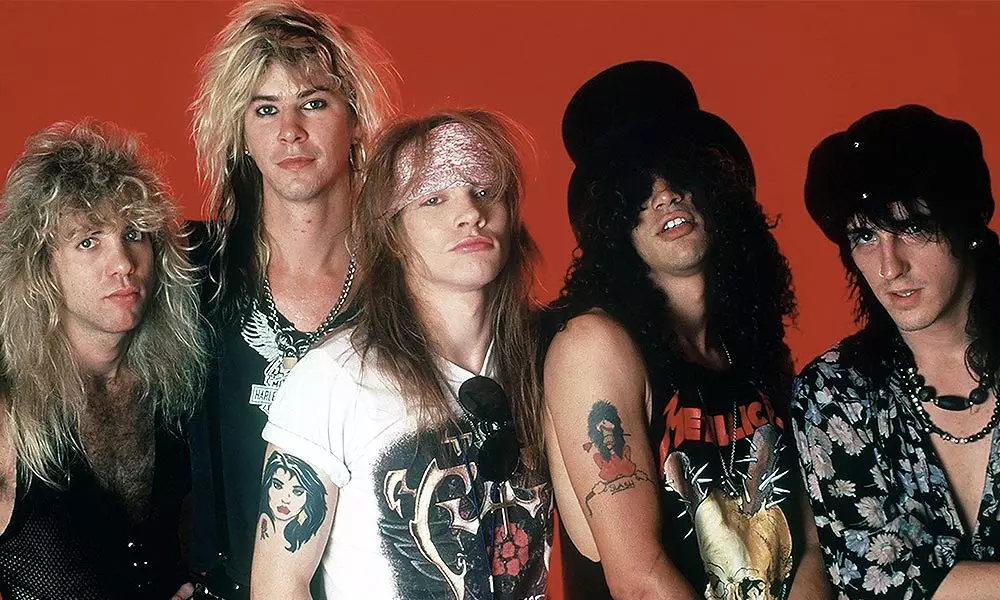
Guns N Roses is one of the most recognizable rock bands in modern music history. Known for its powerful guitar riffs, expressive vocals, energetic performances, and larger-than-life personality, the band became a defining force in rock during the late 1980s and early 1990s. Although the music industry has changed dramatically since then, the name Guns N’ Roses continues to attract longtime fans as well as listeners discovering the band for the first time.
The group’s appeal comes from more than a collection of successful songs. Guns N Roses combined the raw attitude of hard rock with memorable songwriting and an unpredictable stage presence. Their music could move from aggressive and rebellious to emotional and reflective, sometimes within the same album. That range helped the band stand apart from many of its contemporaries.
At the center of the story are several musicians who became closely associated with the band’s identity, particularly Axl Rose and Slash. Their creative relationship, along with the contributions of other members over the years, shaped the sound that made Guns N’ Roses famous. The band’s history also includes major lineup changes, ambitious albums, worldwide tours, and an enduring cultural influence.
How Guns N’ Roses Began
Guns N’ Roses emerged from the Los Angeles rock scene in the mid-1980s.The band was formed through the combination of musicians from several local groups, bringing together different personalities and musical backgrounds. The result was a group that sounded rougher and more unpredictable than the polished rock acts dominating parts of the mainstream at the time.
The early lineup included Axl Rose, Slash, Duff McKagan, Izzy Stradlin, and Steven Adler. Each musician brought something distinctive to the group. Rose provided an unmistakable vocal personality, Slash became known for his blues-influenced guitar playing, McKagan supplied a strong bass foundation, Stradlin contributed heavily to the songwriting, and Adler helped establish the rhythmic character of the early recordings.
The band’s early shows helped create its reputation. Guns N’ Roses developed a following through energetic performances and a willingness to embrace the excesses associated with rock culture. Their sound was loud and direct, but there was also a strong musical foundation beneath the attitude.
The Breakthrough of Appetite for Destruction
The band’s breakthrough came with Appetite for Destruction, released in 1987. Initially, the album did not become an immediate blockbuster, but word of mouth and increasing radio exposure eventually transformed it into a massive success. It became one of the most important debut albums in rock history.
A major reason for its success was the combination of memorable songwriting and distinctive performances. Songs such as “Welcome to the Jungle,” “Sweet Child o’ Mine,” and “Paradise City” demonstrated different sides of the group. “Welcome to the Jungle” introduced listeners to an aggressive and chaotic version of Los Angeles, while “Sweet Child o’ Mine” showed that the band could produce a highly melodic rock song.
Slash’s guitar work became one of the album’s defining characteristics. His playing combined blues phrasing, hard-rock power, and expressive solos. At the same time, Rose’s vocals gave the songs an intensity that was difficult to imitate. Together, these elements created a sound that immediately stood out.
The Importance of Axl Rose
Axl Rose became the most recognizable voice of Guns N’ Roses. His vocal range allowed him to move between gritty lower tones, high-register singing, and dramatic delivery. Rather than relying on a single vocal style, he used different approaches depending on the emotion and structure of a song.
Rose also became known for his intense stage presence. His performances were energetic and theatrical, reinforcing the band’s reputation as an unpredictable live act. His personality frequently attracted as much attention as the music, making him one of the most discussed rock frontmen of his generation.
Beyond performance, Rose was an important part of the band’s creative direction. He participated extensively in songwriting and arrangements, especially as the group’s music became more ambitious. His influence became increasingly apparent as Guns N’ Roses moved beyond the straightforward hard-rock structure of its earliest material.
Slash and the Guitar Sound
Slash is arguably one of the most recognizable guitarists associated with Guns N’ Roses. His playing helped give the band’s music a strong connection to classic blues-based rock while maintaining the volume and aggression expected from hard rock.
One of Slash’s greatest strengths was his ability to make guitar solos memorable rather than treating them simply as technical demonstrations. His solos often functioned as another melodic voice within a song. This approach helped make instrumental sections recognizable even to listeners who were not guitar enthusiasts.
His image also became closely connected with the band’s identity. The top hat, long hair, Les Paul-style guitar, and distinctive playing style created an instantly recognizable persona. Yet the image worked because it was supported by genuine musicianship and a strong understanding of rock tradition.
Duff McKagan and the Rhythm Section
Duff McKagan played an important role in establishing Guns N’ Roses’ rhythmic foundation. His bass lines were generally direct and powerful, helping connect the guitar work with the drums while giving the songs a strong sense of movement.
McKagan’s musical background extended beyond bass playing. He contributed to songwriting and developed a reputation as a versatile musician. His approach to the instrument helped maintain the band’s hard-rock character without overcrowding the arrangements.
His partnership with the drummer was particularly important. Rock songs can lose their impact when the rhythm section lacks energy, but Guns N’ Roses benefited from a rhythm section that could support both fast, aggressive tracks and slower, more dramatic material.
Izzy Stradlin’s Role in the Band
Izzy Stradlin played an important role during Guns N’ Roses’ early years. While Slash often received considerable attention for his guitar solos, Stradlin’s rhythm playing and songwriting contributions were fundamental to the band’s early sound.
His guitar work provided structure underneath Slash’s lead parts. That combination created a fuller guitar arrangement than simply having one guitarist carry the entire song. Stradlin’s approach was rooted in classic rock and helped give the band’s music a natural, organic feel.
Stradlin was also involved in writing some of the band’s most memorable material. His contribution is particularly important when examining the early era because Guns N’ Roses was not simply a vehicle for one performer. It was a collaborative group whose strongest recordings reflected several musicians working together.
Steven Adler and the Early Drumming Style
Steven Adler was the drummer during the classic early recording period. His playing contributed to the loose, energetic feel that became an important part of the band’s identity.
Adler’s drumming worked particularly well with the straightforward rock structures of Appetite for Destruction. Rather than making the rhythm overly complicated, the performances gave the guitars and vocals enough room to dominate while maintaining momentum.
His time with the group was relatively brief compared with some other members, but his contribution remains an important part of Guns N’ Roses history. The sound of the first major album cannot be separated from the musicians who performed on it.
The Use Your Illusion Era
Following the enormous success of Appetite for Destruction, expectations surrounding Guns N’ Roses became enormous. Instead of releasing a simple follow-up, the band delivered two albums in 1991: Use Your Illusion I and Use Your Illusion II.
The two records demonstrated a much broader musical ambition. There were hard-rock songs, blues-inspired tracks, ballads, experimental arrangements, and extended compositions. The albums showed that the band was interested in exploring different formats rather than simply repeating the formula that had made it famous.
Songs such as “November Rain,” “Don’t Cry,” and “Civil War” revealed a more expansive side of the group.“November Rain” in particular demonstrated how Guns N’ Roses could incorporate piano, orchestral textures, and a long-form arrangement into its hard-rock identity.
November Rain and the Power of the Ballad
“November Rain” became one of Guns N’ Roses’ most recognizable songs. Its long arrangement and emotional presentation helped it reach listeners who might not normally consider themselves hard-rock fans.
The song is notable for its piano-led opening and gradual expansion into a full rock production. Slash’s guitar solos provide major emotional peaks, while Rose’s vocals contribute to the dramatic character of the composition.
Its accompanying music video also played a significant role in the song’s cultural impact. At a time when music television was extremely influential, visually ambitious videos could help turn songs into major events. “November Rain” became an example of how rock music could combine songwriting, performance, and visual storytelling.
Guns N’ Roses and the Power of Music Videos
Music videos were a major part of Guns N’ Roses’ rise. During the late 1980s and early 1990s, television music channels gave artists an opportunity to reach audiences beyond traditional radio.
The band’s videos often emphasized its rebellious personality. “Welcome to the Jungle” introduced the group with an aggressive visual style, while “Sweet Child o’ Mine” presented the musicians in a more direct performance setting.
Later videos became increasingly ambitious. “November Rain” and other productions demonstrated that Guns N’ Roses was willing to treat music videos as substantial creative projects rather than simple promotional clips.
The Band’s Relationship With Rock Culture
Guns N’ Roses became closely associated with the rebellious side of rock culture. The band’s music often dealt with relationships, ambition, conflict, addiction, nightlife, loneliness, and the pressures surrounding fame.
This gave the songs a mixture of fantasy and realism. Some tracks celebrated excess, while others explored its consequences. That contrast helped the band’s catalog remain more varied than a simple collection of party songs.
The group also arrived at an important moment in rock history. Glam metal was commercially powerful, alternative rock was growing, and punk and underground scenes continued to influence younger musicians. Guns N’ Roses occupied a distinctive position between these worlds.
The Changing Lineup
Lineup changes became one of the defining features of Guns N’ Roses history. As the band became more successful, internal disagreements, personal issues, creative differences, and changing priorities affected the original lineup.
Members departed at different points, and new musicians were brought in. These changes affected the band’s sound and working relationships. For listeners, they also created distinct eras within the group’s history.
The departures of important original members were especially significant because the classic lineup had developed such a recognizable identity. Nevertheless, Guns N’ Roses continued rather than disappearing after the original lineup changed.
The Long Road to Chinese Democracy
One of the most famous chapters in the band’s history was the long development of Chinese Democracy. The album became known for its extended production period, changing musicians, evolving arrangements, and unusually high expectations.
The project eventually resulted in the release of Chinese Democracy in 2008. By that point, Guns N’ Roses sounded considerably different from the classic lineup era.
The album demonstrated that Rose was interested in taking the band’s music into different production territory. While its sound incorporated hard rock, it also featured modern studio techniques, layered instrumentation, and arrangements that differed significantly from Appetite for Destruction.
Why Chinese Democracy Became Such a Talking Point
The lengthy development of Chinese Democracy became part of popular music culture itself. Fans waited for years while rumors and reports circulated about its progress.
This created an unusual situation where the album became famous before many listeners had heard the finished music. The delay generated enormous curiosity and sometimes skepticism.
When the album finally appeared, it was judged against expectations that had developed over many years. Regardless of individual opinions about the music, its release represented an unusual chapter in the history of major-label rock.
The Reunion With Slash and Duff McKagan
A major development occurred when Slash and Duff McKagan returned to the Guns N’ Roses lineup for touring. Their involvement brought together several musicians associated with the band’s most famous period.
The reunion attracted considerable attention because the relationship between Rose and Slash had been separated for many years. Their return to performing together created an opportunity for audiences to hear familiar songs with musicians strongly associated with the original recordings.
The reunion era also demonstrated the continuing commercial and cultural strength of the Guns N’ Roses name. Large audiences remained interested in seeing the band perform its classic material decades after the original breakthrough.
Guns N’ Roses as a Live Band
Live performance has always been central to Guns N’ Roses’ identity. Unlike studio recordings, concerts allow the band’s personality and musicianship to develop in real time.
The band’s concerts typically feature extended versions of familiar songs, guitar solos, vocal performances, and moments that allow individual musicians to take the spotlight. This gives longtime listeners something different from simply playing the studio albums.
Large-scale tours also introduced Guns N’ Roses to new generations. Someone who discovered the band through streaming or a parent’s record collection could eventually experience the songs performed live by musicians connected with different eras of the band’s history.
The Importance of the Guitar Solos
Guitar solos remain one of the most recognizable features of Guns N’ Roses music. In an era when many forms of popular music have become increasingly production-focused, the band’s classic recordings remain strongly associated with live instrumental performance.
Slash’s solos are especially important because they are often built around melody. A listener can remember the contour of a solo even without knowing the technical details behind it.
The band’s guitar arrangements also demonstrate the importance of contrast. Rhythm guitar can provide the foundation while lead guitar adds movement and emotional emphasis. This approach gives many Guns N’ Roses songs a fuller sound.
Guns N’ Roses and Songwriting
The band’s songwriting is broader than its most famous singles might suggest. Some songs are built around simple rock structures, while others contain multiple sections, changing tempos, and extended instrumental passages.
Themes also vary significantly. Love songs sit beside stories about urban life, personal conflict, ambition, addiction, friendship, and self-destruction.
That variety has helped the catalog remain relevant to different listeners. Someone may first discover the band through a famous ballad and later explore its heavier songs, while another listener might begin with the aggressive material and eventually appreciate the band’s slower compositions.
The Legacy of Appetite for Destruction
Appetite for Destruction remains central to discussions of Guns N’ Roses because it captured the original lineup at a particularly important point in its development.
The album combined raw production, memorable riffs, strong choruses, and energetic performances. It sounded dangerous without abandoning conventional songwriting.
Its influence can be heard in later hard-rock and alternative-rock musicians. Many artists have cited Guns N’ Roses as an important influence, particularly in relation to guitar-driven songwriting and the revival of a rougher rock aesthetic during the late 1980s.
The Legacy of Use Your Illusion
The Use Your Illusion albums expanded the band’s musical identity. Rather than relying exclusively on the aggressive style of the debut, the records explored different moods and arrangements.
The ambitious scale of songs such as “November Rain” demonstrated that Guns N’ Roses could work with long compositions without losing its rock foundation.
The albums also showed the band’s willingness to take creative risks. Not every experiment had to sound like the debut, and this willingness to expand helped establish the group as more than a one-album phenomenon.
Guns N’ Roses and Younger Generations
One of the interesting aspects of Guns N’ Roses is its ability to reach listeners who were not alive when the band released its biggest records.
Streaming platforms, social media, movies, television, games, playlists, and classic-rock radio have all contributed to keeping the band’s music accessible.
Younger listeners can discover songs in a completely different order from earlier generations. Instead of hearing a band through radio singles, they can explore an entire catalog instantly and decide which songs resonate with them.
This has helped preserve Guns N’ Roses as a living part of rock culture rather than simply a historical act.
The Visual Identity of Guns N’ Roses
The band’s visual identity has always been closely tied to its music. The logo, album artwork, clothing, guitars, and stage presentation became recognizable symbols.
The members also developed distinct personal images. Slash’s appearance, Rose’s stage clothing, and the overall rebellious aesthetic helped create an identity that could be recognized even outside the music itself.
That visual consistency became particularly important during the band’s rise because rock music was increasingly becoming a multimedia experience.
The Meaning of the Guns N’ Roses Name
The name Guns N’ Roses itself reflects the band’s combination of aggression and beauty. “Guns” can suggest danger, conflict, and raw power, while “roses” can suggest beauty, romance, and emotion.
That contrast also describes much of the band’s music. One song can be loud and aggressive, while another can be emotional and melodic.
The contrast between hard-edged rock and softer musical elements is one reason the band’s catalog has such a broad emotional range.
Why Fans Continue to Listen
Fans continue to return to Guns N’ Roses because the songs combine memorable melodies with strong personalities. The music often feels immediate rather than overly polished.
There is also a sense of history attached to the recordings. Listening to Appetite for Destruction places the listener inside a specific moment in rock history, while the later albums show how the musicians responded to changing circumstances.
For longtime fans, the music can be connected to memories, concerts, friendships, and different periods of life. For newer listeners, the same songs can feel like discoveries.
Guns N’ Roses in Modern Rock
Modern rock exists in a very different environment from the one Guns N’ Roses entered during the 1980s. Streaming has changed how music is discovered, while social media has changed how artists interact with audiences.
Even so, guitar-driven rock continues to draw inspiration from earlier generations. Guns N’ Roses remains part of that musical lineage.
The band’s influence is particularly noticeable in the continuing popularity of classic guitar tones, memorable riffs, expressive solos, and large-scale rock performances.
Essential Guns N’ Roses Songs to Explore
For someone discovering Guns N’ Roses for the first time, several songs provide a useful introduction to different aspects of the band’s sound. “Welcome to the Jungle” represents the aggressive side of the group, while “Sweet Child o’ Mine” demonstrates its melodic songwriting.
“Paradise City” combines an energetic verse with a huge chorus, making it one of the band’s most recognizable concert songs. “November Rain” offers a completely different experience through its slower opening and extended arrangement.
Other tracks such as “Patience,” “Civil War,” “You Could Be Mine,” and “Rocket Queen” help demonstrate the range of the catalog. Exploring different albums rather than only the biggest singles provides a much clearer picture of the band’s musical development.
The Albums Worth Knowing
The most essential starting point is Appetite for Destruction, particularly for listeners interested in the band’s original sound. It provides the clearest introduction to the chemistry among the classic lineup.
The next major stage is represented by Use Your Illusion I and Use Your Illusion II. Together, they reveal a more ambitious and varied Guns N’ Roses.
The Spaghetti Incident? explores the band’s relationship with earlier rock and punk influences through cover versions. Chinese Democracy represents a later and substantially different chapter, with Rose leading a changing group of musicians and embracing a more modern studio sound.
Guns N’ Roses’ Influence on Rock Musicians
The band’s influence can be seen in guitar playing, songwriting, stage performance, and visual presentation. Many musicians were inspired by the combination of technical ability and raw energy.
Slash’s approach to guitar became particularly influential among players who wanted to combine blues vocabulary with hard-rock intensity.
The band also demonstrated that commercial success did not necessarily require abandoning an aggressive musical identity. This helped reinforce the idea that hard rock could reach enormous audiences while maintaining a strong underground-inspired attitude.
What Makes Guns N’ Roses Different
Guns N’ Roses succeeded because it brought together elements that could easily have existed separately. The band had the aggression of hard rock, the melody of classic rock, the attitude of punk, and the emotional range of a ballad-oriented songwriting tradition.
Its members also possessed strong individual identities. Instead of blending into a generic rock lineup, the musicians became recognizable personalities.
Most importantly, the band’s best-known recordings contain songs that remain easy to remember. Memorable choruses, guitar riffs, and vocal performances give the music a staying power that goes beyond its original era.
Frequently Asked Questions About Guns N’ Roses
Who are Guns N’ Roses?
Guns N’ Roses is an American hard-rock band formed in Los Angeles during the 1980s. The group became internationally famous through its debut album, Appetite for Destruction, and later expanded its catalog through the Use Your Illusion albums and other releases.
Who is the lead singer of Guns N’ Roses?
Axl Rose is the band’s lead vocalist and one of its founding members. His distinctive voice and stage presence became central to the group’s identity.
Who is the guitarist associated with Guns N’ Roses?
Slash is the guitarist most strongly associated with the band’s classic sound. His melodic, blues-influenced solos became an important part of Guns N’ Roses’ musical identity.
What was Guns N’ Roses’ first major album?
Appetite for Destruction, released in 1987, was the band’s major breakthrough album. It eventually became one of the most commercially successful rock albums of its era.
What is Guns N’ Roses’ most famous song?
The answer depends on the listener, but “Sweet Child o’ Mine,” “Welcome to the Jungle,” “Paradise City,” and “November Rain” are among the band’s most widely recognized songs.
When did Guns N’ Roses become famous?
The band began gaining attention in the Los Angeles rock scene during the mid-1980s and achieved international fame after the growing success of Appetite for Destruction.
Why did Guns N’ Roses have lineup changes?
The band experienced numerous lineup changes over the years due to a combination of personal, professional, creative, and other circumstances. These changes produced different eras in the group’s musical history.
What makes Guns N’ Roses influential?
The band’s combination of hard-rock energy, blues-based guitar playing, memorable songwriting, dramatic vocals, and powerful live performances influenced numerous musicians and helped shape late-1980s and early-1990s rock.
Is Guns N’ Roses still culturally relevant?
Yes. The band’s classic songs continue to appear on streaming services, radio, playlists, films, television, and live performances. New listeners continue to discover its music decades after the band’s initial breakthrough.
Conclusion
Guns N Roses occupies a unique place in rock history. The band’s story includes enormous success, creative ambition, lineup changes, controversy, reinvention, and a lasting connection with audiences around the world. From the raw energy of Appetite for Destruction to the expansive sound of the Use Your Illusion era and the later evolution represented by Chinese Democracy, the band’s catalog covers several different stages of rock music. Axl Rose’s distinctive vocals, Slash’s expressive guitar work, Duff McKagan’s bass playing, and the contributions of numerous other musicians all helped shape that history.