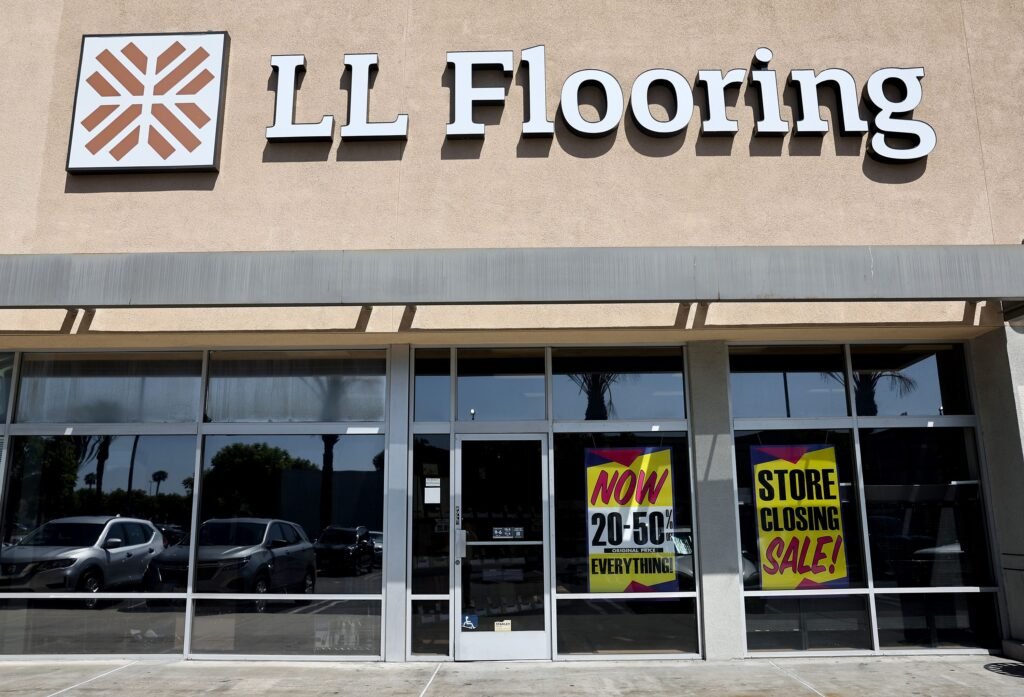
If you have searched for LL Flooring recently, you may have noticed that the name does not always lead to the same business experience it once did. That is because LL Flooring went through one of the most dramatic changes in the U.S. flooring retail industry in recent years. The company was formerly known as Lumber Liquidators, adopted the LL Flooring name, entered Chapter 11 bankruptcy in 2024, and later had part of its business acquired by F9 Investments.
Today, the stores that continued after that process operate under the Lumber Liquidators name again. The company says it has more than 200 stores nationwide and continues to sell hardwood, vinyl, laminate, and other flooring products.
That history makes the keyword LL Flooring interesting for homeowners, contractors, DIY shoppers, and anyone researching an older purchase or trying to understand what happened to the retailer. It also means that information written several years ago can be confusing or outdated.
This guide breaks down the LL Flooring story in simple terms. We will look at its history, product selection, bankruptcy, rebranding, pricing approach, shopping experience, flooring choices, installation considerations, and what consumers should know today.
What Was LL Flooring?
LL Flooring was a U.S.-based specialty flooring retailer that focused primarily on hard-surface flooring. The business was better known for many years as Lumber Liquidators before changing its corporate and retail identity to LL Flooring. The name change was intended to reflect a broader flooring selection rather than an image centered primarily around lumber and hardwood.
The company had built a substantial physical retail network across the United States. Its stores were designed around a fairly straightforward concept: provide homeowners, contractors, builders, and DIY customers with a large selection of flooring at competitive prices. Customers could shop for different materials, compare styles, examine samples, and arrange installation or other project services.
The business had its roots in the 1990s. Tom Sullivan founded Lumber Liquidators after recognizing an opportunity to source flooring directly and sell it to customers at lower prices. The company eventually became a major specialty flooring retailer, with hundreds of locations and a strong national presence.
For shoppers, the LL Flooring name therefore represents more than a simple store brand. It is part of a longer retail history that includes Lumber Liquidators, a major expansion period, a name change, financial difficulties, bankruptcy, and eventually a return to the Lumber Liquidators identity.
The Connection Between LL Flooring and Lumber Liquidators
One of the biggest sources of confusion surrounding LL Flooring is its relationship with Lumber Liquidators. They are not completely unrelated companies that happened to sell similar products. Rather, LL Flooring was the later identity of the business that had become widely known as Lumber Liquidators.
The company changed its name as it attempted to position itself as a broader flooring retailer. Instead of focusing on the word “lumber,” the LL Flooring identity emphasized flooring as the central category. That made sense from a marketing perspective because the company sold more than traditional hardwood products.
However, the LL Flooring identity did not ultimately become permanent. After the company entered bankruptcy proceedings in 2024, F9 Investments reached an agreement to acquire 219 stores and other assets. F9 was led by Tom Sullivan, the founder of the original Lumber Liquidators business.
The acquired stores subsequently returned to the Lumber Liquidators name. Industry coverage in 2026 describes the business as having reverted from LL Flooring back to Lumber Liquidators, while the current company website also uses the Lumber Liquidators identity.
That means someone searching for an old LL Flooring store may now find information under the Lumber Liquidators name. The history is connected, but the current branding is different.
What Happened to LL Flooring?
The major turning point for LL Flooring came in 2024. The company filed for Chapter 11 bankruptcy protection in August of that year while attempting to restructure its business and find a buyer. At the time, the retailer had hundreds of stores across the United States.
The initial bankruptcy strategy did not necessarily mean that every store would disappear. The company initially planned to close 94 locations while keeping more than 300 stores operating during the restructuring process. It also obtained debtor-in-possession financing to support operations while looking for a potential buyer.
The situation changed quickly. In September 2024, LL Flooring announced plans to liquidate the business after difficulties finding a buyer that could preserve the entire operation. Store-closing sales began, and customers were told that locations would be shutting down.
Then came an unexpected development. F9 Investments agreed to acquire 219 stores, inventory, intellectual property, and other assets. This allowed a substantial portion of the business to survive instead of disappearing entirely.
The bankruptcy process therefore did not result in every former LL Flooring location disappearing permanently. Instead, a significant portion of the business was purchased and relaunched under its original Lumber Liquidators identity.
How Many LL Flooring Stores Are Still Around?
There is an important distinction between the historical LL Flooring store network and the current Lumber Liquidators network. Before the bankruptcy, the business operated more than 400 locations. During the bankruptcy, hundreds of locations were affected by closures and liquidation.
F9 Investments ultimately acquired 219 stores from the LL Flooring business. Industry reporting later described the remaining operation as having more than 200 stores, although an exact current store count can change as locations are relocated or adjusted.
The current Lumber Liquidators website says the company has over 200 stores nationwide. It also describes the company as having more than 350 flooring options and a focus on products such as hardwood and waterproof vinyl.
This is important for anyone searching for an “LL Flooring near me.” A location that appeared under the LL Flooring name in older search results may now be listed as Lumber Liquidators, while some former locations may have closed completely.
The company has also made strategic location changes since the acquisition. In 2025, five store relocations were announced across Michigan, Delaware, Georgia, Illinois, and California, demonstrating that the surviving business has been adjusting its physical footprint rather than simply maintaining every inherited location.
What Types of Flooring Does the Company Offer?
Flooring is one of those purchases where having several material options can make a huge difference. A kitchen, bedroom, basement, office, and commercial space may all require completely different characteristics. LL Flooring historically built its business around giving customers access to several hard-surface categories.
Hardwood has traditionally been one of the company’s strongest categories. Hardwood flooring can provide a warm, natural appearance and can work with traditional, modern, rustic, and transitional interiors. Different wood species, plank widths, colors, surface treatments, and finishes can create very different visual results.
The company also offers engineered wood. Engineered flooring can provide the appearance of real wood while using a layered construction that can make it suitable for situations where solid hardwood may not be the ideal choice. However, installation requirements and environmental conditions still matter, so customers should evaluate the specific product rather than assuming every engineered floor performs identically.
Vinyl and laminate are also important parts of the modern flooring market. Vinyl can be particularly attractive for areas where moisture resistance is important, while laminate can provide a wood-inspired appearance at a different price point. The current Lumber Liquidators site specifically promotes hardwood, vinyl, and laminate options.
Is LL Flooring Good for Hardwood?
For shoppers interested in hardwood, the former LL Flooring business has a long history in the category. The original Lumber Liquidators business was founded around the idea of sourcing flooring products and offering them to consumers at competitive prices.
Hardwood remains attractive because it combines appearance, durability, and long-term appeal. A well-selected hardwood floor can become one of the defining features of a room. It can also potentially be refinished depending on its construction, thickness, finish, and installation method.
Still, buying hardwood should never be based only on the retailer’s name. The actual species, grade, plank dimensions, finish, moisture content, installation requirements, and warranty terms are all important. Two hardwood floors can look similar in a showroom but behave differently once installed.
The same principle applies to pricing. A low price per square foot does not automatically mean a lower-quality floor, but it also does not automatically mean a bargain. Customers need to calculate the full project cost, including underlayment where applicable, installation, transitions, trim, delivery, removal of an old floor, and potential waste.
Vinyl Flooring Can Be a Practical Alternative
Vinyl flooring has become increasingly popular because modern products can combine attractive designs with practical performance. For homeowners who want the appearance of wood or stone without using those natural materials, vinyl can be a compelling alternative.
One of the biggest advantages is the variety of designs available. Modern vinyl products can imitate wood grain, stone patterns, concrete textures, and other finishes. This gives homeowners more flexibility when coordinating floors with cabinets, wall colors, furniture, and architectural features.
Water resistance is another major consideration. Some vinyl products are designed for environments where moisture may be present, although shoppers should always check the exact manufacturer’s specifications. “Waterproof” and “water-resistant” are not interchangeable terms, and installation details can have a major impact on real-world performance.
Vinyl can also be easier to maintain than some traditional flooring materials. Regular sweeping or vacuuming followed by manufacturer-approved cleaning methods is usually enough for everyday care. However, even durable flooring benefits from proper installation and maintenance rather than being treated as completely maintenance-free.
Laminate Flooring Still Has a Place in the Market
Laminate flooring remains popular among homeowners who want a decorative floor that can resemble natural wood without necessarily paying for solid hardwood. Modern laminate designs can be surprisingly convincing, particularly when the printed pattern and surface texture work together.
One reason people consider laminate is value. A homeowner working with a fixed renovation budget may be able to cover more square footage with laminate than with certain hardwood products. That can be especially useful when renovating several rooms at once.
Laminate can also offer a wide range of colors and styles. Light oak looks, darker walnut-inspired finishes, gray tones, rustic textures, and contemporary patterns can all be found across the broader laminate market. The right choice depends heavily on the home’s lighting and overall interior design.
However, laminate should be selected based on the specific room and product specifications. Moisture exposure, subfloor conditions, installation method, wear rating, and cleaning requirements all matter. A floor that performs beautifully in a bedroom may not be the best choice for an area that regularly experiences spills or heavy moisture.
How to Choose the Right LL Flooring Product
The best way to choose flooring is to start with the room rather than the appearance. Ask what the room experiences every day. Does it have heavy foot traffic? Are pets present? Is moisture a concern? Will children frequently use the space? Are furniture and appliances likely to be moved around?
Next, consider the visual style. Flooring occupies a large percentage of the visible surface area in most rooms, so its color has a major effect on the overall atmosphere. Light flooring can make some spaces feel more open, while darker flooring can create a warmer and more dramatic appearance.
Plank width is another detail people often underestimate. Wider boards can produce a contemporary or spacious appearance, while narrower boards can feel more traditional. The direction of installation can also affect how a room appears.
Finally, think beyond the initial purchase price. A flooring project includes more than boxes of planks. Installation materials, underlayment, adhesives, transitions, trim, delivery, labor, and waste can all affect the final budget.
What About LL Flooring Prices?
Pricing is one of the reasons shoppers have historically been attracted to LL Flooring. The business was built around a value-oriented retail model, including direct sourcing and high-volume purchasing. The current company says it keeps overhead relatively low and buys large volumes directly from mills to help maintain competitive pricing.
However, flooring prices are not static. They vary according to material, species, construction, thickness, finish, brand, availability, location, and current promotions. A price seen in an old LL Flooring article or review should therefore not be treated as a current quote.
The best approach is to compare the total installed project cost rather than simply comparing the advertised price per square foot. For example, one flooring product may have a lower material price but require additional preparation, while another may cost more per square foot but have fewer installation complications.
Customers should also purchase enough material to account for cutting and waste. The required percentage depends on the product, room shape, installation pattern, and installer recommendations. Buying too little can create problems later if a particular color or product becomes unavailable.
Should You Buy Flooring From the Current Lumber Liquidators Business?
For shoppers who find a current Lumber Liquidators location, the decision should be based on the specific product, price, warranty, availability, and installation arrangements rather than simply the old LL Flooring name.
The business currently operates as Lumber Liquidators and continues to present itself as a national flooring retailer with more than 200 stores. Its website highlights flooring experts, hardwood, vinyl, laminate, and other options.
At the same time, shoppers should understand the company’s recent history. The business went through Chapter 11 and a major asset sale, and a large number of former locations were closed. That does not automatically tell you whether a particular current product is good or bad, but it does mean customers should pay attention to current policies rather than relying on older LL Flooring reviews.
Before placing a large order, confirm product availability, expected delivery timing, installation terms, return rules, warranty coverage, and what happens if additional material is needed after installation. These details can matter just as much as the advertised price.
LL Flooring and Installation Services
Flooring installation is often where a seemingly simple shopping decision becomes more complicated. The floor itself may be excellent, but poor installation can lead to gaps, movement, squeaks, uneven transitions, moisture problems, or premature wear.
Professional installation can be especially useful when the subfloor needs preparation. A flooring professional can identify issues that may not be obvious to a homeowner, including uneven areas, moisture concerns, damaged subfloor sections, or unsuitable existing surfaces.
Customers should ask exactly what the installation quote includes. Removing existing flooring may be a separate charge. Moving furniture, disposing of old material, preparing the subfloor, installing transitions, adding trim, and handling stairs may also affect the final price.
If you choose an independent installer, get the scope of work in writing. If you use a retailer-arranged installation service, review the contract carefully and understand who is responsible for measuring, installation defects, material shortages, and warranty claims.
What Happened to the Old LL Flooring Locations?
Not every former LL Flooring location survived the bankruptcy process. The company initially announced 94 store closures, and the later liquidation process affected many more locations. Eventually, 219 stores were included in the sale to F9 Investments.
This explains why online searches can produce confusing results. One website might reference an LL Flooring store that no longer exists, while another might show a Lumber Liquidators location at a different address.
Some surviving stores have also moved. In 2025, the company announced relocations involving stores in Michigan, Delaware, Georgia, Illinois, and California. The stated goal was to strengthen the company’s position in those markets and improve customer access.
If you are trying to locate a former LL Flooring store, it is therefore better to search for the current Lumber Liquidators location rather than relying on an older LL Flooring directory. Store information can change, especially following the company’s restructuring and subsequent footprint adjustments.
The Importance of Checking Flooring Samples
One of the smartest things a flooring shopper can do is take samples home before making a large purchase. Store lighting can make a floor look very different from how it appears under natural daylight.
This is particularly important with wood-look products. Grain patterns, knots, undertones, plank variation, and surface texture can become much more noticeable once dozens or hundreds of square feet are installed.
Place samples near your cabinets, walls, furniture, and major light sources. Look at them in the morning, afternoon, and evening. A floor that looks neutral under bright store lighting may reveal warm or cool undertones inside your home.
It is also worth looking at multiple planks together. A single sample does not always show the amount of variation that will appear across an entire floor. Flooring is a large visual commitment, so spending extra time on samples can prevent expensive mistakes.
LL Flooring Reviews: What Should You Look For?
Online reviews can be useful, but they need to be read carefully. Flooring reviews often involve several different elements at once, including the product itself, store service, delivery, installation, customer service, and warranty handling.
A customer might give a poor review because an installation was delayed even though the flooring product performed well. Another customer might praise a salesperson while having problems with the product. These are different issues and should not be treated as evidence about the entire company.
When reading reviews, look for repeated patterns rather than one dramatic complaint. Multiple independent customers describing the same issue can be more meaningful than a single extreme experience.
It is also important to check the date of the review. Because LL Flooring went through a bankruptcy, ownership change, and rebranding, very old reviews may describe a substantially different organization than the current Lumber Liquidators business.
Why the LL Flooring Story Matters to the Flooring Industry
The LL Flooring story illustrates how difficult specialty retail can become when consumer demand, housing activity, operating costs, inventory, and financing conditions move in the wrong direction.
The company’s bankruptcy filing came during a period when the home-improvement sector was dealing with weaker housing activity and changes in consumer spending. Industry reporting connected the difficulties faced by LL Flooring with broader economic and housing-market pressures.
The company also faced its own operational and financial challenges. Its bankruptcy filings described liquidity pressures and difficulties involving vendors and suppliers, while the company publicly cited a challenging macroeconomic environment.
Yet the eventual sale shows another side of the story. Instead of allowing the entire retail concept to disappear, F9 Investments acquired a substantial group of stores and returned the business to its original Lumber Liquidators identity.
For consumers, this means the LL Flooring story is less about a simple “store closed” headline and more about a major transformation of an established flooring retailer.
What Makes a Good Flooring Retailer?
A good flooring retailer should offer more than a large product catalog. Customers need accurate measurements, useful product information, dependable availability, reasonable pricing, clear warranties, and competent installation support.
Product selection matters because different rooms require different performance characteristics. A retailer that can provide hardwood, engineered wood, laminate, and vinyl gives customers more opportunities to match the floor to the room.
Expert guidance is also valuable. Flooring is not something most people purchase frequently, so shoppers may not understand terms such as wear layer, construction, acclimation, underlayment, floating installation, glue-down installation, or moisture requirements.
The best experience comes when the retailer helps customers understand those differences rather than simply pushing the most expensive product. That is particularly important for first-time homeowners and DIY renovators who may be unfamiliar with flooring specifications.
How to Budget for a Flooring Project
Start by measuring the actual area that needs flooring. Do not stop at the exact room dimensions because cutting and installation waste must be considered.
Then separate your budget into categories. Material is only one part of the project. Depending on the floor, you may need underlayment, adhesive, transitions, trim, subfloor preparation, delivery, installation labor, furniture moving, and old-floor removal.
It is also wise to keep a contingency amount. Older homes can reveal surprises once existing flooring is removed. A damaged subfloor or unexpected moisture issue can increase the cost of a project.
Finally, compare quotes using the same scope of work. A $5,000 installation quote and a $4,500 quote cannot be meaningfully compared if one includes demolition and subfloor preparation while the other does not.
The Future of the Lumber Liquidators Business
The post-bankruptcy business appears to be focused on rebuilding around the Lumber Liquidators identity. The current company website describes a network of more than 200 stores and continues to promote flooring products for homeowners and other customers.
The company has also been making strategic changes to its store network rather than simply preserving every location inherited from LL Flooring. Store relocations announced in 2025 suggest an effort to improve market positioning and customer accessibility.
At the same time, reliable financial comparisons with the old publicly traded LL Flooring business are more difficult because the current operation is privately held. Floor Covering Weekly noted in 2026 that the current company is private and that reliable sales figures are not publicly available in the same way they were previously.
For consumers, the practical takeaway is simple: the brand has changed, but the underlying flooring retail concept continues. Someone searching for LL Flooring today will often need to think in terms of the current Lumber Liquidators business.
Is LL Flooring Still a Company?
The answer requires a little clarification. LL Flooring as the former retail identity is no longer the current consumer-facing brand. The portion of the business acquired by F9 Investments was relaunched as Lumber Liquidators.
The current Lumber Liquidators website identifies the business by that original name and says it has more than 200 stores nationwide.
So, if you are searching for LL Flooring because you remember the company from a previous purchase, you are not necessarily looking at a completely unrelated business. The history is directly connected, but the present-day branding and ownership structure are different from the publicly traded LL Flooring business that entered Chapter 11 in 2024.
This distinction is particularly important when researching warranties, old orders, store locations, product availability, or customer-service information. Older LL Flooring information may describe policies and locations that no longer apply.
Frequently Asked Questions About LL Flooring
Is LL Flooring the same as Lumber Liquidators?
LL Flooring was the name used by the former Lumber Liquidators business after its rebranding. Following the 2024 bankruptcy and asset sale, the acquired stores returned to the Lumber Liquidators name.
Did LL Flooring go bankrupt?
Yes. LL Flooring filed for Chapter 11 bankruptcy protection in August 2024. The company initially planned store closures while pursuing a sale, but the situation later moved toward liquidation before F9 Investments agreed to acquire 219 stores and other assets.
Are LL Flooring stores still open?
The former LL Flooring stores do not generally operate under the LL Flooring name today. The surviving stores operate as Lumber Liquidators. The current company says it has more than 200 stores nationwide.
Who bought LL Flooring?
F9 Investments, led by Lumber Liquidators founder Tom Sullivan, acquired 219 stores and other assets from the LL Flooring bankruptcy estate. The stores subsequently operated under the Lumber Liquidators name.
Does Lumber Liquidators still sell hardwood flooring?
Yes. The current Lumber Liquidators business continues to promote hardwood flooring along with vinyl, laminate, and other flooring products.
Is LL Flooring still publicly traded?
The old LL Flooring public-company structure went through Chapter 11 and liquidation proceedings. The current operating business is privately held, according to industry reporting.
Can I still find flooring at a former LL Flooring store?
Some former locations were acquired and continue operating under the Lumber Liquidators name, while many other locations closed during the bankruptcy process. Because locations can also move, checking the current store information is important.
Is Lumber Liquidators worth considering for a flooring project?
It can be worth comparing, especially if you want to evaluate hardwood, laminate, vinyl, or other hard-surface options. As with any flooring retailer, compare the exact product, specifications, total installed cost, availability, warranty, and installation terms before making a large purchase.
Final Thoughts on LL Flooring
The story of LL Flooring is more complicated than simply saying that a flooring retailer went out of business. The company that consumers knew as LL Flooring did enter Chapter 11 bankruptcy in 2024, and a large number of stores were closed. However, 219 stores and other assets were acquired by F9 Investments, allowing a significant part of the business to continue. The biggest change for consumers is the return of the Lumber Liquidators name. The current business says it operates more than 200 stores nationwide and continues to focus on flooring products including hardwood, vinyl, and laminate.
YOU MAY HAVE MASSED