The debate around chow mein vs lo mein comes up every time someone opens a Chinese restaurant menu or plans a homemade stir-fry night. Both dishes feature wheat noodles paired with vegetables and protein, yet the final results feel distinct on the plate and in the mouth. One leans softer and saucier while the other often brings more texture from the frying process. Knowing the practical differences helps you order with confidence or cook either version successfully at home.
Many people use the names interchangeably, which only adds to the confusion. The truth lies in the cooking technique and the resulting mouthfeel. Once you understand how the noodles are prepared and how the sauce interacts with them, the choice becomes clearer based on what you feel like eating. This guide breaks down the history, methods, ingredients, and everyday tips so you can navigate chow mein vs lo mein without guesswork and enjoy both styles to the fullest.
Breaking Down the Basic Definitions
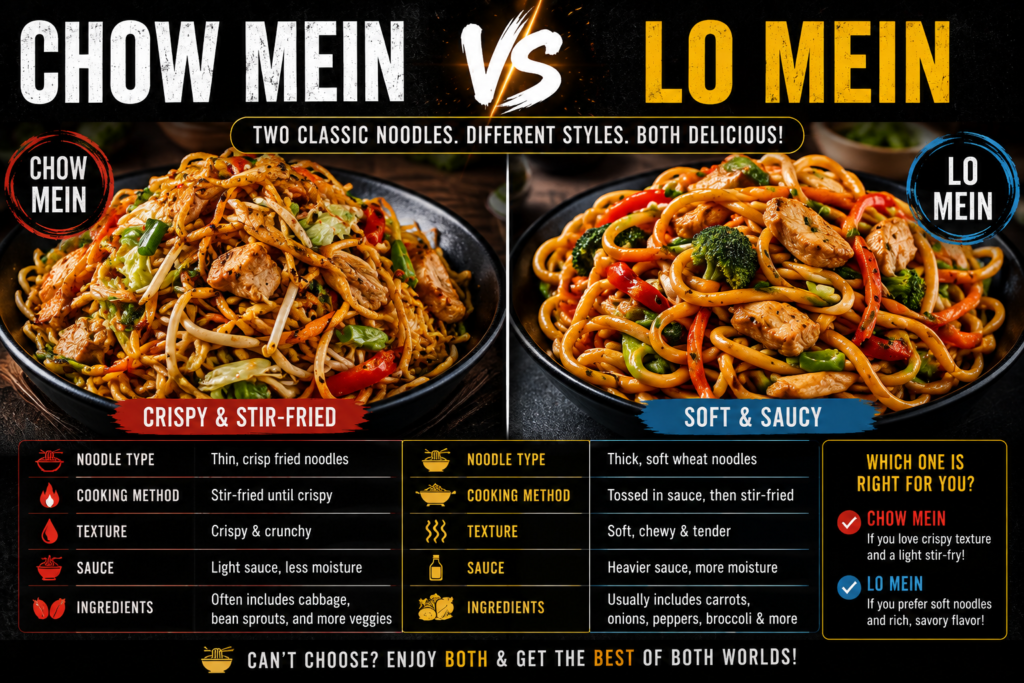
Chow mein refers to a style where the noodles receive more direct contact with hot oil in the pan or wok. The goal is often a drier finish with some crisp edges or an overall firmer texture. The name itself points to the frying step that defines the dish. Ingredients get stir-fried together, and the noodles spend enough time in the heat to develop color and bite.
Lo mein takes a different route. The noodles are usually boiled or steamed first until tender, then tossed or lightly stirred with a generous amount of sauce and the other components. The emphasis stays on coating every strand rather than frying the noodles themselves for crispness. The result feels softer and more thoroughly seasoned. These foundational approaches create the main split people notice when comparing the two.
Historical Roots and How the Dishes Evolved
Noodle dishes have deep roots in Chinese cooking traditions that stretch back centuries. Wheat noodles became staples in northern regions, and various stir-frying and boiling techniques developed around available ingredients and cooking vessels. The concepts behind both styles traveled with Chinese immigrants and adapted to new environments, especially in the United States where American Chinese cuisine took shape.
Over time restaurant menus standardized the names for clarity with local diners. What began as flexible home and regional preparations settled into the recognizable forms most people encounter today. The evolution shows how practical cooking methods can become cultural touchstones. Understanding that background adds appreciation when you sit down to a plate of either dish and notice the care that goes into the preparation.
Texture as the Most Noticeable Difference
Texture drives much of the preference when people discuss these options. In the chow mein approach the noodles often develop a pleasant firmness or even light crispiness depending on how long they stay in the pan. That contrast with soft vegetables and tender protein creates an engaging bite. Some versions aim for a pan-fried cake-like base that delivers crunch on the bottom.
The lo mein style keeps the noodles soft and pliable throughout. They absorb the sauce readily and provide a smooth, consistent chew. The overall plate feels cohesive rather than texturally varied. Neither approach is superior; they simply satisfy different moods. Recognizing this core distinction makes it easier to decide which one matches your craving on any given day.
Sauce Quantity and How It Interacts with the Noodles
Sauce plays a major supporting role in both dishes yet behaves differently because of the noodle preparation. Chow mein versions typically use less liquid overall so the noodles can fry properly without steaming. The seasoning coats the ingredients more lightly and allows the natural flavors of the vegetables and protein to stand out alongside the browned notes from the pan.
Lo mein relies on a more generous sauce that clings to every strand. Soy sauce, sesame oil, and other seasonings create a glossy coating that defines the eating experience. The softer noodles act like a sponge and carry the flavor through each bite. Adjusting sauce levels at home lets you fine-tune either style to personal taste while staying true to the traditional character of each.
Typical Cooking Methods Explained in Practical Terms
Preparing chow mein usually starts with par-cooking the noodles, then adding them to a hot wok or skillet with oil. The cook keeps the ingredients moving so everything fries evenly and the noodles gain color. High heat and relatively dry conditions are essential. Timing matters because the goal is texture rather than simply heating everything through.
Lo mein preparation often involves fully cooking the noodles first until they reach the desired tenderness. They are then combined with the stir-fried aromatics, vegetables, and protein along with the prepared sauce. The final tossing step focuses on even distribution rather than prolonged frying. Both methods reward good mise en place so the actual cooking moves quickly and the results stay vibrant.
Common Ingredients Shared Across Both Dishes
Despite the differences in technique, the supporting cast of ingredients overlaps heavily. Aromatics such as garlic, ginger, and green onions form the fragrant base in nearly every version. Vegetables like cabbage, carrots, bell peppers, bean sprouts, and mushrooms appear frequently because they add color, crunch, and nutrition. Proteins range from chicken, beef, and pork to shrimp, tofu, or egg.
The sauce components also share common ground. Soy sauce provides saltiness and color, while sesame oil contributes aroma. A touch of sugar or other sweeteners balances the salt, and sometimes oyster sauce or hoisin adds depth. These shared building blocks mean that once you master the basic flavors, switching between the two styles becomes mostly a matter of adjusting the noodle treatment and sauce volume.
Regional and Restaurant Variations Worth Knowing
Different Chinese regional traditions and overseas adaptations have produced multiple interpretations. Some versions of the fried style stay relatively soft while others push for maximum crispness. American Chinese restaurants often present a saucier lo mein and a drier or crispier chow mein to give diners clear choices. In other places the lines blur and local preferences shape the final plate.
Exploring these variations expands what you can expect when ordering or cooking. A restaurant in one city might serve a chow mein that feels closer to what another place calls lo mein. Asking about preparation style or looking at photos on the menu can clarify expectations. Home cooks have the freedom to blend elements and create hybrid versions that suit their exact preferences.
How to Choose Between Them When Ordering Out
When the menu lists both options, consider what texture and sauciness you want that day. If you prefer something that feels lighter and offers more chew or crispness, the fried style usually delivers. If you want a comforting, fully coated plate of noodles that eats like a complete sauced meal, the tossed version is the safer bet.
Looking at the listed ingredients and any descriptive words helps. Mentions of crispy or pan-fried point one direction. Words like soft or saucy point the other. Server recommendations can also guide first-time orders. Once you try both from the same kitchen you develop a clearer sense of how that particular restaurant interprets the difference.
Home Cooking Tips for Authentic Results
Success at home starts with the right noodles. Fresh or dried egg noodles work well for both styles when cooked to the proper stage. Having all ingredients cut and measured before the heat goes on keeps the process smooth. A large wok or heavy skillet provides the surface area needed for proper stir-frying without steaming.
For the fried approach, make sure the pan is hot and the noodles are relatively dry before they go in. For the tossed style, prepare a flavorful sauce in advance and add it toward the end so it coats rather than pools. Tasting and adjusting seasoning at the final stage ensures balance. Practice with simple combinations before adding more complex elements builds confidence quickly.
Nutritional Aspects and Healthier Adjustments
Both dishes can fit into a balanced eating pattern depending on portion size and ingredient choices. The vegetable content contributes fiber and vitamins while the protein adds staying power. The noodles supply energy through carbohydrates. Oil used in cooking affects the overall fat content, so controlling the amount keeps the meal lighter.
Choosing lean proteins, loading extra vegetables, and moderating the sauce sugar content improves the nutritional profile of either style. Whole-wheat or alternative noodles offer more fiber when desired. These adjustments allow frequent enjoyment without feeling overly heavy. Awareness of the components makes it easy to tailor the plate to personal goals.
Flavor Profiles and Seasoning Strategies
The savory backbone of soy and sesame appears in both, yet the intensity and supporting notes can shift. The fried version often highlights the toasted flavors that develop from contact with the hot pan. The tossed version carries the sauce more prominently so the balance of salt, sweet, and aromatic elements stands out clearly.
Building flavor in layers improves either dish. Starting with aromatics, searing the protein, and finishing with sauce or final seasonings creates depth. Fresh garnishes such as green onions or cilantro brighten the finished plate. Small experiments with chili oil, vinegar, or additional spices keep the meals interesting over time without straying too far from the classic character.
Common Misconceptions That Cause Confusion
One frequent mix-up is assuming the names refer to completely different noodle types rather than different preparations. In reality the same or very similar noodles can be used for both. Another misconception is that one style is always healthier or more authentic than the other. Both have legitimate roots and can be prepared with care.
Some people believe chow mein must be crispy in every case, yet many restaurant versions stay relatively soft. Clearing up these points reduces frustration when the plate arrives looking or tasting different from expectations. Focusing on the actual cooking method rather than the name alone leads to better results and more enjoyable meals.
Pairing Ideas and Complete Meal Planning
Either noodle dish works as a standalone main course. Adding a simple soup or a light appetizer creates a more complete restaurant-style experience at home. Fresh cucumber salad or pickled vegetables offer cooling contrast to the savory warmth of the noodles. Steamed greens on the side increase the vegetable presence without complicating the main preparation.
For gatherings, offering both styles or multiple protein options lets guests customize. The dishes reheat reasonably well, making them practical for leftovers or meal prep. Thinking about the full plate rather than just the noodles elevates everyday dinners and special occasions alike.
Storage, Reheating, and Leftover Strategies
Cool leftovers promptly and store them in airtight containers in the refrigerator. The fried style may lose some crispness upon reheating, while the saucier version often holds up better. A hot skillet with a splash of water or broth restores moisture and texture more effectively than a microwave alone.
Repurposing leftovers into a quick fried rice or adding them to a broth-based soup extends their usefulness. Labeling containers with the date helps track freshness. These practical habits reduce waste and make the effort of cooking stretch further across the week.
Exploring Protein and Vegetable Combinations
Chicken remains a popular and versatile choice for both styles because it cooks quickly and absorbs sauce well. Beef sliced thinly against the grain provides richer flavor. Shrimp adds a lighter, sweeter note. Tofu or tempeh works for plant-based versions and takes on the seasoning effectively.
Vegetable combinations can follow the seasons. Cabbage and carrots are reliable year-round options. Snow peas, broccoli, and bok choy bring freshness and color. Mushrooms contribute umami depth. Mixing textures within the vegetables keeps each bite interesting. The flexibility means the same basic method can produce many different meals.
Sauce Variations That Transform the Plate
A standard soy-based sauce forms the foundation, yet small changes create new experiences. Adding a bit of hoisin or oyster sauce increases richness. Chili garlic sauce or fresh chilies introduce heat. A touch of citrus or rice vinegar brightens the overall flavor. Peanut or sesame paste produces a thicker, nuttier coating suited to certain preferences.
Preparing the sauce separately allows precise control over saltiness and consistency. Tasting before combining with the noodles prevents over-seasoning. Keeping a few go-to sauce formulas on hand speeds up weeknight cooking while still offering variety across different nights.
Equipment and Technique Details That Improve Results
A carbon steel wok or a large cast-iron skillet retains heat well and supports proper stir-frying. High smoke-point oils handle the temperature needed without burning. Long cooking chopsticks or a sturdy spatula help keep ingredients moving. Having a lid available for brief steaming of harder vegetables can be useful.
Controlling the heat level throughout the process prevents burning or steaming. Working in batches when cooking larger quantities maintains temperature. These equipment and technique points apply to both styles and reward a little attention with noticeably better texture and flavor.
Cultural Significance and Everyday Enjoyment
Noodle dishes occupy an important place in many meals across Chinese culinary traditions and their global adaptations. They represent comfort, practicality, and the ability to feed people well with relatively simple ingredients. In home kitchens and restaurants alike they continue to satisfy because they deliver on flavor and substance.
The ongoing conversation about preferences keeps the dishes relevant. Some households lean toward one style while others rotate between both. That everyday presence is part of what makes learning the differences worthwhile. Enjoying either version connects you to a broader food culture while still feeling personal and immediate.
Troubleshooting Common Cooking Problems
If the noodles turn out soggy, the pan was likely overcrowded or the heat too low. Cooking in smaller batches and maintaining high temperature solves the issue. When the dish tastes bland, the sauce may need more intensity or the seasoning was added too late. Adjusting earlier in the process improves distribution.
Sticky noodles often result from insufficient oil or incomplete draining. A light coating after the initial cook and thorough draining help. Burnt garlic or ginger means the aromatics stayed in the pan too long before other ingredients were added. Timing the addition of each component carefully prevents those problems and leads to more consistent results.
Making the Dishes Work for Different Dietary Preferences
Both styles adapt well to various needs. Gluten-free noodles substitute when required, though the texture changes. Lower-sodium sauces and reduced oil keep the meal lighter. Fully plant-based versions rely on tofu, extra vegetables, and careful seasoning to maintain satisfaction.
For those monitoring carbohydrates, increasing the vegetable-to-noodle ratio helps. High-protein additions support different goals. The basic frameworks remain flexible enough to accommodate these adjustments without losing the essential character that makes each dish appealing.
Entertaining and Scaling the Recipes
These noodle dishes scale nicely for groups. Preparing components in advance and stir-frying in batches keeps the workflow manageable. Setting out different proteins or sauce options lets guests personalize their plates. The casual nature of the food suits both informal dinners and larger gatherings.
Presentation in large serving bowls or on platters shows off the colors and textures. Simple garnishes elevate the visual appeal. Having extra sauce on the side accommodates different preferences. Planning the menu around the strengths of either style creates a cohesive and satisfying spread.
| Aspect | Chow Mein Characteristics | Lo Mein Characteristics |
|---|---|---|
| Primary Technique | More frying for texture | Tossing with sauce for coating |
| Noodle Texture | Firmer or lightly crispy | Soft and tender |
| Sauce Amount | Lighter coating | More generous and glossy |
| Overall Feel | Drier with contrast | Saucier and cohesive |
| Best Mood Match | When craving bite and texture | When wanting comfort and flavor absorption |
One cook noted that the fried version scratches the itch for something with more texture while the tossed style feels like a warm hug on a plate. Another observed that once you taste both prepared well, the preference becomes personal rather than absolute. Those simple reactions capture the spirit of the comparison.
FAQ
What is the main difference people notice in chow mein vs lo mein?
The most immediate difference appears in texture and sauce. One style usually presents firmer or lightly crisped noodles with a lighter coating, while the other keeps the noodles soft and thoroughly coated in a more abundant sauce. These outcomes come from distinct cooking approaches rather than completely different ingredients. Understanding that core contrast helps when deciding which to order or prepare.
Can the same noodles be used for both styles?
Yes, similar wheat-based or egg noodles work for either preparation. The key lies in how long they cook initially and how they are treated in the pan afterward. Par-cooking followed by frying suits one approach, while fuller cooking followed by tossing with sauce suits the other. Fresh or dried noodles both succeed when the timing matches the intended style.
Which option tends to be saucier when comparing chow mein vs lo mein?
The tossed style generally carries more sauce and feels glossier on the plate. The frying-focused version uses less liquid so the noodles can develop texture without steaming. Sauce quantity is one of the clearest practical distinctions and often guides the choice for people who have a strong preference for either a coated or a drier finish.
How can I make restaurant-style versions at home?
Start with proper noodles and high heat. For the firmer style, ensure the pan stays hot and the ingredients stay relatively dry while frying. For the softer style, prepare a balanced sauce and toss thoroughly at the end. Prepping all components before cooking and working quickly once the heat is on produces results that closely match good restaurant plates.
Are there healthier ways to prepare either dish?
Increasing the vegetable portion, choosing lean proteins, and moderating the oil and sugar in the sauce improve the nutritional balance of both. Alternative noodles can add fiber when desired. Controlling portion size also helps. These adjustments keep the meals satisfying while aligning better with various dietary goals.
Does the debate around chow mein vs lo mein matter for authenticity?
Both styles have legitimate places within broader Chinese and Chinese-American cooking traditions. Authenticity depends more on technique and ingredient quality than on declaring one superior. Regional and restaurant variations exist for good reason. Focusing on well-executed preparation of whichever style you prefer leads to better enjoyment than worrying about rigid definitions.
Conclusion
Chow Mein vs Lo Mein The comparison of these two noodle dishes ultimately comes down to texture, sauce, and personal preference rather than a strict hierarchy. One delivers a firmer or crispier bite with lighter seasoning while the other offers soft noodles fully coated in flavorful sauce. Both can be prepared with care at home or enjoyed from a favorite restaurant once you understand the underlying methods. Exploring the differences enriches everyday meals and removes the confusion that sometimes appears on menus. Whether you lean toward one style consistently or rotate between both, the knowledge of how each comes together allows more intentional and satisfying choices. With practice the techniques become second nature, and the simple pleasure of a well-made plate of noodles remains as reliable as ever.