
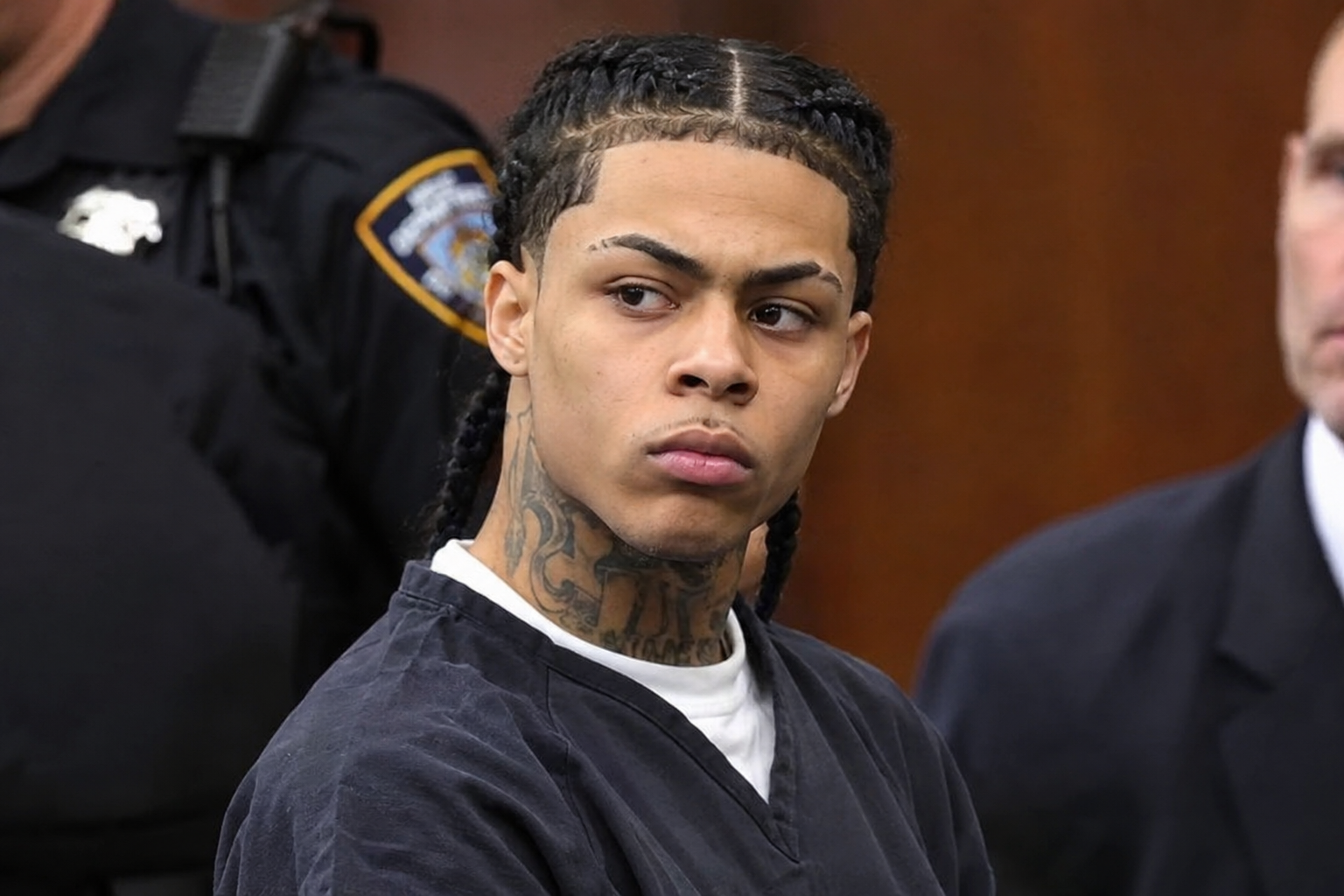
The keyword “Kay Flock sentence” has attracted considerable attention from hip-hop fans, music listeners, and people following high-profile criminal cases. Kay Flock, whose real name is Kevin Perez, became widely known for his energetic Bronx drill music, distinctive delivery, and rapid rise in the New York rap scene. However, his growing musical reputation was accompanied by serious legal problems that eventually became a major part of his public story.
For fans who want to understand what happened, the subject involves more than a single court decision. It includes a federal criminal case, allegations connected to violence, the legal process that followed his arrest, and questions about how his incarceration could affect his music career. Understanding the distinction between the charges, the jury’s verdict, and the eventual sentence is essential to getting the story right.
This article examines the Kay Flock sentence topic in detail, explaining the rapper’s background, the events surrounding his legal troubles, the significance of the federal proceedings, and what his case means for his future. It also separates established legal outcomes from rumors and speculation that sometimes circulate on social media.
Because criminal cases can involve several different stages, the date and nature of a legal development matter. A sentence is not the same thing as an arrest, an indictment, or a conviction, and confusing these terms can lead to inaccurate reporting. The goal here is to provide a clear, readable overview without sensationalizing the circumstances.
Who Is Kay Flock?
Background and musical career
Kay Flock is the stage name of Kevin Perez, a rapper from the Bronx, New York. He became a recognizable name in the city’s drill music scene, a style of hip-hop known for its hard-hitting beats, direct lyrics, and intense street narratives.His music connected with listeners who appreciated its raw energy and distinctive New York sound.
His rise to prominence accelerated in 2021, when songs such as “Being Honest” helped introduce him to a much wider audience.His debut mixtape, The D.O.A. Tape, further established his place in the Bronx drill movement. His delivery, memorable hooks, and aggressive musical style helped him build a following among young hip-hop fans.
However, Kay Flock’s career developed alongside growing public attention to the relationship between drill music, neighborhood conflicts, and violence.While artists often use lyrics to express their experiences, prosecutors in his criminal case argued that certain songs, statements, and online activity were connected to real-world conflicts. That distinction became a significant part of the proceedings against him.
How Long Is Kay Flock’s Sentence?
The central question behind the search term “Kay Flock sentence” has a clear answer: Kay Flock was sentenced to 30 years in federal prison on December 16, 2025. U.S. District Judge Lewis J. Liman imposed the sentence following a federal jury trial in Manhattan.
In addition to the prison term, Perez received five years of supervised release. Supervised release generally follows imprisonment and requires a person to comply with court-imposed conditions. It is separate from the prison sentence and does not mean that the person can immediately return to unrestricted everyday life after release.
The sentence followed a jury’s March 2025 verdict finding Perez guilty of racketeering conspiracy, attempted murder and assault with a deadly weapon in aid of racketeering, and a firearm-related offense. The jury also found him not guilty of the murder charge brought against him.This distinction is important because the 30-year term was imposed for the offenses of conviction, not for a murder conviction.
When Was Kay Flock Sentenced?
The sentencing hearing took place on December 16, 2025, after months of legal proceedings following the jury’s verdict in March. The case was handled in federal court in the Southern District of New York, which has jurisdiction over federal criminal matters in Manhattan and surrounding areas.
Before sentencing, prosecutors and defense lawyers presented arguments about the appropriate punishment. Prosecutors sought a lengthy prison term, emphasizing the seriousness of the offenses and the alleged pattern of violence connected to the group they said Perez led. His defense argued for a substantially lower punishment and challenged aspects of the government’s account of his role.
Judge Liman ultimately imposed 30 years in prison. The outcome drew widespread attention because Perez was only 22 when the sentence was handed down, and his music career had begun attracting substantial attention just a few years earlier. News coverage of the hearing focused on the length of the sentence, the judge’s comments, and the difference between the punishment requested by prosecutors and the outcome.
What Charges Led to Kay Flock’s Sentence?
The case involved several federal charges rather than a single isolated allegation. One of the most significant was racketeering conspiracy, which concerns an agreement to participate in an enterprise through a pattern of specified criminal activity. Federal racketeering laws are designed to address organized criminal activity and can apply when prosecutors establish the required connections between an enterprise, its participants, and criminal conduct.
Another major part of the case involved attempted murder and assault with a deadly weapon in aid of racketeering. These offenses concern violent conduct allegedly committed to maintain or increase a person’s position in a criminal enterprise. The jury found Perez guilty on relevant charges after hearing evidence during the trial.
The case also included a firearm offense associated with a violent crime. Federal firearm laws can impose serious penalties when a gun is used, carried, or discharged in connection with certain crimes of violence. The combined seriousness of the convictions contributed to the lengthy sentence. The exact legal basis should be understood through the verdict and sentencing record rather than simplified social media summaries.
What Happened in Kay Flock’s Federal Case?
The federal prosecution centered on allegations that a Bronx-based group known as Sev Side/DOA was involved in a series of violent incidents. Prosecutors argued that the group operated as a criminal enterprise and that Perez held a leadership role. Their case connected alleged acts of violence with disputes between rival groups and efforts to maintain status within the organization.
During the trial, prosecutors presented evidence intended to show relationships between individuals, alleged shootings, communications, and the group’s activities. They also discussed music and social media as part of their account of the alleged conflicts. The prosecution’s position was that these materials helped explain the group’s identity, relationships, and motivations, rather than simply reflecting artistic expression.
The defense challenged the government’s interpretation and contested aspects of the allegations. A jury evaluated the evidence and returned its verdict in March 2025. It found Perez guilty of several federal offenses but acquitted him of the murder charge. That mixed outcome matters: the prosecution did not obtain a conviction on every charge, even though the remaining convictions resulted in a substantial prison term.
Was Kay Flock Convicted of Murder?
One of the most frequently misunderstood details about the Kay Flock case is the difference between the murder allegation and the charges on which he was convicted. Although Perez faced a federal murder charge, the jury found him not guilty of murder in March 2025. The jury nevertheless found him guilty of other serious offenses, including racketeering conspiracy and attempted murder.
An acquittal on one charge does not automatically cancel convictions on separate charges. Each count has its own legal elements, and jurors must evaluate whether the prosecution has proved the required elements beyond a reasonable doubt. A defendant can therefore be acquitted of one alleged offense while being convicted of other crimes arising from related events.
This distinction explains why the murder acquittal did not prevent the judge from imposing a 30-year prison sentence. The remaining convictions carried significant legal consequences, and the court considered the applicable sentencing rules and arguments presented by both sides. Anyone researching the case should be cautious about headlines that describe Perez simply as having been convicted of murder, because that wording does not accurately reflect the jury’s verdict.
What Did the Judge Say During Sentencing?
Judge Lewis J. Liman emphasized the seriousness of the conduct established during the case. According to the U.S. Attorney’s Office, the judge described Perez as someone who had celebrated and contributed to a culture of violence, and he characterized the harm caused as immense. Those remarks reflected the court’s assessment of the case and its consequences for the affected community.
The prosecution had argued that a lengthy prison sentence was necessary because of the severity of the offenses, the alleged leadership role, and the impact of repeated violence. Prosecutors sought a 50-year term, a punishment considerably longer than the 30 years ultimately imposed. The judge’s final decision therefore differed from the government’s requested sentence.
The defense, meanwhile, asked the court to consider Perez’s age, background, and personal circumstances. His lawyers argued that a much shorter sentence was appropriate and challenged the prosecution’s portrayal of him as a gang leader. The court ultimately imposed a sentence that reflected its assessment of the convictions and the seriousness of the conduct. Sentencing hearings are important because they allow both sides to explain why a particular punishment should or should not be imposed.
How Did Kay Flock’s Music Affect the Case?
Kay Flock’s music became part of the wider discussion surrounding his prosecution. Drill music often draws on neighborhood experiences, rivalries, personal conflicts, and street life. Lyrics can contain exaggeration, fictional storytelling, artistic persona, and references to real events. Because of this complexity, a song’s meaning cannot automatically be reduced to a literal confession.
In Perez’s case, prosecutors argued that some of his lyrics and online statements were relevant to understanding the alleged group’s activities, rivalries, and violence. Their argument placed the music within a broader collection of evidence. The case was not simply a legal judgment about whether a particular song was controversial or whether an artist used aggressive language.
The distinction is important for musicians and listeners alike. Courts may consider artistic material when it has a legitimate connection to disputed facts, intent, identity, or other issues in a criminal case. However, that does not mean that every violent lyric proves a crime or that drill music as a genre is inherently criminal. The relevance of artistic expression depends on the circumstances and the evidence presented in a particular case.
Why Did the Kay Flock Case Receive So Much Attention?
One reason the case attracted widespread interest was Perez’s rapid rise in music. He had become a recognizable figure in Bronx drill within a short period, and his arrest and prosecution placed his future career in doubt. For fans who had followed his early releases, the prospect of a lengthy prison sentence represented a dramatic change in the trajectory of a young artist.
Another factor was the seriousness of the allegations and the federal government’s approach to the case. Federal racketeering prosecutions can involve multiple alleged participants, a broader account of criminal activity, and evidence gathered across different incidents. That makes them more complex than cases focused on one isolated event. The combination of a high-profile rapper, serious violence-related charges, and a long federal trial naturally generated extensive news coverage.
The sentence also sparked discussion about accountability, rehabilitation, and the role of public attention in criminal cases. Some people focused on the punishment and the harm described by prosecutors, while others discussed the rapper’s age, the future of his career, and the wider consequences of incarceration. These reactions reflect different public perspectives, but the legal outcome itself must be distinguished from opinions expressed online.
Did Kay Flock Appeal His Sentence?
Following the sentencing, reports in January 2026 indicated that Kay Flock had appealed his conviction. An appeal is a formal legal process in which a higher court reviews specified aspects of a lower court’s proceedings or decision. It is different from asking the original judge for sympathy or simply disagreeing with the outcome.
An appeal may raise questions about legal rulings, jury instructions, the admission of evidence, the sufficiency of the evidence under applicable standards, or other claimed errors. The reviewing court examines the issues properly presented by the parties and applies the relevant legal rules. It does not automatically conduct an entirely new trial or accept every argument raised by the defense.
Most importantly, filing an appeal does not itself erase a conviction or cancel a prison sentence. The sentence remains the operative judgment unless a court changes it or another legal development affects its enforcement. As of the information available in the cited reporting, an appeal had been reported, but a filed appeal should not be mistaken for a successful reversal.
What Is the Difference Between a Prison Sentence and Supervised Release?
The Kay Flock sentence includes two distinct parts: 30 years in prison and five years of supervised release. The prison term is the principal punishment imposed for the federal convictions. During that period, the person remains in federal custody, subject to the rules and procedures governing incarceration.
Supervised release is a separate period that generally begins after the prison term has been completed, subject to applicable rules and any adjustments to the sentence. It is administered in the community under court-imposed conditions. Depending on the case, those conditions may involve reporting requirements, restrictions on certain activities, and compliance with other legal obligations.
Violating the conditions of supervised release can result in additional legal consequences, including a return to custody in appropriate circumstances. It is therefore inaccurate to treat supervised release as a simple extension of ordinary freedom without restrictions. In Perez’s case, the five-year period was imposed in addition to the 30-year prison sentence.
How Could the Sentence Affect Kay Flock’s Music Career?
A 30-year federal prison term creates major obstacles for a recording artist. A career in modern hip-hop often depends on regular releases, public appearances, touring, interviews, collaborations, and active communication with fans. Incarceration severely limits an artist’s ability to participate directly in many of those activities.
Music can still reach listeners while an artist is incarcerated, depending on recording arrangements, previously completed material, rights ownership, distribution agreements, and applicable institutional rules. Existing tracks may continue to stream, and record labels or other authorized parties may manage music already available to the public. However, the existence of a music catalog does not guarantee that new releases will be possible or commercially successful.
The long-term impact will depend on legal developments, contractual arrangements, audience interest, and the amount of material that can lawfully be released. A sentence also affects the artist’s ability to develop new creative relationships and respond personally to changes in the industry. For Kay Flock, the legal case has become a defining part of his public story, even though his music remains the reason many listeners first learned his name.
What Is Kay Flock’s Expected Release Date?
People searching for a Kay Flock release date often want to know when he might return to music or everyday life. However, a precise release date should not be presented as confirmed without reliable information from official custody records or a clear court determination.
A 30-year sentence does not always translate into a simple calendar calculation. The actual time served can depend on the sentence’s legal terms, applicable federal rules, qualifying credit for time already spent in custody, and any changes resulting from appeals or other court proceedings. Eligibility for sentence reductions or other adjustments is governed by law and the facts of the individual case.
For that reason, it would be misleading to calculate a definite release date by adding 30 years to December 16, 2025, and treating the result as certain. The sentencing date establishes when the punishment was imposed, but it does not independently establish every detail of how the term will be administered. Official federal custody information and subsequent court decisions are the appropriate sources for any confirmed update.
What Happened After Kay Flock’s Sentencing?
The legal story did not necessarily end when the judge announced the 30-year term. The reported appeal became an important part of what followed, as the defense sought appellate review of the conviction. Such proceedings can take considerable time, and their outcomes depend on the legal issues raised and the reviewing court’s decision.
A separate development in July 2026 also brought renewed attention to the original trial. According to the U.S. Attorney’s Office, a witness named Ashanti Washington, also known as Shani Boni, pleaded guilty to perjury relating to testimony she gave during Perez’s March 2025 trial. The government said the false testimony concerned whether the murder victim had threatened Perez.
That development should be reported carefully. A witness’s guilty plea for lying under oath does not, by itself, establish that Perez’s other convictions have been overturned or that his appeal has succeeded. Those questions depend on the applicable legal process and any subsequent court rulings. The perjury case is a separate legal matter, although it concerns testimony given during the trial that led to Perez’s convictions.
Kay Flock Sentence and the Wider Debate About Drill Music
The case has contributed to a broader debate about how courts, law enforcement agencies, artists, and communities interpret drill music. Supporters of the genre often argue that music can describe difficult environments, express frustration, document personal experiences, or create a dramatic persona. They caution against treating an entire musical style as evidence of criminal intent.
Critics, on the other hand, point to situations in which online disputes, threats, and references to real-world violence appear to intensify conflicts. When prosecutors believe that specific material is connected to a criminal enterprise or a particular offense, they may seek to introduce it as evidence. Whether such material is relevant and admissible depends on the applicable rules of evidence and the facts of the case.
The important lesson is to avoid broad conclusions from a single prosecution. Kay Flock’s case involved specific charges, a particular body of evidence, a jury verdict, and a sentence imposed by a federal judge. It does not mean that every drill rapper is involved in crime, nor does it mean that lyrics alone automatically justify imprisonment. The legal significance of music must be evaluated in context.
Frequently Asked Questions About Kay Flock’s Sentence
1. How many years did Kay Flock get in prison?
Kay Flock received a 30-year federal prison sentence on December 16, 2025. He was also sentenced to five years of supervised release following imprisonment. The sentence followed his convictions on several federal charges, including racketeering conspiracy and attempted murder.
2. What is Kay Flock’s real name?
Kay Flock’s real name is Kevin Perez. He is a Bronx rapper who gained recognition through the New York drill music scene, particularly in 2021. His music career attracted substantial attention before his federal prosecution became a major part of his public profile.
3. Was Kay Flock found guilty of murder?
No. The jury found Kay Flock not guilty of the murder charge at his March 2025 federal trial. However, it convicted him of other serious offenses, including racketeering conspiracy, attempted murder, and a firearm-related offense. Those convictions led to his 30-year prison sentence.
4. When was Kay Flock sentenced?
Kay Flock was sentenced on December 16, 2025, by U.S. District Judge Lewis J. Liman in federal court in Manhattan. The judge imposed 30 years in prison followed by five years of supervised release.
5. Did Kay Flock appeal his conviction?
Yes. News reports published in January 2026 indicated that Kay Flock had appealed his conviction. Filing an appeal does not automatically overturn a verdict or reduce a sentence. The outcome depends on the legal arguments presented and the reviewing court’s decision.
6. Why did Kay Flock receive such a long sentence?
The court imposed the sentence after considering his convictions and the seriousness of the offenses. Prosecutors emphasized the alleged pattern of gang-related violence and his role in the group, while the defense sought a substantially shorter term. The judge ultimately imposed 30 years rather than the 50 years requested by prosecutors.
7. Will Kay Flock be able to release music from prison?
Potentially, depending on the circumstances. Previously recorded songs may continue to be distributed through authorized music platforms, and existing releases can remain available. Whether new music can be recorded or released depends on practical restrictions, applicable rules, contractual arrangements, and access to recording opportunities.
8. When will Kay Flock get out of prison?
A definitive release date should not be assumed from the length of the sentence alone. The actual date may depend on applicable sentence-credit rules, time already served, and any changes resulting from later legal proceedings. Reliable official custody information is needed to establish a confirmed release date.
Conclusion
The Kay Flock sentence case is a significant chapter in the story of a young rapper whose career rose quickly in the Bronx drill scene before serious criminal proceedings changed his future. On December 16, 2025, Kevin Perez, known professionally as Kay Flock, received 30 years in federal prison followed by five years of supervised release. The sentence followed a jury verdict that included convictions for racketeering conspiracy, attempted murder, and a firearm-related offense. Although the jury acquitted him of the murder charge, the remaining convictions carried serious consequences. His reported appeal and subsequent developments involving a witness from the original trial are additional reasons to follow reliable legal updates rather than relying on rumors.
