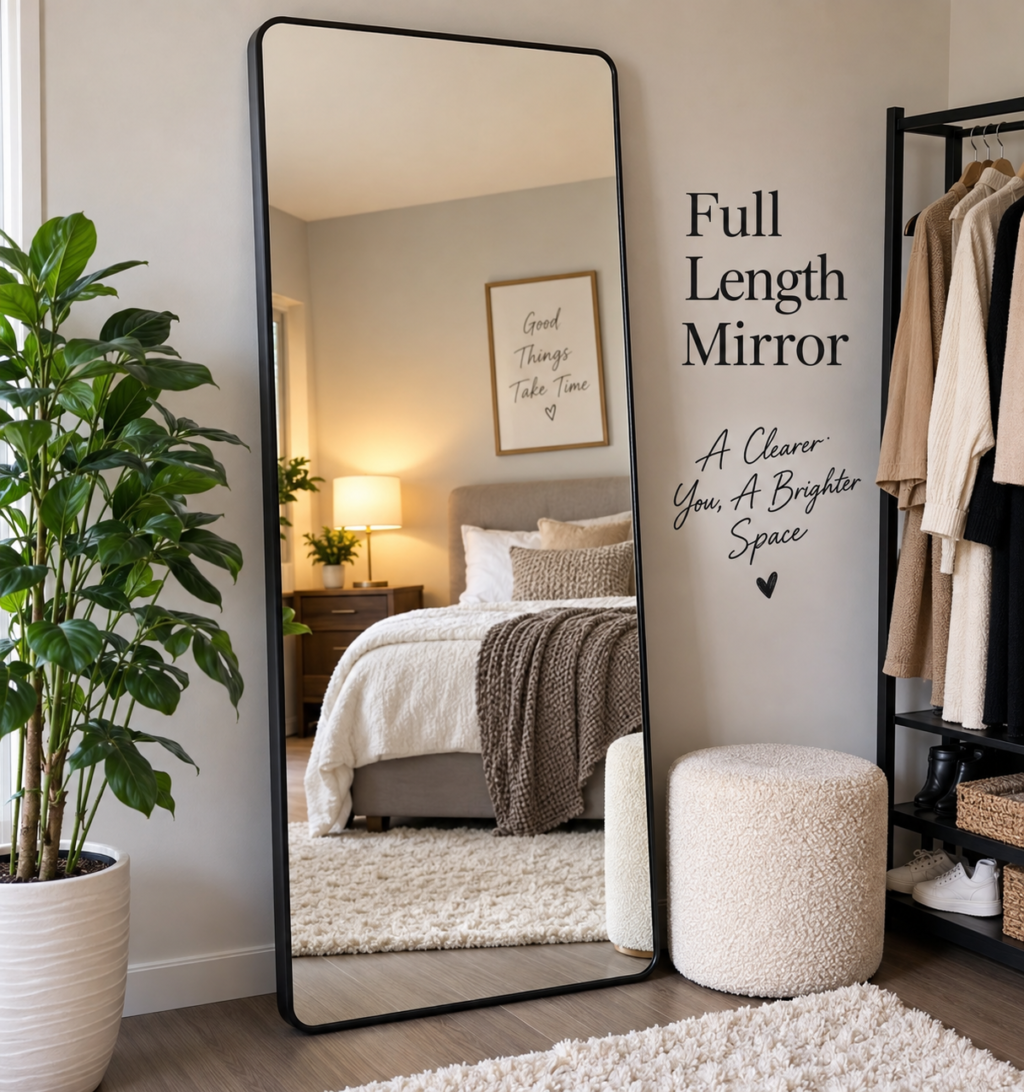
A full length mirror is one of those home essentials that can completely change the way a room looks and feels. At first glance, it may seem like a simple piece of furniture designed to help you check your outfit. In reality, a well-placed mirror can make a small room appear larger, improve lighting, add personality to a space, and even become a major decorative feature.
Whether you are furnishing a bedroom, dressing room, hallway, apartment, studio, or retail space, choosing the right mirror requires more thought than simply picking the largest one available. Size, shape, frame, placement, glass quality, safety, and overall design can all affect how useful and attractive the mirror will be.
The good news is that there are countless styles available today. You can find minimalist frameless designs, elegant arched mirrors, traditional wooden frames, modern metal styles, leaning mirrors, wall-mounted options, and even smart mirrors with additional features. With so many choices, it is possible to find something that matches almost any interior.
This guide explains everything you need to know about choosing and using a full length mirror, from understanding the different styles to selecting the correct size and finding the best position in your home.
What Is a Full Length Mirror?
A full length mirror is a mirror large enough to show most or all of your body from head to toe when you stand at an appropriate distance from it. Unlike small vanity or wall mirrors, it is specifically designed to provide a complete view of your appearance.
The exact dimensions can vary considerably. Some models are relatively narrow and tall, while others are wide enough to provide a more comfortable viewing area. The ideal size depends on where you plan to use the mirror and how much wall or floor space you have available.
A full length mirror can be mounted directly onto a wall, attached to a door, placed inside a wardrobe, or designed to lean against a wall. Freestanding versions may also have built-in supports that allow them to stand independently.
Beyond practical use, these mirrors are popular because they can contribute to interior design. Their reflective surface can bounce light around a room and create the impression of additional space. This makes them particularly useful in smaller bedrooms and apartments.
Why a Full Length Mirror Is Useful
The most obvious benefit of a full length mirror is being able to see your complete outfit. A small mirror might show your face and upper body, but it cannot tell you whether your shoes, trousers, dress, or overall proportions work together.
Having a complete view makes getting ready easier. You can quickly check clothing combinations, footwear, accessories, and overall appearance before leaving home. This is especially useful when dressing for work, formal events, parties, weddings, or other occasions where small details matter.
A mirror can also make a room feel brighter. When positioned opposite or near a natural light source, the reflective surface can distribute light across the space. The result can be a room that feels more open and welcoming without adding another electrical light source.
Another advantage is visual space. Mirrors create an optical illusion that can make walls appear farther away than they actually are. A thoughtfully positioned full length mirror can therefore be a practical decorating tool as well as an everyday household item.
Choosing the Right Size
Size is one of the most important factors to consider before purchasing a full length mirror. A mirror that is too small may not provide the viewing area you expect, while an oversized model could overwhelm a small room.
Height is particularly important. For a comfortable full-body view, choose a mirror that is tall enough to show you from head to toe. The mirror does not necessarily need to be as tall as you are because viewing geometry allows a person to see their entire body in a mirror that is approximately half their height when positioned correctly.
Width is more about comfort and style. A narrow mirror can work perfectly well when floor space is limited, but a wider mirror generally provides a more relaxed viewing experience. It can also reflect more of the surrounding room.
Before buying, measure the available space. Consider not only the mirror’s dimensions but also the surrounding furniture, doors, drawers, walking paths, and electrical outlets. A beautiful mirror becomes inconvenient if it blocks access to another part of the room.
Popular Full Length Mirror Styles
There is no single design that works for every home. The best style depends on your existing furniture, architecture, color scheme, and personal taste.
Modern interiors often look excellent with simple rectangular mirrors featuring thin black, silver, or neutral frames. These designs are clean and understated, allowing the mirror to blend naturally into the room.
For a softer appearance, arched mirrors are increasingly popular. Their curved tops can introduce a more elegant shape into rooms dominated by straight furniture and rectangular walls. They work particularly well in bedrooms, dressing areas, and contemporary interiors.
Traditional homes may benefit from decorative wooden or carved frames. These designs can give the mirror the appearance of a substantial furniture piece rather than simply a functional object.
Frameless mirrors offer another option. Their clean edges make them ideal for minimalist rooms where visual simplicity is important. Because there is no heavy frame, they can also make the reflective surface appear larger.
Framed vs. Frameless Mirrors
The frame can dramatically influence the appearance of a full length mirror. A framed model usually feels more substantial and can act as an accent piece within a room.
Wooden frames are particularly versatile. Natural wood can add warmth, while painted wood can coordinate with existing furniture. Dark frames often create a stronger visual contrast, whereas lighter frames can produce a softer appearance.
Metal frames are another popular choice. Black metal can give a mirror an industrial or modern character, while brass, gold, or bronze finishes can create a more luxurious impression.
Frameless designs are generally more understated. They allow the mirror itself to become the focus and can work especially well in minimalist spaces. They are also useful when you want the mirror to blend into the wall rather than stand out.
Full Length Mirror for the Bedroom
The bedroom is probably the most common place to use a full length mirror. It provides a convenient location for checking outfits while getting dressed and can make the room look more spacious.
A standing mirror beside a wardrobe or clothing rack can create a practical dressing area. If the room has enough space, a larger decorative mirror can become part of the bedroom’s overall design.
Placement matters. Avoid putting the mirror somewhere that makes the room feel crowded. Leave enough clearance around it so you can step back and see your complete outfit.
If your bedroom receives good natural light, placing the mirror where it can reflect that light may make the room feel brighter. However, consider privacy and what the mirror will reflect before choosing its final location.
Full Length Mirror for a Small Room
A small room does not necessarily mean you should avoid a large mirror. In fact, mirrors can be particularly valuable in compact spaces.
A tall mirror draws the eye vertically, which can make a room feel taller. A wide reflective surface can also create the impression of additional depth.
For a small bedroom, consider a slim mirror that occupies minimal floor space. Wall-mounted versions are especially practical because they do not require valuable floor area.
Another useful technique is positioning the mirror opposite a visually attractive area. Instead of reflecting a cluttered corner, allow it to reflect a window, artwork, clean wall, or attractive piece of furniture. The reflected image becomes part of the room’s visual design.
Leaning Full Length Mirrors
Leaning mirrors have become a favorite choice for modern interiors because they offer a relaxed and stylish appearance. Rather than being attached permanently to the wall, the mirror rests against it.
This approach can make a room feel less formal. It is particularly suitable for bedrooms, dressing areas, studios, and larger living spaces.
One major advantage is flexibility. You can potentially move the mirror when rearranging furniture or changing the room’s layout. This is useful for renters or anyone who enjoys regularly updating their interior.
However, safety should always be considered. A large leaning mirror can be heavy, and accidental movement may cause damage or injury. Where appropriate, use the manufacturer’s recommended anti-tip hardware or wall anchoring system.
Wall-Mounted Full Length Mirrors
Wall-mounted mirrors provide a more permanent solution. They are particularly useful when floor space is limited or when you want a clean, organized appearance.
Mounting a mirror securely requires suitable hardware for the wall type and the weight of the mirror. A heavy mirror should never be attached using hardware that is not designed to support its weight.
The mounting height also matters. Position the mirror so that it provides a comfortable view for the people who will use it most often.
Wall-mounted designs can look especially polished when carefully aligned with furniture. For example, a tall mirror positioned beside a wardrobe can create a dedicated dressing zone without requiring additional furniture.
Door-Mounted Mirror Options
If your bedroom has limited wall and floor space, the back of a door can become an excellent location for a full length mirror.
Over-the-door models are designed to attach to the top of a door without requiring extensive installation. They can be useful in apartments, dorm rooms, guest bedrooms, and compact homes.
Door-mounted mirrors are also convenient because they use an otherwise overlooked area. However, check the door’s construction and the mirror’s mounting system before installation.
Make sure the added weight does not interfere with normal door operation. The mirror should remain securely attached when the door is opened and closed.
How to Choose the Right Mirror Shape
Rectangular mirrors remain the most practical choice for full-body viewing. Their tall, straight design maximizes the available reflective area and fits naturally against walls.
Arched mirrors offer a more decorative alternative. The curved top creates visual softness and can make the mirror look more like a piece of interior architecture.
Oval mirrors are another attractive option. They can bring a traditional or elegant feel to a room while avoiding the sharp corners of rectangular designs.
Irregular and organic shapes are increasingly used in contemporary interiors. These mirrors are often chosen more for decoration than maximum practicality. If your primary purpose is checking an outfit from head to toe, make sure the unusual shape still provides enough usable reflective area.
Understanding Mirror Glass Quality
Not every mirror provides the same quality of reflection. Glass quality, manufacturing, backing, and construction can all influence the final image.
A high-quality mirror should provide a clear and reasonably accurate reflection without obvious distortion. Poorly manufactured mirrors can sometimes create stretched, compressed, or wavy images, which can be frustrating when you are using the mirror to judge clothing fit.
Thickness can also affect durability. Larger mirrors need appropriate construction because their weight can become significant.
Look carefully at the edges and corners. Quality finishing reduces the likelihood of chips and other damage during normal use.
If the mirror will be used in a busy household, durability should be a priority rather than focusing entirely on appearance.
Mirror Frames and Interior Design
The frame is an opportunity to connect the mirror with the rest of your décor. Instead of treating it as a separate object, think about how its material and color relate to your furniture.
A black frame can coordinate with black hardware, lighting fixtures, or furniture legs. A wooden frame can complement flooring, cabinets, or other natural materials.
Gold and brass finishes can work well in rooms with warm colors and decorative accents. Silver or chrome can fit naturally into cooler, modern interiors.
You do not have to match every element perfectly. In fact, a small amount of contrast can make the room more interesting. The goal is to create visual balance rather than make everything identical.
Best Places to Put a Full Length Mirror
Placement can determine whether a mirror feels useful or awkward. One of the best locations is near a wardrobe or dressing area because it allows you to transition naturally from choosing clothing to checking the finished outfit.
A bedroom corner can also work well, particularly when the mirror is tall enough to emphasize the room’s vertical dimensions.
Hallways are another practical option. A full length mirror near an entryway allows you to check your appearance before leaving home. It can also make a narrow hallway feel more open.
Try to consider what the mirror will reflect. The reflection should ideally add something positive to the room instead of highlighting clutter, unfinished areas, or unattractive storage.
Using Mirrors to Make a Room Look Bigger
Interior designers have long used mirrors to create the illusion of additional space. A large reflective surface essentially gives your eyes another visual plane to explore.
In a small room, a tall mirror can increase the sense of vertical height. A wide mirror can make the room feel broader.
Positioning is critical. If a mirror reflects a doorway or another part of the room, it can visually extend that area. If it reflects natural light, the room may also feel brighter.
However, more mirrors are not always better. Covering every wall with reflective surfaces can make a room feel visually busy. One carefully selected full length mirror is often more effective than several poorly positioned mirrors.
How Lighting Affects a Full Length Mirror
Lighting can dramatically change the way you look in a mirror. Harsh overhead lighting may create strong shadows, while soft, evenly distributed lighting usually provides a more comfortable reflection.
Natural daylight is often excellent for checking clothing colors because it provides a relatively neutral reference. If possible, position your dressing mirror where you can benefit from natural light without creating uncomfortable glare.
For evening use, consider adding lighting around the dressing area. Wall lights or appropriately positioned lamps can provide more balanced illumination.
Avoid placing a strong light directly behind you if it creates a dark reflection. Similarly, intense lighting directly in front of the mirror can cause glare and make it difficult to see clearly.
Full Length Mirror Safety Tips
Safety should be taken seriously, especially with large mirrors. A full length mirror can be surprisingly heavy, and broken glass can create dangerous shards.
If you are mounting the mirror to a wall, use hardware appropriate for both the mirror’s weight and the wall material. Follow the manufacturer’s installation instructions rather than relying on generic hooks.
Families with young children or pets should take additional precautions. Freestanding mirrors may need anti-tip support to prevent accidental falls.
Inspect the mirror periodically for cracks, loose mounting hardware, or damaged edges. If you notice significant damage, stop using it until it has been safely repaired or replaced.
Cleaning and Maintaining Your Mirror
Keeping a full length mirror clean is relatively simple, but the wrong cleaning method can leave streaks or damage certain finishes.
Use a soft, lint-free cloth and a suitable glass-cleaning solution. Instead of soaking the entire surface, use a controlled amount of cleaner to avoid liquid running into the frame or edges.
Dust the frame regularly, particularly if it has decorative grooves where dust can collect.
Avoid abrasive materials that may scratch the glass. If the mirror has a special coating or unusual frame material, follow the care instructions provided by the manufacturer.
Regular gentle cleaning is better than occasional aggressive cleaning. A few minutes of maintenance can keep the mirror looking new for years.
Full Length Mirror for Dressing and Fashion
For anyone interested in clothing and fashion, a full length mirror is more than a household accessory. It becomes an important part of the dressing process.
Seeing the complete outfit helps you evaluate proportions that cannot be judged from a small mirror. You can see whether a jacket works with your trousers, whether a dress falls correctly, or whether your shoes complement the overall look.
It can also help with accessories. Hats, bags, shoes, belts, and outerwear can significantly change an outfit, and a full-body reflection makes it easier to evaluate the complete combination.
For people who frequently photograph outfits, a full length mirror can also serve as part of a personal styling area. Good lighting and a clean background can make the space practical as well as visually appealing.
Full Length Mirror for Entryways
An entryway mirror is both practical and decorative. It gives you one final opportunity to check your appearance before leaving the house.
A tall mirror can also make an entrance feel more spacious. This is particularly useful in narrow hallways or small apartments.
Pairing the mirror with a small console table, bench, shoe cabinet, or coat hooks can create a functional entryway arrangement. The mirror becomes part of a larger zone rather than looking like an isolated object.
Keep the surrounding area tidy. Because mirrors reflect their surroundings, clutter around the entrance can become visually amplified.
How Much Should You Spend on a Full Length Mirror?
The right budget depends on what you expect from the mirror. Basic models can provide excellent functionality without a high price, while premium designs may focus more heavily on materials, craftsmanship, frame construction, or additional features.
Before spending more, decide what matters most to you. If the mirror is primarily for checking outfits, prioritize accurate reflection, suitable dimensions, durability, and safe installation.
If the mirror is also intended to serve as a major decorative feature, investing in a distinctive frame or high-quality finish may make sense.
Remember that price alone does not guarantee quality. A more expensive mirror is not automatically better for your particular room. Compare dimensions, construction, mounting options, glass quality, and customer feedback when available.
Common Mistakes to Avoid
One common mistake is buying a mirror without measuring the intended location. Even a beautiful mirror can become inconvenient if it blocks furniture or makes the room difficult to navigate.
Another mistake is ignoring the reflection itself. People often focus on the wall where the mirror will stand without considering what the mirror will show. A poor reflection can make the room look more cluttered.
Choosing the wrong scale is another issue. A tiny mirror can disappear on a large wall, while an enormous frame can dominate a compact bedroom.
Finally, do not overlook installation safety. Large mirrors need appropriate support, whether they are mounted on a wall, attached to a door, or designed to lean.
How to Style a Full Length Mirror
Styling a full length mirror does not need to be complicated. Sometimes the simplest arrangement looks the most sophisticated.
Place a decorative plant nearby to add natural texture. A small bench beneath or beside the mirror can create a practical dressing corner. You can also combine the mirror with artwork or wall lighting.
If you have a large bedroom, use the mirror to define a dedicated dressing area. A clothing rack, small stool, rug, and good lighting can turn an unused corner into a useful personal space.
For minimalist interiors, allow the mirror to stand almost alone. Its shape and reflection can provide enough visual interest without adding numerous decorative accessories.
Choosing a Mirror for Your Personal Style
Your personal style should play an important role in your choice. A mirror is something you may look at every day, so selecting a design that genuinely appeals to you can make the room feel more personal.
Modern homeowners may prefer clean lines and simple frames. Traditional décor may call for wood or decorative detailing. Scandinavian-inspired interiors often benefit from natural materials and uncomplicated shapes.
If you are uncertain, choose a versatile design. A simple neutral frame can remain attractive even if you change your furniture or paint color later.
Think about long-term use rather than following a short-lived trend. A stylish mirror should ideally work with your home for several years.
Frequently Asked Questions About Full Length Mirrors
What size should a full length mirror be?
A full length mirror should generally be tall enough to provide a comfortable head-to-toe view. The exact dimensions depend on your height, viewing distance, and available space. A wider mirror offers a more comfortable viewing area but requires additional wall or floor space.
Is a leaning mirror better than a wall-mounted mirror?
Neither is universally better. Leaning mirrors offer flexibility and a relaxed appearance, while wall-mounted mirrors save floor space and provide a more permanent installation. If safety or limited floor space is a concern, secure mounting may be the better choice.
Where should I place a full length mirror?
Good locations include bedrooms, dressing areas, hallways, entryways, and walk-in closets. Try to place the mirror where it provides a useful reflection and does not interfere with furniture or walking paths.
Can a full length mirror make a small room look bigger?
Yes. A strategically positioned mirror can create the visual impression of greater depth and reflect natural or artificial light. The effect depends heavily on placement and what the mirror reflects.
Are frameless mirrors a good choice?
Frameless mirrors are excellent for minimalist and contemporary interiors. They have a clean appearance and can blend easily with many decorating styles. However, framed mirrors may offer additional visual character and protection around the edges.
How do I clean a full length mirror without streaks?
Use a soft, lint-free cloth and an appropriate glass cleaner. Apply the cleaner carefully rather than allowing excessive liquid to run toward the edges. Avoid abrasive materials that could scratch the surface.
Is a full length mirror useful beyond checking outfits?
Definitely. It can make a room appear larger, distribute light, improve interior design, create a dressing zone, and provide a decorative focal point.
Final Thoughts on Choosing a Full Length Mirror
A full length mirror can be one of the most useful and visually effective additions to a home. While its primary purpose is to provide a complete reflection, its benefits go far beyond checking your outfit. The right mirror can make a small room feel more spacious, brighten a dark corner, complement your furniture, and create a dedicated dressing area. The key is to select a design that fits both your practical requirements and your home’s overall style.
Before making a purchase, measure your available space carefully and consider the mirror’s height, width, frame, shape, glass quality, mounting method, and intended location. Think about what the mirror will reflect and how it will interact with the room’s lighting.
YOU MAY HAVE MASSED