A mirror is one of those everyday objects that seems simple until you start looking at how much it actually does. Most people use a mirror to check their appearance, fix their hair, apply makeup, or make sure their clothes look right. But mirrors have a much bigger role in homes, offices, stores, gyms, studios, vehicles, and even scientific environments.
Beyond its practical purpose, a mirror can completely change the feeling of a room. A well-positioned mirror can make a small space appear larger, reflect natural light, create a decorative focal point, and add a sense of elegance without requiring a major renovation. That combination of function and design is what makes mirrors so popular.
The word mirror can also refer to different technologies and ideas. Traditional glass mirrors use a reflective coating to bounce light back toward the viewer, while modern versions can include LED lighting, anti-fog surfaces, smart displays, magnification, Bluetooth speakers, and other features. In this guide, we will explore mirrors from their basic meaning to their history, types, uses, maintenance, placement, and modern trends.
What Is a Mirror?
A mirror is a surface designed to reflect light in a controlled way so that an image can be seen. The most familiar type is a flat glass mirror with a reflective coating on its back. When light reaches the surface, it reflects toward the observer, allowing the observer to see an image of the objects in front of it.
The quality of a mirror depends on several factors, including the smoothness of its surface, the quality of its reflective coating, the clarity of the glass, and the manufacturing process. A high-quality mirror generally produces a clear and natural-looking reflection without noticeable distortion.
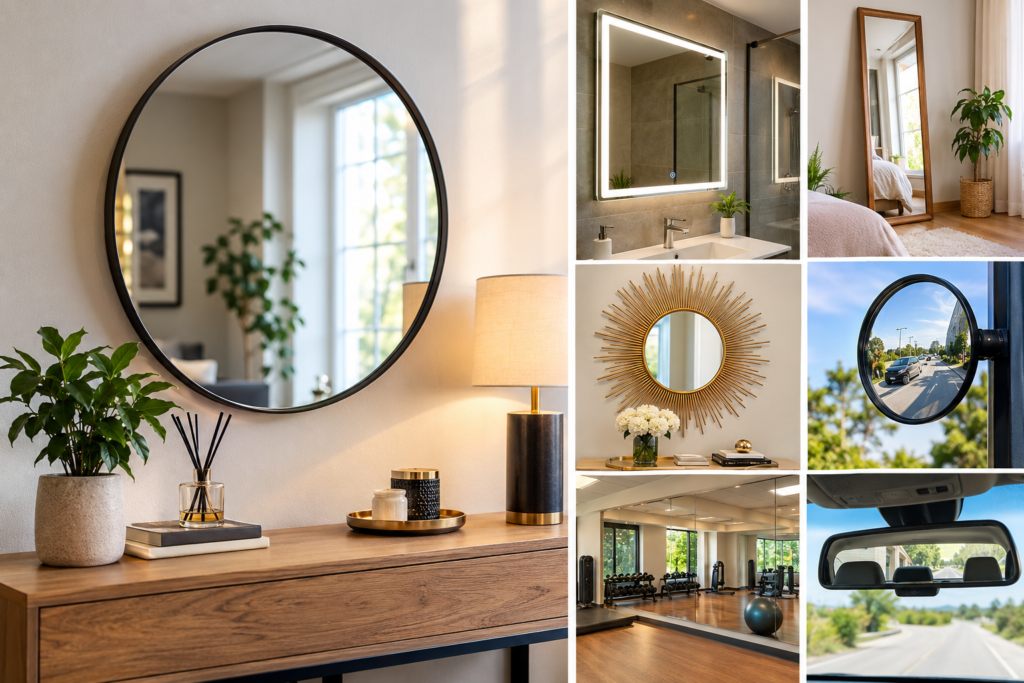
Mirrors are available in many shapes and sizes. You can find small handheld mirrors, large full-length mirrors, bathroom mirrors, decorative wall mirrors, dressing mirrors, vehicle mirrors, and specialized mirrors used in optical equipment. Although their designs differ, they all depend on the basic principle of light reflection.
How Does a Mirror Work?
The basic science behind a mirror is the reflection of light. When light strikes a smooth reflective surface, it changes direction rather than simply passing through or being scattered in different directions. This predictable reflection allows the surface to create an image.
In a typical household mirror, the glass itself provides protection and a smooth front surface, while a reflective layer behind the glass does much of the actual reflecting. The reflective material is commonly protected by additional layers to reduce damage caused by moisture, scratches, and environmental exposure.
The image you see in a flat mirror appears to be the same size as the object, although it has an important spatial difference. The reflection appears as though it exists behind the mirror. This is called a virtual image because light does not actually travel backward from that apparent location.
A Brief History of Mirrors
The history of mirrors goes back much further than modern glass products. Ancient people discovered that naturally occurring materials such as polished stone, volcanic glass, and carefully polished metals could reflect images. These early mirrors were much less clear than modern versions, but they served the same fundamental purpose.
Over time, civilizations developed better techniques for producing reflective surfaces. Polished copper, bronze, silver, and other metals were used in different cultures. The quality of the reflection depended heavily on how smoothly the material could be polished.
The development of glass mirrors represented a major improvement. As glassmaking techniques advanced, manufacturers learned how to combine glass with reflective materials to produce clearer and more practical mirrors. Eventually, industrial manufacturing made mirrors affordable enough for ordinary households rather than reserving them mainly for wealthy families or specialized uses.
Different Types of Mirrors
There is no single type of mirror that works best for every situation. The right choice depends on where the mirror will be installed, what it will be used for, and what kind of appearance the owner wants.
Flat mirrors are among the most common. They provide a relatively accurate reflection and are frequently used in bedrooms, bathrooms, hallways, dressing areas, and shops. Their simple design makes them suitable for both modern and traditional interiors.
Other mirrors are shaped or curved to change the way images appear. Concave mirrors can magnify objects under certain conditions, while convex mirrors provide a wider field of view. Decorative mirrors may use unusual shapes, frames, bevels, or multiple panels to create an artistic effect.
Bathroom Mirrors
Bathroom mirrors are among the most frequently used mirrors in a home. They are typically positioned above a sink or vanity and provide a convenient surface for grooming, shaving, skincare, makeup application, and other daily routines.
Because bathrooms contain significant moisture, choosing an appropriate mirror is important. Excess humidity can eventually damage poorly protected reflective coatings, especially around exposed edges. Proper installation and ventilation can help extend the life of a bathroom mirror.
Modern bathroom mirrors often include additional features. LED lighting can improve visibility, while anti-fog technology can keep the surface clearer after a hot shower. Some premium models may also include touch controls, clocks, temperature displays, speakers, or smart-home connectivity.
Full-Length Mirrors
A full-length mirror allows a person to see most or all of their body at once. These mirrors are particularly useful in bedrooms, dressing rooms, clothing stores, dance studios, and fitness spaces.
The size of a full-length mirror should match both the user’s needs and the available wall or floor space. A mirror that is too small may fail to provide a useful reflection, while an unnecessarily large model can overwhelm a small room.
Placement is just as important as size. A full-length mirror works best when there is enough distance between the person and the reflective surface. Freestanding models offer flexibility because they can be moved, while wall-mounted mirrors provide a cleaner and more permanent appearance.
Decorative Mirrors
A mirror does not have to be purely functional. Decorative mirrors can serve as major design elements within an interior. Their frames, shapes, finishes, and arrangements can influence the overall personality of a room.
Round mirrors can create a softer visual effect, while rectangular and square designs often provide a structured appearance. Arched mirrors can add a classic or architectural feel, while irregular geometric designs can create a more contemporary look.
Large decorative mirrors are especially effective when used as focal points. Instead of simply filling an empty wall with artwork, a homeowner can use a carefully selected mirror to add both visual interest and practical value.
Smart Mirrors
Technology has transformed the traditional mirror into something much more sophisticated. A smart mirror can combine reflection with digital features, depending on the model.
Some smart mirrors include built-in displays that can show information such as time, weather, calendar appointments, news, or reminders. Others may offer voice controls, speakers, lighting adjustments, and connections to smart-home systems.
The idea behind a smart mirror is not to replace the basic function of reflection but to add useful technology around it. This makes smart mirrors particularly interesting for modern bathrooms, bedrooms, salons, hotels, and other spaces where people want convenience without adding multiple separate devices.
LED Mirrors
LED mirrors have become popular because they combine reflection with integrated lighting. Instead of installing separate lights around a traditional mirror, an LED model can provide illumination directly from the mirror itself.
Good lighting can make a significant difference when using a mirror for grooming or makeup. Even illumination helps reduce harsh shadows and makes it easier to see details. The exact lighting arrangement varies between models, with some providing front lighting and others using backlighting for a softer decorative effect.
LED mirrors can also contribute to the appearance of a room. A softly illuminated mirror can create a modern atmosphere, especially in bathrooms and bedrooms. When choosing one, it is worth considering brightness, color temperature, controls, energy efficiency, and installation requirements.
Mirrors for Small Rooms
One of the most useful design tricks involving mirrors is their ability to make a space feel more open. A small room cannot physically become larger simply by adding a mirror, but the reflection can create the visual impression of greater depth.
A large mirror positioned across from a window can reflect natural light and distribute brightness throughout the room. Similarly, placing a mirror at the end of a narrow hallway can make the hallway appear deeper.
However, more mirrors are not always better. If too many reflective surfaces are used, the room can start to feel visually busy. The goal should be intentional placement rather than covering every available wall.
Mirrors and Interior Design
Interior designers frequently use mirrors to balance proportions, enhance light, and create visual interest. A mirror can fill an empty wall without making the space feel as heavy as some forms of artwork or furniture.
The frame also matters. A simple frameless mirror can fit a minimalist interior, while an ornate frame can complement a traditional or luxurious setting. Wooden frames may work well with natural or rustic interiors, while metal finishes can suit industrial and contemporary spaces.
Another design technique is grouping several smaller mirrors together. Instead of one large piece, multiple mirrors can create a gallery-style arrangement. The shapes and spacing should still feel intentional so that the final arrangement looks designed rather than accidental.
Mirrors in Bedrooms
A bedroom mirror can be useful for getting dressed, checking an outfit, or simply improving the room’s visual appearance. Full-length mirrors are especially practical when placed near a wardrobe or dressing area.
Mirrored wardrobe doors can provide another solution when floor and wall space are limited. They combine storage with a reflective surface, making them particularly useful in smaller bedrooms.
Positioning should take privacy and personal preference into account. Some people enjoy having a mirror near their dressing area, while others prefer to place it away from the bed. There is no universal rule; comfort and functionality should guide the decision.
Mirrors in Living Rooms
A living room mirror can add brightness and depth without requiring structural changes. Large mirrors can work particularly well above consoles, fireplaces, sofas, or sideboards.
When selecting a living room mirror, consider what it will reflect. A mirror reflecting a beautiful window, artwork, plant, or architectural feature can enhance the room. A mirror reflecting clutter or an unattractive area may have the opposite effect.
The scale of the mirror should also relate to nearby furniture. A very small mirror above a large piece of furniture may look disconnected, while an oversized mirror can become the room’s dominant feature.
Mirrors in Hallways and Entryways
Entryways are natural locations for mirrors because people often want to check their appearance before leaving the house. A mirror near the entrance can also make a narrow space feel more welcoming.
A console table paired with a wall mirror is a classic arrangement. The combination creates a practical area for keys and other small items while giving the wall a clear visual focal point.
In narrow hallways, a long mirror can increase the sense of depth. However, it should be installed securely and positioned where it will not interfere with movement or create an accidental collision risk.
Choosing the Right Mirror Size
Size is one of the first things to consider when buying a mirror. The correct dimensions depend on the wall, surrounding furniture, intended purpose, and viewing distance.
For a bathroom vanity, the mirror often works best when its width relates logically to the sink or vanity. It does not necessarily have to be exactly the same width, but the proportions should look balanced.
For decorative applications, scale can be more flexible. A large mirror may become a statement piece, while several smaller mirrors can create a layered arrangement. Before buying, measuring the wall and marking the approximate dimensions can prevent unpleasant surprises.
Choosing the Right Mirror Shape
Shape has a surprisingly strong influence on interior design. Rectangular mirrors are versatile and easy to incorporate into many layouts. They also work well above long vanities and furniture pieces.
Round mirrors can soften rooms dominated by straight lines. Their curved edges can provide contrast against rectangular cabinets, tiles, windows, and furniture.
Arched, oval, hexagonal, and irregular mirrors can add personality. The best choice depends on the overall design rather than simply following the latest trend. A mirror should feel connected to the space around it.
Mirror Frames and Materials
A mirror frame can change its entire appearance. Frameless mirrors provide a clean and understated look, while framed mirrors can become decorative features.
Wood frames can introduce warmth and texture. Metal frames can create a sleek or industrial appearance. Plastic and composite frames can offer affordability and a wide variety of colors and designs.
The frame should also be appropriate for the environment. Bathrooms, for example, require materials that can tolerate moisture better than materials designed exclusively for dry interior spaces.
How to Clean a Mirror Properly
Cleaning a mirror sounds simple, but incorrect cleaning methods can leave streaks or damage the surface. A soft, lint-free cloth is generally a better choice than a rough material that could scratch the glass.
A suitable glass-cleaning solution can help remove fingerprints, dust, and other marks. Rather than flooding the mirror with liquid, applying a controlled amount to the cloth can reduce the chance of moisture reaching the edges.
It is also important to avoid aggressive scrubbing. If a mark does not disappear immediately, gentle repeated cleaning is usually safer than using excessive pressure or abrasive materials.
Common Mirror Problems
Like other household products, mirrors can develop problems over time. Streaks and cloudy areas are among the most common complaints and are often related to cleaning technique or residue.
Another issue is deterioration around the edges. In humid environments, moisture can sometimes reach the reflective coating and cause dark spots or discoloration. Once the backing has significantly deteriorated, cleaning will not restore it.
Distortion can also occur, especially with inexpensive or poorly manufactured mirrors. Slight distortions may not be noticeable for decorative purposes, but they can become frustrating when the mirror is being used for detailed grooming or outfit checking.
Mirror Safety
Safety should always be considered when installing a mirror. Large mirrors can be surprisingly heavy, and improper mounting can create a serious risk of falling.
Wall type, mirror weight, mounting hardware, and installation method all matter. A suitable fixing system should be selected according to the wall structure rather than simply relying on a basic nail or adhesive.
In homes with children or pets, additional attention may be necessary. Secure installation and appropriate positioning can reduce the chance of accidental impact or breakage.
Mirrors in Retail Stores
Retail stores use mirrors for both practical and commercial reasons. Clothing shops commonly install large mirrors in changing rooms and sales areas so customers can see how products look when worn.
Strategically placed mirrors can also influence the perception of a retail environment. They can make spaces appear brighter and more spacious, while attractive frames or lighting can contribute to the store’s visual identity.
In beauty salons and barber shops, mirrors are central to the customer experience. Clients need to see the results of haircuts, styling, makeup, or other services, making mirror quality particularly important.
Mirrors in Gyms and Dance Studios
Mirrors are common in fitness environments because they allow people to observe their form and movement. In strength training areas, a mirror can help someone monitor posture and technique.
Dance studios often use large wall-mounted mirrors so students can observe movements and compare their positions with an instructor or choreography. The mirror becomes a practical training tool rather than merely a decorative object.
Gym mirrors can also influence the atmosphere of a facility. Large reflective walls can make an exercise area feel bigger and brighter, which can contribute to a more open training environment.
Mirrors in Vehicles
Vehicle mirrors are a specialized form of reflective technology designed to improve visibility. Side mirrors and rear-view mirrors help drivers observe areas that cannot be seen directly.
Unlike ordinary flat household mirrors, some vehicle mirrors use curved surfaces to provide a wider viewing area. This can help drivers monitor surrounding traffic, although mirrors cannot eliminate blind spots completely.
Modern vehicles increasingly combine conventional mirrors with cameras and digital displays. These systems can provide additional information and improve visibility under certain conditions, but drivers still need to understand how the system works before relying on it.
Scientific and Optical Uses of Mirrors
Mirrors are not limited to everyday household applications. They are essential components in many scientific and optical systems.
Telescopes can use mirrors to collect and focus light from distant objects. This allows astronomers to observe celestial bodies and study phenomena that would otherwise be extremely difficult to see.
Mirrors are also used in lasers, microscopes, imaging systems, measuring instruments, and other optical technologies. In these applications, surface quality and precision are extremely important because even small imperfections can affect the behavior of light.
How to Make a Room Look More Expensive With Mirrors
You do not need an enormous budget to use mirrors effectively. The key is choosing a design that looks intentional and matches the room.
A large mirror with a simple frame can sometimes create a stronger effect than several small decorative pieces. Pairing the mirror with appropriate lighting can make the entire arrangement look more sophisticated.
Another effective approach is to use the mirror to highlight something attractive. Reflecting plants, artwork, architectural details, or natural light can make the room appear more carefully designed without adding much physical decoration.
Mirror Trends in Modern Homes
Modern mirror design is increasingly focused on combining appearance with functionality. LED lighting, minimalist frames, unusual shapes, smart features, and custom dimensions are becoming common in contemporary interiors.
Organic shapes are particularly useful for adding softness to modern rooms. Instead of relying exclusively on sharp rectangular designs, homeowners can choose curved or asymmetrical mirrors for a more relaxed appearance.
At the same time, classic designs remain popular. A timeless mirror with a high-quality frame can remain attractive for many years, making it a better long-term choice than a trend that may quickly feel outdated.
How to Choose a Mirror for Your Home
Start by identifying the main purpose. If you need the mirror for grooming, clarity and suitable lighting may be more important than decorative details. If it is primarily for interior design, shape, frame, and scale may take priority.
Next, measure the available space. Check both the wall dimensions and the surrounding furniture. Think about what the mirror will reflect before making a final decision.
Finally, consider quality and installation. A cheap mirror that becomes distorted, damaged, or difficult to mount may not provide good value in the long run. Paying attention to glass quality, backing, frame construction, and mounting hardware can make a noticeable difference.
Mirror Buying Guide
| Mirror Type | Best Use | Main Advantage | Important Consideration |
|---|---|---|---|
| Full-Length Mirror | Bedrooms and dressing areas | Shows most of the body | Needs adequate viewing distance |
| Bathroom Mirror | Bathrooms | Everyday grooming | Moisture resistance |
| LED Mirror | Bathrooms and bedrooms | Built-in lighting | Electrical installation |
| Decorative Mirror | Living rooms and hallways | Enhances interior design | Frame and proportions |
| Smart Mirror | Modern homes | Technology plus reflection | Features and power requirements |
| Convex Mirror | Vehicles and security areas | Wider field of view | Objects may appear smaller |
| Concave Mirror | Optical and specialized uses | Can magnify or focus light | Position affects image |
Frequently Asked Questions About Mirrors
What is the main purpose of a mirror?
The main purpose of a mirror is to reflect light in a controlled way so that a person can see an image. Household mirrors are commonly used for grooming, dressing, decoration, and improving the appearance of interior spaces.
Which mirror is best for a bedroom?
A full-length mirror is often a practical choice for a bedroom because it allows you to check an entire outfit. A decorative or LED mirror can also work well depending on the room’s layout and purpose.
Can a mirror make a small room look bigger?
Yes. A strategically positioned mirror can create the visual impression of greater depth and reflect light, making a small room feel brighter and more open.
How often should a mirror be cleaned?
There is no fixed schedule. A mirror should be cleaned whenever fingerprints, dust, water marks, or other visible residue appear. Frequently used bathroom mirrors may need cleaning more often than decorative mirrors.
Why do mirrors become black around the edges?
Dark or black spots around the edges can result from deterioration of the reflective backing. Moisture and age are common contributing factors, especially when the mirror is exposed to humid conditions.
Are LED mirrors worth buying?
They can be worthwhile if you want integrated lighting and a modern appearance. They are especially useful for grooming and makeup, where good illumination is important.
What is the difference between a flat and convex mirror?
A flat mirror generally provides a natural-looking reflection with the same apparent size as the object. A convex mirror curves outward and provides a wider field of view, which is why curved mirrors are useful in vehicles and security applications.
How do I choose the correct mirror size?
Measure the available wall space and consider the furniture around it. Then choose a size that provides the required viewing area without making the arrangement feel visually unbalanced.
Can mirrors be used as decoration?
Absolutely. Mirrors can function as artwork-like design elements. Their frames, shapes, sizes, and placement can add character while also reflecting light and creating a sense of space.
Are expensive mirrors always better?
Not necessarily. Price can reflect materials, craftsmanship, technology, size, and branding, but a more expensive mirror is not automatically the best option. The right mirror is one that offers suitable quality and features for its intended use.
Final Thoughts on Mirrors
A mirror may be an ordinary household object, but its combination of science, function, and design makes it surprisingly versatile. From a small bathroom mirror to a massive decorative wall installation, mirrors can serve very different purposes while relying on the same fundamental principle of light reflection. Choosing the right mirror requires more than simply picking a design that looks attractive in a store. Size, shape, placement, lighting, frame materials, safety, and environmental conditions all matter. A bathroom mirror needs different qualities from a decorative living-room mirror, while an optical mirror may require an entirely different level of precision.
YOU MAY HAVE MASSED