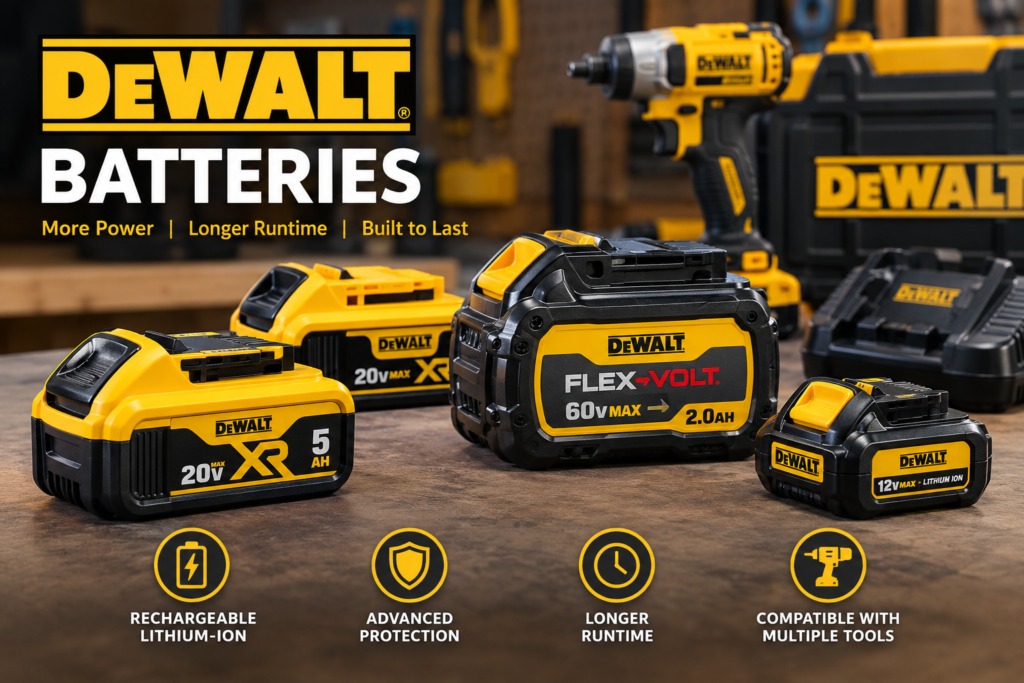
If you use cordless power tools regularly, you already know that the battery can be just as important as the tool itself. A powerful drill, impact driver, saw, or grinder is only as useful as the battery powering it. That is why DeWalt batteries have become such an important part of modern jobsite equipment. They are designed to provide portable power without forcing users to stay connected to an electrical outlet.
DeWalt offers batteries in different voltage classes, capacities, sizes, and technologies. This gives professionals, contractors, DIY users, and homeowners plenty of options, but it can also make choosing the right battery confusing. A battery that works perfectly for a compact drill may not be the best choice for a high-demand circular saw or grinder.
Understanding battery voltage, amp-hour capacity, compatibility, charging, storage, runtime, and maintenance can help you get much more from your cordless tools. Instead of simply buying the largest or most expensive battery, it is better to understand what your particular tool and workload actually require.
This guide explains the most important things you should know about DeWalt batteries, including how they work, which factors affect performance, how to choose the right capacity, how to care for them, and what to consider when replacing an old battery.
What Are DeWalt Batteries?
DeWalt batteries are rechargeable power sources designed for the company’s cordless power tools and equipment. Modern DeWalt cordless systems primarily use lithium-ion battery technology, which offers a useful combination of energy density, portability, and rechargeable performance.
The battery supplies electrical energy to the tool’s motor and electronic components. When you pull the trigger on a cordless drill or impact driver, energy flows from the battery into the tool. The tool’s electronics regulate that power so the motor can operate according to the demand placed on it.
One of the biggest advantages of a modern battery platform is convenience. Instead of purchasing a separate battery system for every cordless tool, users can often use compatible batteries across multiple tools within the same platform. This can reduce equipment costs and make a cordless tool collection easier to manage.
Understanding DeWalt Battery Voltage
Voltage is one of the first specifications people notice when shopping for DeWalt batteries. It represents the electrical potential available from the battery system and is closely related to the type of tool the battery is designed to power.
Lower-voltage battery systems are generally intended for lighter applications and compact tools. Higher-voltage platforms are designed to deliver more power for demanding applications. However, higher voltage does not automatically mean that a battery is better for every situation.
The important point is compatibility. You should always use a battery that belongs to the appropriate DeWalt battery platform for your tool. A battery designed for one system should not be forced into a tool simply because its voltage sounds similar.
What Does Amp-Hour Capacity Mean?
Amp-hour, commonly written as Ah, describes the battery’s capacity. In simple terms, a higher Ah rating generally means the battery can store more energy and potentially operate a compatible tool for longer before needing a recharge.
For example, a compact battery may be convenient for short jobs where weight matters more than maximum runtime. A higher-capacity battery can be useful when you’re cutting, drilling, grinding, or fastening continuously for longer periods.
However, runtime isn’t determined by Ah alone. The tool itself, material being worked on, operating speed, load, temperature, and battery condition all influence how long a battery lasts. A power-hungry tool can consume a high-capacity battery much faster than a low-demand tool.
Compact Batteries Versus High-Capacity Batteries
Compact DeWalt batteries have an obvious advantage: they are easier to carry and usually add less weight to the tool. This can make a noticeable difference when you’re working overhead, climbing ladders, installing cabinets, assembling furniture, or performing repetitive fastening.
For lightweight tools, a compact battery can provide a comfortable balance between runtime and portability. A drill used for occasional household tasks, for example, may not need the largest battery available.
High-capacity batteries make more sense when extended runtime is important. They can reduce the number of battery changes during a long work session and may be particularly useful for tools that consume significant power.
Why Battery Weight Matters
It is easy to focus entirely on runtime when buying batteries, but weight deserves attention too. A larger battery can add considerable weight to a cordless tool, and that weight is noticeable after hours of use.
Imagine using an impact driver overhead for an entire afternoon. Even a relatively small increase in weight can contribute to fatigue. In applications where the tool is constantly moving, a compact battery may actually improve productivity because the operator can work more comfortably.
On the other hand, weight is less important when the tool is supported by both hands or positioned against a stable surface. For demanding cutting or grinding applications, the additional runtime of a larger battery may be more valuable than its extra weight.
DeWalt Battery Compatibility
Compatibility is one of the most important subjects to understand before buying a replacement battery. DeWalt has multiple cordless battery families, and not every battery fits every tool.
The physical connection, electrical characteristics, and electronic communication between the battery and tool can vary between platforms. Because of this, you should check the specific tool model and the battery platform it supports before purchasing.
If you already own several DeWalt tools, identifying the battery platform used by your collection can simplify future purchases. Staying within the same compatible system can also make it easier to rotate batteries between tools.
Why Battery Technology Has Changed
Cordless tool batteries have developed significantly over the years. Older battery technologies were generally heavier and offered less energy for their weight. Modern lithium-ion batteries changed expectations for cordless equipment.
Lithium-ion technology provides a high amount of stored energy relative to its size and weight. It also supports the compact battery designs that have become common in modern cordless tools.
Another major development has been battery electronics. Modern battery packs can incorporate monitoring and protection systems that help manage temperature, current, charging, and other operating conditions. These systems are important because battery performance isn’t simply about storing electricity; safe power management matters too.
How DeWalt Batteries Affect Tool Performance
The battery is more than a portable power container. It can influence how a cordless tool feels and performs during demanding work.
When a tool encounters heavy resistance, its motor may require more current. A battery and tool system capable of handling that demand can maintain useful performance under load. When the battery becomes depleted, the tool may eventually slow down or stop.
Battery condition also matters. An older battery that has experienced many charging cycles may not provide the same runtime it offered when new. That’s why two batteries with identical labels can sometimes perform differently after years of use.
Choosing a Battery for Drills and Impact Drivers
Drills and impact drivers are among the most common cordless tools, and they don’t always need the largest battery. For general household projects, installation work, and light fastening, a compact pack can be convenient.
If you’re using a drill for long periods, a medium-capacity battery may provide a useful compromise. It can offer more runtime without making the tool unnecessarily bulky.
Impact drivers used for demanding construction fastening may benefit from a higher-capacity battery, especially when they’re being used continuously. The right choice ultimately depends on the tool, workload, and how important low weight is to you.
Choosing a Battery for Saws
Saws can place substantial demands on cordless batteries because cutting materials requires continuous motor power. Circular saws, reciprocating saws, and other cutting tools can consume energy more quickly than lightweight fastening tools.
For occasional cutting, a medium-capacity battery may be sufficient. For extended cutting sessions, a higher-capacity battery can reduce interruptions.
The material also makes a difference. Cutting soft wood is not necessarily the same as cutting dense material or working through thick stock. The harder the tool has to work, the greater the energy demand can become.
Choosing a Battery for Grinders
Cordless grinders can be particularly demanding because they often operate at high speeds and may be used under heavy load. Battery selection therefore deserves extra attention.
A larger-capacity battery can be useful when grinding or cutting for extended periods. It can provide more energy before a recharge becomes necessary, assuming the battery is compatible with the grinder.
At the same time, the additional weight may affect handling. For jobs requiring precision or frequent repositioning, the user may prefer a lighter setup. This is another example of why there isn’t one universally perfect DeWalt battery.
Battery Runtime and Real-World Conditions
Manufacturers may provide capacity information, but real-world runtime can vary substantially. A battery used under heavy load will generally discharge faster than one powering a tool under light conditions.
Temperature can also affect battery behavior. Very hot or very cold conditions may influence performance and charging. For that reason, storing and charging batteries under appropriate conditions is an important part of battery care.
The condition of the battery also matters. As rechargeable batteries age, their ability to hold and deliver energy can decline. A battery that once powered a tool throughout a work session may eventually require more frequent charging.
How to Charge DeWalt Batteries Properly
Using the correct charger is an important part of maintaining a rechargeable battery system. The charger is designed to communicate with and charge compatible battery packs according to the intended charging process.
Avoid improvising with unsuitable chargers, damaged charging equipment, or questionable electrical connections. A proper charging setup helps reduce unnecessary risk and protects the investment you’ve made in your tools.
It’s also sensible to inspect the battery before charging. If a battery pack is visibly damaged, unusually swollen, cracked, leaking, or behaving abnormally, it should not simply be placed on a charger as though nothing is wrong.
How Long Do DeWalt Batteries Last?
There isn’t one exact lifespan that applies to every DeWalt battery. Battery longevity depends on usage, charging habits, storage conditions, temperature, workload, and the number of charge cycles.
A battery used occasionally under moderate conditions may remain useful for years. A battery used heavily every working day may experience wear much sooner.
One of the clearest signs of aging is reduced runtime. You may notice that a fully charged battery no longer lasts as long as it used to. If the reduction becomes significant enough to interfere with normal work, replacement may make more sense than continuing to rely on it.
Signs That a Battery May Need Replacement
Reduced runtime is one common indication that a battery is approaching the end of its useful service life. If you find yourself replacing batteries far more frequently during a job, the battery’s capacity may have declined.
Another warning sign is unusual physical damage. Cracks, swelling, melted components, damaged terminals, or other visible abnormalities should be taken seriously.
Unexpected tool behavior can also indicate a battery or tool problem. If a battery repeatedly causes interruptions, fails to charge normally, or behaves differently from your other compatible batteries, investigate the problem rather than continuing to use it without checking.
Proper Storage of DeWalt Batteries
Good storage practices can help protect batteries when they aren’t being used. Keep them in a clean, dry environment away from excessive heat, moisture, and direct sunlight.
Avoid leaving battery packs in places that can become extremely hot, such as a closed vehicle exposed to strong sunlight. Excessive heat can be hard on rechargeable battery systems.
It is also a good idea to protect battery terminals from contact with metal objects. Loose batteries stored alongside tools, screws, or other conductive objects can potentially create unwanted electrical contact.
Keeping Battery Contacts Clean
The connection between the battery and tool needs to remain reliable. Dust, dirt, and debris can accumulate in workshop environments, especially on busy jobsites.
Before cleaning a battery, make sure it is removed from the tool and handled safely. Keep the contacts and surrounding areas free from excessive dirt without using methods that could damage the battery.
A clean connection can help maintain consistent electrical contact. If you notice physical damage to the terminals, however, cleaning alone is not the solution. The battery should be inspected properly.
Why Genuine Batteries Matter
When replacing a battery, users sometimes look for the cheapest available option. Price can be important, but battery quality and compatibility should not be overlooked.
A genuine battery designed for the relevant DeWalt platform is made to work with the manufacturer’s tool and charging ecosystem. Third-party products can vary considerably in construction, electronics, capacity, and quality.
If a battery is unusually cheap compared with normal market pricing, it is worth asking why. Counterfeit or poorly manufactured battery packs may not provide the expected performance or protection.
Buying DeWalt Batteries Online
Online shopping makes it easy to compare different battery capacities and prices, but buyers should still verify exactly what they are purchasing.
Read the complete product description and check the model information. Make sure the battery is compatible with your tools rather than relying only on a product photograph.
Seller reputation also matters. Be cautious about listings with unrealistic claims, suspiciously low prices, unclear specifications, or packaging that appears inconsistent with the manufacturer’s products.
Buying Batteries for Professional Work
Professionals often have different battery requirements from occasional DIY users. A contractor who uses cordless tools every day may prioritize runtime, durability, charging speed, and having several interchangeable packs.
For a professional tool collection, purchasing multiple batteries can be more practical than relying on one large pack. While one battery is working, another can be charging, allowing the user to keep moving.
A smart battery setup can therefore be viewed as part of the overall workflow. Instead of asking only which battery is largest, consider how many tools you use, how long you work, and how frequently you can recharge.
DeWalt Batteries for DIY Projects
Home users usually have more flexibility. If a cordless tool is used for occasional repairs, furniture assembly, home improvement, or small outdoor projects, a compact or medium-capacity battery may be enough.
There is little value in carrying a heavy battery when the tool only needs to operate for a few minutes at a time. A smaller pack can make the tool easier to handle and store.
However, homeowners who frequently work on renovation projects may appreciate having higher-capacity batteries available. The right setup depends on the types of projects you regularly perform.
Battery Safety Should Always Come First
Rechargeable lithium-ion batteries contain significant stored energy, so safe handling matters. Never intentionally damage, puncture, crush, disassemble, or modify a battery pack.
If a battery becomes extremely hot, visibly damaged, swollen, or otherwise abnormal, stop using it and follow appropriate manufacturer or local disposal guidance.
Don’t attempt to repair a damaged battery pack yourself unless you have the appropriate professional expertise and equipment. Battery cells and internal electronics require careful handling.
DeWalt Batteries and the Cordless Tool Ecosystem
One of the biggest advantages of a battery platform is the ecosystem surrounding it. Once you have compatible batteries and chargers, adding additional tools can become simpler.
For example, a user might start with a drill and later add an impact driver, saw, work light, or other compatible equipment. Depending on the platform, the same battery family may support multiple tools.
This approach can reduce duplication. Instead of buying a new battery and charger with every tool, users may be able to purchase tool-only versions where appropriate and share their existing battery supply.
How to Build a Practical Battery Collection
A practical battery collection doesn’t necessarily mean buying the biggest packs available. Instead, think about how you actually work.
A useful setup might include compact batteries for lightweight tools and higher-capacity batteries for equipment that consumes more power. This gives you flexibility without forcing every tool to carry the same battery size.
It can also help to label or organize batteries so you know which ones are charged and ready. Keeping batteries in a consistent storage location can save time when you’re preparing for a job.
Tips for Getting More Runtime
There are several ways to make a battery last longer during a work session. The first is to avoid unnecessary tool operation. Don’t keep a cordless tool running when it isn’t performing useful work.
Using the correct accessory also matters. A sharp, appropriate cutting blade or drill bit can allow the tool to work more efficiently than a worn accessory.
You can also rotate batteries during longer projects. Instead of waiting until every battery is completely exhausted, keeping multiple packs available can make the overall workflow smoother.
Common Mistakes People Make With Batteries
One common mistake is buying a battery without checking compatibility. Battery platforms can look similar, but appearance alone isn’t enough to establish compatibility.
Another mistake is choosing capacity based only on the largest number. Bigger isn’t always better. A high-capacity pack may provide longer runtime but also add weight and cost.
A third mistake is neglecting storage. Leaving batteries in extreme heat or exposing them to unnecessary moisture can create conditions that aren’t ideal for long-term battery health.
Are Higher-Ah Batteries Always Better?
Higher Ah capacity can be beneficial, but it doesn’t automatically make a battery the best choice for every user. Battery selection involves trade-offs.
More capacity can mean longer runtime, but it can also mean more weight and a higher purchase price. For a compact drill used for short tasks, that additional capacity may not provide much practical benefit.
For demanding tools, however, higher capacity can be extremely useful. The best approach is to match battery capacity to the tool and workload rather than choosing purely by the biggest specification.
How to Maintain a DeWalt Battery Collection
Maintenance starts with simple habits. Keep batteries clean, store them appropriately, inspect them periodically, and use compatible chargers and tools.
Avoid treating batteries as disposable objects. They are an important part of your cordless equipment investment, and good handling can help you get useful service from them for longer.
It is also helpful to periodically check older batteries against newer ones. If one battery consistently provides significantly less runtime or behaves abnormally, it may be reaching the end of its useful life.
Recycling and Disposing of Old Batteries
Old rechargeable batteries should not simply be thrown into ordinary household trash. Battery recycling programs and appropriate collection facilities exist in many locations.
The correct disposal process can vary depending on where you live. Check local regulations and available recycling services for guidance.
Before transporting an old battery for recycling, take reasonable precautions to prevent accidental contact with conductive materials. If the battery is damaged, follow the relevant safety instructions provided by the manufacturer or local recycling facility.
DeWalt Batteries and Jobsite Productivity
A reliable battery system can have a surprisingly large effect on productivity. When batteries are charged, compatible, and organized, workers spend less time searching for power sources or waiting for equipment.
For professionals, those small delays can add up throughout a working day. A well-planned battery rotation system helps keep tools available when they are needed.
For DIY users, organization provides a different benefit: convenience. Knowing that a charged battery is ready in the toolbox makes it easier to start a project without unnecessary preparation.
Frequently Asked Questions About DeWalt Batteries
How do I choose the right DeWalt battery?
Start by checking the battery platform supported by your tool. Then consider the type of work you perform, desired runtime, battery weight, and how frequently you use the tool. A compact battery can be ideal for lightweight work, while a higher-capacity option may be more appropriate for demanding applications.
Does a higher Ah rating mean more power?
Not exactly. Ah primarily describes capacity, while voltage and the overall battery-tool system are important factors in power delivery. A higher Ah battery generally offers more stored energy, but that doesn’t mean it automatically transforms a tool into a more powerful model.
Can I use one DeWalt battery with different tools?
You can use a battery across different tools when those tools belong to the same compatible battery platform. Always verify compatibility using the specific tool and battery information rather than assuming that all DeWalt batteries interchange.
Why does my battery run out faster than before?
Battery aging is one possible reason. Heavy workloads, operating conditions, temperature, and tool demands can also affect runtime. If the battery is significantly older than your other packs and consistently provides less runtime, it may be approaching the end of its useful life.
How should I store DeWalt batteries?
Store batteries in a clean, dry environment away from excessive heat and direct sunlight. Keep the battery terminals protected from contact with conductive objects, and avoid storing visibly damaged battery packs.
Can I leave a battery on the charger?
Follow the charging and storage guidance provided with your specific DeWalt battery and charger. Modern charging systems are designed with battery management in mind, but good practice is to use the manufacturer’s equipment and instructions rather than treating charging as a completely hands-off process.
Are DeWalt batteries worth buying?
For someone already using compatible DeWalt cordless tools, staying within the same battery ecosystem can be convenient. The value depends on the specific tool collection, workload, battery capacity required, and purchase price.
How can I make my batteries last longer?
Avoid excessive heat, protect the battery from physical damage, use the correct charger, keep the contacts clean, and store the battery appropriately. Matching the battery and tool to the job can also reduce unnecessary strain.
Final Thoughts on DeWalt Batteries
DeWalt batteries are a central part of the modern cordless tool experience. Choosing the right battery isn’t simply about finding the highest capacity or the newest model. It is about understanding compatibility, voltage, capacity, weight, runtime, workload, and how the battery fits into your overall tool collection. For light tasks, a compact battery can make a cordless tool easier and more comfortable to handle. For demanding jobs, a higher-capacity battery may provide the additional runtime needed to keep working without frequent interruptions. Professionals may benefit from keeping several batteries available, while occasional users can often keep things much simpler.
Battery care is equally important. Proper storage, safe charging, regular inspection, and responsible disposal can help you get the most from your investment. A good battery system should make your tools more convenient, not more complicated.
YOU MAY HAVE MASSED