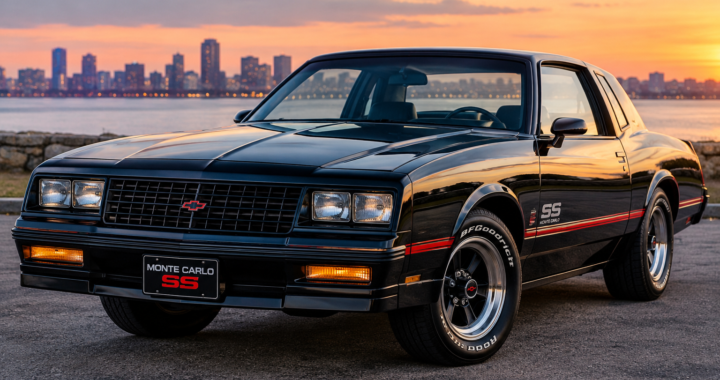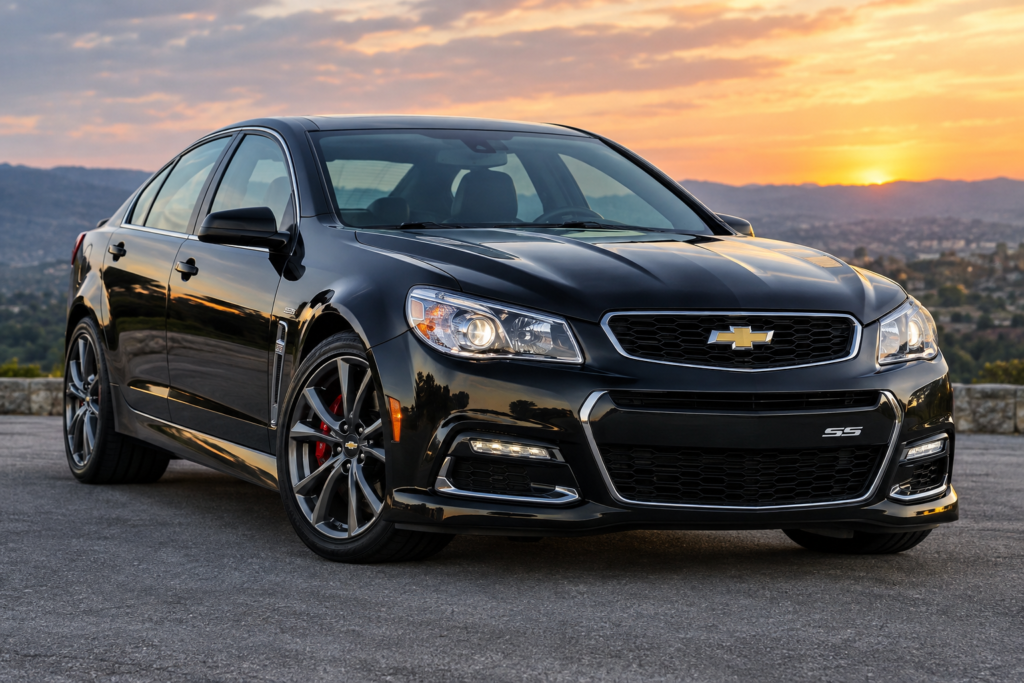
The Chevy SS is one of those cars that can surprise you before you even realize what it is. At first glance, it looks like a relatively ordinary four-door sedan. There are no exotic doors, dramatic body lines, or oversized spoilers screaming for attention. But underneath that understated exterior is a serious performance machine with a powerful V8 engine, rear-wheel drive, and the kind of driving character that has made it memorable among enthusiasts.
The Chevy SS was produced for only a short period, which helped turn it into something of a modern automotive sleeper. Chevrolet took the idea of a practical sedan and combined it with hardware normally associated with performance-oriented vehicles. The result was a car that could carry passengers and luggage during the week while still delivering a genuinely exciting driving experience on the weekend.
What makes the Chevy SS especially interesting is how little attention it demands. It does not need to look aggressive to be quick. Its design is relatively restrained, and that is part of its appeal. For drivers who appreciate performance without wanting an obviously modified-looking vehicle, the SS offers a particularly interesting formula.
What Is the Chevy SS?
The Chevy SS is a high-performance sedan developed by Chevrolet and sold in the United States during the 2014 through 2017 model years. It was based closely on the Holden Commodore sold in Australia, making the SS part of a broader international performance-car story rather than a conventional American sedan project.
The basic concept was straightforward: take a large rear-wheel-drive sedan, give it a naturally aspirated V8, add serious suspension and braking hardware, and make it available as a practical four-door car. That combination immediately separated the SS from many mainstream sedans of its era.
Unlike many modern performance vehicles, the Chevy SS did not rely on turbocharging or complicated hybrid technology to produce its power. Its naturally aspirated V8 delivered power in a linear and predictable way, giving the car a traditional muscle-car character while maintaining the practicality of a sedan.
The Story Behind the Chevy SS
Understanding the Chevy SS means looking beyond Chevrolet itself. The car was closely related to the Holden Commodore, a performance-oriented Australian sedan with a long history. General Motors had experience developing rear-wheel-drive vehicles through Holden, and that engineering foundation eventually helped bring the SS formula to American buyers.
The result was unusual for the United States market. Chevrolet already had performance products such as the Camaro and Corvette, but the SS occupied a different space. It offered serious V8 performance without being a coupe or a dedicated sports car.
The limited production run also gave the SS an unusual identity. It was never intended to become one of Chevrolet’s highest-volume models. Instead, it appealed to buyers who specifically wanted a powerful rear-wheel-drive sedan and were willing to look beyond the usual choices.
That limited availability is one reason the Chevy SS remains interesting today. Cars that were once overlooked can become increasingly appreciated when enthusiasts recognize how unusual their combination of features really was.
Chevy SS Engine and Performance
One of the biggest reasons people remember the Chevy SS is its engine. The sedan used a naturally aspirated 6.2-liter LS3 V8, an engine family closely associated with Chevrolet performance vehicles.
The LS3’s character is important. Rather than delivering power through turbocharger boost, the engine provides a strong and immediate response when the driver presses the accelerator. The sound, throttle response, and broad torque delivery all contribute to the classic V8 experience.
For a large sedan, the performance was impressive. The SS could accelerate aggressively while remaining comfortable enough for normal road use. It had enough power to make highway passing effortless and enough performance hardware to feel at home on winding roads.
The engine was also part of what made the car attractive to enthusiasts. The LS-based V8 platform has a large aftermarket and a strong reputation among performance-car owners. That gives SS owners plenty of opportunities to personalize or maintain their cars.
Chevy SS Transmission Choices
Transmission choice is another major part of the Chevy SS story. Depending on the model year, buyers could choose between an automatic transmission and a six-speed manual transmission.
The manual option is particularly significant because powerful sedans with manual gearboxes have become increasingly rare. A rear-wheel-drive sedan with a naturally aspirated V8 and a manual transmission represents a combination that is difficult to find in newer vehicles.
For enthusiasts, the manual gearbox adds another level of involvement. The driver has direct control over gear selection and can better interact with the engine’s power delivery. That makes ordinary drives feel more engaging.
The automatic version, meanwhile, is appealing for people who want performance with greater convenience. It makes commuting easier and allows the SS to function as an everyday vehicle without requiring constant driver involvement.
Exterior Design of the Chevy SS
The Chevy SS has a deliberately understated exterior. Instead of adopting the dramatic appearance associated with many modern performance cars, Chevrolet gave it a relatively clean sedan profile.
This understated design is one of the car’s defining characteristics. Someone unfamiliar with the model could easily mistake it for an ordinary Chevrolet sedan at a quick glance. Enthusiasts, however, can recognize details such as the wheels, front-end styling, exhaust arrangement, and other performance-oriented touches.
The design also contributes to the car’s sleeper reputation. A sleeper is essentially a vehicle that looks less powerful than it actually is. The SS fits that concept particularly well because its performance capabilities are not immediately obvious.
For some owners, this subtle appearance is more appealing than aggressive styling. The car can look professional during the week while still offering genuine performance whenever the road opens up.
Chevy SS Interior and Comfort
Performance does not mean much if a car is uncomfortable every day, and the Chevy SS was designed with practicality in mind. Its four-door layout provides easier access for passengers than a traditional sports coupe.
The interior has enough space for normal family and daily-driving duties, making the SS more versatile than many dedicated performance cars. Drivers can enjoy a powerful V8 without giving up the basic advantages of a sedan.
The cabin also has a relatively straightforward design. It does not attempt to create the futuristic atmosphere found in some modern luxury vehicles. Instead, the focus is on familiar controls and usable technology.
For today’s buyers, some aspects of the interior may feel older than those of newer vehicles. Infotainment systems, displays, driver-assistance technology, and connectivity have advanced considerably since the SS was introduced. Still, the core appeal of the car is its mechanical character rather than cutting-edge electronics.
Chevy SS Handling and Driving Experience
Straight-line acceleration is only one part of a performance car. The Chevy SS also benefits from a chassis designed to handle its V8 power.
The rear-wheel-drive layout provides a traditional performance-car balance. Under enthusiastic driving, the driver can feel the relationship between throttle input, rear-wheel traction, steering, and chassis movement.
The suspension setup gives the SS more capability than a typical large sedan. It can handle corners with confidence while remaining suitable for everyday roads. That combination is important because an overly aggressive performance setup could make a sedan uncomfortable as a daily driver.
The steering and braking systems also contribute to the overall experience. Rather than simply being a large car with a powerful engine, the SS was engineered as a complete performance package.
Why the Chevy SS Is Considered a Sleeper
The sleeper concept is central to the Chevy SS’s identity. Many performance cars announce their capabilities through dramatic styling, loud graphics, large aerodynamic components, or aggressive bodywork. The SS takes a different approach.
Its sedan shape allows it to blend into normal traffic. Someone might see it at a parking lot and simply assume it is an older Chevrolet sedan. That changes quickly when the V8 comes to life.
The sleeper character also makes the car appealing to drivers who do not want unnecessary attention. The vehicle can remain relatively discreet while still delivering serious performance.
That combination of subtle styling and mechanical capability is difficult to reproduce. Modern performance cars often use aggressive styling as part of their identity, whereas the SS derives much of its personality from being unexpectedly fast.
Chevy SS Versus the Camaro
The Chevy SS and Camaro share Chevrolet performance DNA, but they serve different purposes. The Camaro is a sports coupe designed primarily around performance and style, while the SS is a practical four-door sedan.
The Camaro offers a more traditional sports-car experience. Its lower seating position, coupe body, and aggressive appearance make its purpose obvious. The SS, in comparison, provides additional practicality without abandoning serious performance.
For someone who regularly carries passengers, the sedan configuration can be a major advantage. Rear doors and a usable trunk make daily life considerably easier.
The decision between them ultimately comes down to what type of vehicle fits the driver’s needs. The Camaro emphasizes the sports-car experience, while the SS combines that performance philosophy with sedan practicality.
Chevy SS Versus Other V8 Sedans
The Chevy SS entered a relatively unusual market. V8-powered sedans have existed for decades, but the combination of rear-wheel drive, naturally aspirated V8 power, understated styling, and manual transmission availability is uncommon.
Competitors from other manufacturers offered their own high-performance sedans, but the SS had its own particular personality. It was less focused on luxury than some European alternatives and less visually aggressive than certain American performance sedans.
The SS also appealed to buyers who valued simplicity. Its naturally aspirated engine avoided the additional complexity associated with turbocharging, while the overall vehicle retained a relatively conventional mechanical layout.
That does not make the SS universally superior to other performance sedans. Each vehicle has different strengths. Instead, the SS occupies a distinctive niche that continues to attract enthusiasts.
Fuel Economy and Everyday Driving
A large naturally aspirated V8 sedan is not going to compete with a compact hybrid for fuel economy. Buyers considering a Chevy SS should understand that performance comes with a fuel-consumption tradeoff.
Driving style has a major effect on fuel usage. Gentle highway driving can be considerably more economical than frequent hard acceleration and aggressive driving. The V8 provides substantial power, but using that power regularly will naturally increase fuel consumption.
For an enthusiast, this may be an acceptable compromise. The purpose of the SS is not maximum fuel efficiency. It is about combining performance, practicality, and the traditional V8 experience in one package.
Anyone considering an SS as a daily driver should therefore evaluate fuel costs alongside insurance, maintenance, tires, and other ownership expenses.
Chevy SS Maintenance
Like any performance vehicle, the Chevy SS benefits from regular maintenance. Engine oil, filters, brakes, tires, cooling-system components, suspension parts, and other consumables should be monitored carefully.
The V8 itself has a strong performance reputation, but that does not mean maintenance can be ignored. A well-maintained example can be much more attractive than a neglected car with impressive modifications.
Because the SS is no longer produced, replacement parts and specialized components may require more research than they would for a current Chevrolet model. Some components are shared with other GM vehicles, while other parts can be more specific to the SS platform.
When buying a used example, service records are extremely valuable. They can provide insight into how the previous owner treated the vehicle and whether important maintenance has already been completed.
Buying a Used Chevy SS
The used market is where the Chevy SS becomes particularly interesting. Since production ended years ago, anyone shopping for one is generally looking at a pre-owned vehicle.
Condition should be a major priority. A low-mileage car is not automatically better if it has been poorly maintained, modified incorrectly, or stored improperly. A well-documented vehicle with sensible maintenance can be a much more attractive purchase.
Potential buyers should inspect the body, interior, engine bay, suspension, brakes, tires, exhaust, and electrical systems. A professional pre-purchase inspection is also worth considering.
It is important to remember that these cars were built for performance. Some examples may have been driven enthusiastically or modified by previous owners. Modifications are not automatically bad, but buyers should understand exactly what has been changed and whether the work was performed properly.
Common Chevy SS Modifications
The Chevy SS has an enthusiast following, so modifications are common. Owners may upgrade wheels, tires, suspension components, exhaust systems, intake systems, brakes, or engine-related parts.
Some modifications focus on improving handling. Better tires and carefully selected suspension components can change the way the car responds without dramatically affecting everyday usability.
Other owners concentrate on sound and appearance. Exhaust modifications can make the V8 more noticeable, while wheels and subtle exterior changes can give the sedan a more personalized appearance.
Engine modifications can produce larger changes, but they should be approached carefully. Poor-quality tuning or incompatible parts can create reliability problems. For a valuable performance sedan, maintaining a sensible balance between power and dependability is important.
Chevy SS Reliability Considerations
Reliability depends heavily on the specific vehicle, its maintenance history, mileage, and modifications. The presence of a well-known V8 does not eliminate the normal concerns associated with an aging performance car.
As the vehicle gets older, rubber components, seals, suspension parts, electrical components, and other age-sensitive items may require attention. Even a car with relatively low mileage can experience issues caused by age.
Previous ownership is another important factor. A stock or lightly modified SS with consistent maintenance records may provide a different ownership experience from a heavily modified example that has been repeatedly used for aggressive driving.
This is why condition matters more than simply choosing the cheapest available car. A thorough inspection before purchase can reveal problems that are not obvious during a short test drive.
The Value of the Chevy SS Today
The Chevy SS has developed a distinctive place in the performance-car world because of its unusual combination of features. It was never an ordinary sedan, but it also was not marketed as an exotic sports car.
Its appeal comes from the formula: four doors, rear-wheel drive, naturally aspirated V8 power, and understated styling. That combination is increasingly difficult to find in a modern automotive market dominated by turbocharged engines, front-wheel-drive platforms, crossovers, and electrification.
Market values for used performance vehicles can change based on condition, mileage, specifications, modifications, and demand. Buyers should therefore evaluate individual cars rather than assuming every SS has the same value.
A clean, properly maintained example can be especially interesting to enthusiasts because the model represents a particular period in automotive history.
Is the Chevy SS Practical as a Daily Driver?
For an enthusiast who wants one vehicle to perform multiple roles, the SS can make a strong practical case. Its four doors and sedan body make it easier to live with than a two-seat sports car.
There is also something satisfying about driving a normal-looking sedan that has genuine performance underneath. You can use it for commuting, errands, road trips, and passenger transportation while still having a powerful V8 available whenever you want a more exciting drive.
The biggest compromises are likely to be fuel consumption, age-related maintenance, and the fact that modern technology has moved forward significantly since the SS was produced.
If advanced infotainment and the latest driver-assistance systems are priorities, a newer vehicle may provide more features. If mechanical character and traditional performance matter more, the SS remains an intriguing option.
Chevy SS and the Future of Performance Sedans
The Chevy SS represents an era when manufacturers could still build relatively traditional performance sedans with large naturally aspirated engines. The automotive industry has since moved toward smaller turbocharged engines, electrification, SUVs, and increasingly sophisticated electronic systems.
That makes cars like the SS interesting from a historical perspective. It demonstrates a period when a manufacturer could combine a large V8 with an understated four-door body and sell the concept to American enthusiasts.
Performance has not disappeared. It has simply changed form. Modern electric and turbocharged vehicles can produce extraordinary acceleration, while contemporary chassis technology can deliver impressive handling.
What is harder to reproduce is the specific experience of a naturally aspirated V8, rear-wheel-drive sedan, and manual transmission. That mechanical combination gives the SS a personality that cannot be perfectly replicated by simply matching its acceleration numbers.
Chevy SS Ownership Experience
Owning a Chevy SS is about more than having a quick sedan. The car offers an experience that blends practicality with traditional performance.
For many enthusiasts, the most enjoyable part is the contrast between appearance and capability. The car can look calm and ordinary when parked, yet the V8 gives it an entirely different personality when driven.
Ownership also means accepting that the vehicle is no longer new. Preventive maintenance becomes increasingly important as these cars age. Keeping records, using quality replacement parts, and addressing small issues before they become major problems can help preserve the vehicle.
The community surrounding the SS can also be valuable. Owners and enthusiasts often share technical information, maintenance experiences, modification ideas, and sourcing advice, making it easier to understand the platform.
What to Look for When Inspecting a Chevy SS
A careful inspection is essential when shopping for a used SS. Start with the overall condition of the exterior. Look for inconsistent paint, repaired damage, corrosion, uneven panel gaps, and signs that the vehicle may have experienced an accident.
Next, examine the tires and wheels. Performance cars can consume tires quickly, especially when driven aggressively. Uneven tire wear can also point toward alignment or suspension issues.
Inside the car, test the electronics, climate controls, seats, windows, infotainment system, and other equipment. Small electrical problems can become frustrating if several age-related issues appear at the same time.
Finally, pay attention to the engine, transmission, brakes, suspension, and exhaust. Unusual noises, fluid leaks, vibrations, warning lights, or inconsistent shifting deserve further investigation before purchasing.
Chevy SS for Enthusiasts
The Chevy SS has a special appeal to enthusiasts because it does not fit neatly into one category. It is part muscle car, part sports sedan, and part sleeper.
Its V8 gives it traditional American performance credentials, while the rear-wheel-drive platform provides an engaging driving experience. The sedan body adds practicality that many performance cars cannot match.
The limited production history adds another layer of interest. Enthusiasts often appreciate vehicles that were relatively uncommon even when new, particularly when those vehicles combine several desirable features.
The SS also rewards drivers who prefer subtlety. It does not have to announce its performance with extreme styling. Its capabilities are there for the driver to discover.
Why the Chevy SS Remains Memorable
The most memorable cars are not always the ones with the highest horsepower or most advanced technology. Sometimes they are the vehicles that combine several desirable characteristics at exactly the right moment.
The Chevy SS did that with a large naturally aspirated V8, rear-wheel drive, sedan practicality, and understated styling. It was a somewhat unusual product in Chevrolet’s lineup, which helped give it an identity of its own.
Its relatively short production period also means there are only so many examples available today. As the automotive industry continues changing, traditional combinations like this become increasingly uncommon.
For enthusiasts, that gives the SS lasting appeal. It represents a simple idea executed in a distinctive way: take a practical sedan and give it the heart of a performance car.
Frequently Asked Questions About the Chevy SS
What engine does the Chevy SS have?
The Chevy SS uses a naturally aspirated 6.2-liter LS3 V8. The engine is one of the key reasons the sedan is popular with performance enthusiasts and is known for strong power delivery and a traditional V8 character.
Is the Chevy SS rear-wheel drive?
Yes. Rear-wheel drive is one of the defining features of the Chevy SS. Combined with its V8 engine, the drivetrain gives the sedan a traditional performance-oriented layout.
Was the Chevy SS available with a manual transmission?
Yes. The Chevy SS was offered with a six-speed manual transmission, which is one of the features that makes the model particularly interesting to driving enthusiasts.
Is the Chevy SS a muscle car?
The Chevy SS is better described as a performance sedan, although it shares many characteristics with traditional American muscle cars. Its V8 engine and rear-wheel-drive layout give it strong muscle-car connections.
Is the Chevy SS good for daily driving?
It can be. The four-door body, comfortable interior, and large trunk make it considerably more practical than many dedicated sports cars. However, fuel consumption and age-related maintenance should be considered.
Why is the Chevy SS considered a sleeper?
Its relatively understated sedan styling does not immediately communicate its performance potential. Underneath that ordinary-looking body is a powerful V8 and a rear-wheel-drive performance chassis.
Is the Chevy SS still being produced?
No. Production of the Chevrolet SS ended after the 2017 model year. Buyers today generally need to look at the used-car market.
What makes the Chevy SS special?
Its combination of a naturally aspirated V8, rear-wheel drive, four-door practicality, understated styling, and available manual transmission makes it an unusual and memorable performance sedan.
Final Thoughts on the Chevy SS
The Chevy SS is a fascinating example of what happens when practicality and performance are given equal importance. It does not try to be a supercar, and it does not need to. Instead, it delivers a powerful V8, rear-wheel-drive dynamics, four-door usability, and subtle styling in one package. Its naturally aspirated engine gives the car a traditional character that is becoming harder to find. The available manual transmission adds even more enthusiast appeal, while the sedan body makes the vehicle useful for everyday life.
YOU MAY HAVE MISSED