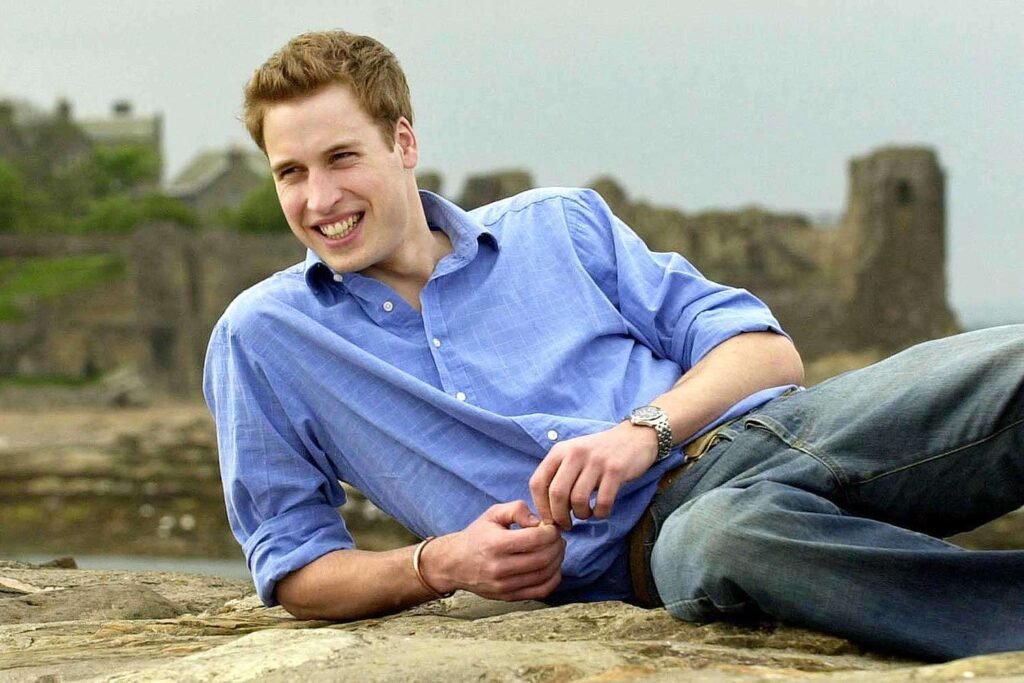
When people search for Prince William young, they are often curious about what the future King of the United Kingdom was like before royal duties, marriage, fatherhood, and the enormous public attention that followed him into adulthood. Prince William’s early years offer a fascinating look at a young royal growing up in one of the world’s most famous families while also experiencing many of the ordinary challenges associated with childhood, school, friendship, education, and family life.
Prince William Arthur Philip Louis was born on June 21, 1982, at St Mary’s Hospital in Paddington, London. He was the elder son of Charles, then the Prince of Wales, and Diana, Princess of Wales. His birth immediately attracted enormous public interest, but his parents also wanted their children to experience as normal a childhood as circumstances allowed. The official Royal Family biography records that William was christened at Buckingham Palace on August 4, 1982.
Looking back at Prince William young is useful because many of the qualities associated with him today began developing long before he became the Prince of Wales. His education, time with his family, experiences outside the palace environment, military career, university years, and relationship with Catherine Middleton all contributed to the person he eventually became. His childhood was privileged in many obvious ways, but it was also shaped by intense media attention and significant family events that made his early life unusually public.
Prince William’s Birth and His Place in the Royal Family
Prince William was born into the British royal family at a time when his parents were among the most closely watched people in the world. His father, Charles, was heir apparent to Queen Elizabeth II, while his mother, Diana, quickly became one of the most famous women on the planet. As their first child, William naturally received extraordinary attention from the public and press.
His official biography states that William was born at 9:03 p.m. on June 21, 1982, at St Mary’s Hospital in Paddington, London. The announcement of his birth was followed by the traditional public interest surrounding the arrival of a royal child. He was given the names William Arthur Philip Louis, combining names with longstanding connections to the British royal family.
From the beginning, however, William was not simply treated as a future monarch by his parents. Diana in particular was known for wanting her sons to experience life outside the highly controlled royal environment. Photographs from William’s childhood frequently showed him with his parents and younger brother Harry, helping create the public image of a young family that was trying to balance royal expectations with everyday experiences.
Growing Up With Princess Diana and Prince Charles
One of the most important influences on Prince William young was his relationship with his parents. Charles and Diana separated in 1992, when William was ten years old, and their divorce was finalized in 1996. Those years were played out under intense media scrutiny, making his childhood very different from that of most children.
William was particularly close to his mother. Diana reportedly made efforts to expose William and Harry to experiences beyond palace life, including activities and places that would have been unusual for young members of the royal family. The intention was to give the boys a broader understanding of ordinary life and people outside their immediate social circle.
His relationship with his father was also important. Charles had a strong interest in environmental issues, architecture, rural communities, and charitable work, while Diana placed considerable emphasis on compassion and direct human connection. As William grew older, elements of both parents’ approaches became visible in his own interests and public work. His later focus on environmental issues, homelessness, mental health, and young people can be viewed as part of a wider family tradition of charitable engagement.
Prince William Young and His Relationship With Prince Harry
William’s childhood was closely connected with that of his younger brother, Prince Harry. The brothers were separated by just over two years, and much of their early life was spent together. They shared the unusual experience of growing up as members of a famous royal family while attending school and participating in activities that gave them some distance from formal royal duties.
Being brothers within the royal family also meant that their childhood relationship existed alongside an unusual public narrative. William was second in line to the throne at birth, while Harry was further down the succession. Even when they were children, newspapers and commentators sometimes discussed their different future roles.
The brothers also experienced one of the most difficult moments of their childhood together when their mother died in 1997. William was 15 years old and Harry was 12. Their father accompanied them as they walked behind Diana’s coffin during the funeral procession. The official Royal Family biography notes that Charles subsequently sought privacy for his sons so they could continue their school lives with greater protection from public attention.
His First Schools and Early Education
Prince William’s education was notable because it followed a relatively conventional school path rather than relying entirely on private tutoring at a royal residence. According to the Royal Family’s official biography, he began at Mrs Mynors Nursery School in west London before attending Wetherby School in 1987.
In 1990, William moved to Ludgrove School in Berkshire. He spent five years there before entering Eton College in 1995. This transition represented an important stage in his development because Eton was a major educational institution with a long history and a demanding academic and social environment.
William’s school years also allowed him to develop interests and friendships away from formal royal duties. Although his position meant he could never experience completely normal school life, attending established schools exposed him to classmates from different backgrounds and gave him opportunities to participate in sports and other activities.
Life at Eton College
Prince William entered Eton College in 1995 when he was 13. His time at Eton is an important part of any discussion of Prince William young because it covered his teenage years, a period when personality, confidence, interests, and independence naturally develop.
At Eton, William studied subjects including geography, biology, and history of art. The official Royal Family biography states that he left the school in 2000 with A Levels in those three subjects. He also held several leadership positions during his time there, including House Captain of Games, House Captain, and Prefect.
Eton also provided a degree of separation from the intense royal environment. William was still followed by photographers and reporters, but school gave him a structured setting in which academic work, sport, friendships, and teenage responsibilities could take priority. Those experiences became particularly important as he gradually prepared for a much more public adult life.
The Impact of Losing His Mother Young
Any discussion of Prince William young would be incomplete without considering the death of Diana, Princess of Wales. She died in a car crash in Paris on August 31, 1997, when William was only 15. Her death shocked Britain and people around the world, while William and Harry suddenly had to deal with grief under extraordinary public scrutiny.
For a teenager, losing a parent is already an enormous emotional experience. For William, the circumstances were even more difficult because his mother was one of the most recognizable people in the world. Millions of people mourned Diana, while William and Harry had to grieve privately despite intense international attention.
The experience appears to have influenced William’s later approach to family and public life. He has frequently emphasized the importance of supporting children, families, and young people. His public work has also included conversations around mental health and emotional wellbeing. While it would be inappropriate to speculate about every personal consequence of his childhood experiences, it is reasonable to recognize that major family events formed an important part of his early life.
Prince William’s Gap Year
After leaving Eton in 2000, William chose to take a gap year before university. Rather than simply spending the year relaxing, he used it for travel, volunteering, work, and experiences outside Britain. This was an important stage in the transition from Prince William young to the adult royal who would eventually take on official responsibilities.
The Royal Family records several activities from this period. William undertook survival training with the Welsh Guards in Belize, volunteered with Raleigh International in Chile, worked on a dairy farm in the United Kingdom, and traveled in Africa.
The gap year was significant because it gave William opportunities to experience different environments before university. Working on a farm and participating in volunteer programs were very different from life at a royal residence. These experiences also helped build practical skills, confidence, and a wider understanding of communities and cultures.
University Life at St Andrews
In September 2001, William began studying at the University of St Andrews in Scotland. Initially, he enrolled in a four-year degree program in history of art. After two years, however, he changed his main subject to geography.
University represented another major step toward independence. William lived as a student, made friends, participated in sports, and developed interests away from the formal structure of royal life. St Andrews became especially important because it was where he met Catherine Middleton, who would later become the Princess of Wales.
William graduated in June 2005 with a 2:1 Master of Arts (Honours) degree in Geography. His final dissertation focused on coral reefs in Rodrigues in the Indian Ocean, and his university education included fieldwork connected with geography and environmental subjects.
Prince William Young and Catherine Middleton
The relationship between William and Catherine is one of the best-known parts of his young adulthood. They both attended the University of St Andrews and developed a friendship before their relationship became romantic.
Their university years gave them an opportunity to know each other away from some of the pressures of formal royal life. Catherine was studying history of art, while William initially studied the same subject before changing to geography. Their shared university environment provided a relatively ordinary setting compared with the public attention that followed them later.
William and Catherine eventually married at Westminster Abbey on April 29, 2011. Their relationship became an important part of William’s public identity, particularly because Catherine’s presence helped establish a young family-centered image around the future King. They now have three children: Prince George, Princess Charlotte, and Prince Louis.
His Interest in Sport During His Younger Years
Sport was another important part of Prince William’s youth. Like many young people, he participated in physical activities at school and university. Sports provided an opportunity to compete, socialize, and develop discipline outside academic work.
At St Andrews, William was particularly involved in water polo. The Royal Family states that he was selected to represent the Scottish national universities water polo team in the annual Celtic Nations tournament against Wales and Ireland.
His interest in sport continued into adult life and later became connected with charitable work. William has supported sporting organizations and initiatives that encourage young people to participate in physical activity. The connection between sport and personal development has remained a recurring theme in royal charitable activities.
From University Graduate to Military Officer
After university, William began preparing for another significant stage of his life by entering military training. He joined the Royal Military Academy Sandhurst as an Officer Cadet and completed the training required to become an Army officer.
In December 2006, William was commissioned as an Army officer and joined the Household Cavalry’s Blues and Royals as a Second Lieutenant. He was later promoted to Lieutenant. The Royal Family’s records describe his decision to join the Household Cavalry and the responsibilities associated with that career.
His military experience was important because it gave him professional responsibilities separate from his identity as a member of the royal family. Military service also required teamwork, leadership, discipline, and the ability to operate within a structured organization. These qualities would later become relevant to his role as a senior working royal.
Prince William and His Flying Career
William later pursued a flying career in the military. In 2009, he began training as a Search and Rescue pilot, eventually joining C Flight, 22 Squadron at RAF Valley in Anglesey in September 2010.
The Royal Family states that he spent three years as a Search and Rescue Pilot and participated in 156 search and rescue operations. He also completed a routine operational deployment to the Falkland Islands and qualified as an operational captain.
This period was particularly interesting because it gave William a professional identity that extended beyond ceremonial duties. Search and rescue work carries real responsibility, and the experience placed him in situations requiring technical skill, teamwork, judgment, and calm decision-making.
Prince William Young and the Development of His Public Image
The public image of Prince William changed significantly as he moved from childhood into adulthood. When he was young, the media often focused on him as Diana’s son and a future king. As he grew older, attention increasingly shifted toward his education, friendships, career, relationship, and eventual royal responsibilities.
That transition was not always simple. William experienced intense media attention throughout his teenage and university years. The balance between public interest and personal privacy became an ongoing issue, particularly because of the experiences his mother had with the press.
Over time, William developed a more controlled public presence. His official appearances generally emphasize service, charitable causes, family, and his responsibilities as a senior member of the Royal Family. His childhood and early adulthood helped establish the foundations for that more measured approach.
How His Young Years Influenced His Approach to Family
Family has remained central to William’s public life. His own experiences growing up in the royal family, becoming a parent, and losing his mother at a young age have given family-related issues particular significance in his public work.
William and Catherine have three children, Prince George, Princess Charlotte, and Prince Louis. The Royal Family states that the family spends time at Kensington Palace and also has a private residence on the Sandringham Estate in Norfolk.
The couple have also emphasized issues affecting children and families. Catherine’s public work has strongly focused on early childhood development and children’s emotional wellbeing, while William has supported initiatives involving young people, mental health, homelessness, and environmental concerns. Together, their approach has helped create a modern image of royal family life that places considerable emphasis on parenting and community issues.
Prince William’s Environmental Interests
Geography became more than an academic subject for William.His university education included environmental topics, and he later became involved in conservation and sustainability initiatives.
His environmental interests also connect with a wider tradition within his family.His father, now King Charles III, has spent decades advocating for environmental causes, conservation, sustainable development, and related issues. William has developed his own public approach to these subjects while carrying forward some of that broader family interest.
His environmental work has become especially visible through initiatives associated with the Royal Foundation and Earthshot-related activities. The focus is generally on practical solutions to environmental challenges rather than simply discussing the problems. This represents one of the areas where William has attempted to establish an individual identity within the wider institution of the monarchy.
From Young Prince to Prince of Wales
William’s transformation from a young prince into a senior royal was gradual. His childhood involved school and family life, his teenage years included the major challenge of losing his mother, and his early adulthood involved university, military service, marriage, and fatherhood.
Following the death of Queen Elizabeth II in September 2022 and the accession of King Charles III, William became the Prince of Wales. The title had previously belonged to his father for more than six decades. The official Royal Family biography confirms that William also became Duke of Cornwall after his father’s accession.
This new position made his earlier experiences even more significant. The young boy photographed with Diana eventually became the heir apparent to the British throne. His childhood, education, professional career, and family life all became part of the preparation for a role that will eventually require him to become King.
What Made Prince William’s Young Years Different?
The most obvious difference between William’s childhood and that of an ordinary child was his position in the line of succession. From birth, he was destined to have an unusually public life. His family relationships, schooling, friendships, appearance, and activities were often subjects of public interest.
At the same time, many elements of his childhood were surprisingly familiar. He attended school, played sports, studied for examinations, went to university, made friends, traveled, worked, and eventually built a family of his own. His parents’ decision to expose him to experiences outside palace life gave him opportunities to understand environments beyond royal circles.
The combination of extraordinary privilege and ordinary experiences is perhaps the most interesting aspect of Prince William young. His upbringing was neither completely conventional nor entirely isolated from normal life. Instead, it existed somewhere between the two, shaped by royal tradition, family circumstances, education, media attention, and a gradual preparation for future responsibility.
Frequently Asked Questions About Prince William Young
How old was Prince William when he was born?
Prince William was born on June 21, 1982, at St Mary’s Hospital in Paddington, London. He was the first child of Charles, then the Prince of Wales, and Diana, Princess of Wales.
Where did Prince William go to school?
William attended Mrs Mynors Nursery School, Wetherby School, Ludgrove School, and later Eton College. He entered Eton in 1995 and completed his A Levels there in geography, biology, and history of art.
What did Prince William study at university?
William initially studied history of art at the University of St Andrews. After two years, he switched to geography and graduated in 2005 with a 2:1 Master of Arts (Honours) degree in Geography.
How old was Prince William when Princess Diana died?
William was 15 years old when Diana, Princess of Wales, died on August 31, 1997. His younger brother Harry was 12 at the time.
Did Prince William have a normal childhood?
William’s childhood included many experiences familiar to other children, including school, sports, friendships, and family activities. However, his position as a member of the British royal family meant that his life was subject to considerable public and media attention.
Where did Prince William meet Catherine Middleton?
William met Catherine Middleton while they were both students at the University of St Andrews in Scotland. They graduated from the university in 2005 and married at Westminster Abbey in 2011.
Did Prince William serve in the military?
Yes. William attended the Royal Military Academy Sandhurst and was commissioned into the Household Cavalry’s Blues and Royals in 2006. He later trained as a Search and Rescue pilot and served with the RAF.
What is Prince William’s role today?
Prince William is the Prince of Wales and heir apparent to the British throne. He supports his father, King Charles III, through official duties, charitable work, and public engagements.
Conclusion
The story of Prince William young is much more than a collection of childhood photographs and royal milestones. It is the story of a boy born into an extraordinary family who gradually moved through school, adolescence, university, professional training, marriage, and parenthood before becoming the heir apparent to the British throne. His early life included remarkable privileges, but it also contained difficult experiences. Growing up under constant media attention and losing his mother as a teenager were events that set his childhood apart from the lives of most people. At the same time, his parents made efforts to give him and Prince Harry experiences outside formal royal surroundings.
His education at Eton, gap year, geography studies at St Andrews, military service, and flying career each added another layer to his development. Those experiences helped him gain independence and practical skills before taking on increasingly important royal responsibilities.
Today, William’s childhood is often viewed through the lens of his future role. The young prince who attended school in Berkshire and later studied in Scotland is now the Prince of Wales and the first in line to the throne. His journey shows how gradually a public figure can move from childhood into a role shaped by history, tradition, responsibility, and expectations.
YOU MAY HAVE MISSED