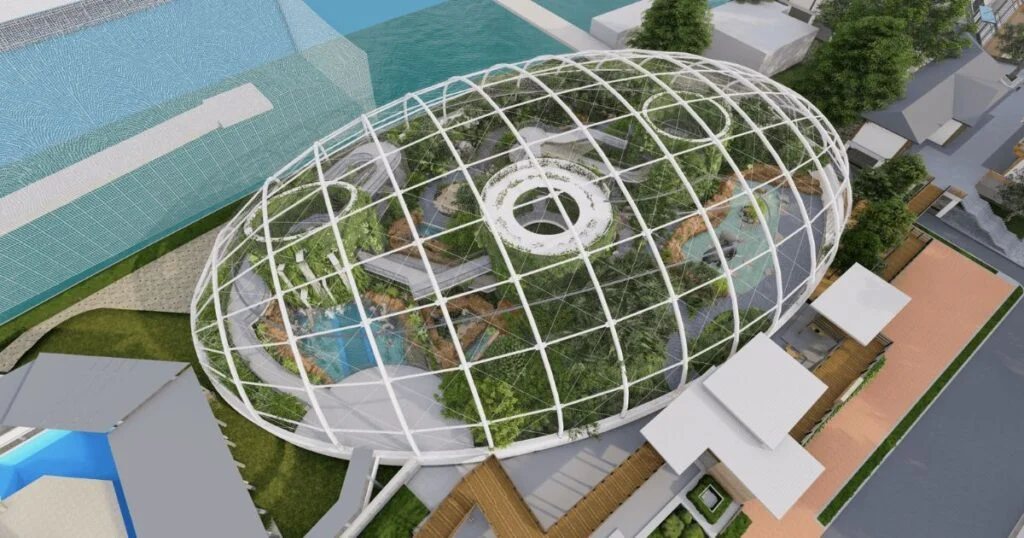
If you have ever wondered what is a biodome, the simplest answer is that it is a specially designed enclosed environment where plants, animals, microorganisms, water, air, and other natural processes can interact under carefully managed conditions. A biodome is essentially an artificial ecosystem created to imitate some of the functions of a natural ecosystem. Depending on its purpose, it can be small enough to fit inside a laboratory or large enough to contain forests, wetlands, agricultural areas, and entire communities of living organisms.
The idea behind a biodome is fascinating because it brings several parts of nature together in one controlled space. Instead of allowing environmental conditions to change naturally, scientists or engineers can manage factors such as temperature, humidity, light, water, nutrients, and carbon dioxide. This makes biodomes useful for scientific research, education, conservation, agriculture, and experiments involving long-term human habitation in controlled environments.
Biodomes are also closely connected with ideas about sustainability and the future of life beyond Earth. Scientists have explored enclosed ecosystems to understand how humans might produce food, recycle water, manage waste, and maintain breathable air in isolated environments. While a biodome cannot perfectly reproduce the complexity of Earth, it provides a practical way to study how different components of an ecosystem depend on one another.
What Is a Biodome in Simple Terms?
A biodome can be thought of as a large, controlled bubble or enclosed structure containing living organisms and the environmental conditions they need to survive. The word combines “bio,” referring to life, with “dome,” describing the type of enclosed structure often associated with these environments. Not every biodome is literally dome-shaped, however. Modern enclosed ecosystems can use many different architectural designs.
Inside a biodome, plants may produce oxygen and absorb carbon dioxide through photosynthesis. Animals can consume plants or other organisms, while microorganisms help break down organic material and return nutrients to the environment. Water may circulate through evaporation, condensation, collection, filtration, and reuse. These processes resemble natural ecological cycles, although they are often carefully monitored and assisted by technology.
The main difference between a biodome and an ordinary greenhouse is the complexity of the system. A greenhouse primarily provides a favorable environment for growing plants. A biodome can be designed as a much broader ecosystem containing multiple species, habitats, food chains, water systems, soil communities, and atmospheric interactions. In other words, a greenhouse focuses mainly on cultivation, while a biodome can attempt to recreate a functioning ecological system.
How Does a Biodome Work?
A biodome works by creating a controlled environment in which living organisms and physical systems interact. Designers first determine what type of ecosystem they want to reproduce. It could be a tropical forest, desert, wetland, agricultural environment, or another ecological setting. The structure is then equipped with systems capable of controlling the conditions required by the selected organisms.
Light is one of the most important elements. Plants require light for photosynthesis, so biodomes need access to sunlight, artificial lighting, or a combination of both. Temperature and humidity also have to remain within appropriate ranges. If the environment becomes too hot, too cold, too dry, or too humid, certain organisms may struggle to survive.
Water and nutrients are equally important. A well-designed biodome may use filtration and recycling systems to reduce water consumption. Organic waste can potentially be processed by microorganisms and returned to the soil as nutrients. The goal is to create a system where materials are continuously reused rather than constantly entering and leaving the environment. However, real biodomes usually still require outside energy and occasional material inputs.
The Main Components of a Biodome
A biodome contains several interconnected components that work together to support life. The physical structure is the first major component because it creates a boundary between the internal ecosystem and the outside environment. Transparent or partially transparent materials may be used when natural light is important, while insulated surfaces can help maintain stable temperatures.
The atmosphere inside the biodome is another essential component. Oxygen, carbon dioxide, nitrogen, water vapor, and other gases must remain within suitable ranges. Plants can influence atmospheric conditions through photosynthesis and respiration, but mechanical ventilation, sensors, and air-management systems may also be necessary.
Living organisms form the biological component. Plants, animals, fungi, bacteria, insects, and other microorganisms can all play different roles. Soil organisms, for example, are extremely important because they help decompose organic matter and recycle nutrients. The more complex the ecosystem becomes, the more carefully its relationships need to be monitored.
Why Are Plants Important in a Biodome?
Plants are often considered the foundation of a biodome because they perform several essential biological functions. Through photosynthesis, plants use light energy to convert carbon dioxide and water into chemical energy while releasing oxygen. This process supports plant growth and can contribute to maintaining an atmosphere suitable for other organisms.
Plants also provide food and habitat. In an ecosystem containing insects, birds, or herbivores, vegetation can become part of the food chain. Different plants may occupy different ecological roles, from ground cover and grasses to shrubs and trees. Their roots can also influence soil structure and water movement.
Another important role of plants is their relationship with water. Plants release water vapor through transpiration, contributing to humidity and potentially influencing the internal water cycle. In a carefully managed biodome, evaporation and transpiration can become part of a larger circulation system in which water is collected and reused.
The Role of Animals in a Biodome
Animals can add another level of complexity to an enclosed ecosystem. Depending on the purpose of the biodome, animals may include insects, birds, fish, reptiles, mammals, or other organisms. Each species has specific food, temperature, habitat, and behavioral requirements.
Animals can contribute to ecological processes in several ways. Herbivores consume vegetation, predators can control populations of other animals, and insects may pollinate plants. Some organisms also help distribute seeds or modify soil. These interactions can make the ecosystem more dynamic and biologically diverse.
However, introducing animals into a biodome requires careful planning. A species that seems harmless may reproduce rapidly or consume too many resources. Predators can also create unexpected population changes. Because the ecosystem is enclosed, there may be fewer natural mechanisms available to correct an imbalance. That is why biodiversity must be designed rather than simply accumulated.
How Water Is Managed Inside a Biodome
Water management is one of the most interesting parts of biodome design. In a natural ecosystem, water constantly moves through processes such as evaporation, condensation, precipitation, infiltration, runoff, and biological absorption. A biodome attempts to reproduce some of these processes on a smaller and more controlled scale.
Water may evaporate from ponds, soil, or plant surfaces and enter the atmosphere as water vapor. When that vapor encounters cooler surfaces, it can condense into liquid water. Depending on the design, the resulting water may return to the soil or be collected for treatment and reuse.
Efficient water recycling can make enclosed ecosystems much more sustainable. Instead of continually supplying fresh water, designers can recover and purify a significant portion of the water already present. This concept is particularly important when researchers study environments where outside water supplies are limited.
How Biodomes Control Temperature and Humidity
Temperature control is essential because every organism has environmental limits. A tropical ecosystem requires very different conditions from a desert ecosystem. Even small changes in temperature can influence plant growth, animal behavior, microbial activity, and water movement.
Biodomes can use insulation, ventilation, shading, heating, cooling, and automated climate-control equipment to maintain desired conditions. Sensors continuously measure factors such as temperature and humidity, allowing operators to identify changes before they become serious problems.
Humidity also needs careful attention. Too little moisture can stress plants, while excessive humidity may encourage fungal growth or create conditions that are unsuitable for certain organisms. Maintaining the right balance is therefore a constant management task rather than a one-time adjustment.
Biodomes and the Carbon Cycle
The carbon cycle is another important process that researchers can study inside enclosed ecosystems. Carbon moves among the atmosphere, plants, animals, soil, microorganisms, and other parts of an ecosystem. Plants absorb carbon dioxide during photosynthesis, while organisms release carbon dioxide through respiration.
When plants or animals die, decomposers break down their organic material. Some of the carbon can return to the atmosphere, while some becomes part of the soil. This continuous movement demonstrates how closely different components of an ecosystem are connected.
A biodome allows scientists to observe these relationships under controlled conditions. Although a small enclosed ecosystem cannot reproduce Earth’s entire carbon cycle, it can provide valuable information about carbon movement, plant productivity, decomposition, and ecological balance.
Biodomes and the Oxygen Cycle
Oxygen is especially important when biodomes are designed to support animals or potentially humans. Plants and algae can generate oxygen through photosynthesis, while animals and microorganisms consume oxygen during respiration.
This creates an ongoing exchange between organisms. Plants use carbon dioxide and release oxygen, while animals generally consume oxygen and release carbon dioxide. The relationship is more complicated in real ecosystems because many organisms, including plants themselves, respire continuously.
A biodome designed for long-term human habitation would require particularly sophisticated atmospheric monitoring. Oxygen concentration, carbon dioxide levels, humidity, contaminants, and ventilation would all need to be controlled. Simply placing plants inside an enclosed building would not automatically create a safe atmosphere for humans.
What Is the Difference Between a Biodome and a Greenhouse?
Although the terms are sometimes used interchangeably, biodomes and greenhouses have different purposes. A greenhouse is primarily designed to create favorable growing conditions for plants. It may control temperature, humidity, light, and ventilation, but it does not necessarily attempt to reproduce a complete ecosystem.
A biodome, by contrast, can contain many interacting biological systems. Its purpose may be to recreate an ecosystem or study ecological relationships. It may include soil organisms, insects, aquatic systems, animals, plants, and carefully managed atmospheric conditions.
There is also a practical difference in complexity. A greenhouse can be relatively simple to operate, while a biodome may require extensive monitoring and management. The more species and ecological processes included, the more difficult it becomes to maintain stability.
What Is a Biodome Used For?
One major use of biodomes is scientific research. Researchers can study plants, animals, microorganisms, climate interactions, nutrient cycles, and ecosystem behavior in a controlled environment. This can be useful when conducting experiments that would be difficult to perform in an open natural environment.
Biodomes are also valuable for education. Students can see ecological relationships happening in a physical space rather than learning about them only through books or diagrams. An enclosed ecosystem can demonstrate concepts such as food webs, photosynthesis, decomposition, water cycling, and biodiversity.
Another important application is conservation. Some controlled environments can provide conditions for growing endangered plants or maintaining species that are difficult to protect in their original habitats. Biodomes cannot replace natural conservation, but they can serve as complementary tools for research, propagation, and education.
Biodomes and Sustainable Agriculture
Agriculture inside controlled environments is another area where biodome concepts become useful. Growing food in enclosed spaces can protect crops from certain weather conditions, pests, and environmental fluctuations. It can also allow growers to manage water and nutrients more precisely.
A biodome-style agricultural system could combine crops with water recycling, composting, microorganisms, and other biological processes. Such systems may reduce waste and make better use of limited resources.
However, sustainability depends on the entire system. Artificial lighting, heating, cooling, pumps, and filtration equipment require energy. If that energy comes from inefficient or carbon-intensive sources, the environmental benefits can be reduced. A truly sustainable biodome therefore needs to consider energy consumption as carefully as water and food production.
Biodomes and Space Exploration
Perhaps the most futuristic application of biodomes is space exploration. If humans eventually establish long-term settlements on the Moon, Mars, or another world, they will need controlled environments to survive.
A space biodome could theoretically provide a protected habitat for plants and potentially people. Plants could contribute to food production and atmospheric management, while water and nutrients could be recycled. Such systems could reduce the amount of material that must constantly be transported from Earth.
Scientists still face enormous challenges in making this practical. Radiation, low gravity, extreme temperatures, limited resources, and the absence of Earth’s natural atmosphere make extraterrestrial environments fundamentally different from terrestrial ones. A biodome on another planet would therefore need much stronger engineering and life-support systems than most Earth-based enclosed ecosystems.
What Is Biosphere 2?
One of the most famous experiments related to the idea of a biodome is Biosphere 2 in Arizona. Built as a large experimental facility, Biosphere 2 was designed to study closed ecological systems and explore whether humans could live inside an artificial environment.
The project attracted enormous attention because it attempted to include multiple ecosystems within an enclosed structure. Researchers lived inside the facility while scientists monitored atmospheric chemistry, plant growth, animals, water, and other ecological processes.
The experiment demonstrated how difficult it is to maintain a truly closed ecosystem. Unexpected changes occurred in oxygen levels, species populations, soil chemistry, and other environmental factors. The lessons from Biosphere 2 remain valuable because they show that ecosystems are far more complicated than they may initially appear.
Can a Biodome Be Completely Self-Sustaining?
The idea of a completely self-sustaining biodome is attractive, but achieving true self-sufficiency is extremely difficult. Natural ecosystems rely on enormous external energy inputs, especially sunlight, and they also exist within a planetary environment that provides immense buffers and reserves.
An enclosed ecosystem can recycle many materials, but recycling is rarely perfect. Some nutrients become unavailable, some materials degrade, and equipment requires maintenance. Energy must also be supplied to pumps, sensors, lighting, cooling systems, and other technologies.
For these reasons, most practical biodomes are better described as partially closed systems rather than perfectly closed ecosystems. Their purpose is to minimize external inputs and maximize internal recycling rather than completely eliminate outside support.
Advantages of Biodomes
One major advantage of a biodome is environmental control. Researchers can create specific conditions and observe how organisms respond. This is particularly useful for experiments involving climate, agriculture, plant growth, or ecological interactions.
Another advantage is resource management. Water, nutrients, and organic materials can potentially be recycled within the system. In regions where resources are limited, controlled environments may provide opportunities to improve efficiency.
Biodomes can also inspire public interest in science and environmental conservation. Visitors can see how ecosystems work and understand that natural processes are interconnected. This educational value can be just as important as the scientific research conducted inside the structure.
Challenges of Building and Maintaining a Biodome
One of the biggest challenges is maintaining ecological balance. Adding or removing one species can influence many other parts of the system. A population increase in one insect, for example, could affect plants, predators, soil organisms, and nutrient availability.
Energy requirements can also become significant. Climate control, artificial lighting, water pumps, filtration equipment, and monitoring systems can consume substantial amounts of electricity. The larger the biodome, the more complicated these requirements become.
Cost is another major issue. Constructing an enclosed structure capable of maintaining specialized environmental conditions can require expensive materials and technology. Long-term maintenance can be equally demanding. Sensors need calibration, equipment can fail, and living organisms continue changing regardless of what the designers planned.
What Is a Biodome’s Role in Environmental Education?
Biodomes provide an excellent way to make environmental science easier to understand. Instead of treating concepts such as food chains and nutrient cycles as abstract ideas, visitors can observe actual interactions between organisms.
For example, a student might see insects pollinating plants, fish interacting with aquatic vegetation, or decomposers breaking down organic material. These observations make it easier to understand how ecosystems depend on relationships rather than isolated species.
Biodomes can also encourage discussions about sustainability. When people see how much effort is required to recycle water and maintain a stable atmosphere in a relatively small environment, they gain a new perspective on the natural systems that make life possible on Earth.
The Future of Biodome Technology
Future biodomes are likely to become more automated and efficient. Advanced sensors can monitor environmental conditions continuously, while computer systems can adjust temperature, humidity, lighting, irrigation, and ventilation.
Artificial intelligence and data analysis could eventually help operators identify ecological problems before they become visible. For example, changes in plant growth, soil moisture, atmospheric composition, or animal behavior might provide early warnings of an imbalance.
The future may also bring more sophisticated closed-loop systems. Water could be purified and reused multiple times, organic waste could be converted into nutrients, and renewable energy could power climate-control equipment. These developments could make biodome-style systems more practical for remote locations and potentially future space habitats.
Why Biodomes Matter for the Future
The importance of biodomes goes beyond the structures themselves. They represent an attempt to understand how life-supporting systems function when their components are closely connected.
On Earth, people often take clean air, fresh water, fertile soil, and biodiversity for granted because the planet provides them on an enormous scale. A biodome makes those processes more visible. When the environment is enclosed, every resource becomes easier to track, and small changes can have noticeable consequences.
This makes biodomes valuable laboratories for sustainability. They can help researchers explore how humans might reduce waste, recycle resources, grow food efficiently, and create resilient environments in challenging locations.
Final Thoughts on What Is a Biodome
So, what is a biodome It is an enclosed and controlled environment designed to support living organisms and, in many cases, reproduce some of the ecological processes found in nature. Biodomes can range from relatively simple educational installations to highly sophisticated research facilities containing multiple ecosystems. Their real value comes from the relationships they allow us to study. Plants, animals, microorganisms, soil, water, air, nutrients, and energy are not independent pieces. They form a connected system in which a change in one area can affect many others. Biodomes also offer a useful way to think about the future. Whether the goal is sustainable agriculture, conservation, environmental education, scientific research, or eventual human habitation beyond Earth, understanding controlled ecosystems can provide important knowledge.
Perhaps the most interesting lesson is that building a miniature version of Earth’s life-support system is much harder than it sounds. The complexity of a natural ecosystem is enormous. Biodomes remind us that clean water, breathable air, fertile soil, and biological diversity are the results of countless interconnected processes—and that protecting those systems is essential for life.
Frequently Asked Questions About What Is a Biodome
What is a biodome?
A biodome is an enclosed environment designed to contain and support living organisms under controlled conditions. It can include plants, animals, microorganisms, soil, water, and atmospheric systems.
Is a biodome the same as a greenhouse?
No. A greenhouse is primarily designed to provide suitable growing conditions for plants. A biodome can be much more complex and may attempt to recreate interactions among multiple organisms and environmental systems.
Can humans live inside a biodome?
Humans can live in some controlled enclosed environments, but creating a biodome that independently supports people for long periods is extremely challenging. Food, water, oxygen, waste, energy, temperature, and atmospheric composition all need to be carefully managed.
Are biodomes completely self-sustaining?
Most biodomes are not completely self-sustaining. They may recycle water, nutrients, and organic materials, but they commonly require outside energy, maintenance, equipment, and sometimes additional materials.
Why are biodomes useful?
Biodomes are useful for research, education, conservation, agriculture, and studying closed ecological systems. They can also help researchers investigate concepts relevant to future habitats in extreme environments.
What is Biosphere 2?
Biosphere 2 is a large experimental facility in Arizona that was designed to investigate closed ecological systems and human life within an enclosed environment. It is one of the best-known examples of large-scale research connected with biodome concepts.
Can plants produce enough oxygen inside a biodome?
Plants can produce oxygen through photosynthesis, but whether they can produce enough for humans depends on the size and design of the ecosystem, plant productivity, atmospheric volume, and the number of people and other organisms present. A human-supporting system requires careful engineering and monitoring.
Could biodomes be used on Mars?
Theoretically, biodome-like habitats could help create protected environments for future Mars missions or settlements. However, they would need advanced life-support systems and protection from radiation, extreme temperatures, low atmospheric pressure, and other Martian conditions.
What is the biggest challenge of a biodome?
Maintaining ecological balance is one of the biggest challenges. Because the environment is enclosed, changes in one population or resource can produce unexpected effects throughout the entire system.
Why are biodomes important for sustainability?
Biodomes allow scientists to study resource recycling, controlled agriculture, water management, ecological relationships, and efficient use of energy. These lessons can contribute to the development of more sustainable technologies and living systems.
YOU MAY HAVE MASSED