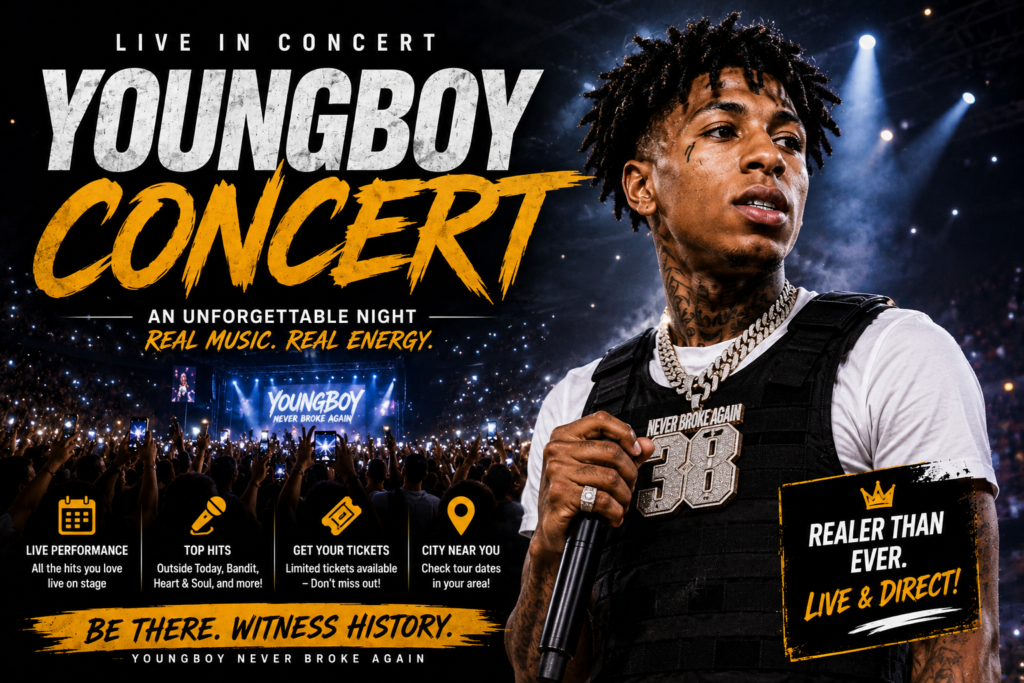
The energy inside an arena when the lights drop and the first beat hits carries a unique intensity that recorded music cannot fully capture. For fans of the Baton Rouge artist known for raw emotion and relentless output, attending a YoungBoy concert represents more than a night out. It becomes a shared moment of connection with lyrics that many have replayed hundreds of times. The recent Make America Slime Again run proved that demand for these live shows remains exceptionally strong after years of limited touring.
Interest in every YoungBoy concert continues to grow because the performances blend high-energy tracks with more reflective moments. Crowds know the words, phones light up the space, and the artist moves through an extensive catalog that spans multiple eras of his career. This guide explores what makes these events memorable, how the major tour unfolded, practical advice for future dates, and the broader context of his return to the stage. Whether you have already attended or are planning for the next opportunity, the details here aim to deepen appreciation for the live experience.
The Long Wait and Return to the Stage
Years of legal restrictions kept the artist largely off the road even as his music dominated streaming platforms. Fans streamed billions of plays and watched music videos accumulate massive view counts, yet the chance to see the material performed live stayed limited. The announcement of a full arena run therefore generated immediate excitement and rapid ticket sales.
That return carried extra weight. Many in the audience had grown up with the music during the period when live shows were scarce. The resulting atmosphere often felt closer to a reunion than a standard concert. Openers set the tone, and by the time the headliner appeared the building already pulsed with anticipation. The decision to tour at scale after such a long gap highlighted both artistic readiness and strong commercial demand.
Overview of the Make America Slime Again Tour
The 2025 trek stretched across more than forty dates and visited major arenas throughout the United States. Gross revenue approached seventy million dollars with more than half a million tickets sold, establishing it as one of the strongest debut headlining runs by a rapper in recent history. Individual nights set personal records for both attendance and box office.
Support acts rotated and included familiar names from the broader scene, creating variety from city to city. Production elements featured dramatic entrances, stage props, and lighting that matched the intensity of the music. The tour supported newer material while drawing heavily from the extensive back catalog, giving longtime listeners a comprehensive survey of the artist’s work.
Atmosphere Inside the Venue
From the moment doors open the mood builds. Merchandise lines form early, fans compare setlist predictions, and the collective energy rises as the clock moves closer to showtime. Once the performance begins the response is immediate and loud. Entire sections rap along without missing a word, creating a wall of sound that sometimes rivals the speakers.
Certain tracks shift the feeling toward something more communal. Ballads and reflective songs turn the arena into a large-scale sing-along where phones replace lighters and the focus moves from jumping to shared emotion. The contrast between high-octane moments and quieter ones gives the night dynamic range and keeps attention locked for the full duration.
Typical Setlist Structure and Song Selection
Performances regularly stretch past forty songs and cover a wide timeline. Newer cuts open or close segments while established favorites receive the strongest crowd reactions. The order often groups higher-energy material together before shifting into melodic territory and then returning to intensity.
Fans frequently note how few songs from any single project dominate. Instead the set pulls from across the discography, rewarding those who have followed the entire journey. Guest appearances occasionally appear, adding surprise and variety. The length of the show itself becomes part of the appeal, delivering substantial value for the ticket price.
Production Elements and Stage Design
Visuals play an important supporting role. Dramatic entrances, including thematic props, create memorable opening images. Lighting design tracks the emotional shifts in the music, moving from stark and aggressive to warmer tones during softer passages. Video screens amplify close-ups and provide additional visual storytelling.
These production choices enhance rather than overshadow the performance. The focus stays on the artist and the connection with the audience. Simple but effective staging allows movement across the platform and keeps sightlines strong even from upper levels.
Practical Tips for Attending Future Shows
Arriving early helps with security lines, merchandise purchases, and finding preferred standing or seating positions. Clear bag policies at most arenas require advance planning. Comfortable footwear proves essential because many fans remain on their feet for the majority of the night.
Checking the specific venue rules and any age restrictions prevents last-minute issues. Secondary ticket markets can offer options closer to showtime, though prices fluctuate with demand. Following official channels for announcements ensures the most accurate information about dates, openers, and any schedule changes.
Ticket Availability and Pricing Patterns
High demand during the recent tour led to rapid sell-outs in many markets. Primary sales moved quickly, and secondary prices rose accordingly for desirable seats. Lower bowl and floor sections commanded premiums while upper levels remained more accessible in some cities.
Future announcements will likely follow similar patterns. Signing up for artist or promoter presales improves chances of securing tickets at face value. Flexible date options and willingness to travel to nearby cities expand possibilities when local shows sell out.
Fan Demographics and Crowd Energy
The audience spans a wide age range. Younger fans who discovered the music through streaming platforms stand alongside older listeners who followed from earlier projects. The shared knowledge of lyrics creates an inclusive feeling even among strangers.
Energy levels stay high throughout. Call-and-response moments, coordinated chants, and spontaneous dancing appear regularly. Security presence remains visible yet the overall atmosphere tends toward celebratory rather than chaotic when crowds stay focused on the performance.
Memorable Moments from Recent Performances
Viral clips from the tour captured everything from emotional sing-alongs to high-energy mosh-adjacent sections. Moments when the artist interacted directly with the crowd or paused to acknowledge the long wait for live shows generated strong responses. Surprise guests and extended outros of favorite tracks also stood out in fan recaps.
These highlights travel quickly across social platforms and build anticipation for subsequent dates. They also serve as reminders of the unique atmosphere that only exists inside the venue on the night of the show.
Comparing Live Shows to the Recorded Catalog
Studio versions allow precise production and repeated listening. Live performances introduce variation in delivery, extended ad-libs, and the unpredictable energy of a full crowd. Certain songs gain new intensity when thousands of voices join the chorus.
The live setting also reveals the physical demands of performing an extensive set. Pacing, breath control, and stage movement become visible elements that recorded tracks cannot convey. Many fans leave with renewed appreciation for both formats.
The Role of Openers in Building the Night
Support acts warm the crowd and introduce newer or complementary sounds. Their sets provide variety and give the main performance a stronger launch. Strong openers can create lasting impressions and expand the overall value of the ticket.
Rotation of guests across different legs of a tour keeps the experience fresh for fans who attend multiple dates. The combination of established and emerging names on the bill reflects the broader scene surrounding the headliner.
Preparing Mentally and Physically for the Show
Long sets and high volume levels benefit from basic preparation. Staying hydrated, resting beforehand, and protecting hearing with appropriate earplugs help maintain comfort. Knowing approximate set length allows better pacing of energy throughout the evening.
Emotional readiness also matters. The music often explores heavy themes, and hearing those songs in a collective setting can feel intense. Approaching the night with openness to both celebration and reflection enhances the overall experience.
Merchandise and Souvenir Opportunities
Official tour merch typically includes apparel, posters, and limited items specific to the run. Lines form early and popular sizes sell out. Purchasing at the venue supports the tour directly and provides tangible reminders of the night.
Some fans prefer to wait until after the performance when crowds thin. Others secure items before the show to avoid missing anything. Either approach works depending on personal priorities.
Safety Considerations and Venue Navigation
Large crowds require basic awareness of exits, medical stations, and personal belongings. Staying with a group or establishing meeting points reduces stress. Following staff instructions during entry, intermissions, and exit keeps the evening smooth for everyone.
Transportation planning after the show matters because rideshares and public transit can face high demand. Knowing options in advance prevents delays at the end of a long night.
The Broader Significance of These Live Events
For an artist whose career developed largely through digital platforms, successful arena runs confirm that online popularity can translate into ticket sales at scale. The strong turnout after years away from the road underscores the depth of the connection with listeners.
These concerts also create shared cultural moments. Fans leave with stories, photos, and a sense of participation in something larger than individual streaming sessions. The collective experience reinforces community around the music.
Table of Key Elements in a Typical YoungBoy Concert
| Element | Description | Fan Impact |
|---|---|---|
| Set length | Often exceeds forty songs | High value and comprehensive survey of catalog |
| Energy range | Mix of aggressive tracks and melodic moments | Dynamic pacing that holds attention |
| Production | Dramatic entrances and responsive lighting | Visual enhancement without overpowering the music |
| Crowd participation | Strong sing-alongs and collective energy | Heightened emotional connection |
| Openers | Rotating support acts | Added variety and extended evening |
This summary highlights the consistent features that define the live experience.
Quotes from Fans and Observers
One attendee described the night as “not just a concert but a full release of everything the music has meant over the years. Hearing thousands of people scream the same words felt powerful.”
A reviewer noted, “The ability to move from high-intensity tracks to vulnerable moments without losing the crowd shows real command of the stage and deep catalog knowledge.”
Another fan shared, “After waiting so long to see it live, the first few songs almost felt unreal. By the middle of the set it became pure celebration.”
These reflections capture the emotional range that many experience during the shows.
Conclusion
A YoungBoy concert delivers an intense, catalog-spanning performance that rewards both longtime listeners and newer fans. The successful arena tour demonstrated strong demand and created lasting memories through extended setlists, dynamic energy, and genuine connection with the audience. Production choices, crowd participation, and the simple fact of finally seeing the music performed live combined to make the nights distinctive.
Future dates will likely build on that foundation. Practical preparation around tickets, venue rules, and personal comfort allows fuller enjoyment of the experience. The music already lives in headphones and playlists for millions. Experiencing it in a packed arena adds a dimension that recorded versions cannot replicate. For those who have the chance to attend, the result is often a night that stays vivid long after the final song ends.
FAQs
What should first-time attendees expect at a YoungBoy concert?
Expect a long set that draws from across the catalog, high crowd energy, and a mix of aggressive and melodic moments. The atmosphere often feels communal because so many people know the lyrics. Arriving early, checking bag policies, and preparing for extended time on your feet improves the overall experience.
How long do YoungBoy concert performances usually last?
Recent shows frequently ran close to two hours of actual performance time with extensive song lists. Doors open earlier and openers add to the total evening length. The substantial runtime gives fans a broad survey of material rather than a short hits package.
Are tickets for a YoungBoy concert difficult to obtain?
Demand during the major arena run led to quick sell-outs in many markets. Presales and early action on primary platforms offer the best chance at face-value tickets. Secondary markets provide alternatives closer to show dates, though prices can rise with scarcity.
What kind of production appears at a YoungBoy concert?
Staging typically includes dramatic entrances, responsive lighting, and video support that matches the emotional shifts in the music. Props and visual elements enhance the performance without becoming the main focus. The emphasis stays on the artist and the connection with the crowd.
How does the live experience differ from streaming the music?
Live shows introduce crowd energy, slight variations in delivery, and the physical presence of the performance. Sing-alongs and collective reactions create moments that recorded tracks cannot provide. Many fans report that hearing familiar songs in that setting deepens their connection to the material.