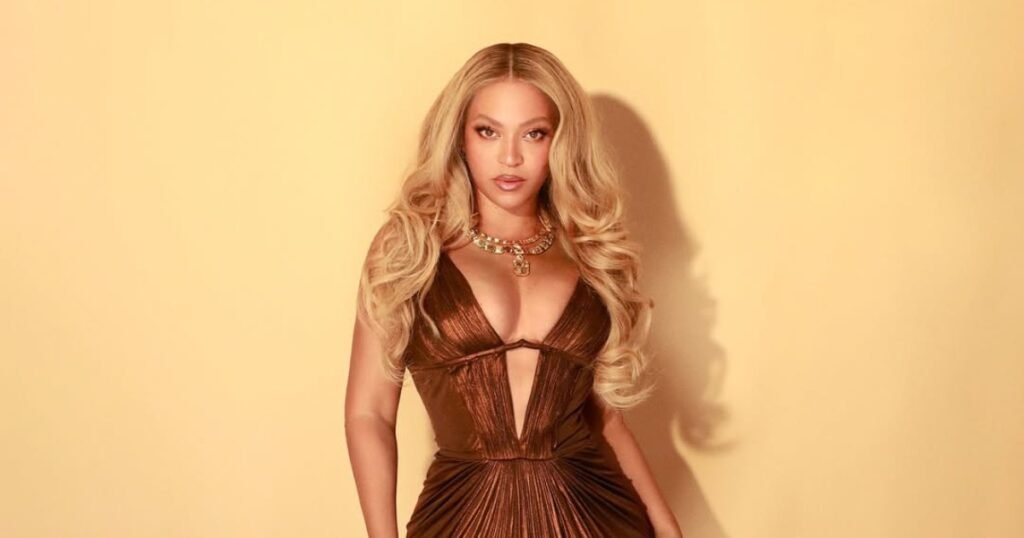
Beyonce is one of the most influential entertainers of her generation, but describing her simply as a singer does not really capture the scale of her career. Over several decades, she has built an identity that combines music, performance, fashion, film, business, visual storytelling, and cultural influence. From her early years performing with Destiny’s Child to becoming a global solo superstar, she has consistently reinvented herself without losing the qualities that made audiences connect with her in the first place.
What makes Beyonce particularly fascinating is the way she approaches her career as a complete creative project. Her albums are rarely just collections of songs. They often arrive with carefully planned visuals, concepts, performances, costumes, and messages. She has also demonstrated an unusual ability to remain relevant as the entertainment industry changes around her.
For fans, Beyonce represents excellence and confidence. For musicians, she is an example of disciplined artistry. For the entertainment business, she has shown how a performer can take greater control over the creative process and turn a personal brand into a powerful cultural institution. Her story is therefore much bigger than individual hit songs or awards.
Beyonce’s Early Life and Introduction to Music
Beyonce Giselle Knowles-Carter was born on September 4, 1981, in Houston, Texas. She showed an interest in performing from an early age, and her family supported her artistic development. Singing and dancing became important parts of her childhood, eventually leading her toward competitive performance and professional opportunities.
As a young performer, Beyonce participated in talent competitions and developed her stage skills before becoming part of the group that would eventually be known as Destiny’s Child. Those early experiences were important because they taught her how to perform under pressure and how to work as part of an ensemble.
Her childhood was not simply about becoming famous. It was a period of intensive training and experimentation. Singing, dancing, choreography, and stage presence all became parts of the skill set she would later use to establish herself as a solo performer.
Destiny’s Child and the Beginning of Her Rise
Destiny’s Child became one of the defining girl groups of the late 1990s and early 2000s. The group achieved major success with songs such as “Say My Name,” “Bills, Bills, Bills,” and “Survivor.” Their music combined contemporary R&B with pop influences and often featured themes of independence and self-confidence.
Beyonce emerged as the group’s most recognizable member, but her success was connected to the group’s chemistry. Destiny’s Child gave her an opportunity to develop her vocal ability while learning how the music industry worked at a professional level.
The experience also prepared Beyonce for the demands of a solo career. She learned about recording, choreography, interviews, touring, music videos, and the business side of entertainment. By the time she began releasing major solo material, she already possessed years of experience that many new artists have to acquire after entering the spotlight.
Beyonce’s Breakthrough as a Solo Artist
Beyonce’s transition from group member to solo superstar became one of the most successful career moves in modern pop and R&B history. Her debut solo album, Dangerously in Love, arrived in 2003 and immediately established her as a major individual artist.
The album included major hits such as “Crazy in Love” and “Baby Boy.” “Crazy in Love,” featuring Jay-Z, became especially important because it introduced a more mature and confident version of Beyonce to the public.
The success of the album proved that her appeal extended far beyond Destiny’s Child. She could carry an entire project by herself, combining powerful vocals with polished choreography and a distinctive visual identity. Her solo career had officially begun, and the expectations surrounding her quickly became enormous.
The Importance of Crazy in Love
“Crazy in Love” remains one of Beyonce’s signature songs and an important moment in early-2000s pop culture. The track combined an energetic production with a memorable vocal performance and a prominent contribution from Jay-Z.
The song also helped establish Beyonce’s ability to blend R&B, pop, hip-hop, and dance influences without sounding disconnected from her musical identity. Its energy made it accessible to a broad audience while still reflecting her roots.
The accompanying music video became equally recognizable. Beyonce’s choreography, styling, and confident performance helped create an image that was very different from the youthful group identity associated with her earlier career.
Beyonce’s Evolution as an Artist
One of the clearest characteristics of Beyonce’s career is evolution. Instead of repeatedly releasing the same kind of music, she has continually changed her sound, themes, and presentation.
Albums such as B’Day, I Am… Sasha Fierce, and 4 showed different sides of her artistry. Some projects focused heavily on energetic performances, while others explored vulnerability, relationships, identity, and personal growth.
This evolution helped prevent her career from becoming predictable. Audiences could never be completely sure what her next project would sound or look like, but they generally knew that it would be carefully produced.
Beyonce and Her Distinctive Vocal Style
Beyonce’s voice is one of the central reasons for her longevity. She has a powerful vocal range and is particularly recognized for her control, runs, harmonies, sustained notes, and ability to move between soft and explosive performances.
Her vocal ability becomes especially obvious during live performances. Studio recordings can be polished through production, but performing difficult material on stage night after night requires considerable technical discipline.
She also understands how to use her voice as part of storytelling. Not every song needs maximum power. Some of her most effective performances depend on restraint, emotional phrasing, and subtle changes in tone.
Beyonce’s Approach to Performance
A Beyonce performance is rarely just about standing on stage and singing. Choreography, lighting, costumes, staging, musicianship, and visual effects are often carefully integrated into the overall experience.
Her dancing has become one of her defining strengths. She is capable of executing complex choreography while maintaining vocal control, which is particularly demanding during large-scale concerts.
Her attention to performance details has helped establish her as one of the defining live entertainers of her era. She treats concerts as productions rather than simple collections of songs, creating an environment where music and visual storytelling work together.
Beyonce’s Visual Albums and Storytelling
One of the biggest changes in Beyonce’s career came with the increasing importance of visual storytelling. Her 2013 self-titled album arrived unexpectedly and included music videos for the songs, creating a project that encouraged listeners to experience the music visually as well as sonically.
This approach changed expectations around album releases. Instead of relying exclusively on traditional promotion, Beyonce used surprise, visuals, and anticipation to create a cultural event.
The visual component also gave her greater control over storytelling. Songs could be connected through recurring themes, imagery, characters, and emotions. Her albums increasingly became complete artistic statements.
Lemonade and a New Level of Cultural Impact
Lemonade, released in 2016, became one of Beyonce’s most discussed projects. It combined music with a visual film and explored themes including relationships, betrayal, identity, family, history, resilience, and Black womanhood.
The project was notable not simply because of its commercial success but because of its emotional and cultural ambition. Beyonce used personal themes while connecting them to broader historical and social experiences.
Lemonade also demonstrated her willingness to allow complexity into her work. The album moved between anger, sadness, pride, forgiveness, celebration, and strength rather than presenting a single emotional message.
Beyonce and Black Culture
Beyonce’s relationship with Black culture has become an important part of her artistic identity. Throughout her career, she has incorporated musical traditions, visual references, fashion, history, and cultural symbolism into her projects.
Her work often celebrates Black creativity while also acknowledging historical struggles. She has used mainstream platforms to bring attention to artists, designers, musicians, dancers, and cultural traditions that might otherwise receive less international exposure.
This cultural influence is one reason Beyonce’s work is frequently discussed beyond entertainment journalism. Her projects can become subjects of conversations about history, representation, fashion, gender, identity, and popular culture.
Homecoming and the Power of Live Music
Beyonce’s 2018 Coachella performance became one of the most celebrated live performances of her career. The performance was later documented in the Netflix film Homecoming.
The show was remarkable because it incorporated a large marching-band-inspired musical arrangement, extensive choreography, guest appearances, and references to historically Black colleges and universities.
Rather than simply performing her biggest hits, Beyonce constructed a large-scale celebration of Black musical traditions. The performance demonstrated how entertainment, cultural history, and spectacle could be combined into one event.
Beyonce’s Influence on Fashion
Fashion has always played an important role in Beyonce’s public image. Her stage costumes, red-carpet appearances, music-video styling, and album visuals have helped make her one of the most influential celebrity figures in fashion.
She has worked with major designers while also supporting emerging creative talent. Her fashion choices often become topics of discussion because they are closely connected to the themes of her music.
Her influence goes beyond simply wearing expensive clothes. Beyonce understands that clothing can communicate character, mood, history, confidence, and artistic direction.
Beyonce as a Businesswoman
Beyonce has also developed a substantial business identity. Her career demonstrates how modern entertainers can expand beyond music into fashion, film, production, endorsements, and entrepreneurship.
She has been involved with various commercial and creative ventures throughout her career. These projects have helped reinforce the idea that an artist can have control over multiple parts of a brand instead of depending entirely on traditional record-industry structures.
Her business success is particularly interesting because she tends to maintain a relatively private personal life. She does not need to constantly appear in public to maintain interest in her work.
Beyonce and Jay-Z
Beyonce’s relationship with Jay-Z has been one of the most closely followed celebrity relationships in entertainment. The two musicians have collaborated professionally many times while also building individual careers.
Their musical collaborations have included some of the biggest moments of both artists’ careers. Together, they have explored themes of love, ambition, family, wealth, success, and personal challenges.
Despite enormous public interest, the couple has generally maintained a degree of privacy around their family life. Their ability to separate their public creative work from their private world has become part of their broader celebrity identity.
Beyonce as a Mother
Beyonce is also a mother, and family has increasingly appeared as a theme in her creative work. She and Jay-Z have three children: Blue Ivy Carter and twins Rumi and Sir.
Blue Ivy has occasionally appeared alongside her mother in professional settings, including musical performances. Her involvement has attracted significant public attention because she has grown up surrounded by two globally famous musicians.
Beyonce has generally protected her children’s privacy while allowing selected family moments to become part of her artistic world. This balance between public creativity and personal boundaries has been an important part of her approach to fame.
Renaissance and Beyonce’s Dance Music Era
With Renaissance, Beyonce entered another major creative chapter. Released in 2022, the album embraced house, disco, dance, funk, and club music while maintaining her vocal identity.
The project was designed to feel celebratory and liberating. Its sound encouraged listeners to dance, but the album also reflected a deeper appreciation for musical traditions that influenced modern dance culture.
Renaissance demonstrated once again that Beyonce could explore a different musical environment without losing her identity. Rather than simply following current trends, she connected contemporary production to the artists and genres that helped create those sounds.
Cowboy Carter and American Musical History
Beyonce’s Cowboy Carter represented another dramatic shift. Released in 2024, the album explored country and Americana while challenging traditional ideas about who belongs within those musical spaces.
The project was much broader than a conventional country album. It incorporated country, folk, rock, R&B, blues, and other American musical traditions.
The album’s concept also connected to the history of Black musicians within American roots music. Beyonce used the project to examine the genre while demonstrating how interconnected American musical traditions really are.
Beyonce’s Grammy Achievements
Beyonce has become one of the most decorated artists in Grammy history. Her awards recognize achievements across genres and demonstrate her ability to remain competitive over multiple decades.
Her Grammy success is particularly notable because her work does not remain confined to one musical category. She has received recognition for pop, R&B, dance, traditional music, and other styles.
Awards, however, are only one measure of her impact. Her influence on music, performance, fashion, and visual storytelling arguably extends far beyond any trophy collection.
Beyonce’s Impact on Younger Artists
Many contemporary artists have cited Beyonce as an inspiration. Her influence can be seen in vocal performances, choreography, album visuals, stage design, fashion, and approaches to celebrity.
Young performers can study her career as a model for long-term development. She demonstrates the importance of preparation, consistency, reinvention, and attention to detail.
Her influence is also visible in the way artists think about albums. More musicians now treat releases as complete visual and conceptual experiences rather than simply collections of songs.
Beyonce’s Relationship With Her Fans
Beyonce’s fan community, often called the BeyHive, has become one of the most recognizable fan groups in modern popular culture.
Her fans are highly engaged with her music, performances, fashion, lyrics, videos, and public appearances. Part of this loyalty comes from the fact that Beyonce rarely overshares.
Because she does not constantly reveal every detail of her life, major announcements and releases can feel like genuine events. Her fans have learned to pay attention because important moments can arrive without extensive warning.
Why Beyonce Has Remained Relevant
Maintaining global relevance for more than two decades is extremely difficult. Music trends change, audiences change, technology changes, and new artists appear constantly.
Beyonce has remained relevant because she has repeatedly adapted without abandoning her core identity. She understands when to experiment and when to rely on her strongest qualities.
Another factor is her commitment to quality. Her projects often involve extensive preparation, large creative teams, and significant attention to detail. That consistency has created trust between the artist and her audience.
Beyonce’s Legacy in Music
Beyonce’s legacy will likely be measured in several different ways. Her vocal performances alone would be enough to secure her place in modern music history.
But her influence extends further. She helped redefine what a pop superstar can do with albums, visual storytelling, live performances, fashion, and business.
She also demonstrated that mainstream success does not require an artist to simplify their identity. She has repeatedly brought complex cultural ideas into projects designed for global audiences.
The Future of Beyonce’s Career
Predicting what Beyonce will do next is difficult, and that uncertainty is part of her appeal. Her career has never followed a completely predictable pattern.
She may continue exploring musical history, develop new visual projects, expand her business interests, or eventually move further into film and production. Whatever direction she chooses, her previous work suggests that she will approach it with considerable preparation.
At this point in her career, Beyonce does not need to prove that she can achieve commercial success. She has already done that repeatedly. The more interesting question is what kind of creative statement she wants to make next.
Conclusion
Beyonce career is a remarkable example of artistic evolution, discipline, and creative control. From her early days with Destiny’s Child to her solo breakthrough and later conceptual albums, she has continually expanded the definition of what a successful entertainer can be. Her music has moved through R&B, pop, hip-hop, dance, country, rock, blues, and other influences. At the same time, her performances have transformed concerts into major visual productions, while her fashion and business decisions have strengthened her influence outside music. What ultimately makes Beyonce different is the combination of talent and intention. She is not simply successful because she can sing. She understands performance, storytelling, branding, history, visual communication, and audience connection.
That combination has allowed her to remain one of the most important figures in contemporary entertainment. Whether people admire her vocals, choreography, albums, fashion, cultural influence, or business achievements, Beyonce has created a career that is difficult to compare with that of any other modern performer.
Frequently Asked Questions About Beyonce
Who is Beyonce?
Beyonce is an American singer, songwriter, performer, actress, and businesswoman. She first became widely known as a member of Destiny’s Child before establishing a highly successful solo career.
When was Beyonce born?
Beyonce was born on September 4, 1981, in Houston, Texas.
What was Beyonce’s first solo album?
Her first solo studio album was Dangerously in Love, released in 2003. It featured major songs including “Crazy in Love” and “Baby Boy.”
Why is Beyonce so influential?
Beyonce is influential because her impact extends across music, live performance, fashion, visual storytelling, business, and popular culture. She has also inspired many younger performers.
What is Beyonce’s most famous song?
There is no single universally agreed-upon “most famous” Beyonce song, but “Crazy in Love,” “Single Ladies,” “Halo,” “Formation,” and “Break My Soul” are among her best-known releases.
Is Beyonce still making music?
Yes. Beyonce released Cowboy Carter in 2024, continuing her exploration of American musical traditions and demonstrating that she remains an active and evolving artist.
How many children does Beyonce have?
Beyonce and Jay-Z have three children: Blue Ivy Carter, Rumi Carter, and Sir Carter.
What makes Beyonce’s performances special?
Her performances combine singing, choreography, visual production, costumes, staging, musicianship, and storytelling. She is known for maintaining a high level of preparation and precision in live shows.
YOU MAY HAVE MISSED