The House of the Dragon cast brought the history of House Targaryen to life with a combination of established performers, rising stars, and young actors who had to portray the same characters at different stages of their lives. Set roughly 200 years before Game of Thrones, the series focuses on the Targaryen civil war known as the Dance of the Dragons.
What makes the cast particularly interesting is the show’s use of different actors for several characters as the story moves through major time jumps. Characters such as Rhaenyra Targaryen and Alicent Hightower are portrayed by younger and older performers, allowing the series to explore how relationships, ambitions, and personalities change over time.
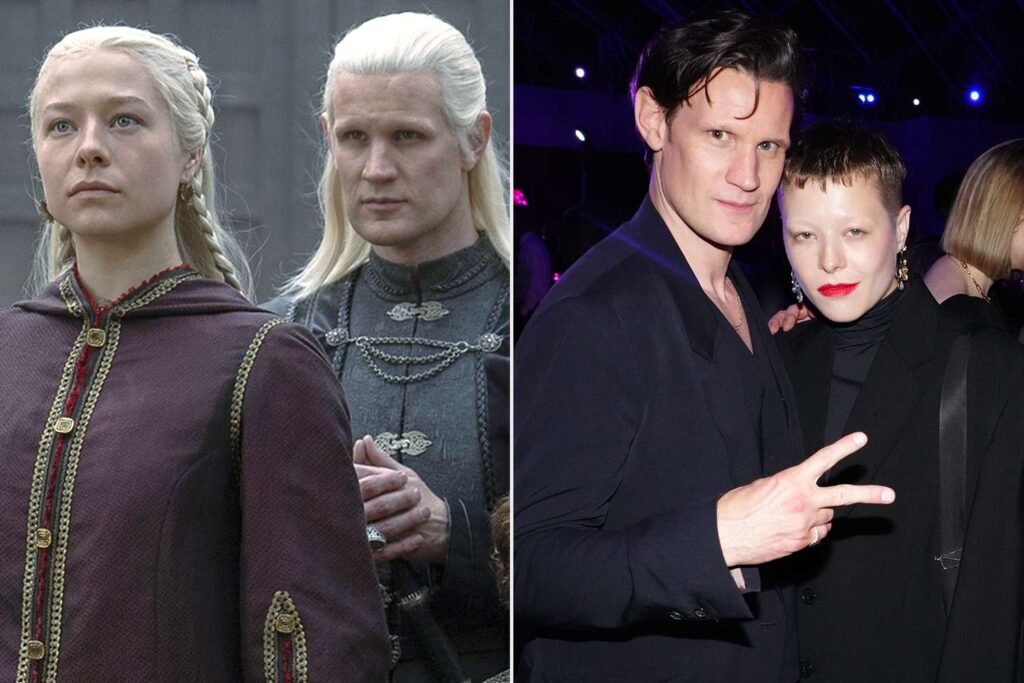
From Emma D’Arcy’s complex portrayal of Rhaenyra to Matt Smith’s unpredictable Daemon, the House of the Dragon cast has played a huge role in making the series one of HBO’s most discussed fantasy dramas. Below is a detailed look at the principal actors, their characters, and why each performance matters.
What Is House of the Dragon About?
House of the Dragon is based on George R. R. Martin’s fictional history Fire & Blood. Unlike a traditional fantasy novel told from one character’s point of view, the book presents the history of the Targaryen dynasty through competing historical accounts. The television series takes those events and turns them into a character-driven drama.
At the center of the story is Rhaenyra Targaryen, the daughter of King Viserys I Targaryen. Viserys names her as his heir, but her position becomes increasingly complicated after he marries Alicent Hightower and has additional children. What initially looks like a question of succession eventually develops into a devastating struggle for the Iron Throne.
The series is therefore not simply about dragons. The dragons are spectacular, but the real story is about family, power, loyalty, marriage, inheritance, resentment, and political manipulation. That is also why the performances are so important. The audience needs to understand why characters who love one another eventually become enemies.
Emma D’Arcy as Rhaenyra Targaryen
Emma D’Arcy plays Rhaenyra Targaryen, one of the central figures in House of the Dragon. Rhaenyra is introduced as a young princess who unexpectedly becomes the named heir to the Iron Throne after her father loses his firstborn son. Her position immediately puts her in a difficult situation because Westerosi traditions generally favor male succession.
D’Arcy’s performance becomes increasingly layered as Rhaenyra moves from an outspoken young woman into a ruler dealing with enormous political pressure. Rather than portraying her as a flawless hero, the performance allows Rhaenyra to make questionable decisions and experience fear, anger, grief, and frustration. That complexity makes the character feel more human.
One of the strongest elements of D’Arcy’s portrayal is the contrast between Rhaenyra’s public and private personalities. In public, she must project authority and confidence. In private, she often has to deal with the emotional consequences of decisions made by herself and the people around her. The result is a character who is constantly balancing personal desires against political responsibility.
Milly Alcock as Young Rhaenyra
Milly Alcock portrays the younger version of Rhaenyra Targaryen. Her performance helped establish the character before the series moved forward in time and introduced the older version played by Emma D’Arcy.
Young Rhaenyra is curious, rebellious, intelligent, and sometimes impatient with the expectations placed upon her. She does not initially seem like someone who wants to spend her life trapped inside the political rules of the royal court. Her relationship with Alicent is also particularly important because their friendship becomes one of the emotional foundations of the story.
Alcock’s performance gives young Rhaenyra a distinctive energy. She feels like someone who knows that she has been given an extraordinary opportunity but does not fully understand the price attached to it. That youthful confidence eventually gives way to much heavier responsibilities, making the transition to D’Arcy’s portrayal especially meaningful.
Matt Smith as Prince Daemon Targaryen
Matt Smith plays Prince Daemon Targaryen, Viserys’s younger brother and one of the most unpredictable members of the royal family. Daemon is ambitious, charismatic, reckless, and often difficult to understand. He can behave like a loyal family member in one scene and create a political crisis in another.
Smith brings considerable personality to the role. Daemon is not written as a straightforward villain, and the performance avoids making him completely predictable. His motivations often overlap. He wants power, but he also genuinely cares about certain members of his family. He seeks recognition but frequently sabotages himself through impulsive behavior.
The character’s relationship with Rhaenyra becomes one of the most important relationships in the series. Their dynamic combines romance, family loyalty, political calculation, and mutual ambition. Smith and D’Arcy give those scenes a complicated emotional quality that helps keep Daemon from becoming a one-dimensional fantasy character.
Paddy Considine as King Viserys I Targaryen
Paddy Considine portrays King Viserys I Targaryen, the monarch whose decisions create much of the succession crisis that follows. Viserys is not presented as a cruel king. In many ways, his biggest weakness is that he wants peace so badly that he struggles to confront the conflicts developing around him.
Considine gives Viserys a deeply human quality. The king genuinely loves his family, but his attempts to keep everyone happy frequently create new problems. He believes that naming Rhaenyra as heir will settle the succession question, yet he does not fully appreciate how much opposition she will face.
Viserys’s physical decline also becomes an important part of the performance. As his health deteriorates, Considine shows a ruler becoming increasingly fragile while still trying to maintain the dignity expected of a king. His later scenes are among the most emotionally powerful parts of the series.
Olivia Cooke as Alicent Hightower
Olivia Cooke plays the older version of Alicent Hightower. Alicent begins the story as Rhaenyra’s closest friend, but their relationship changes dramatically after Alicent becomes queen and has children with Viserys.
Cooke’s portrayal is interesting because Alicent is not simply motivated by greed or hatred. She believes she is protecting her children and preserving what she thinks is the legitimate order of the kingdom. Her understanding of duty is very different from Rhaenyra’s, and those conflicting ideas gradually push the two women apart.
Alicent is also heavily influenced by her father, Otto Hightower. She learns to view political decisions through the lens of family survival. Cooke captures the character’s internal conflict particularly well, showing someone who wants to do what she believes is right while becoming increasingly trapped by the consequences of her choices.
Emily Carey as Young Alicent Hightower
Emily Carey plays the younger version of Alicent. Her role is particularly important because viewers first see Alicent and Rhaenyra as close friends rather than political rivals.
Young Alicent is more cautious than Rhaenyra. She understands the rules of court life and knows that her father expects her to behave strategically. At first, she appears to have little control over the direction of her own future.
Carey’s performance makes Alicent’s transformation believable. The character does not suddenly become a different person. Instead, her circumstances gradually reshape her. Her marriage to Viserys, motherhood, political responsibilities, and relationship with Otto all contribute to the woman she eventually becomes.
Rhys Ifans as Otto Hightower
Rhys Ifans plays Otto Hightower, Alicent’s father and one of the most politically influential figures in the story. Otto is intelligent, calculating, and extremely focused on the future of his family.
He understands that royal succession creates opportunities for ambitious families. His actions are often presented through the language of duty and stability, but there is always an element of political calculation underneath. That ambiguity makes him one of the show’s more interesting supporting characters.
Ifans plays Otto with controlled intensity. He rarely needs to raise his voice to make a scene feel threatening. His character often operates through conversations, information, alliances, and carefully chosen words rather than physical force.
Steve Toussaint as Lord Corlys Velaryon
Steve Toussaint plays Corlys Velaryon, also known as the Sea Snake. Corlys comes from House Velaryon, a powerful Valyrian family with enormous wealth and a legendary naval tradition.
Corlys is ambitious, but his ambition is not identical to Otto’s. He wants his family to receive the recognition he believes it deserves. His relationship with Princess Rhaenys and his children also demonstrates that political ambition can exist alongside genuine family affection.
Toussaint gives Corlys a commanding presence. The character carries himself like someone who has spent years building his reputation. He is confident in his achievements and often believes that the Velaryons should have a greater role in the kingdom’s future.
Eve Best as Princess Rhaenys Targaryen
Eve Best portrays Princess Rhaenys Targaryen, a member of the royal family whose own claim to the throne was passed over in favor of a male relative. Her history gives her a unique perspective on the succession conflict surrounding Rhaenyra.
Rhaenys is more experienced than many of the younger characters. She understands how dangerous political ambition can be because she has already experienced the consequences of being denied a claim.
Best gives Rhaenys a calm but powerful presence. She does not need constant action to dominate a scene. Her expressions and carefully delivered dialogue often communicate years of experience with royal politics.
Fabien Frankel as Ser Criston Cole
Fabien Frankel plays Ser Criston Cole, a knight whose rise at court becomes increasingly controversial. Criston’s relationship with Rhaenyra has major consequences for both characters, and his later loyalty to Alicent becomes an important part of the political divide.
Criston is an example of how personal emotions can influence political decisions. His pride and resentment become closely connected with his understanding of honor. As the story develops, he becomes increasingly hostile toward Rhaenyra and those who support her.
Frankel’s performance emphasizes Criston’s seriousness and intensity. The character is often uncomfortable with the complicated moral compromises of court politics, yet he becomes deeply involved in exactly those conflicts.
Sonoya Mizuno as Mysaria
Sonoya Mizuno plays Mysaria, a character who operates outside the traditional structures of Westerosi nobility. Mysaria’s position gives her a different perspective on the royal court because she understands information, secrets, and the hidden lives of powerful people.
Her relationship with Daemon is an important early part of her story, but Mysaria gradually develops an identity and purpose beyond that connection. She becomes associated with information networks and political influence.
Mizuno plays the character with a restrained style that fits Mysaria’s position. She often knows more than the people around her, and that knowledge becomes her greatest source of power.
Harry Collett as Jacaerys Velaryon
Harry Collett plays Jacaerys Velaryon, the eldest son of Rhaenyra and an important figure in the next generation of the Targaryen conflict.
Jacaerys is forced to mature quickly. He grows up surrounded by political tension and understands that questions about his legitimacy can threaten both his family and his future.
Collett portrays him as a young man attempting to become the kind of leader his family needs. He has inherited the responsibilities of a royal heir, but he is still learning how to handle diplomacy, danger, and personal loss.
Tom Glynn-Carney as Aegon II Targaryen
Tom Glynn-Carney plays Aegon II, the son of Viserys and Alicent whose claim to the throne becomes central to the succession crisis.
Aegon is a complicated character. He does not initially appear prepared for the responsibilities of kingship, yet circumstances push him toward the center of the political struggle. His relationship with his family and his understanding of power are often unstable.
Glynn-Carney’s performance emphasizes Aegon’s vulnerability alongside his more destructive qualities. He is not simply a confident prince waiting to become king. He is someone who has been shaped by neglect, expectation, resentment, and the pressure of being placed into a role he may not fully understand.
Ewan Mitchell as Aemond Targaryen
Ewan Mitchell plays Prince Aemond Targaryen, one of Alicent’s sons and one of the most visually distinctive members of the younger generation.
Aemond grows up feeling that he lacks what his siblings and relatives possess. His determination to prove himself eventually becomes central to his identity. He is disciplined and ambitious, but also capable of making extremely dangerous decisions.
Mitchell’s performance gives Aemond an intimidating presence without making him feel like a conventional villain. His character is driven by pride and a desire for recognition, and those emotions make his actions particularly consequential.
Bethany Antonia as Baela Targaryen
Bethany Antonia portrays Baela Targaryen, the daughter of Daemon Targaryen and Laena Velaryon. Baela belongs to a younger generation that inherits the political consequences of the older characters’ decisions.
Baela is associated with the Targaryen tradition of dragonriding and carries the expectations attached to her family name. However, she also has to find her own identity within an increasingly dangerous political landscape.
Antonia’s portrayal gives Baela a confident quality. She is not simply a background member of the royal family. Her presence represents the next generation that will ultimately have to live with the consequences of the Dance of the Dragons.
Phoebe Campbell as Rhaena Targaryen
Phoebe Campbell plays Rhaena Targaryen, Baela’s twin sister. Like Baela, Rhaena is part of the younger generation caught between the powerful families involved in the succession crisis.
Rhaena’s personality is somewhat different from her sister’s. Her story gives the audience another perspective on what it means to grow up inside a family where dragons, inheritance, and political status are constantly discussed.
Campbell brings a quieter quality to the role, allowing Rhaena’s character to develop through relationships and circumstances rather than relying solely on dramatic confrontations.
The Importance of the House of the Dragon Cast
The biggest strength of the House of the Dragon cast is the way the actors create relationships that feel connected across generations. This is essential because the story covers decades of family history.
The younger performers establish relationships and personalities that later actors must carry forward. When the series jumps ahead in time, the audience needs to believe that the older Rhaenyra is the same person who once argued with her father and dreamed of controlling her own future.
The same applies to Alicent. Emily Carey establishes a young woman shaped by friendship, family pressure, and court politics, while Olivia Cooke continues that emotional trajectory in the later period. The casting therefore works almost like a relay race between generations.
Why the Time Jumps Made Casting Difficult
Casting House of the Dragon was particularly challenging because the story includes major time jumps. The production needed actors who could make the audience emotionally invest in characters at different ages.
Using different performers allowed the show to portray significant changes without requiring actors to appear artificially aged for every stage of their lives. However, it also created a challenge: the performances needed to feel connected.
The transition between Milly Alcock and Emma D’Arcy was especially important because Rhaenyra remains the emotional center of the story. The two actors approached the character differently, but both captured her intelligence, independence, and determination.
The same was true for Alicent. Emily Carey and Olivia Cooke created distinct performances while maintaining the character’s core traits. That continuity helped the time jumps feel like part of the story rather than a production distraction.
The Dragons Are Also Part of the Cast
Although the human performers receive most of the attention, the dragons are essential members of the House of the Dragon world. Each dragon is given a distinct appearance, personality, and relationship with its rider.
Dragons such as Syrax, Caraxes, Vhagar, Meleys, and Seasmoke are not interchangeable creatures. Their designs, sounds, movements, and behavior help communicate the personalities of their riders.
This approach makes the dragon scenes more emotionally meaningful. A dragon is not simply a special-effects spectacle. When a character loses or bonds with a dragon, the event has consequences because the audience understands that relationship.
The visual effects teams therefore work alongside the actors to create believable interactions. Performers often have to react to imaginary creatures, meaning their performances must sell the idea that something enormous and dangerous is actually standing in front of them.
House of the Dragon Cast and Character Chemistry
The success of the series depends heavily on chemistry between performers. Political fantasy can become difficult to follow when characters are only delivering exposition, but strong relationships make complicated storylines easier to understand.
Emma D’Arcy and Olivia Cooke are a particularly important example. Rhaenyra and Alicent begin as friends and gradually become opponents. Their relationship provides an emotional framework for the larger political conflict.
Matt Smith and Emma D’Arcy create another distinctive dynamic through Daemon and Rhaenyra. Their relationship is unpredictable, sometimes affectionate and sometimes tense. The actors make their scenes feel personal even when the larger political stakes are enormous.
These relationships show why casting matters so much. The story could theoretically work on paper, but the emotional impact depends on actors convincing viewers that these characters genuinely care about one another.
How the Cast Brings Targaryen Politics to Life
The Targaryen political system can be complicated because several characters have legitimate connections to the royal family. The cast helps make those relationships understandable by giving each character a different motivation.
Rhaenyra believes that her father’s decision to name her heir should be respected. Alicent worries about what will happen to her children if Rhaenyra becomes queen. Daemon wants influence and recognition. Otto wants his family to remain powerful. Corlys wants his house to receive the status he believes it deserves.
None of these motivations exist in isolation. Characters make decisions based on relationships that have developed over years. The actors therefore have to communicate history even when the script does not explicitly explain it.
This is one reason House of the Dragon feels more like a family tragedy than a simple battle for political power. The people fighting for the throne are often relatives, former friends, parents, children, husbands, and wives.
The Next Generation of the House of the Dragon Cast
One of the show’s most interesting developments is its increasing focus on younger characters. The original conflict begins with Viserys, Rhaenyra, Alicent, Daemon, Otto, and their generation, but the consequences eventually fall on their children.
Actors such as Harry Collett, Tom Glynn-Carney, Ewan Mitchell, Bethany Antonia, and Phoebe Campbell represent that transition. Their characters inherit conflicts that they did not create.
This generational approach gives the story a tragic quality. Decisions made by parents determine the lives of their children, while those children then make decisions that affect the next generation.
The performances also become more intense as younger characters are pushed into situations that require them to behave like adults. Their struggles show how quickly political conflict can destroy the normal process of growing up.
Why Fans Remain Interested in the House of the Dragon Cast
The House of the Dragon cast continues to attract attention because the actors are closely associated with some of television’s most recognizable fantasy characters. Fans follow not only the characters but also the performers’ careers outside the series.
The cast has also created a strong presence during interviews, premieres, and promotional appearances. Those interactions give viewers an opportunity to see the personalities of the actors separate from the often-dark characters they portray.
Another factor is the uncertainty surrounding the story. Because the audience knows that the Targaryen civil war will have devastating consequences, every major character decision carries additional weight. Viewers naturally become interested in the actors who are responsible for bringing those decisions to life.
Frequently Asked Questions About the House of the Dragon Cast
Who is the main actor in House of the Dragon?
There is not one single main actor because the series has an ensemble cast. Emma D’Arcy as Rhaenyra Targaryen, Matt Smith as Daemon Targaryen, Olivia Cooke as Alicent Hightower, and several other performers play major roles.
Who plays Rhaenyra Targaryen?
Emma D’Arcy plays the older Rhaenyra Targaryen, while Milly Alcock portrays the younger version of the character during the earlier part of the story.
Who plays Daemon Targaryen?
Matt Smith plays Prince Daemon Targaryen. Daemon is the younger brother of King Viserys I and becomes one of the most important figures in the Targaryen succession conflict.
Who plays Alicent Hightower?
Olivia Cooke plays the older Alicent Hightower, while Emily Carey portrays Alicent during her younger years.
Who plays King Viserys in House of the Dragon?
Paddy Considine portrays King Viserys I Targaryen. Viserys is Rhaenyra’s father and the king whose succession decisions become central to the story.
Who plays Aemond Targaryen?
Ewan Mitchell plays Aemond Targaryen. Aemond is one of Alicent and Viserys’s sons and becomes a major figure in the Targaryen conflict.
Who plays Aegon II?
Tom Glynn-Carney plays Aegon II Targaryen. Aegon’s claim to the Iron Throne becomes one of the major causes of the civil war.
Who plays Corlys Velaryon?
Steve Toussaint plays Lord Corlys Velaryon, a powerful lord and naval commander from House Velaryon.
Who plays Princess Rhaenys?
Eve Best plays Princess Rhaenys Targaryen. Rhaenys has her own history with royal succession, giving her an especially interesting perspective on Rhaenyra’s claim.
Why does House of the Dragon use different actors for some characters?
The series contains significant time jumps. Different actors are used to portray characters at different ages, allowing the story to cover decades while maintaining believable character development.
Conclusion
The House of the Dragon cast is one of the biggest reasons the series works as a character-driven fantasy drama. The actors have the difficult task of portraying complicated relationships while also making a massive fictional history feel personal and understandable. Emma D’Arcy, Matt Smith, Olivia Cooke, Paddy Considine, Milly Alcock, Emily Carey, Rhys Ifans, Steve Toussaint, Eve Best, and the rest of the ensemble each bring something different to the Targaryen story. Their performances transform political disputes and historical events into emotional conflicts that viewers can follow.
Perhaps the most impressive feature of the cast is the way it handles generational storytelling. Characters who begin the story as children or young adults eventually become parents, rulers, rivals, and victims of the decisions made by previous generations. The casting choices help make those transitions believable.
YOU MAY HAVE MISSED